Brake Service for German and European Cars: Costs, Parts, and What to Expect
Brake service for a BMW, Mercedes-Benz, Audi, Porsche, or Volkswagen can cost more when the vehicle uses larger rotors, specialized brake components, or additional electronic service procedures. But the badge alone does not determine the bill. The biggest differences come from the brake system fitted to the vehicle, the parts selected, and whether the work involves pads alone or pads, rotors, and other components.
A useful estimate identifies those details instead of quoting “brakes” as a single item. Understanding them makes it easier to compare repair options, choose suitable parts, and distinguish necessary work from a different service package.
Do European Cars Really Wear Through Brakes Faster?
European cars do not automatically need brake replacement more often than other vehicles. Wear depends on vehicle weight, driving conditions, brake design, and the friction material used in the pads.
Several factors explain why some owners experience shorter replacement intervals:
- Vehicle weight: A heavier SUV asks more of its brakes than a lighter sedan when stopping from the same speed.
- Frequent stops: Repeated slowing in traffic creates more brake applications than steady highway driving.
- Hills and loads: Descents, passengers, and cargo increase the work the brakes perform.
- Pad formulation: Friction materials balance stopping response, noise, dust, heat tolerance, and wear differently.
- Mechanical condition: A sticking caliper or restricted movement in the brake hardware can cause uneven or accelerated wear.
For Rancho Cucamonga drivers, a commute with frequent stops can produce a different wear pattern from mostly open-road travel. Mileage alone is therefore a poor basis for deciding whether brakes are due. Pad measurements and rotor condition provide a more useful answer.
What Drives Brake Service Costs on German Cars?
The exact brake package
The same model can have different brake systems depending on its year, trim, and factory options. A larger brake package may use bigger rotors, different pads, and more expensive hardware. Identifying the installed system matters as much as identifying the vehicle model.
Some vehicles also use specialized rotor designs. Carbon-ceramic rotors are a separate category from conventional iron rotors and need parts and inspection procedures appropriate to that system. They are not the same thing as ceramic brake pads.
The scope of replacement
A front-pad estimate is not comparable to a quote for front and rear pads and rotors. A detailed estimate separates:
- The axle being serviced: front, rear, or both.
- Pads and the specified pad product line.
- Rotors, if replacement is included.
- Wear sensors, clips, bolts, or other required hardware.
- Labor and applicable electronic service procedures.
- Brake fluid service, if it is a separate maintenance need.
Caliper repairs or hydraulic problems also change the scope. Those are different jobs from routine friction-part replacement and deserve their own explanation.
Electronic procedures and wear sensors
Some rear brake systems require an electronic parking brake service mode during replacement. Certain vehicles also use pad-wear sensors and service reminders that need attention after the work. These requirements depend on the vehicle, not simply whether it is German or European.
OEM Versus Aftermarket: What Does the Price Difference Buy?
Genuine, vehicle-branded parts often carry a price premium over mainstream aftermarket replacements. That premium does not make every aftermarket option unsuitable, and a lower price does not establish equivalent quality.
Parts labels are most useful when paired with the actual manufacturer and product line:
- Genuine or vehicle-branded parts: Parts supplied under the vehicle manufacturer's brand. These provide a straightforward reference for the original application.
- Original-equipment supplier parts: Parts sold by a company that supplies automakers. That supplier relationship alone does not mean every product it sells is identical to the factory-installed part.
- Aftermarket parts: Replacement products from other product lines or manufacturers. Options range from basic replacements to specialized designs, with different priorities for noise, dust, wear, and heat management.
The useful comparison is not just “OEM versus aftermarket.” It is whether the proposed part matches the installed brake system and suits the vehicle's use.
For example, an owner seeking less visible wheel dust has a different priority from someone regularly descending mountain roads with a loaded SUV. Part selection still starts with the correct application; personal preferences come after compatibility.
Ceramic Versus Semi-Metallic Brake Pads
These names describe broad friction-material categories, not a ranking from basic to premium. Product formulation and vehicle compatibility matter more than the category label alone.
Ceramic pads
Ceramic formulations generally emphasize quiet operation and reduced visible wheel dust. They are an appealing option for everyday use when an appropriate product is available for the vehicle.
Low dust, however, is not a complete measure of brake quality. A ceramic replacement can have a different initial pedal response from the original pad, and it still needs to meet the demands of the installed braking system.
Semi-metallic pads
Semi-metallic formulations contain metallic material and generally offer strong heat handling. Depending on the product, the tradeoff can include more visible dust, noise, or rotor wear.
Neither category guarantees a particular stopping feel or service life. Our comparison of ceramic versus semi-metallic brake pads for European vehicles explains how to weigh these differences. The starting point remains a suitable pad for the exact brake package, rather than a universal preference for one material.
When Do Rotors and Brake Fluid Need Attention?
Rotor condition determines whether pads alone make sense
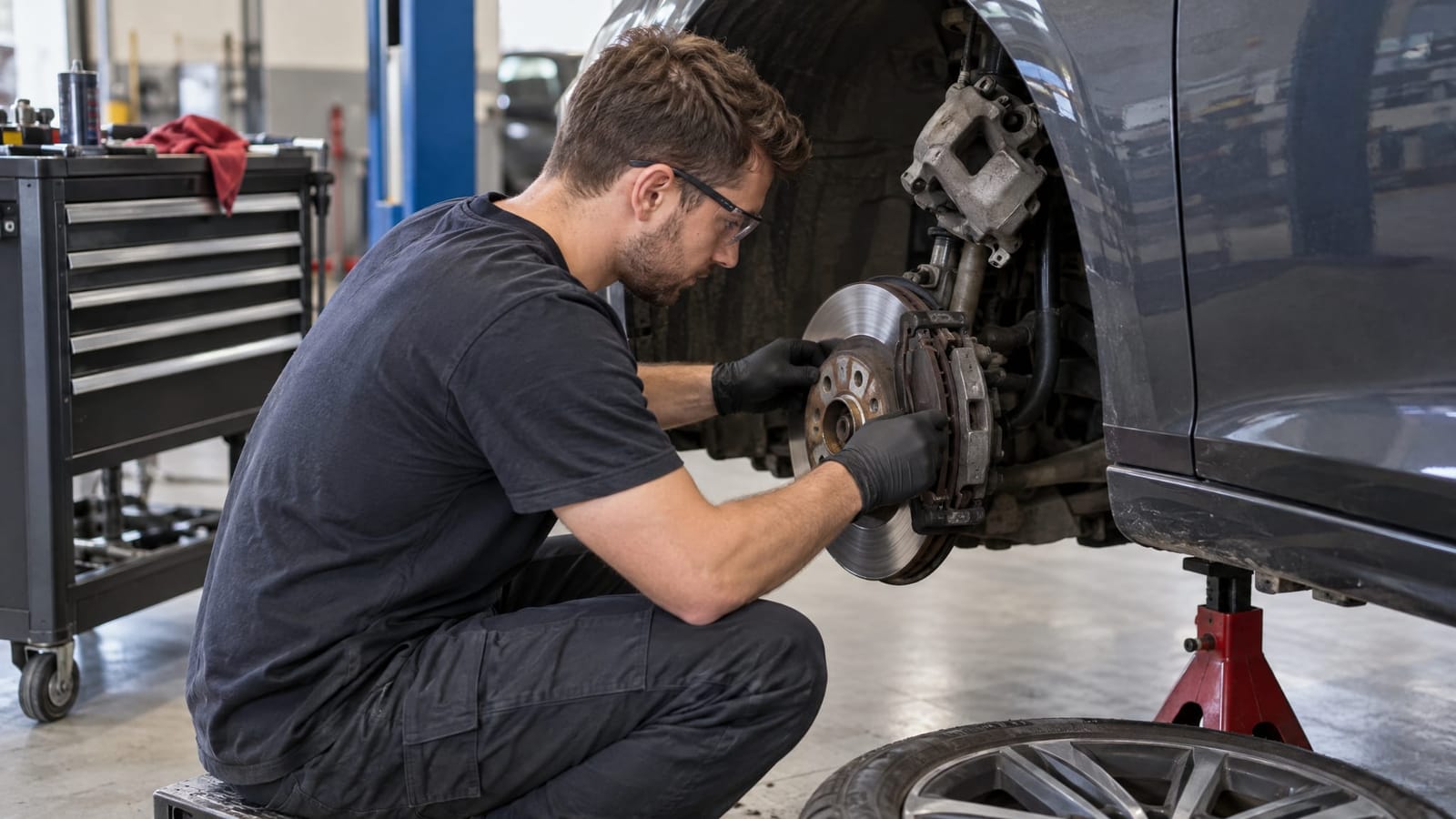
New pads do not automatically require new rotors, but a pads-only service is not appropriate for every worn brake system. Rotor inspection considers remaining thickness, surface damage, corrosion, and whether the rotor can remain within its service limits.
Resurfacing also is not a universal alternative to replacement. It removes material, so suitability depends on the rotor design, condition, and remaining thickness.
If a quote includes rotors, the useful explanation is the condition or measurement behind that recommendation. “European cars always need rotors” is not a substitute for inspecting the parts on the vehicle.
Brake fluid has a separate maintenance schedule
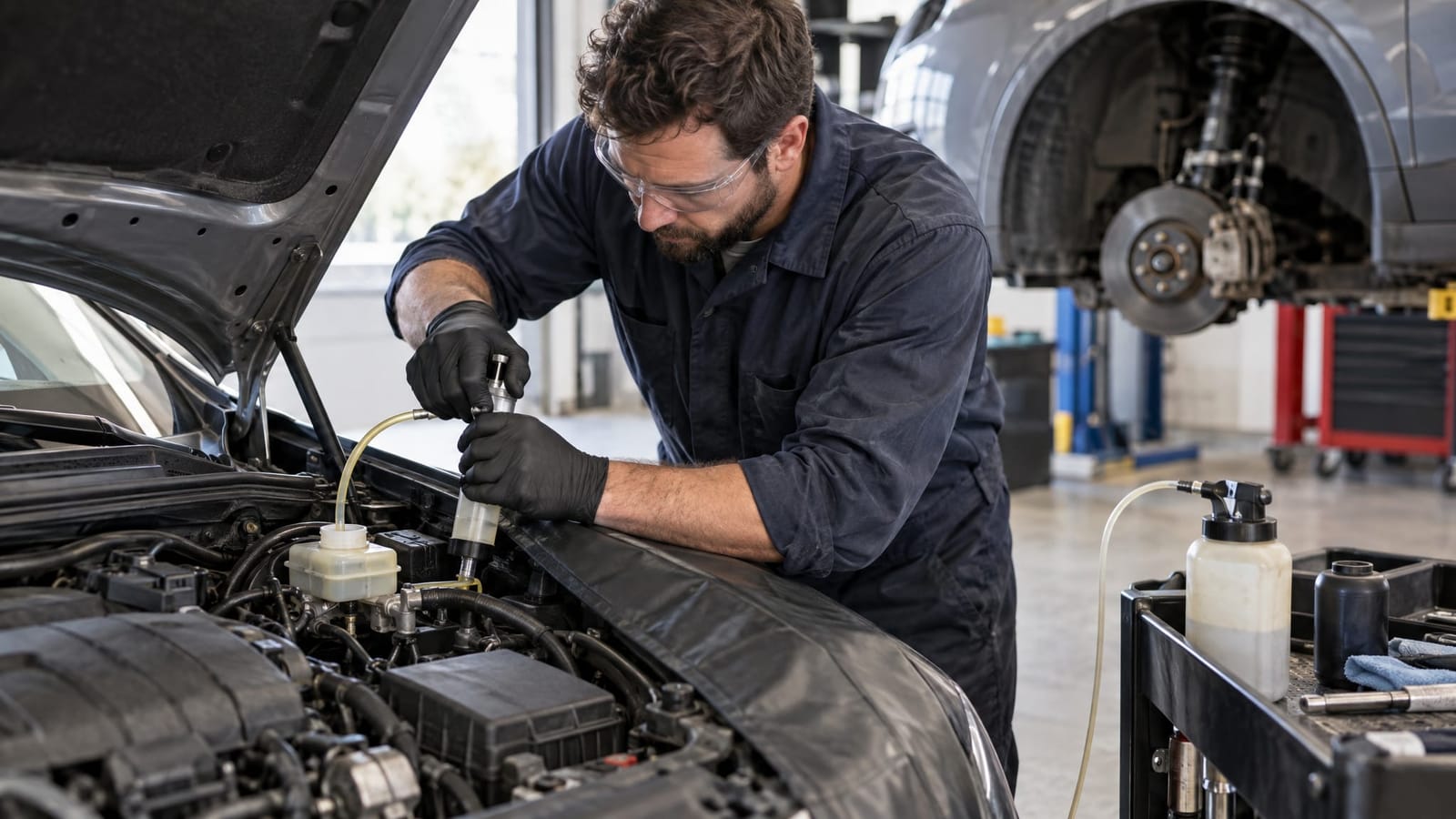
Pad wear and brake fluid condition are different maintenance issues. Glycol-based brake fluid absorbs moisture over time, which can lower its boiling point. A vehicle can have substantial pad material remaining and still be due for fluid service under its maintenance schedule.
Our explanation of why brake fluid needs to be changed covers that distinction. Listing fluid service separately makes an estimate easier to understand and prevents confusion between a fluid exchange and replacing worn pads.
What to Expect From a Brake Inspection and Service
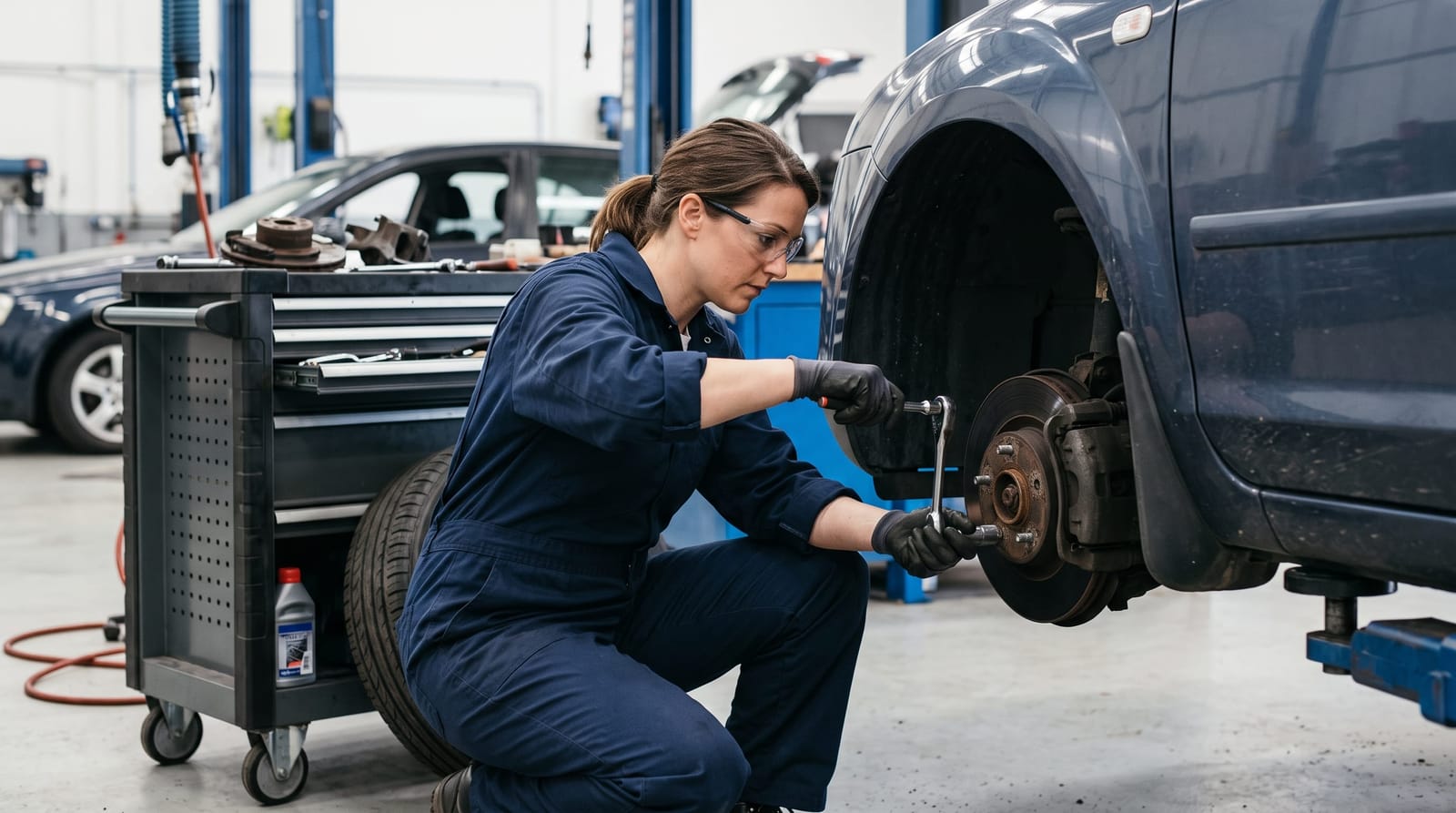
A brake inspection connects the driver's concern with the condition of the components. A useful service process generally includes:
- Clarifying the symptoms: When noise, vibration, or a warning appears, and whether it occurs during braking or ordinary driving.
- Checking wear: Evaluating inner and outer pads, rotor condition, and uneven wear rather than relying only on the most visible pad.
- Inspecting related components: Checking calipers, hardware, hoses, and visible signs of leakage or restricted movement.
- Explaining the repair scope: Separating worn friction parts from additional repairs and scheduled maintenance.
- Completing the required checks: Performing applicable electronic procedures, checking operation, and explaining any specified break-in procedure for the new parts.
Squealing alone does not identify the cause of a brake problem. Vibration also needs diagnosis rather than an automatic assumption that a particular part needs replacement. Our guide to brake pad replacement signs explains the symptoms that help start that conversation.
Noticeably reduced braking or a suddenly soft pedal calls for professional assessment before further driving. Our licensed shop has ASE-certified technicians who can evaluate brake concerns; towing avoids driving a vehicle with impaired braking.
Comparing Local Shop and Dealership Estimates
When comparing estimates from dealerships and independent shops in Rancho Cucamonga or Ontario, start with matching scope rather than the bottom-line total. A lower quote for pads alone does not represent the same work as a quote that includes rotors, sensors, and fluid service.
At Rancho Express Lube, we offer brake services for all makes and models and use digital inspections. Inspection findings help put a parts list into context: which components show wear, what needs attention, and what is separate scheduled maintenance.
For a clear comparison, look for the same axle coverage, named parts, rotor treatment, required hardware, labor, and applicable fees. Warranty terms also belong in the comparison, including what is covered and any conditions.
A complete estimate makes the decision more useful than a general claim that dealerships cost more or independent shops cost less. The question is what each price includes for the same vehicle and repair need.
Keep Brake Wear Separate From Oil-Change Intervals
An oil-change visit is a useful opportunity to review maintenance, but brakes do not wear on an oil-change schedule. Likewise, healthy-looking pads do not change the engine's oil requirements.
For related planning, our articles on BMW synthetic oil requirements and change intervals and switching a Mercedes-Benz from synthetic to regular oil address those separate decisions.
The most useful brake-service plan is specific: the correct brake package, documented wear, suitable replacement parts, and a clearly itemized scope. Those details explain the cost and make competing estimates easier to compare without choosing unnecessary work or overlooking an important part of the repair.