Why Brake Fluid Needs to Be Changed in European Vehicles (And How Often)
Brake fluid needs changing because the glycol-based fluid used in most European passenger vehicles absorbs moisture over time. That moisture lowers its boiling point and can contribute to corrosion inside the braking system. Replacing aging fluid helps maintain its ability to work under heat, even when the brakes still feel normal.
The replacement interval comes from your vehicle’s maintenance schedule. If the schedule specifies a change every two years, low mileage does not extend that interval. A two-year rule does not apply to every European make, model and year, so the schedule for your specific vehicle is the starting point.
Why Moisture Changes How Brake Fluid Works
Brake fluid transfers pressure from the brake pedal through the hydraulic system to the brakes at each wheel. Unlike air or vapor, liquid brake fluid compresses very little, allowing that pressure to reach the braking components effectively.
Glycol-based brake fluid is hygroscopic, meaning it absorbs moisture. Although the braking system is enclosed, small amounts of moisture can enter over time. Fluid condition therefore changes with age, not just with miles driven.
Moisture affects brake fluid in two important ways:
- It lowers the boiling point. Braking generates heat. During sustained braking, such as a long downhill descent, moisture-contaminated fluid can boil at a lower temperature than fresh fluid. The resulting vapor compresses, potentially producing a softer pedal and reduced braking response.
- It can contribute to internal corrosion. Moisture can affect metal surfaces inside hydraulic components. Fluid replacement helps maintain the system, rather than simply changing the appearance of the fluid in the reservoir.
Older fluid does not automatically cause poor braking on every trip. Its ability to tolerate heat can decline before an obvious change in everyday pedal feel appears.
How Often Does Brake Fluid Need Changing?
Check the maintenance schedule for the exact model and year. The brand name alone is not enough to determine the interval, and an engine oil reminder does not necessarily cover brake fluid service.
When reviewing the schedule and service history, look for:
- Elapsed time: A time-based requirement can apply even when the vehicle has accumulated few miles.
- First and repeat services: The timing of the initial replacement may differ from the recurring interval.
- A separate brake fluid reminder: Some vehicles track maintenance items independently. Resetting an oil service reminder does not document a brake fluid change.
- A dated service record: An invoice that specifically lists brake fluid replacement is more useful than a general “maintenance performed” entry.
For example, a weekend car with a two-year brake fluid interval can reach its replacement date while its brake pads still have plenty of material remaining. Pad wear reflects use; brake fluid maintenance also accounts for time.
Changing fluid more frequently without a reason is not the goal. The applicable schedule, inspection findings and any manufacturer guidance for your driving conditions provide a basis for deciding when service is due.
What a Brake Fluid Check Can Tell You
A brake fluid check and a brake fluid replacement serve different purposes. An inspection evaluates present condition; a replacement exchanges aging fluid. Neither a normal-looking reservoir nor a firm pedal proves that a scheduled change can be postponed.
Fluid Level Does Not Measure Fluid Condition
A reservoir level check can identify a concern, but it does not measure moisture content. Fluid level can fall as brake pads wear, and a low level can also indicate leakage. Simply adding fluid does not explain why the level changed.
A top-up also leaves aging fluid in the brake lines and wheel components. It is not equivalent to an exchange and does not restart the replacement interval.
Color Is Not a Reliable Guide
Dark fluid can prompt closer evaluation, but appearance alone cannot reliably reveal its boiling point or moisture content. Clear-looking fluid is not proof that it is fresh.
Testing Adds Information, Not a New Maintenance Schedule
A suitable fluid test can help assess condition. Its usefulness depends on the equipment, the fluid and the testing procedure. The result belongs alongside the manufacturer’s schedule and the service record, rather than automatically replacing either.
At Rancho Express Lube in Rancho Cucamonga, we offer brake services and preventative maintenance, and we use a digital inspection process. Documented findings help explain a vehicle’s present condition, while dated service records show what maintenance has already been completed.
A soft or sinking pedal, visible fluid leakage, or a brake warning light calls for a vehicle-specific assessment by our ASE Certified Technicians, not an assumption that a fluid change alone will correct it. If braking feels impaired or fluid is leaking, having the vehicle transported is the safer option than driving it for an inspection.
What a Proper Brake Fluid Change Involves
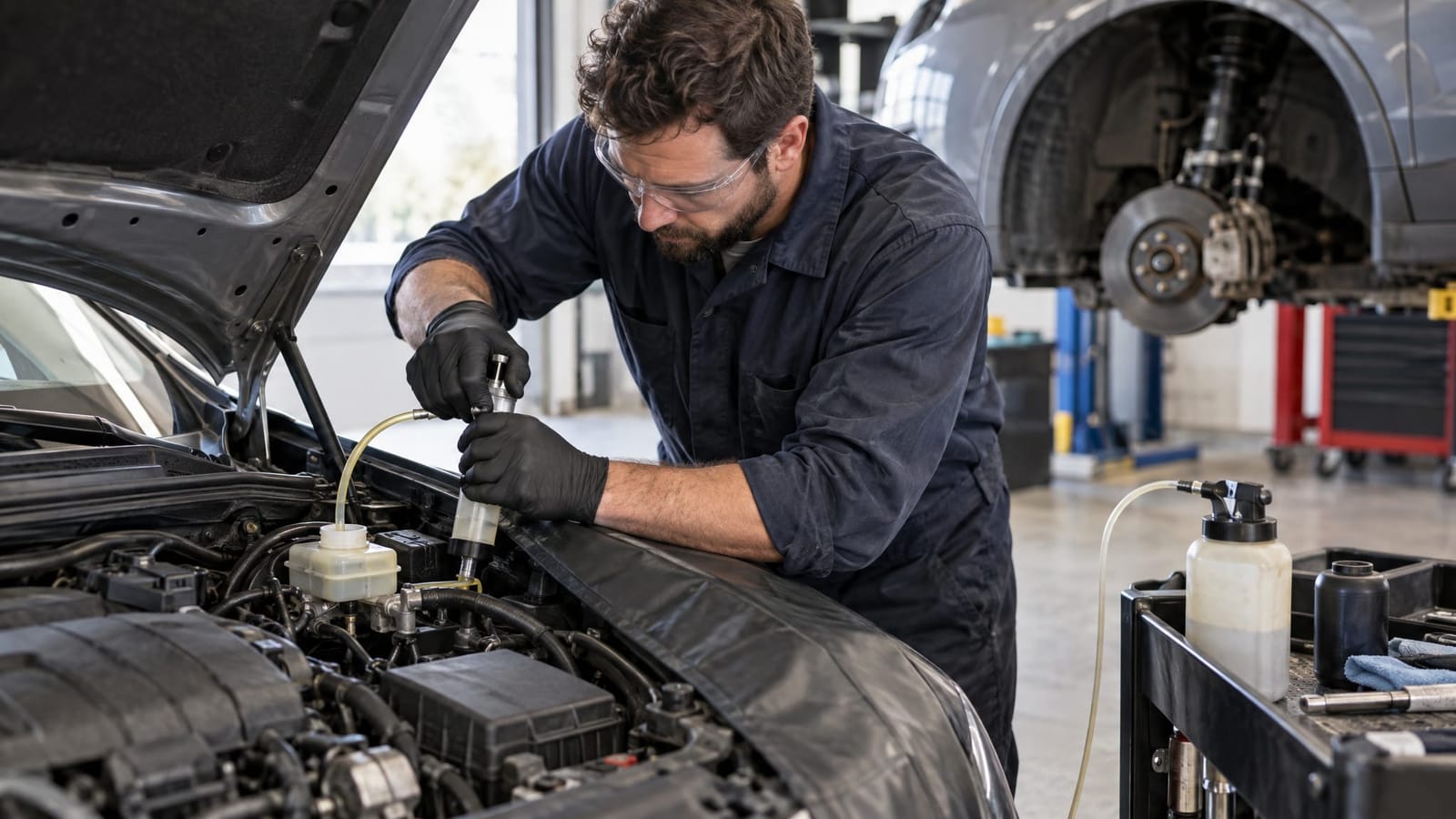
The hydraulic braking system holds fluid in the reservoir, lines and components at the wheels. Removing fluid only from the reservoir leaves older fluid elsewhere in the system.
A proper exchange follows the vehicle’s service procedure to replace fluid throughout the required circuits and remove trapped air. Depending on the vehicle and the work involved, the anti-lock braking system may require additional procedures.
The replacement fluid needs to match the manufacturer’s specification. European vehicles do not all use the same specification, and a general fluid category may not capture every requirement. Some systems call for particular viscosity characteristics, meaning how readily the fluid flows, especially at lower temperatures.
Fluid replacement is not a substitute for other brake repairs. It does not restore worn pads or rotors, repair a leak, or resolve every cause of a soft pedal. Keeping those distinctions clear separates scheduled maintenance from diagnosis and repair.
Other Brake Fluid Questions
Is Brake Fluid Replacement Included When Brake Pads Are Changed?
They are separate services. Pad replacement addresses friction-material wear, while a fluid exchange addresses the hydraulic fluid. A service invoice can show whether both were performed; new pads alone do not mean the fluid was replaced.
Does an Electric European Vehicle Still Need Brake Fluid Maintenance?
Electric vehicles with hydraulic friction brakes still use brake fluid. Regenerative braking can reduce friction-brake use, but it does not eliminate the vehicle’s specified brake fluid maintenance requirements.
Keep a Clear Brake Fluid Service Record
Record the date and mileage of each brake fluid replacement, and keep the invoice with the vehicle’s maintenance history. Comparing that date with the specified interval makes the next service easier to plan, without relying on fluid color, pad condition or a change in pedal feel.