Ceramic vs. Semi-Metallic Brake Pads for European Vehicles: Which Should You Choose?
For a European vehicle used mainly for commuting and everyday errands, ceramic brake pads are often a good choice when quiet operation and cleaner wheels matter most. Semi-metallic pads are often better suited to demanding braking, where heat management and a more assertive initial response take priority over dust and noise.
However, the correct choice starts with your vehicle’s braking system, not the material label. A compatible, well-matched pad matters more than choosing “ceramic” or “semi-metallic” in isolation. Here is how the two compare for daily driving around Rancho Cucamonga and more demanding use.
What Makes Ceramic and Semi-Metallic Pads Different?
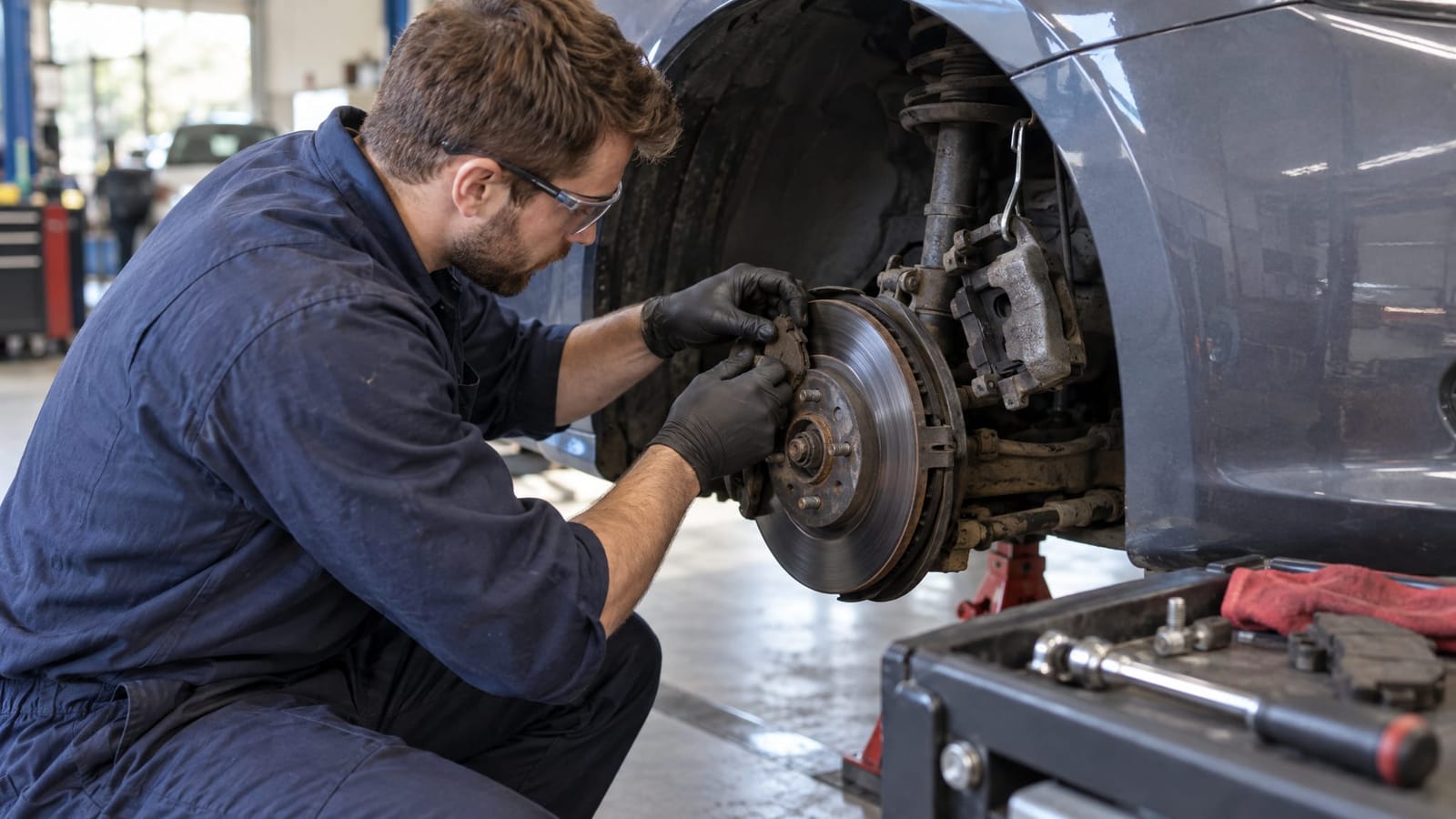
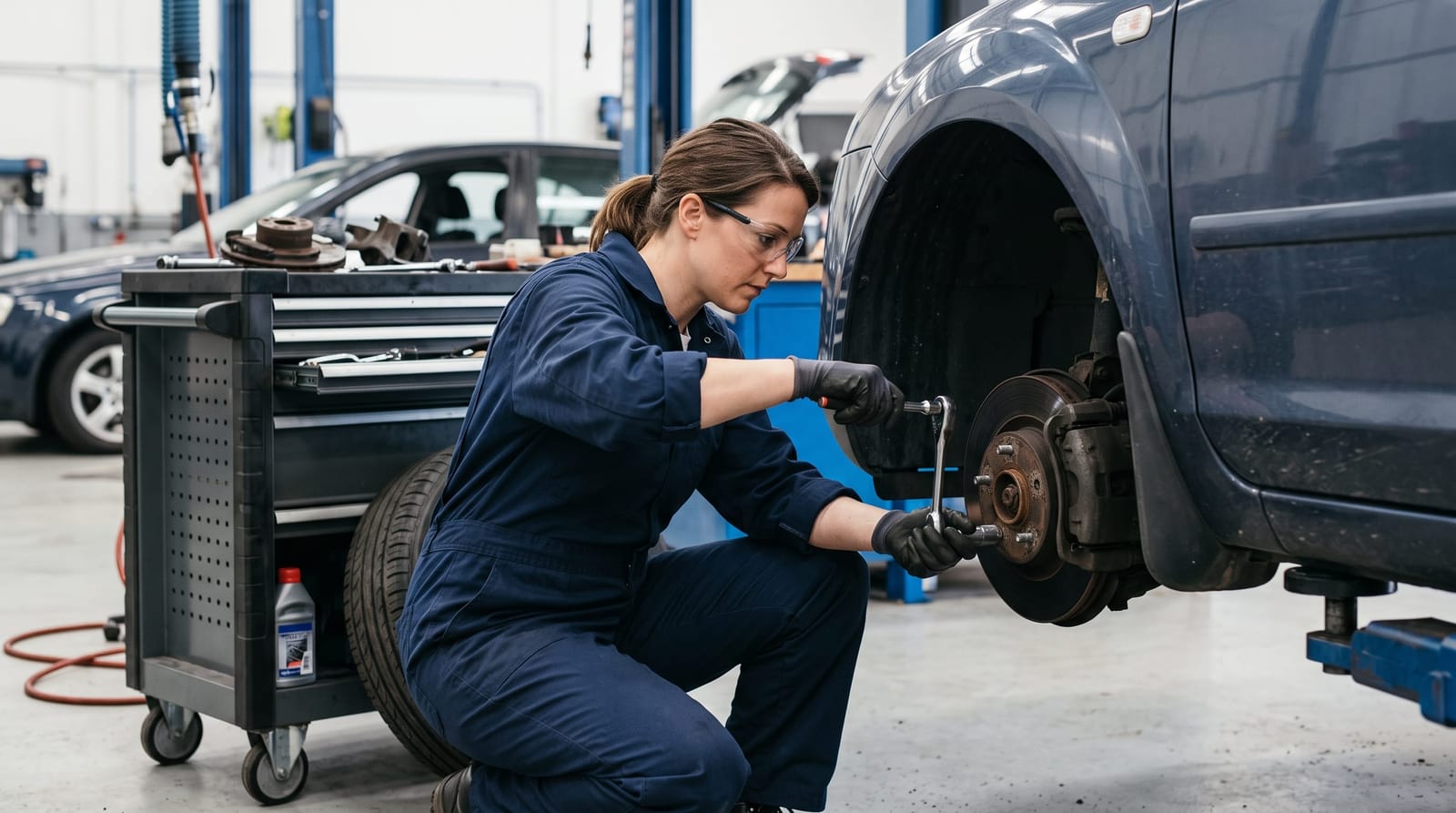
Both types use a friction compound pressed against the brake rotor, the disc that rotates with the wheel, to slow the vehicle.
- Ceramic pads use a ceramic-based mixture with reinforcing fibers, fillers, and binding materials. Street-oriented formulations generally emphasize low noise, smooth operation, and less noticeable wheel dust.
- Semi-metallic pads contain a substantial proportion of metal, such as steel or iron, mixed with other friction materials. Their metal content helps conduct heat, and many formulations emphasize demanding braking performance.
These are broad categories, not performance grades. Two ceramic pads can behave differently, just as two semi-metallic pads can. Neither label alone establishes stopping distance, service life, or suitability for your car.
Ceramic vs. Semi-Metallic Brake Pads: Side-by-Side
| Factor | Ceramic pads | Semi-metallic pads |
|---|---|---|
| Noise | Generally quieter during normal street driving. | More likely to produce audible braking noise, depending on formulation and installation. |
| Wheel dust | Typically produce lighter-colored, less noticeable residue. | Often leave darker, more visible deposits on wheels. |
| Heat performance | Street formulations suit ordinary road use but are not automatically suitable for repeated high-heat braking. | Often well suited to repeated demanding braking, though the specific compound determines its limits. |
| Initial response | Often formulated for smooth, progressive engagement. | Some formulations provide a stronger initial “bite,” meaning a more immediate braking response. |
| Pad cost | Often cost more than comparable basic semi-metallic pads. | Basic options may cost less, while specialized formulations can cost more. |
The tradeoff is not “comfort versus safety.” Both materials can be appropriate for street driving when correctly specified. Tires, rotor condition, brake fluid, and the rest of the braking system also affect how the vehicle stops.
For European Cars, Fit and Brake Specifications Come First
A BMW, Mercedes-Benz, Audi, Volvo, or Porsche may have different brake packages within the same model range. Model year, trim, engine, and optional brake equipment can change the required pad. Vehicle identification details and the actual brake package help distinguish the correct replacement from a part that merely appears similar.
Original-equipment pads are not all the same material. Some European applications use low-metallic formulations, so the available choices do not always fit neatly into a ceramic-versus-semi-metallic comparison. Changing compounds can also change the braking feel you are accustomed to.
Compatibility includes:
- The correct pad shape and dimensions for the installed caliper.
- Suitability for the rotor material and brake package.
- Any required wear sensors, shims, and fitting hardware.
- A friction formulation appropriate for the vehicle and its use.
Because brake selection affects stopping performance, your vehicle’s particular setup calls for a professional assessment. At Rancho Express Lube in Rancho Cucamonga, we are a licensed auto repair shop with ASE-certified technicians, and we offer brake services and digital inspections.
Daily Driving vs. Demanding Use: Which Tradeoffs Matter?
Daily commuting: ceramic often favors comfort and cleaner wheels
For a sedan or SUV used for errands, school trips, and ordinary freeway travel, a compatible ceramic pad can be an appealing choice. Reduced visible dust is especially useful when keeping light-colored wheels clean matters to you.
For example, a commuter choosing between two suitable street pads may reasonably prioritize quiet operation over a sharper initial bite. Hot Inland Empire weather alone does not make that vehicle a high-performance braking application. The heat generated by repeated braking is a different consideration from outdoor temperature.
Long descents and repeated hard braking: compound capability matters more
A heavier SUV regularly descending mountain roads places different demands on its brakes than a sedan making short local trips. Repeated braking creates heat, and excessive heat can cause brake fade, a reduction in braking effectiveness.
A suitable semi-metallic formulation may be the better match when sustained braking demands take priority. However, “semi-metallic” is not a guarantee of fade resistance. The pad’s intended application matters more than a broad material description.
Likewise, a performance badge does not automatically require a competition-oriented pad. A performance car driven gently on public roads has different needs from the same car used on a track. Track use calls for an application-specific selection, not simply any semi-metallic pad.
Compare the Complete Brake Job, Not Just Pad Prices
The least expensive pad is not necessarily the least expensive service, and a higher price does not automatically mean a better match.
When comparing estimates, look for the same scope of work:
- Exact pads: brand, product line, and intended application, rather than only the material category.
- Rotor work: whether the estimate includes rotor replacement or other appropriate work based on condition and specifications.
- Supporting parts: any required sensors, hardware, or shims.
- Installation details: preparation and the pad manufacturer’s bedding procedure, which helps establish proper contact between pads and rotors.
Claims of longer pad life need context. Driving conditions, vehicle weight, rotor condition, and the individual compound all influence wear.
Frequently Asked Questions
Are ceramic brake pads the same as carbon-ceramic brakes?
No. Ceramic brake pads describe a friction-material category. Carbon-ceramic brakes use specialized rotors and require pads intended for that system. An ordinary ceramic street pad is not an interchangeable substitute.
Will ceramic pads eliminate brake dust and squealing?
No. All friction brakes produce wear debris, and either pad type can make noise. Rotor condition, hardware, installation, and the pad formulation can all contribute. Ceramic pads generally reduce these nuisances rather than eliminate them.
Can ceramic and semi-metallic pads be mixed?
Matching pads across the same axle helps maintain consistent braking characteristics. Front and rear specifications can differ, but changing compounds is a whole-system compatibility decision rather than a way to combine the benefits of both materials.
The Better Choice Is the Correctly Matched Pad
Ceramic pads often suit drivers prioritizing quiet daily operation and cleaner wheels. Semi-metallic pads often suit more demanding braking where heat capability matters most. For a European vehicle, the deciding factors are the exact brake package, the specific pad formulation, and how the car is actually driven.