Do Diesel Engines Need Different Filters Than Gas Engines?
If you own a diesel truck or work with diesel-powered commercial vehicles, you've probably noticed that diesel maintenance tends to feel a little more involved than what you'd do for a standard gas-powered car. One of the most common questions we hear from diesel owners is whether diesel engines actually require different filters, and if so, why does it matter? The short answer is yes, and understanding those differences helps you make better decisions about routine maintenance. Let's walk through what sets diesel engine filter requirements apart and why each filter type plays an important role in keeping your engine healthy.
Why Diesel Engines Have Unique Filtration Needs
Diesel engines operate differently from gasoline engines in several fundamental ways. They run at higher compression ratios, generate more combustion byproducts like soot and carbon particles, and rely on a fuel injection system that operates under significantly higher pressure. All of these factors mean that the filtration systems protecting a diesel engine need to work harder and be more precise than those in a typical gas vehicle.
Diesel engine filter requirements are designed around these specific operating conditions. If contaminants make it into the fuel system, the oil, or the air intake, the consequences can be more immediate and more costly than in a gasoline engine: simply because diesel injection components are built to tighter tolerances. That's not a reason to worry, but it is a reason to stay on top of your filter maintenance with a service provider who understands diesel systems.
The three main filters you'll find on a diesel engine are the air filter, the fuel filter, and the oil filter. Each one serves a distinct purpose, and each one has specifications that differ from their gasoline engine counterparts.
Diesel Air Filters: Built for Heavier Demands
Air filters on diesel engines do the same basic job as on any engine: they keep dust, debris, and particulates out of the combustion chamber. But because diesel engines rely entirely on air compression to ignite fuel (there are no spark plugs), maintaining the correct airflow is critical. A restricted or dirty air filter disrupts the air-to-fuel ratio, which leads to incomplete combustion and increased soot production.
Diesel air filters are generally built to handle:
- Higher volumes of airflow, especially in larger truck engines
- More demanding environments like construction sites, farms, or heavy-traffic routes
- Greater particulate loads from dusty or off-road driving conditions
- Longer service intervals that match diesel maintenance schedules
Many diesel vehicles, especially trucks and commercial equipment, use a two-stage or radial seal air filter design rather than the simpler panel filters common in passenger cars. These designs provide a higher level of filtration efficiency without restricting airflow, which is essential for maintaining engine performance and fuel efficiency over time.
How often you replace or clean your diesel air filter depends on your driving environment. If you're regularly driving on dusty unpaved roads or working in industrial areas, your filter may need attention more frequently than the manufacturer's standard interval suggests.
Diesel Fuel Filters: The Most Critical Difference
This is where diesel engine filter requirements differ most significantly from gasoline engines. Diesel fuel filters are not optional maintenance: they are one of the most important service items on your vehicle. Gasoline engines do have fuel filters, but they're typically smaller, less complex, and don't need to be serviced as often.
Diesel fuel systems are sensitive to two main problems that the fuel filter is specifically designed to address:
- Water contamination: Diesel fuel naturally attracts water through condensation. Even small amounts of water in the fuel system can damage high-pressure injectors, cause corrosion, and lead to rough engine performance. Most diesel fuel filters include a water separator bowl that collects moisture before it reaches the injection system. This bowl needs to be drained regularly, in many cases, more often than the filter itself needs to be replaced.
- Fine particulate contamination: Diesel injectors operate at extremely high pressures, sometimes exceeding 30,000 PSI in modern common-rail systems. Even microscopic particles in the fuel can cause premature wear. Diesel fuel filters are rated at much finer micron levels than gasoline fuel filters to catch these contaminants.
Many diesel trucks use two fuel filters: a primary filter that catches larger particles and separates water, and a secondary filter for finer filtration before fuel reaches the injection pump. Keeping both filters in good condition is a straightforward part of routine diesel maintenance that pays dividends in long-term reliability.
Diesel Oil Filters: Higher Capacity, Specific Requirements
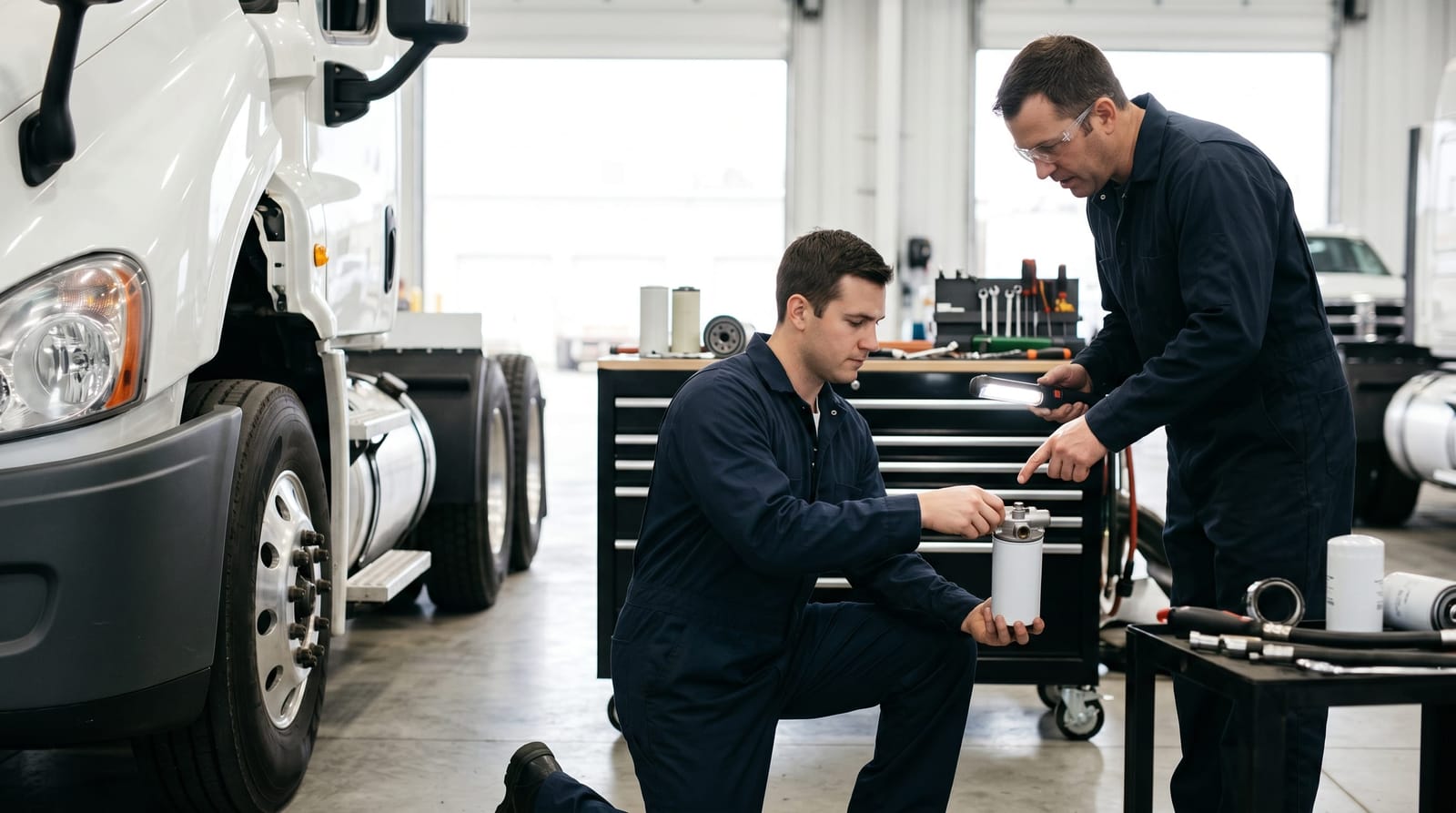
Diesel oil filters are larger and more robust than those used in gasoline engines, and for good reason. Diesel combustion produces more byproducts, including soot and acidic compounds, that end up in the engine oil. A diesel oil filter needs to handle a higher volume of contamination without clogging or breaking down prematurely.
Key differences in diesel oil filter requirements include:
- Higher capacity: Diesel filters hold more oil and trap more contaminants before reaching their limit
- Anti-drain back valves: These prevent oil from draining out of the filter when the engine is off, ensuring immediate lubrication at startup
- Bypass valves: These allow oil to flow even if the filter becomes restricted, preventing oil starvation during a cold start
- Compatibility with diesel-specific engine oil: Diesel oils carry different additive packages, and the filter needs to be compatible with those formulations
Because diesel oil picks up more contaminants between changes, it's especially important that the filter is replaced with every oil change, not just periodically. Using the correct filter specification for your engine model matters too. If you're unsure which oil filter is right for your diesel, understanding your diesel engine oil type requirements is a good starting point, since the oil and filter work together as a system.
Matching Filter Service to Your Diesel Maintenance Schedule
One of the most common mistakes diesel owners make is applying gas-engine maintenance habits to a diesel vehicle. Diesel engine filter requirements follow different intervals and have different priorities. Here's a general guide to how diesel filter maintenance fits together:
- Oil filter: Replace at every oil change: no exceptions
- Fuel filter (primary and secondary): Typically every 15,000 to 30,000 km, but check your owner's manual and driving conditions
- Water separator: Drain whenever the warning light triggers, or as part of regular service checks
- Air filter: Inspect regularly; replace based on condition and manufacturer recommendation, often every 30,000 to 50,000 km
These intervals can shift significantly based on how and where you drive. Fleet vehicles, trucks used in dusty environments, and vehicles that do a lot of short-trip driving may need more frequent attention. Knowing the right diesel truck oil change interval for your specific vehicle is equally important to making sure your overall service schedule stays on track.
Frequently Asked Questions
Can I use a regular gas engine oil filter on my diesel?
It's not recommended. Diesel oil filters are built to handle higher contamination loads and are often designed with specific bypass and anti-drain back valve specs. Using a filter not rated for diesel service can affect how well your oil system performs. Always use a filter that meets the manufacturer's specification for your diesel engine.
How do I know if my diesel fuel filter needs replacing?
Common signs include harder cold starts, rough idle, reduced power under load, or a warning light on your dashboard. Some diesel trucks have a fuel filter restriction indicator that alerts you when flow is becoming limited. Even without these symptoms, following the manufacturer's service interval is the most reliable approach.
What happens if the water separator on my diesel isn't drained?
If the water separator bowl fills up, water can pass through into the fuel system. Water doesn't compress the way fuel does, and it can cause damage to injector tips, promote internal corrosion, and cause rough running. Draining the separator is a quick and easy task that's often included as part of a professional diesel oil change service.
Do diesel air filters need to be replaced more often than in gas vehicles?
Not necessarily more often by time, but diesel engines are often used in more demanding environments, heavy hauling, dusty worksites, rural roads, that cause air filters to clog faster. Inspecting your air filter regularly and replacing it based on condition rather than just mileage is the best approach for diesel applications.
The Bottom Line on Diesel Engine Filter Requirements
Diesel engines do require different filters than gasoline engines, and those differences are meaningful. From the fine-micron fuel filters that protect high-pressure injection systems to the larger oil filters built to handle diesel combustion byproducts, every filtration component in a diesel engine is engineered for heavier, more demanding work. Staying current on diesel engine filter requirements, and using the right filters for your specific vehicle, is one of the most straightforward ways to protect your investment and keep your truck running reliably for the long term. When in doubt, a qualified diesel service provider can walk you through exactly what your engine needs.