Resurface or Replace Warped Brake Rotors on Luxury Cars: What's the Right Call?
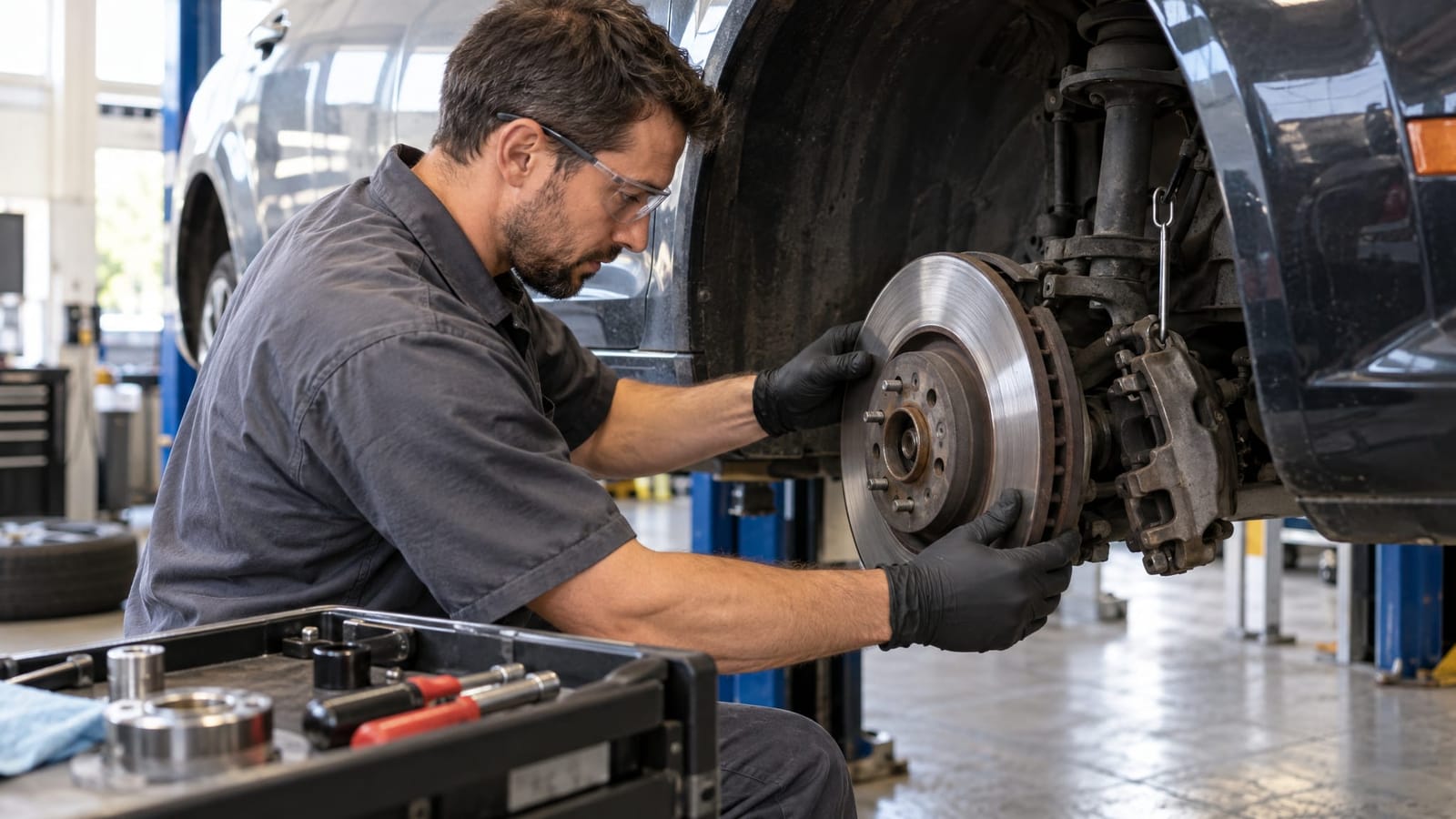
Resurfacing makes sense when the vehicle manufacturer permits it, the rotor has no damage that rules out machining, and enough material will remain afterward to meet the applicable service limits. Replacement is the better choice when machining would leave the rotor too thin, damage cannot be corrected, or the rotor’s design calls for replacement.
For a luxury or European vehicle, the decision depends on the specific brake system, not simply the badge. A Mercedes-Benz, BMW, Audi, Volvo, or Porsche can have different brake options within the same model line. Before choosing either repair, the inspection also needs to identify what is causing the vibration.
Resurfacing vs. Replacement: The Main Tradeoffs
Resurfacing uses a brake lathe to remove a small amount of metal and restore the rotor’s friction surfaces. Replacement installs a new rotor with the correct specifications for the vehicle.
| Decision factor | Resurfacing | Replacement |
|---|---|---|
| Existing rotor condition | Requires adequate remaining thickness and surface irregularities that machining can correct. | Appropriate for rotors worn beyond service limits or otherwise unsuitable for machining. |
| Material remaining | Removes material from an already-used rotor, leaving less allowance for future wear. | Starts with the replacement rotor’s full specified thickness. |
| Cost comparison | Includes machining labor and any related pad or hardware work. | Includes new parts and installation, with cost affected by rotor design. |
| Underlying brake problems | Does not correct a sticking caliper or mounting problem by itself. | Also requires correction of any contributing problem. |
Neither option is automatically the better value. The useful comparison is between two complete repairs, not just a machining charge and the price of a new rotor.
“Warped Rotors” Can Describe Several Different Problems
A pulsing brake pedal or steering-wheel shake during braking often gets described as rotor warping. The rotor is not necessarily bent. Several conditions can produce similar symptoms:
- Thickness variation: The rotor is slightly thicker in some areas than others, creating uneven braking as it rotates.
- Uneven pad-material transfer: An inconsistent layer of friction material on the rotor can create changing grip around its surface.
- Lateral runout: The rotor moves slightly from side to side as it turns. This can involve the rotor, its mounting surface, or the hub beneath it.
- Heat-related distortion: Excessive or uneven heating can affect rotor shape and surface condition.
Repeated heavy braking, extended downhill braking, or a caliper that does not release properly can contribute to excessive heat. Corrosion or debris between the rotor and hub can affect how the rotor sits. Machining or replacing a rotor without addressing a contributing problem can leave the original symptom unresolved.
Diagnosis Comes Before Choosing Either Repair
Because braking performance is safety-critical, the repair decision calls for a professional inspection of your vehicle rather than a judgment based on symptoms alone. At Rancho Express Lube in Rancho Cucamonga, our licensed auto repair shop has ASE-certified technicians who provide brake services and digital inspections.
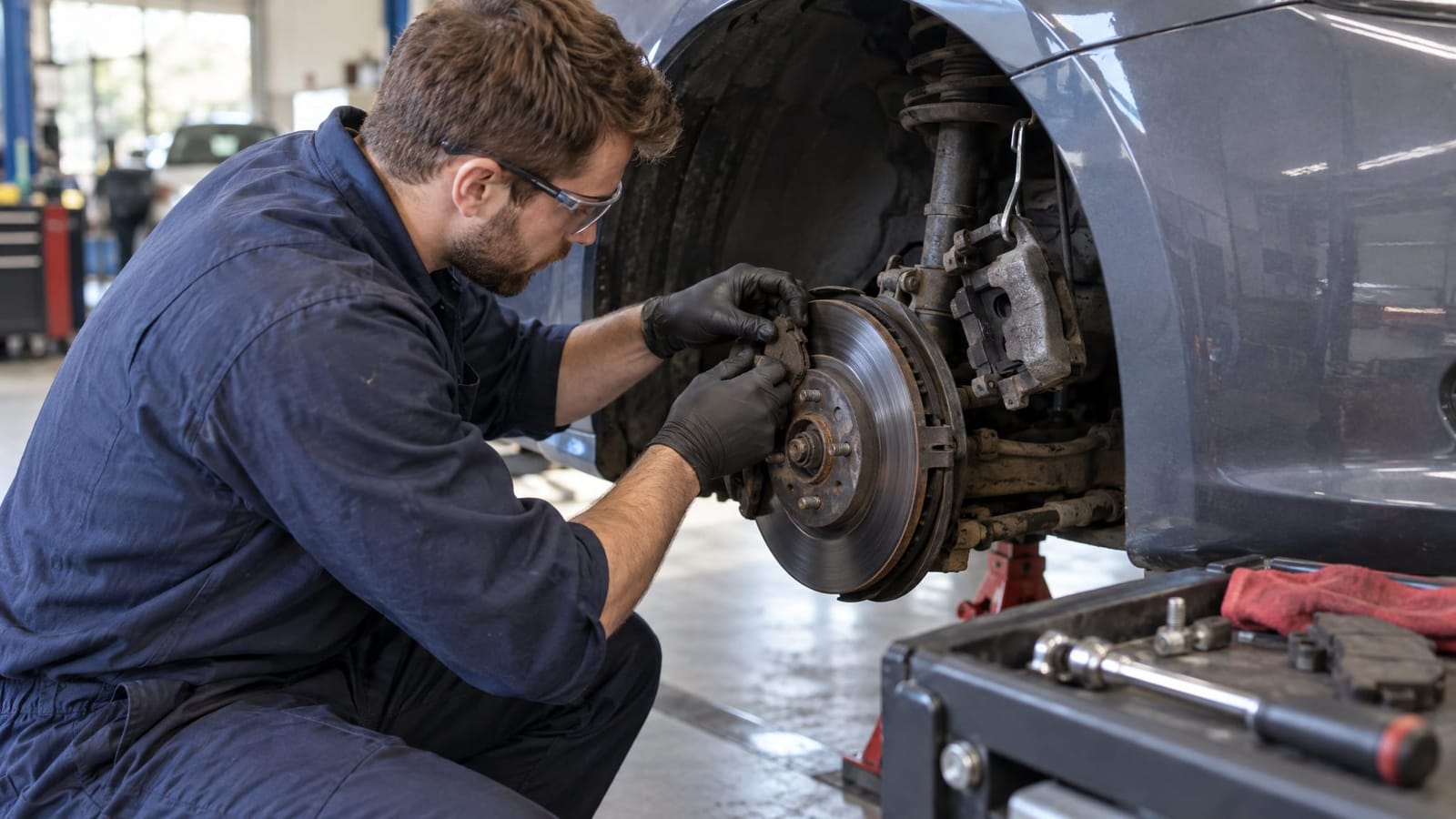
A useful evaluation connects what the driver feels with measurements and an inspection of the surrounding components:
- Symptom pattern: Does the vibration happen only while braking, or also while cruising? Vibration without brake application can point toward tires, wheels, or other components.
- Rotor thickness: Measurements at multiple points reveal remaining material and variation around the disc.
- Rotor runout: A dial indicator measures side-to-side movement as the rotor turns.
- Surface condition: Inspection identifies scoring, corrosion, cracking, and signs of excessive heat.
- Related components: Pad wear, caliper movement, mounting surfaces, and wheel-bearing condition help explain why the symptom developed.
Being above the minimum thickness before machining is not enough. The amount removed during resurfacing also counts. A discard limit identifies when a rotor is too thin to remain in service. Where the manufacturer specifies a separate refinishing limit, that limit guides the machining decision rather than the discard limit alone.
When Resurfacing Is a Practical Choice
Resurfacing can preserve an otherwise usable rotor when its surface needs correction, its construction permits machining, and enough thickness will remain after the work.
For example, a conventional iron rotor with light surface irregularity, no structural damage, and sufficient material to meet the applicable refinishing specification may be a good candidate. The caliper and mounting surfaces also need to be in proper condition, or included in the repair if they are contributing to the problem.
The finished surface matters as much as the thickness measurement. Machining needs to produce a suitable surface for the brake pads while keeping the rotor within the vehicle’s dimensional limits.
The compromise is less material for future wear
Resurfacing removes material that cannot be put back. A rotor that qualifies for machining today will have less material available for future wear than an equivalent new rotor. That difference matters when comparing the total repair cost, especially if machining and replacement estimates are close.
Pad condition also affects the decision. Unevenly worn, glazed, or contaminated pads can compromise the repair. Glazing is a hardened, smooth friction surface that can affect how the pads grip. Resurfacing is best evaluated as part of the complete brake job, including whether the pads remain suitable for use.
When Replacement Is the Right Call
Replacement is appropriate when machining cannot produce a serviceable rotor. Common reasons include:
- Insufficient thickness: The rotor is already at its discard limit, or the required cut would leave it below the permitted refinishing thickness.
- Deep scoring or corrosion: Correcting the affected surfaces would remove too much material.
- Structural cracking or significant heat damage: A smooth-looking machined surface would not resolve the underlying condition.
- Design restrictions: The manufacturer’s service procedure excludes conventional resurfacing for that rotor.
A rotor can look fairly smooth but measure close enough to its service limit that even a light cut is unsuitable. In that case, replacement is justified by the measurement, not by how dramatic the wear looks in a photograph.
New rotors still depend on sound installation and functioning brake components. A sticking caliper or an uneven mounting surface needs attention alongside the rotor work. Replacement alone is not a cure for every brake vibration.
Why Luxury and European Brakes Need a Model-Specific Decision
Rotor thickness and machining limits vary by brake package, not simply by whether a car is a luxury model. The useful questions are how much material remains, how much would need to be removed, and what the service instructions permit.
Overall size does not determine machining allowance
A large rotor can still have little material available for removal once wear is considered. Where the gap between its current thickness and the permitted refinishing limit is small, replacement becomes more practical than machining.
A decision based on another vehicle, even another car from the same brand, can be misleading. Brake packages, rotor dimensions, and service limits can differ. Just as BMW oil specifications and service intervals depend on the vehicle, brake service depends on the hardware actually fitted.
Rotor construction changes the options
Conventional iron, two-piece, and carbon-ceramic rotors cannot all be treated the same way. Carbon-ceramic brakes require material-specific inspection and service procedures rather than conventional iron-rotor machining.
Drilled holes or slots alone do not settle the resurfacing question, either. The applicable manufacturer’s instructions govern whether machining is permitted. The repair needs to match the brake package rather than treating every luxury-car rotor as either machinable or disposable.
How to Compare the Complete Repair
A clear estimate explains why resurfacing or replacement is being recommended. The most useful details are the measured rotor thickness, the applicable service limit, any relevant runout findings, and the condition of the pads and calipers.
When comparing estimates, these questions help distinguish the scope of work:
- Does each estimate include machining or replacement for the same axle?
- What rotor type is specified for the vehicle’s brake package?
- Are pads and related hardware included where needed?
- Does the estimate address any caliper or mounting issue contributing to the vibration?
- If resurfacing is an option, how much material will remain relative to the applicable limit?
If both repairs are technically suitable, the remaining wear allowance and total price difference become useful deciding factors. If only replacement meets the service requirements, a lower machining price does not make resurfacing an equivalent repair.
Our overview of brake service costs, parts, and expectations for German and European cars provides more context for comparing the scope of work.
The Right Call Comes Down to Condition and Specifications
Resurfacing is worthwhile when it produces a properly finished rotor within the manufacturer’s service limits. Replacement is appropriate when wear, damage, or rotor design rules out machining. Either recommendation is strongest when it explains the measurements, accounts for the vehicle’s brake package, and addresses the cause of the original vibration.