Preventative Maintenance for Older Luxury Cars: Protecting Your Investment in the Inland Empire
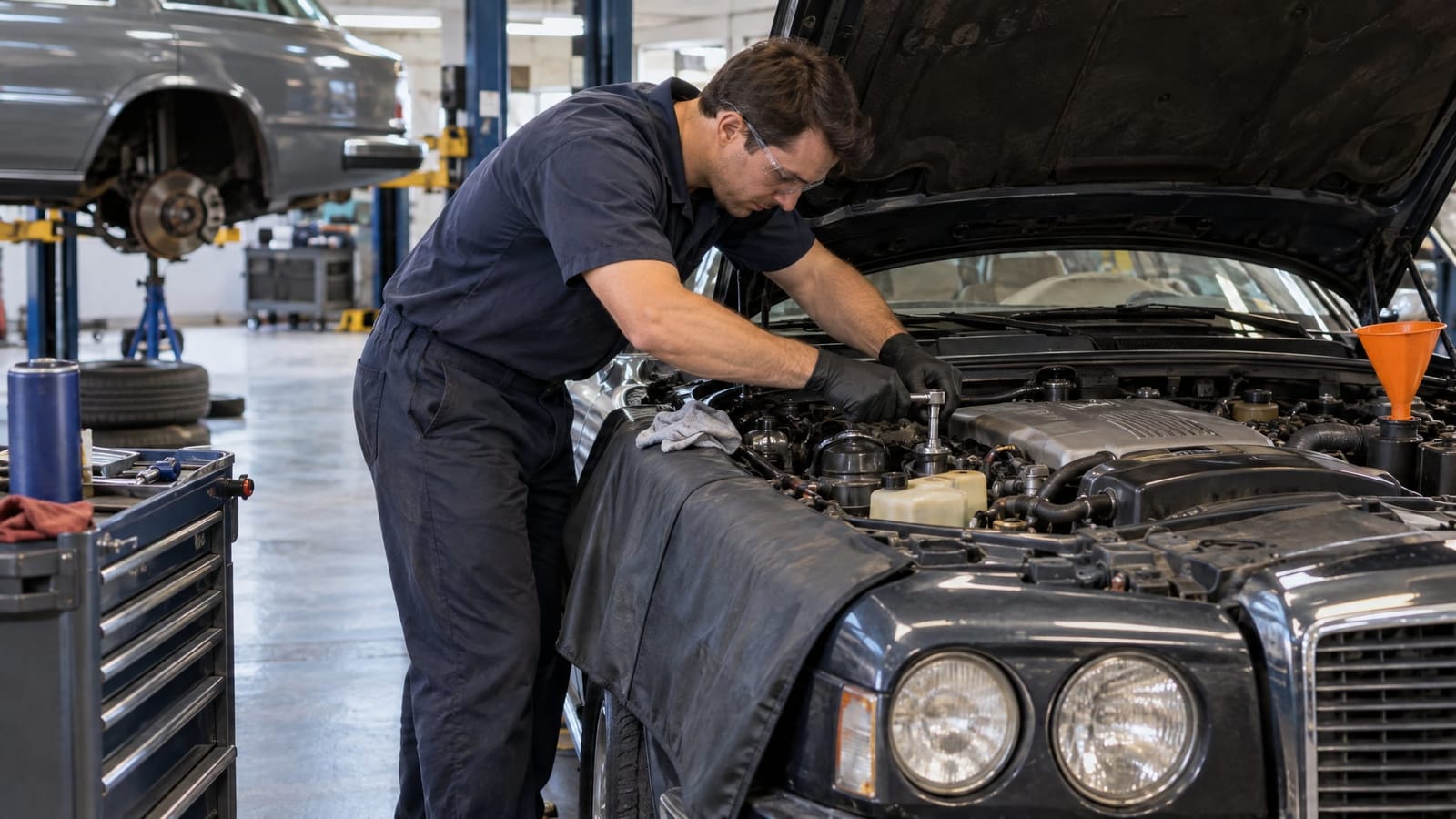
For older luxury cars, effective preventative maintenance starts with the correct engine oil, a vehicle-specific service schedule, and regular checks of the cooling system, battery, brakes, tires, and suspension. The goal is not to replace everything as the car ages. It is to keep required services current and identify developing problems before they become more involved repairs.
In Rancho Cucamonga and throughout the Inland Empire, summer heat adds demands on cooling systems and batteries. Meanwhile, low annual mileage does not stop rubber components, fluids, or tires from aging. These best practices help separate necessary maintenance from unnecessary extras, whether you drive a BMW, Mercedes-Benz, Audi, Volvo, Porsche, or another luxury vehicle.
1. Build a maintenance baseline from records, mileage, and age
Start with the maintenance schedule for your exact model, model year, and engine. A general “luxury car service package” may include items your vehicle does not need while missing something it does.
A useful maintenance record includes:
- The date and mileage of each service.
- The oil specification and other fluid types used.
- Filter, spark plug, belt, and battery replacement history.
- Inspection findings, including leaks or developing wear.
- The next service due by mileage or elapsed time.
For a lightly driven second car, calendar-based maintenance can arrive before the mileage limit. A daily commuter may reach mileage milestones first. Neither pattern makes the other part of the schedule irrelevant.
If records are incomplete, an inspection and the manufacturer's schedule provide a better starting point than replacing every fluid at once. Our 30,000-mile service checklist for European and luxury vehicles explains how to organize a mileage-based review without treating every model alike.
2. Match the oil to the engine, not just the car's age
An older engine still needs oil that meets its manufacturer's requirements. Age alone is not a reason to choose thicker oil, switch away from a required synthetic formulation, or add an oil treatment.
Check both viscosity and manufacturer specifications
Viscosity describes how oil flows at different temperatures. Manufacturer specifications address additional performance requirements. Two oils can share the same viscosity grade without meeting the same vehicle requirements, so “full synthetic” on the bottle is only part of the selection process.
This distinction matters when considering switching from synthetic to conventional oil in a Mercedes-Benz. The decision depends on the engine's requirements, not simply whether a less expensive oil is available.
Use the appropriate interval and watch oil level
Follow the vehicle's maintenance schedule and oil-service indicator instructions. Where the manufacturer defines a separate schedule for demanding use, compare those conditions with your actual driving. Frequent short trips, extended idling, and other operating patterns can affect maintenance needs.
For model-specific considerations, our explanation of BMW synthetic oil change requirements and intervals covers the relationship between oil selection and service timing.
Between services, check oil level using the vehicle's prescribed dipstick or electronic procedure. A recurring need for top-ups deserves attention even when the next oil change is not due. Oil color alone does not reliably establish its remaining service life.
3. Give the cooling system particular attention before hot weather
High outside temperatures make it harder for a vehicle to shed engine heat. A cooling system in good condition is designed to handle demanding temperatures, but aging hoses, seals, and other components can develop leaks or lose effectiveness.
A cooling-system inspection can include:
- Coolant level and evidence of leakage.
- Hose condition, connections, and the expansion tank.
- Radiator condition and cooling-fan operation when indicated.
- Coolant replacement history compared with the maintenance schedule.
Coolant selection matters because formulations are not interchangeable simply because their colors look similar. Replacement fluid needs to match the vehicle's requirements.
Repeatedly adding coolant is not a substitute for locating a leak. Likewise, cabin air conditioning and engine cooling are separate systems. Cold air from the dashboard does not establish that the engine's cooling system is healthy.
4. Test the battery instead of judging it only by whether the car starts
Heat can accelerate battery aging. An older battery may still start the vehicle while having less reserve capacity than it once did, making periodic testing more useful than waiting for a no-start condition.
Battery care also includes checking terminals and connections. Slow starting, repeated jump-starts, or recurring low-voltage messages call for diagnosis rather than an automatic battery replacement. Charging-system faults or an electrical draw while parked can produce similar symptoms.
Some luxury vehicles require a battery registration or reset procedure after replacement so the charging system can account for the new battery. The correct battery type and the model-specific replacement procedure matter as much as physical fit.
5. Inspect brakes, tires, and suspension as connected systems
A luxury car's ride quality and braking feel depend on more than one component. Worn suspension parts can contribute to irregular tire wear, while tire condition and inflation affect handling and ride comfort.
Base brake work on measurements and symptoms
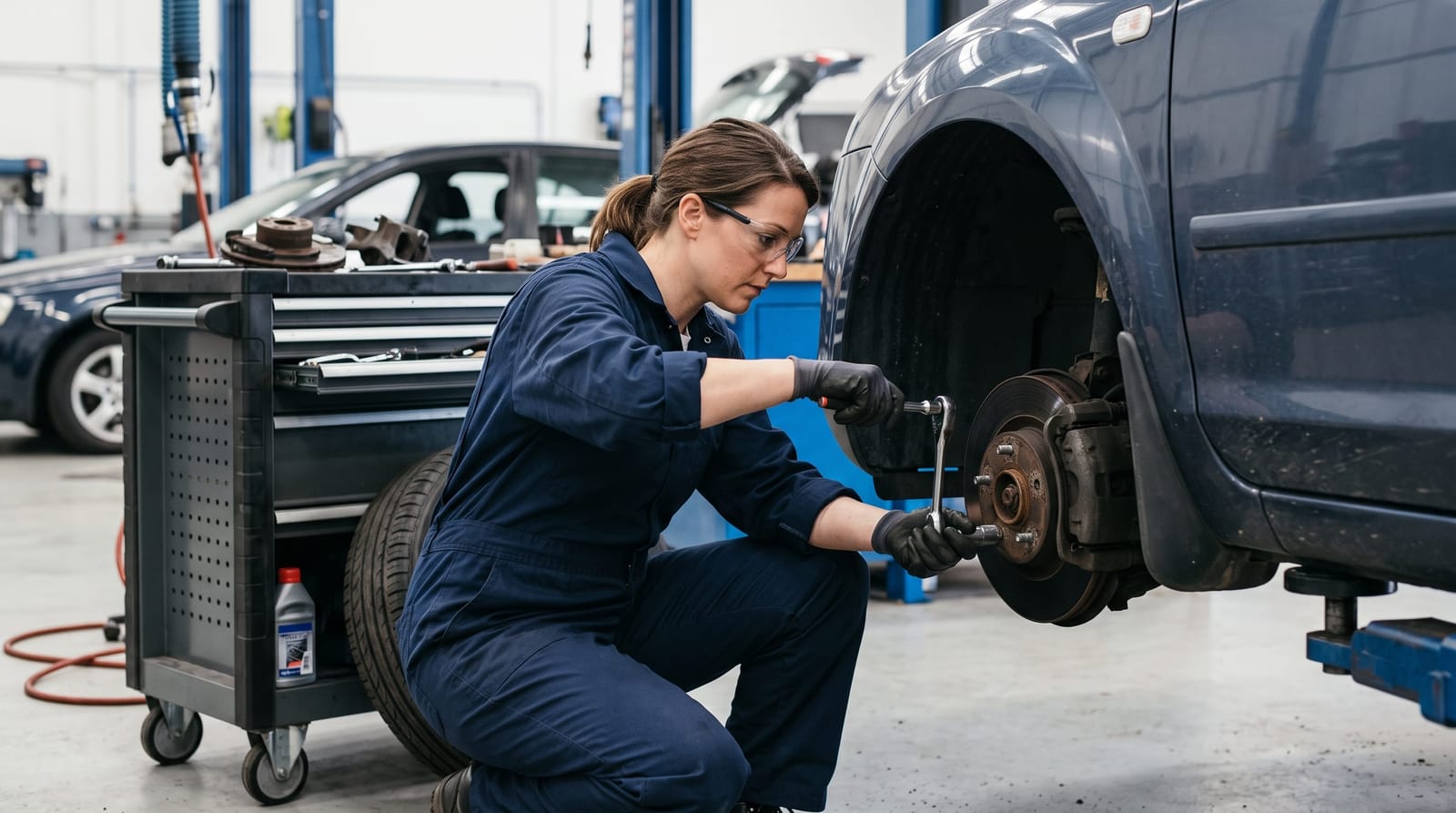
Brake inspections assess pad wear, rotor condition, leaks, and related hardware. Noise alone does not identify which part needs replacement, and pad wear can differ between wheels.
When comparing repair estimates, the useful distinction is what each includes: pads, rotors, wear sensors where fitted, hardware, and labor. Our overview of European brake service costs and parts explains why two estimates may cover different work.
A noticeable loss of braking effectiveness needs prompt professional assessment rather than waiting for a maintenance milestone. Our licensed auto repair team can evaluate braking concerns for your vehicle.
Look beyond remaining tire tread
Tire checks include inflation, cracking, uneven wear, and sidewall condition. The vehicle's recommended pressure is listed on its tire-information placard, commonly found in the driver's door opening. The pressure shown on the tire sidewall is not the vehicle's everyday inflation recommendation.
Uneven wear may point to alignment or suspension concerns. Clunks, persistent vibration, and a change in ride quality also deserve inspection rather than being dismissed as normal signs of age.
6. Treat fluid services as specific maintenance, not a universal flush package
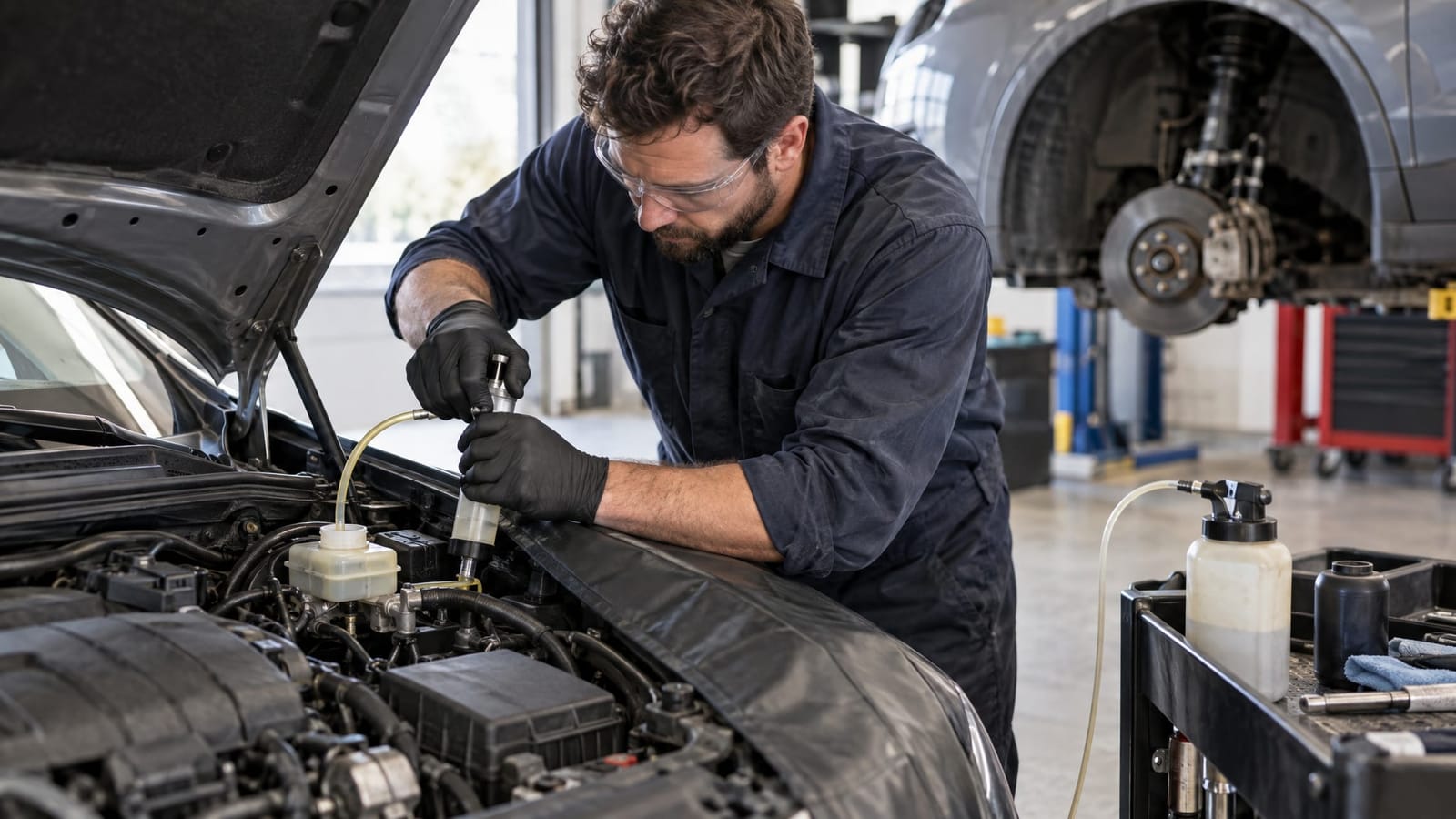
Transmission fluid, brake fluid, and drivetrain lubricants serve different purposes and follow different service requirements. Some vehicles also have hydraulic power-steering fluid; others use electric assistance. A useful maintenance plan identifies what your car actually has.
Brake fluid absorbs moisture over time, which is one reason manufacturers specify replacement schedules. Transmission service depends on the transmission design, required fluid, and maintenance instructions. Differential and transfer-case services may also apply, especially on all-wheel-drive vehicles.
For an older car with shifting concerns, diagnosis comes before assuming a fluid service will solve the problem. Fresh fluid cannot repair worn internal components or correct every electrical or control-system fault.
The right question is not “Does this car need every fluid flushed?” It is “Which service is due, what procedure applies, and is there a symptom that needs diagnosis first?”
7. Separate filter maintenance from air-conditioning repairs
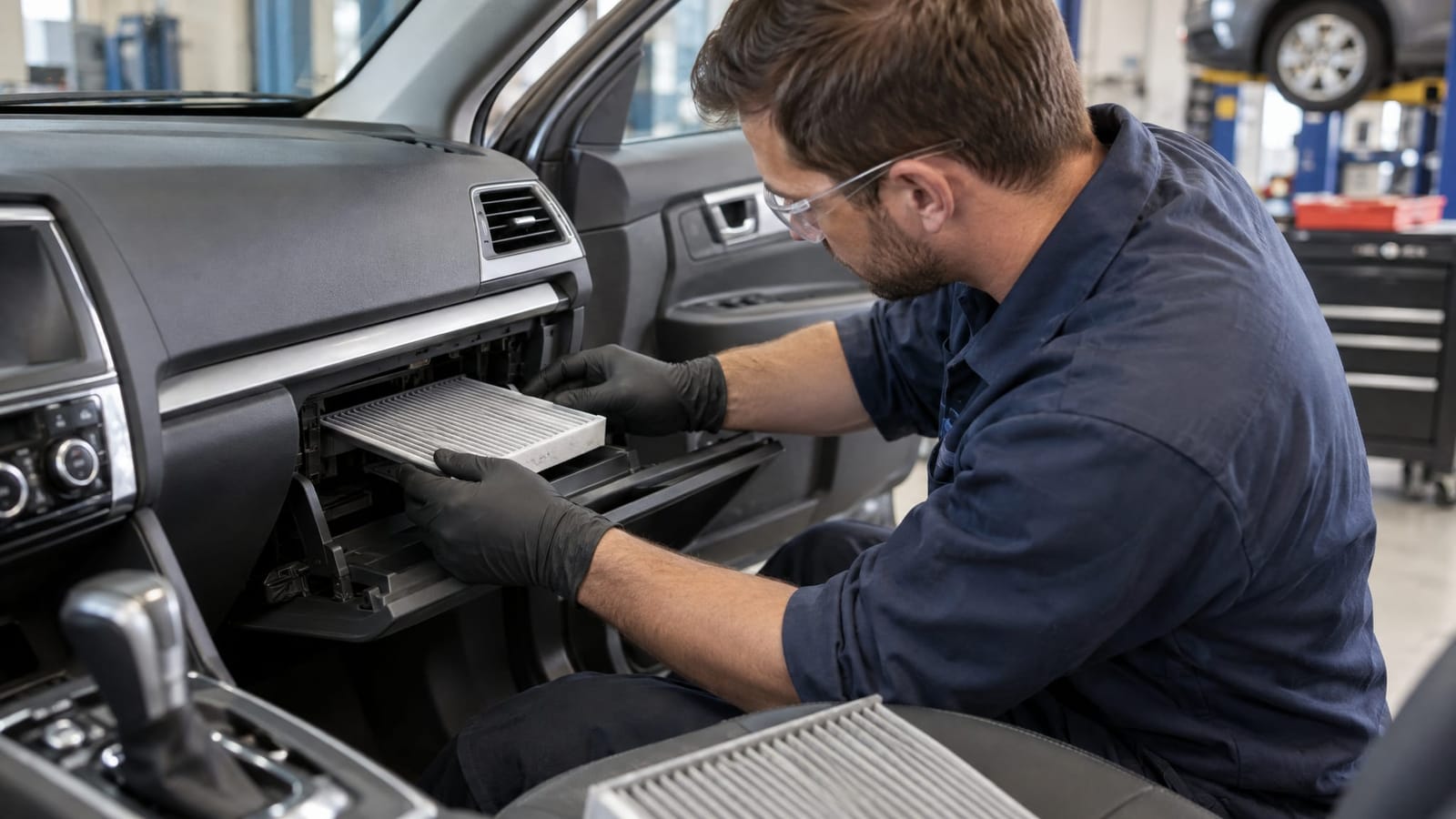
The engine air filter and cabin air filter perform different jobs. The engine filter keeps airborne debris out of the engine's intake. The cabin filter captures particles from air entering the passenger compartment.
Dusty driving conditions can load filters more quickly, so inspection helps determine whether replacement is needed before a scheduled interval. There is no single replacement mileage that fits every filter, vehicle, and driving environment.
Our cabin air filter replacement schedule explains the factors that affect service timing. Reduced airflow through the vents can be related to a restricted filter, but warm air is not automatically a filter problem.
Likewise, an air-conditioning recharge does not repair a refrigerant leak. When cooling performance declines, distinguishing an airflow issue from a refrigerant or component problem avoids replacing parts that do not address the cause.
8. Prioritize findings instead of approving work based on age alone
A practical maintenance plan separates work into clear categories:
- Current concerns: Symptoms or inspection findings that need diagnosis or repair, particularly those affecting braking, steering, or temperature control.
- Scheduled maintenance: Services due according to the manufacturer's time or mileage requirements.
- Items to monitor: Developing wear that can be documented and reassessed without assuming immediate replacement is necessary.
At Rancho Express Lube in Rancho Cucamonga, we offer European oil changes and preventative maintenance, with ASE-certified technicians and digital inspections. We service all makes and models, including older luxury vehicles.
Routine oil changes and scheduled fluid services generally involve less labor and fewer parts than major engine or transmission repairs. Their value comes from maintaining the systems they serve and addressing service needs consistently, not from guaranteeing that repairs will never happen.
For example, an inspection that identifies a small fluid leak creates an opportunity to locate its cause and plan the appropriate repair. Simply topping up the fluid indefinitely leaves the underlying problem in place.
Keep the plan specific to the car
The most useful maintenance plan combines the factory schedule, documented service history, and current inspection findings. That approach keeps attention on what an older luxury car needs now, what is coming next, and what can reasonably remain under observation.