Do I Need New Valve Stems When Installing New Tires?
When it's time to replace your tires, most of the attention naturally goes to choosing the right tires for your vehicle. But there's a small, easy-to-overlook component that plays a big role in keeping those new tires properly inflated: the valve stem. If you've ever wondered whether you need new valve stems when you replace valve stems new tires installation requires, you're not alone, and the answer is worth understanding before your next tire service. Here's a straightforward look at what valve stems do, when they should be replaced, and why most reputable shops include them as part of a complete tire installation.
What Is a Valve Stem and What Does It Do?
A valve stem is the small rubber or metal fitting that sticks out from the rim of your wheel. It's the access point for adding or releasing air from your tire. Inside the stem is a tiny valve core: a spring-loaded pin that opens when you press a pump against it and seals shut when you don't. Without a functioning valve stem, you can't inflate your tire, and if the stem is compromised, air will slowly (or quickly) escape even when the tire itself is in perfect condition.
Most passenger vehicles use standard rubber snap-in valve stems. These are inexpensive, effective, and widely available. Some trucks, SUVs, and performance vehicles use metal clamp-in valve stems, which are more durable and better suited for higher-load or off-road applications. Vehicles equipped with a Tire Pressure Monitoring System (TPMS) use specialized sensor-integrated valve stems that are more complex and more expensive to replace.
Understanding which type you have is the first step toward knowing what to expect during a tire service appointment.
Why Valve Stems Wear Out Over Time
Rubber valve stems are durable, but not indefinitely. The rubber used in standard valve stems is designed to handle temperature swings, road vibration, and constant low-level pressure, but it does degrade over time. On average, a rubber valve stem has a practical service life of about 5 to 6 years, though this can vary depending on climate and driving conditions. In areas with intense heat or cold, degradation can happen faster.
As rubber ages, it loses flexibility and begins to dry out. Small cracks can develop at the base of the stem where it meets the wheel rim, or along the body of the stem itself. Even a hairline crack is enough to allow a slow air leak. In some cases, the valve core inside the stem can also corrode or wear out, causing pressure loss that's easy to mistake for a puncture.
The frustrating part is that valve stem wear isn't always visible during a casual inspection. The cracks may be tiny, or they may be hidden at the base of the stem inside the rim. That's one reason why waiting until a problem appears isn't the most practical approach, by then, you may already have a flat tire on your hands.
Should You Replace Valve Stems When You Get New Tires?
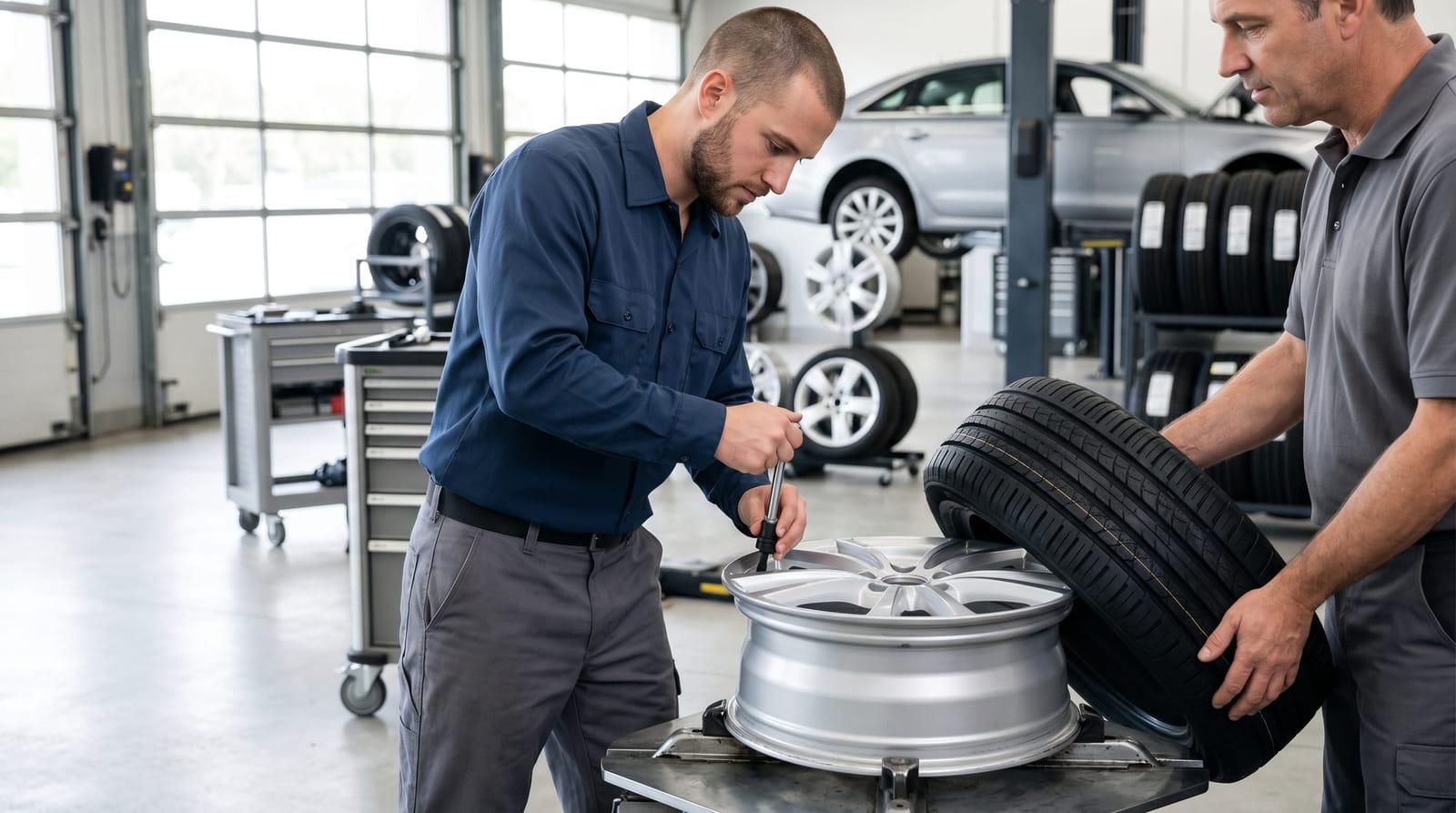
Yes, and this is the recommendation most tire professionals follow. When you go in for new tires, replacing the valve stems at the same time is a straightforward, low-cost step that makes good practical sense. Standard rubber valve stems typically cost just a few dollars each, and installation takes only a minute or two per wheel when the tire is already being dismounted. The labor is essentially already built into the tire installation process.
Think of it this way: if you're investing $400 to $800 or more in a set of four new tires, spending an extra $10 to $20 on new valve stems is a reasonable way to protect that investment. A failed valve stem that causes a slow leak or a flat can shorten tire life, affect fuel efficiency, and create an unnecessary safety concern, all for want of a $3 rubber part.
Most reputable shops include valve stem replacement as a standard part of the tire installation process, often at no extra charge for basic rubber stems. When you book a tire service installation in Claremont or anywhere else, it's worth confirming whether new valve stems are included so you know exactly what you're getting.
TPMS Valve Stems: A Special Consideration
If your vehicle has a Tire Pressure Monitoring System, which has been required on all new U.S. passenger vehicles since 2008: your valve stems are part of a more complex sensor assembly. TPMS sensors transmit real-time tire pressure data to your dashboard, and they are attached directly to the valve stem on the inside of the wheel.
TPMS valve stems still have rubber seals and components that age just like standard stems, but replacing them is a different conversation. A complete TPMS sensor can cost between $50 and $150 per wheel, and not every tire change requires full sensor replacement. However, the rubber grommets, caps, and seals around TPMS valve stems should be inspected and replaced as needed: typically every time tires are serviced. Ignoring worn TPMS seals is one of the more common causes of slow air leaks on newer vehicles.
If you're unsure whether your vehicle has TPMS, look for a tire pressure warning light symbol on your dashboard: it typically looks like a cross-section of a tire with an exclamation point. You can also ask your service advisor before your appointment.
Metal Valve Stems: When Are They Worth Considering?
For vehicles that see off-road use, heavy hauling, or particularly demanding driving conditions, metal clamp-in valve stems offer a more durable alternative to rubber snap-in stems. Metal stems, typically made from brass or aluminum, don't dry out or crack the way rubber does. They can also handle higher internal pressures and are less susceptible to damage from debris, curbs, or the heat generated by heavy braking.
Metal stems do cost more than rubber ones, and they require a slightly different installation process, but for the right application they're a worthwhile upgrade. If you frequently air down your tires for off-road trails and then air back up, or if you tow heavy loads regularly, ask your service advisor whether metal stems make sense for your vehicle and driving habits.
For everyday commuter vehicles and family cars, standard rubber stems, replaced at every tire change, are perfectly adequate and the most cost-effective choice.
Frequently Asked Questions
How long do rubber valve stems last?
Most rubber valve stems hold up well for approximately 5 to 6 years under normal conditions. Heat, UV exposure, and road chemicals can accelerate wear. Since a typical set of tires is replaced every 4 to 6 years for most drivers, replacing the valve stems at the same time as the tires lines up naturally with the rubber's expected service life.
Can a bad valve stem cause a flat tire?
Yes. A cracked or failing valve stem can cause anything from a slow, gradual pressure leak to a more sudden loss of air. Slow leaks from valve stems are sometimes mistaken for a tire puncture. If you find yourself adding air to the same tire repeatedly without finding a nail or screw, the valve stem is worth inspecting.
Do I need to replace TPMS sensors every time I get new tires?
Not necessarily. Full TPMS sensor replacement depends on the age and condition of your existing sensors. However, the rubber seals and service hardware around TPMS valve stems should be inspected and refreshed at each tire service. Your technician can check sensor battery life, most TPMS batteries last 5 to 10 years, and advise whether full sensor replacement is warranted.
Is valve stem replacement included in tire installation at most shops?
For standard rubber valve stems, yes: most reputable tire shops include replacement as part of the tire installation service, often without an additional charge. It's still worth asking upfront so you know exactly what's covered. TPMS sensor service is typically quoted separately given the higher cost of the components involved.
The Bottom Line on Valve Stems and New Tires
Replacing your valve stems when you install new tires is a simple, low-cost step that makes practical sense for almost every vehicle owner. Standard rubber stems degrade over time and can cause air leaks that undermine an otherwise perfectly good set of tires. For just a few dollars per wheel, new stems give you a fresh, reliable seal that matches the lifespan of your new tires. If you're thinking about when to replace tires signs or you're already familiar with tire mounting vs balancing, adding valve stem replacement to your tire service checklist is the kind of small detail that helps your tires perform their best from day one. When in doubt, ask your service advisor: it's a quick conversation that can save you a headache down the road.