Full Service Oil Change vs. Basic Oil Change: What's the Real Difference?

When it comes to maintaining your vehicle, not all oil changes are created equal. If you've ever wondered why some shops charge significantly more for a "full service oil change" compared to a basic option, you're asking exactly the right question. Understanding the difference between these two service levels is a core part of knowing how to care for your vehicle long-term: something we cover in depth in our Full Service Oil Change Guide: What's Included, How Often, and Why It Matters for Your Vehicle. In this post, we break down what each service actually includes, where the real value lies, and why drivers of quality vehicles in Rancho Cucamonga deserve more than the bare minimum.
What Is a Basic Oil Change?
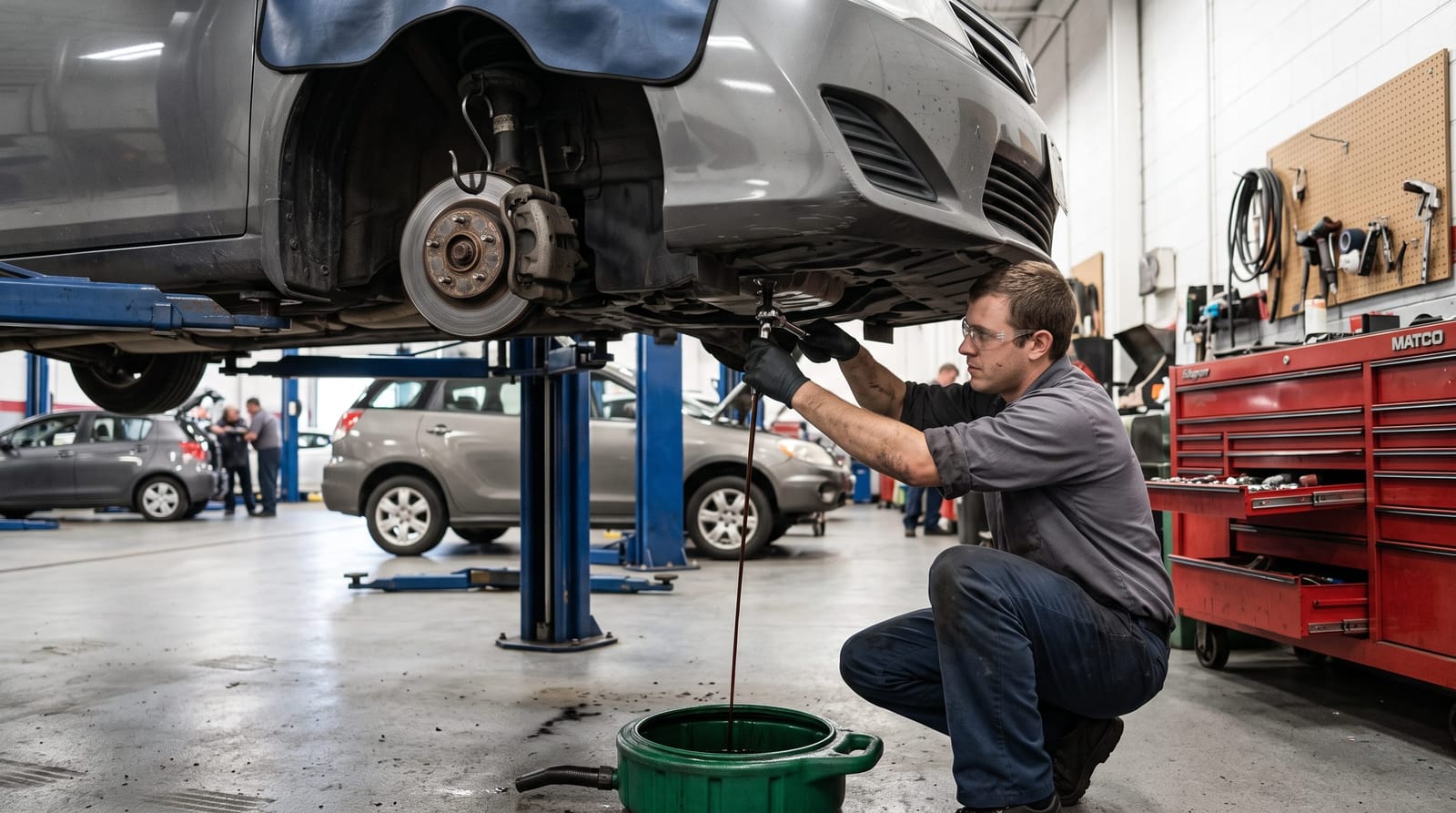
A basic oil change is exactly what it sounds like: a focused, single-task service. A technician drains the old oil from your engine, replaces the oil filter, and refills the engine with fresh oil. That's the full scope of work. The process typically takes 15 to 30 minutes and addresses one specific maintenance need: replacing degraded engine oil.
What's Included in a Basic Oil Change
- Drain and remove old engine oil
- Replace the oil filter
- Refill engine with new oil (typically conventional/mineral-based)
Basic oil changes often use conventional, mineral-based oil refined from crude oil. This type of oil has been the standard for decades and works adequately for older vehicles with simpler engine designs. However, many modern vehicles, especially luxury and European models, are engineered to run on full synthetic oil, which offers better performance across a wider range of temperatures and longer change intervals.
The basic oil change does its job in a narrow sense. But it leaves a significant gap: while your oil gets fresh, everything else in your vehicle goes unchecked. Fluid levels, tire pressure, filters, belts, and dozens of other components that affect safety and reliability are simply not part of the picture.
What Is a Full Service Oil Change?
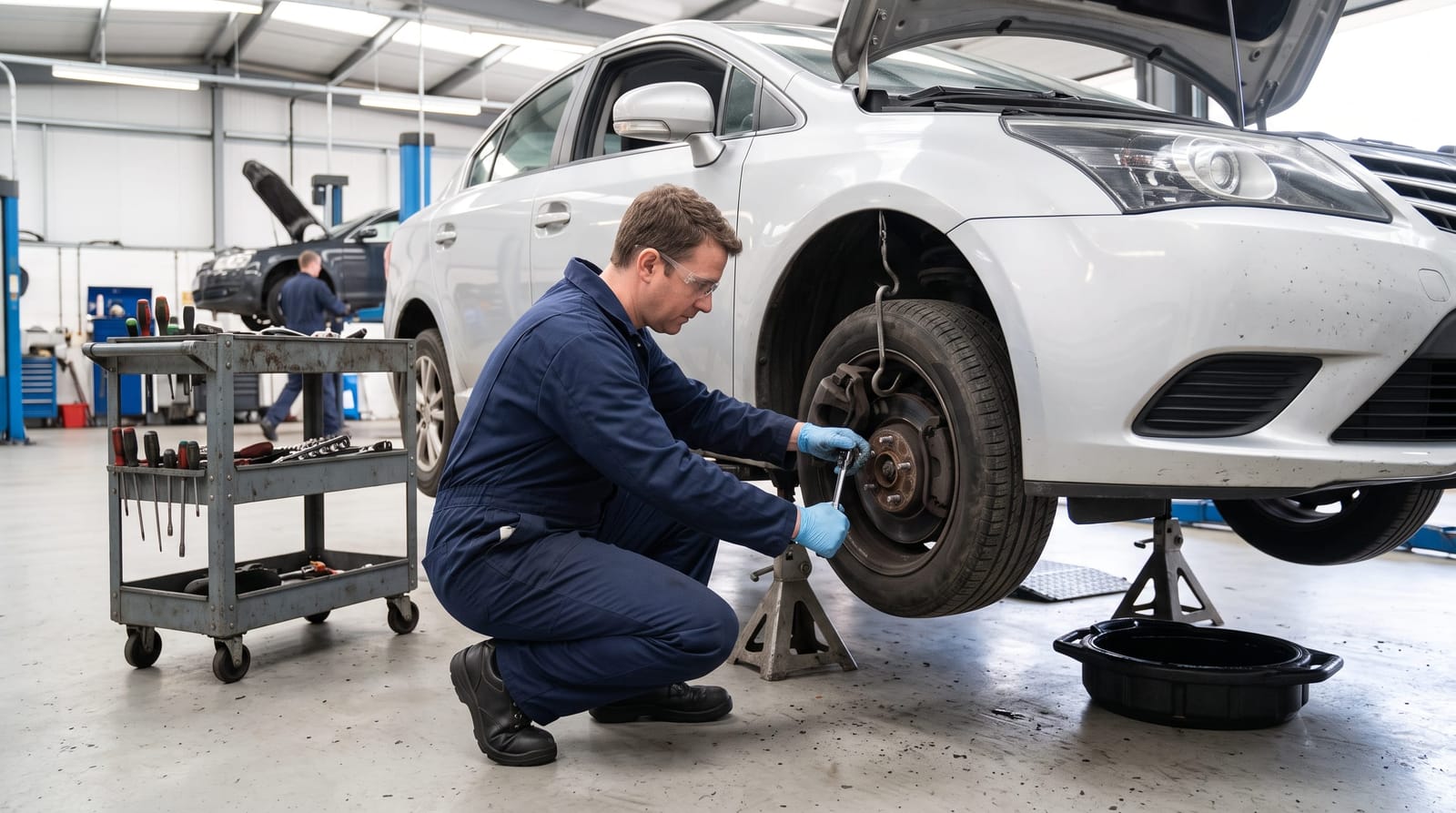
A full service oil change expands on the basics to deliver a more comprehensive maintenance visit. In addition to replacing your oil and filter, a full service appointment includes a series of inspections, fluid checks, and small adjustments designed to catch minor issues before they become bigger problems.
What's Included in a Full Service Oil Change
- Oil drain, filter replacement, and fresh oil fill (often full synthetic)
- Top-off of key fluids (windshield washer fluid, coolant, power steering fluid, brake fluid, and transmission fluid where accessible)
- Tire pressure check and adjustment to manufacturer specifications
- Air filter inspection
- Cabin air filter inspection
- Visual inspection of belts and hoses
- Wiper blade check
- Battery condition check
- Digital multi-point vehicle inspection with documented results
At Rancho Express Lube, the full service oil change is performed by ASE-certified technicians who follow a standardized inspection process on every visit. Customers receive digital inspection results they can review and reference later: a level of transparency that goes well beyond what you'd get at a quick-turnaround basic oil change location. You can also learn more about the vehicle fluids replacement schedule and what gets checked during a full service visit.
Full Service Oil Change vs. Basic: A Side-by-Side Comparison
To make the difference concrete, here's how the two service levels stack up across the areas that matter most to vehicle owners:
Oil Quality
Basic oil changes typically default to conventional oil unless you request otherwise. Full service oil changes, particularly those marketed toward modern vehicles, commonly use full synthetic oil, which flows better in cold starts, handles heat more effectively, and typically lasts longer between changes. Many manufacturers now require full synthetic oil, especially for European and luxury vehicles. Using the wrong oil type can void manufacturer recommendations and affect how your engine operates over time.
Inspection Depth
A basic oil change involves no inspection. A full service oil change includes a systematic, multi-point inspection covering fluid levels, tire condition, belts, filters, lights, and more. Studies suggest that routine multi-point inspections catch an average of 2 to 3 maintenance issues per vehicle that the owner was unaware of: small things that, left unchecked, can develop into more time-consuming repairs down the road.
Fluid Top-Offs
Engine oil isn't the only fluid your vehicle depends on. Brake fluid, coolant, power steering fluid, and windshield washer fluid all play important roles in daily driving. A full service oil change checks and tops off these fluids to the correct levels. A basic oil change doesn't touch any of them.
Tire Pressure
The U.S. Department of Transportation estimates that approximately 1 in 4 vehicles on the road at any given time has at least one significantly underinflated tire. Proper tire pressure affects handling, braking distance, tire wear, and fuel efficiency. A full service oil change includes a tire pressure check and adjustment. A basic oil change does not.
Time Investment
A basic oil change can be completed in as little as 15 minutes. A full service oil change typically takes 30 to 45 minutes at a well-run shop, though this varies by vehicle and findings. That's a reasonable amount of additional time for a meaningfully more thorough result. If you're curious about what drives the timeline, our breakdown of how long a full service oil change actually takes walks through the process step by step.
Why the Additional Steps Actually Matter
It's easy to look at the list of extras included in a full service oil change and wonder whether they're really necessary. The honest answer is: yes, for most vehicles, especially those driven regularly in Southern California conditions, they are.
Rancho Cucamonga sees significant temperature swings throughout the year, with summer highs that routinely exceed 100°F. Heat accelerates fluid breakdown, puts stress on belts and hoses, and causes tire pressure to fluctuate. A basic oil change addresses none of these factors. A full service oil change gives your technician the opportunity to catch and correct minor issues while your vehicle is already on the lift.
Consider a few real-world examples:
- Low coolant discovered during a full service visit can be topped off on the spot. Undetected, low coolant can contribute to engine overheating: one of the more costly issues a vehicle owner can face.
- An underinflated tire caught during a pressure check takes seconds to correct. Left unaddressed, it wears unevenly and may need replacement months earlier than expected. A new tire can cost $150 to $300 or more depending on the vehicle.
- A dirty air filter flagged during the inspection can be replaced affordably during the same visit. A clogged air filter affects engine breathing and overall efficiency.
None of these require alarm or urgency, but all of them are better handled proactively than reactively.
Who Should Choose a Full Service Oil Change?
The straightforward answer: most drivers. But the case for full service is especially strong for certain vehicle owners.
Luxury and European Vehicle Owners
Vehicles like BMW, Mercedes-Benz, Audi, Lexus, Porsche, and Volvo are engineered with tighter tolerances and more sophisticated systems than the average economy car. They almost universally require full synthetic oil: many with specific viscosity ratings and manufacturer approvals. These vehicles also benefit most from the kind of detailed inspection included in a full service appointment, because small deviations from spec can have a larger impact on performance and longevity.
Drivers Who Use Their Vehicle Daily
If your vehicle is your primary form of transportation, commuting, family errands, road trips, keeping it in consistent, reliable condition isn't optional. A full service oil change provides a routine checkpoint that keeps small issues from quietly growing between visits.
Anyone Who Wants Peace of Mind
There's a practical comfort in knowing that a trained technician has looked over your vehicle from multiple angles and everything checked out. That's part of what you're paying for with a full service oil change, not just fresh oil, but documented confirmation that your vehicle is in good shape.
Related Details Worth Exploring
If you're evaluating whether a full service oil change is the right choice for your vehicle, a few related topics are worth understanding in more depth. Many full service packages include added value beyond the inspection itself, for example, at Rancho Express Lube, synthetic oil change appointments come with a complimentary car wash. Our post on the free car wash with synthetic oil change explains exactly what's included and how the process works.
You may also want to understand the broader picture of fluid maintenance across your vehicle's service intervals: the vehicle fluids replacement schedule provides a clear breakdown of what gets checked, what gets topped off, and what has its own independent replacement timeline separate from your oil change.
The Bottom Line
A full service oil change vs. basic oil change isn't really a close comparison when you look at what's actually included. The basic option handles one task. The full service option handles that task and gives your vehicle a structured checkup at the same time: covering fluids, filters, tires, and a documented inspection that keeps you informed about your vehicle's condition.
For drivers in Rancho Cucamonga who depend on their vehicle and want to protect their investment, the full service oil change delivers better long-term value. If you're ready to experience the difference, Rancho Express Lube is here to help, with ASE-certified technicians, digital inspection reports, and service you can trust. Schedule your full service oil change in Rancho Cucamonga today.