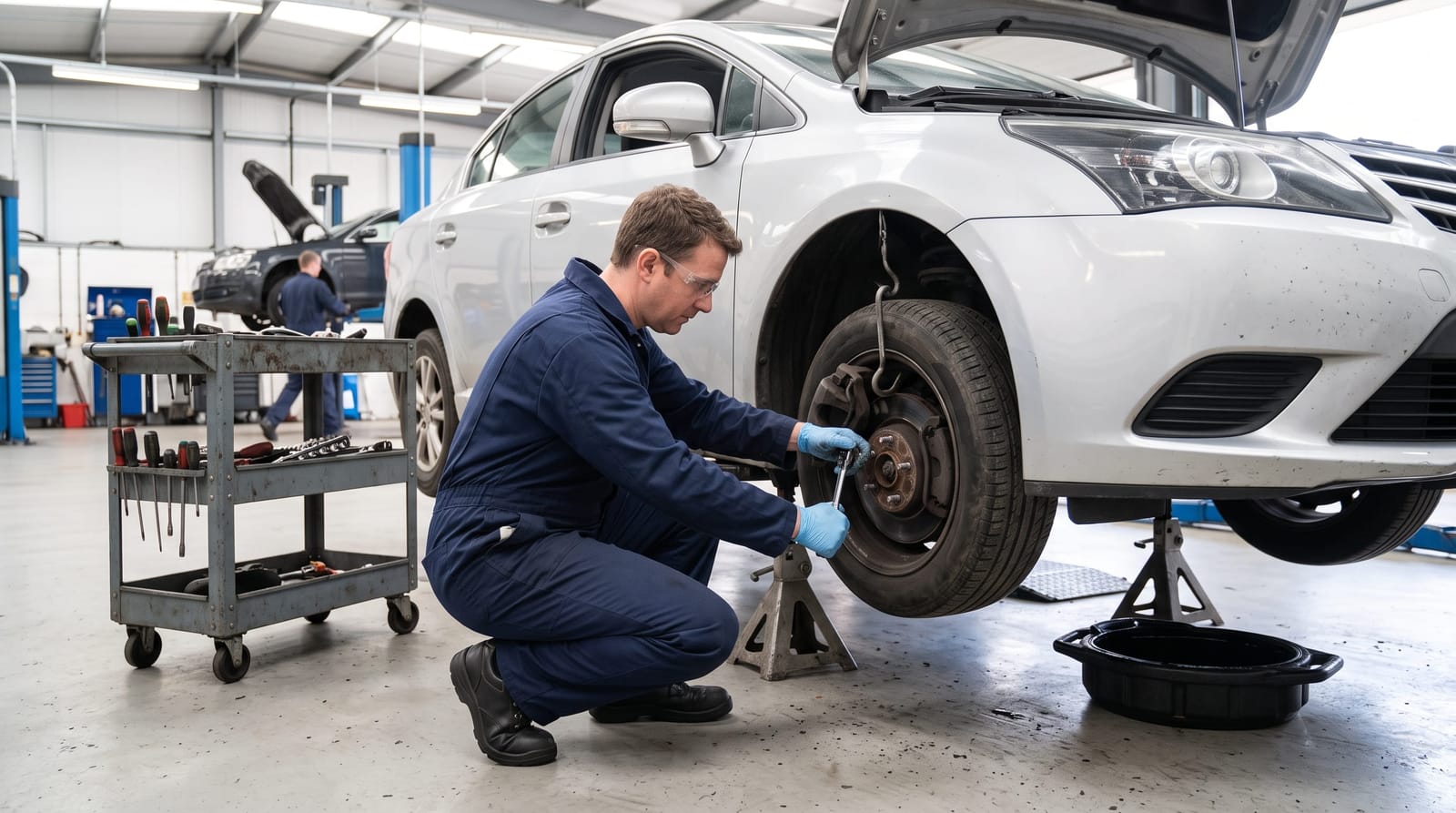
How Often Should You Change Synthetic Oil in a BMW, Mercedes, or European Vehicle?

If you drive a BMW, Mercedes-Benz, Audi, or another European vehicle, you already know these cars are engineered to a higher standard. That same high standard applies to how you maintain them: starting with oil changes. One of the most common questions European car owners ask is: how often should you change synthetic oil in a BMW or similar European vehicle? The answer isn't always as simple as the sticker in your windshield suggests. Between manufacturer recommendations, real-world driving conditions in Southern California, and a few persistent myths, it can be hard to know what's actually right for your car. This guide breaks it all down clearly, so you can make confident, informed decisions about one of the most important parts of your vehicle's routine care.
Step 1: Understand What the Manufacturer Actually Recommends
Before you can make a smart decision about oil change intervals, it helps to know what BMW, Mercedes-Benz, and Audi actually recommend from the factory.
BMW Oil Change Intervals
BMW recommends changing synthetic oil every 7,500 to 10,000 miles, or every two years: whichever comes first. Some newer models come equipped with BMW's Condition Based Service (CBS) system, which uses onboard sensors to monitor oil quality and alert you when a change is needed. While this technology is genuinely useful, it's designed around idealized driving conditions that don't always reflect everyday life in the Inland Empire.
Mercedes-Benz Oil Change Intervals
Mercedes-Benz typically recommends oil changes every 10,000 miles, though their ASSYST Plus service indicator system can sometimes push that interval to 15,000 miles under what the system considers "optimal" conditions. Many independent mechanics and automotive experts consider 10,000 miles a more practical ceiling for real-world use.
Audi Oil Change Intervals
Audi's recommended interval is similar: generally every 10,000 miles or once a year. Like BMW, Audi uses an oil life monitoring system that factors in driving style, mileage, and time elapsed since the last service.
These manufacturer recommendations are a starting point, not a hard rule for every driver. They're established under controlled testing conditions, not the stop-and-go traffic on the 210 Freeway in July.
Step 2: Factor In Southern California Driving Conditions
Here's something the owner's manual doesn't always account for: where and how you drive matters just as much as how far you drive.
Southern California presents a specific set of challenges for engine oil. The Inland Empire is known for consistently high summer temperatures, and under-hood heat in stop-and-go traffic can push engine oil well beyond its designed operating range, even high-quality synthetic oil. Add in highway miles on the 15 or 60 freeways, occasional mountain driving toward Big Bear, and the dusty, dry air common to the region, and your oil is working significantly harder than it would in a mild, low-traffic environment.
What "Severe" Driving Conditions Really Means
Most manufacturers define "severe" driving conditions as a combination of factors that includes:
- Frequent short trips (under 10 miles), where the engine doesn't fully warm up
- Extended idling or heavy traffic driving
- Extreme heat or cold weather exposure
- Dusty or dirty road environments
- Towing or carrying heavy loads regularly
If your daily commute includes any of these, and for most Inland Empire drivers, it does, your vehicle is likely operating under severe conditions. That means sticking closer to the lower end of your manufacturer's recommended range, typically around 5,000 to 7,500 miles between changes, is a more practical approach than waiting for the maximum interval.
Step 3: Separate Myth from Reality About Extended Oil Change Intervals
One of the biggest misconceptions about European vehicles is that because they use full synthetic oil and sophisticated engine management systems, they can go 15,000 miles or more between oil changes without any concern. This idea is worth examining carefully.
The "Longer Is Always Better" Myth
Synthetic oil does last longer than conventional oil, and it's absolutely the right choice for European engines. But "longer-lasting" doesn't mean "indefinite." Over time and mileage, even the best synthetic oil accumulates combustion byproducts, loses some of its viscosity stability, and becomes less effective at protecting your engine's internal components. Waiting too long between changes can lead to the kind of slow, gradual wear that doesn't show up immediately but compounds over time.
The Role of Oil Life Monitors
BMW's CBS system and Mercedes' ASSYST Plus are genuinely useful tools, but they're algorithms, not sensors that physically measure oil condition. They estimate oil life based on driving data, and they tend to lean toward longer intervals under default settings. Treating these systems as the final word on when to change your oil isn't always the safest approach, especially if your driving patterns fall outside the "normal" range they're calibrated for.
The Warranty Consideration
Some drivers worry that changing oil more frequently than the manufacturer's maximum interval will void their warranty. That's generally not how it works: more frequent maintenance doesn't void warranties. In fact, keeping thorough service records of your oil changes is a protective measure, not a risk. For specific warranty questions related to your vehicle, it's always a good idea to review your owner's documentation or speak with a qualified professional who knows your exact situation.
Step 4: Use the Right Oil: Not Just Any Synthetic
Not all synthetic oil is created equal, and European vehicles are particular about what goes into them. Using the wrong specification can actually cause problems, even if you're changing the oil on time.
BMW's Oil Specification
Most BMW models require oil that meets the BMW Longlife-01 or Longlife-04 specification. BMW recommends SAE 5W-30 full synthetic motor oil for the majority of their lineup. Using a generic oil that doesn't meet this spec, even if it's labeled "synthetic", may not provide the correct protection for BMW's engine tolerances.
Mercedes-Benz and Audi Requirements
Mercedes-Benz specifies oils that meet MB 229.5 or MB 229.51 standards depending on the model and engine type. Audi requires oils meeting VW 502.00 or 504.00 specifications for most of their gasoline engines. These aren't marketing labels: they reflect real differences in oil chemistry that matter for how your engine performs and how long it lasts.
When choosing where to get your oil changed, making sure the shop stocks oil that meets your vehicle's exact OEM specification is just as important as the interval itself.
Step 5: Choose a Qualified Shop: And Know What to Look For
A common assumption is that dealerships are the only qualified option for European vehicle maintenance. That's simply not the case. In fact, many European car owners in the Inland Empire find that a well-equipped independent shop offers a more efficient, affordable, and equally professional experience for routine services like oil changes.
Why ASE-Certified Technicians Matter
ASE (Automotive Service Excellence) certification means a technician has passed rigorous testing across specific areas of vehicle service and maintenance. For European oil changes, this matters because using the correct oil specification, torquing the drain plug properly, resetting the service indicator correctly, and performing a thorough inspection all require real knowledge, not just a quick swap.
At Rancho Express Lube, ASE-certified technicians handle European oil changes with attention to the details that protect your investment. A digital multi-point inspection is included with every service, so you leave with a clear picture of your vehicle's overall condition, not just a fresh oil change.
Dealership vs. Local Shop: What's the Real Difference?
Dealerships have their place, especially for warranty repairs and complex diagnostics. But for routine oil changes on a BMW, Mercedes, or Audi, a qualified local shop typically offers faster turnaround, transparent pricing, and a more personal experience, without the long wait times and upsell pressure that dealership service departments are known for. For a closer look at what separates a thorough service from a basic one, the comparison between a full service oil change vs basic is worth reviewing before your next visit.
Related Topics Worth Exploring
If you're a European vehicle owner looking to stay ahead of your maintenance, a few related topics connect directly to what you've just read:
- How to read your vehicle's oil life monitor: Understanding what your BMW or Mercedes dashboard is actually telling you, and when to trust it versus when to come in early.
- Synthetic oil grades explained: What the numbers on your oil container mean, and why the right viscosity for your specific engine matters in warm climates like Southern California.
- What a digital vehicle inspection covers: How a multi-point inspection at each oil change gives you a complete picture of your vehicle's health between major service intervals.
Conclusion: The Right Interval Is the One That Fits Your Actual Driving Life
If you've been wondering how often to change synthetic oil in a BMW, Mercedes, or Audi, the honest answer is: it depends on more than just the number on your service reminder. Manufacturer guidelines are a useful starting point, but Southern California heat, stop-and-go commutes, and your specific driving habits all play a real role in determining the best interval for your vehicle.
The safest approach for most Inland Empire drivers is staying within the 5,000 to 7,500 mile range, using the correct OEM-specified synthetic oil, and having a qualified technician inspect your vehicle at every service. That's exactly what Rancho Express Lube provides: professional European oil changes performed by ASE-certified technicians, with a free car wash included.
Ready to schedule your next synthetic oil change? Stop by Rancho Express Lube in Rancho Cucamonga and let our team take care of your European vehicle the right way.