What Does a Digital Vehicle Inspection Include and Why It Beats a Manual Inspection

When you bring your car in for a full service oil change in Rancho Cucamonga, you expect more than a quick fluid swap. You expect someone to actually look at your vehicle, and tell you what they found. That's where the inspection process makes all the difference. Most drivers don't realize there's a significant gap between a traditional manual inspection and a modern digital vehicle inspection. One gives you a verbal summary or a paper checklist. The other gives you photos, video, and a detailed digital report you can review at home. This guide compares both approaches side by side, explains what a digital multi-point inspection actually covers, and shows why transparency during routine maintenance isn't just a nice-to-have: it's how you protect your investment over the long haul.
What Is a Manual Vehicle Inspection: and Where Does It Fall Short?
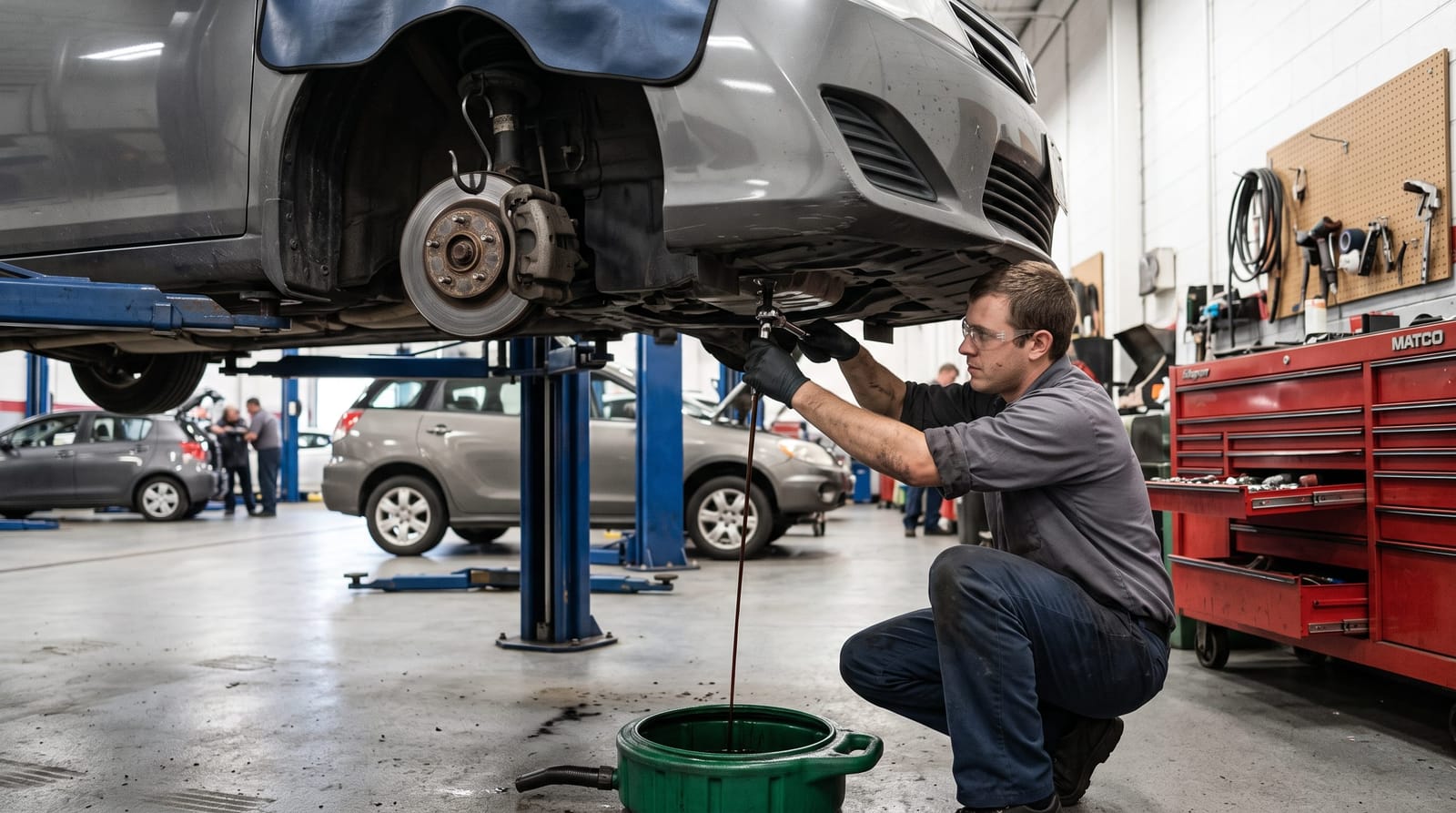
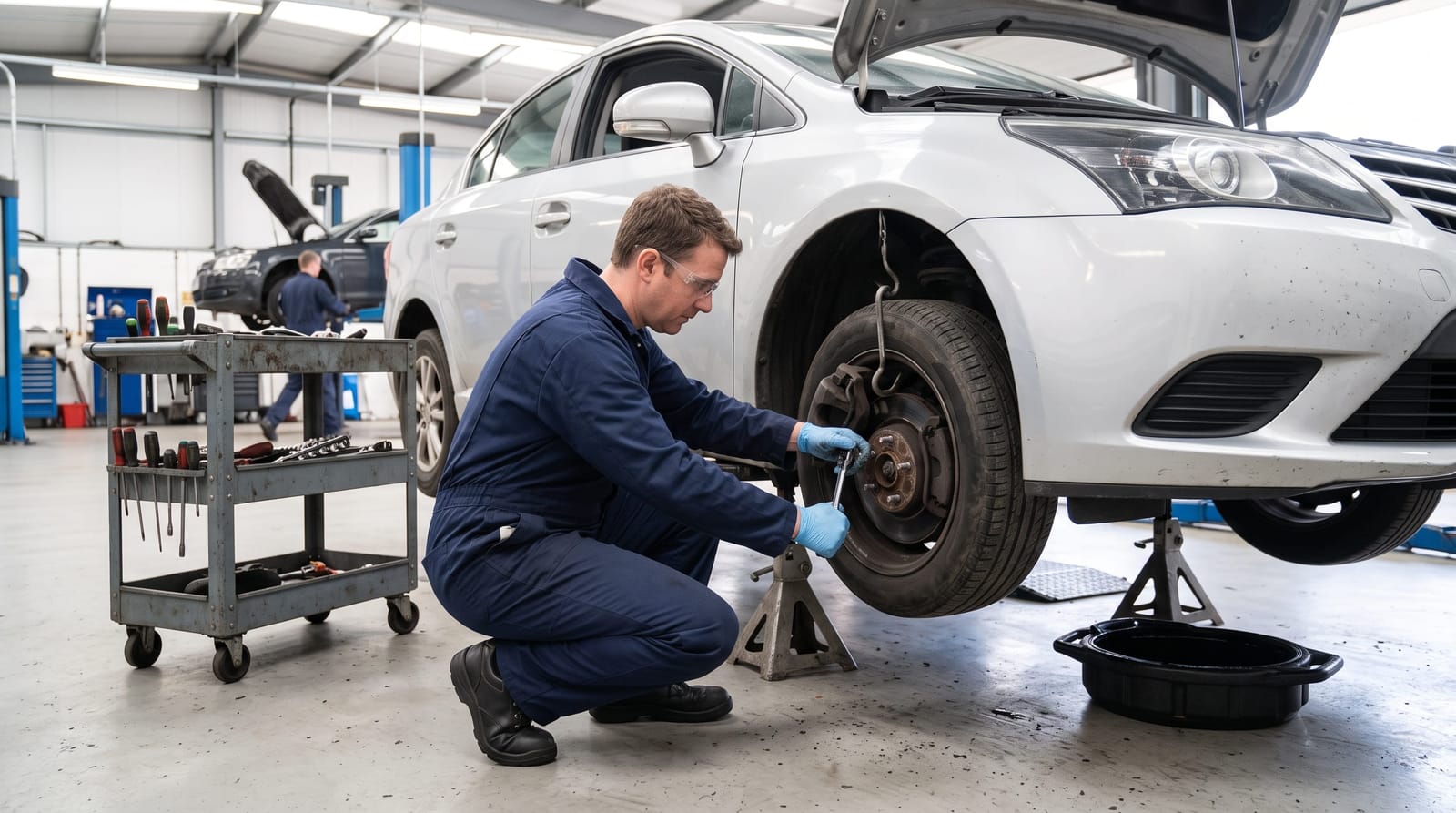
A manual inspection is exactly what it sounds like. A technician walks around your vehicle, checks various components, and records notes on a paper form or clipboard. In some shops, that information is communicated verbally, "your air filter looks a little dirty", without any supporting documentation for the customer to review later.
While experienced technicians can absolutely catch real issues through a manual process, the method itself has some structural limitations that matter to customers:
- No visual evidence. If a technician says your brake pads are worn, you have no way to see that for yourself unless you crawl under the vehicle. You're relying entirely on their word, which, even with a trustworthy shop, can feel uncomfortable.
- Inconsistent documentation. Paper forms vary by technician. One inspector might note a slow tire leak; another might skip it as "minor." There's no standardized structure to ensure every item gets checked every time.
- No record for the customer. Once you drive away, the paper form stays at the shop, or gets discarded. You have no reference point if an issue comes up weeks later.
- Memory-dependent reporting. According to industry research, manual inspections are often reconstructed from memory after the fact, increasing the chance that details get lost or misremembered.
None of this means a manual inspection is worthless. But in an era when consumers expect transparency, especially for higher-end vehicles, the traditional clipboard approach leaves a lot of trust on the table.
What Is a Digital Vehicle Inspection: and What Does It Actually Cover?
A digital multi-point inspection uses a structured, tablet-based process that guides technicians through every inspection point on your vehicle, and captures photo or video evidence at each step. The completed report is sent directly to the customer, usually via text or email, before any conversation about recommendations takes place.
What Gets Inspected During a Digital Multi-Point Inspection?
While the specific checklist varies by shop, a thorough digital inspection typically covers the following systems and components. For a complete breakdown of every item, see our detailed resource on what does a multi-point inspection include.
- Fluids: Engine oil condition and level, coolant, brake fluid, power steering fluid, windshield washer fluid, and transmission fluid where accessible
- Filters: Engine air filter and cabin air filter condition
- Tires: Tread depth (measured in 32nds of an inch), sidewall condition, and inflation pressure on all four tires
- Brakes: Pad thickness front and rear, rotor condition, and brake hardware
- Lights: Headlights, taillights, brake lights, turn signals, and interior warning indicators
- Battery: Voltage output, cold cranking amps, and terminal condition
- Belts and hoses: Serpentine belt wear, radiator hoses, and coolant lines
- Suspension and steering: Visible wear on shocks, struts, tie rods, and CV boots
- Wiper blades: Blade condition and streak testing
Each of these items is rated using a color-coded system, typically green (good), yellow (monitor), or red (attention needed), so customers can understand the overall health of their vehicle at a glance without needing automotive expertise.
Digital Inspection vs. Manual Inspection: A Side-by-Side Comparison
Here's where the difference becomes clear. When you compare the two approaches directly, digital inspections aren't just "newer": they fundamentally change the relationship between the shop and the customer.
Transparency and Evidence
With a manual inspection, the customer hears about findings secondhand. With a digital inspection, photos and short videos accompany every flagged item. If a technician notes that your cabin air filter is clogged, you see an actual image of that filter, not just a recommendation. Studies in quality control research show that visual evidence reduces misunderstandings and increases customer confidence in inspection results by creating an objective, shared point of reference.
Consistency and Accuracy
Digital inspection platforms use pre-built templates that guide technicians through the same checklist in the same order, every single time. This structured format reduces the risk of skipped items: a common problem with paper forms where technicians work from memory or incomplete templates. Research from field inspection specialists at Fulcrum indicates that manual processes lead to significantly higher rates of missing data compared to digital alternatives, with some organizations reporting error reductions of up to 50% after switching to digital inspection workflows.
Speed and Efficiency
Counterintuitively, digital inspections are often faster than manual ones in practice. Because the technician documents findings in real time (rather than reconstructing them from notes later), there's no rework step. The report is complete when the inspection is done. Some shops report that digital inspection times run 20-30% faster than paper-based equivalents, which matters when you're already in the middle of a quick oil change service.
Customer Control and Decision-Making
When a digital report lands in your inbox or via text, you're in the driver's seat. You can review the findings yourself, share them with a spouse or family member, or compare recommendations against your vehicle's owner manual, all before agreeing to any additional service. This kind of informed decision-making is almost impossible with a verbal or paper-only process. It also naturally reduces any anxiety about feeling pressured, because you're evaluating the evidence rather than relying solely on someone else's opinion.
Why Transparency During an Oil Change Actually Protects Your Vehicle
Oil changes happen frequently: every few months for most drivers. That regularity makes them one of the best opportunities to catch small issues before they turn into bigger ones. A low brake pad reading spotted during a synthetic oil change in October is far less disruptive than discovering worn brakes in January when you need to stop quickly on a wet road.
This is especially relevant for luxury and European vehicles, BMWs, Mercedes, Audis, Volvos, where manufacturer maintenance intervals tend to be longer and the cost of deferred maintenance tends to be higher. Understanding your vehicle's condition between dealer visits gives you better control over both your schedule and your budget. For European vehicle owners specifically, knowing how often to change synthetic oil in a BMW, Mercedes, or European vehicle is just one piece of the puzzle: knowing the overall health of the vehicle is the other.
A digital inspection makes this kind of proactive maintenance genuinely easier. You receive a written, photographic record of your vehicle's condition at that point in time. Over multiple visits, you can see trends, a battery reading that's declining, brake pads that are halfway through their life, and plan accordingly. That's not just good service. That's how good shops build long-term relationships with their customers.
The Role of Technician Expertise in a Digital Inspection
It's worth noting that a digital inspection tool is only as good as the technician using it. The photos, the measurements, the ratings: those all require trained eyes and practiced hands to be meaningful. A digital form filled in carelessly is no better than a paper one completed the same way.
This is why the qualifications of the people performing your inspection matter as much as the technology they're using. ASE-certified technicians, professionals who have passed standardized testing through the National Institute for Automotive Service Excellence, are trained to identify the kinds of wear patterns and early warning signs that a general visual sweep might miss. If you want to understand how that certification specifically affects the quality of your oil change and inspection experience, the details behind ASE certification and what it means for your vehicle's service are worth reviewing.
The combination of certified technicians and a structured digital inspection platform isn't a gimmick: it's how a shop demonstrates accountability at every point of contact.
How Rancho Express Lube Uses Digital Inspections During Your Oil Change
At Rancho Express Lube, every full service oil change in Rancho Cucamonga includes a digital multi-point inspection performed by ASE-certified technicians. The process is built into the service, not offered as an add-on. When your vehicle is in the bay, the inspection runs alongside the oil change, so by the time your new oil and filter are in place, your digital report is ready.
That report is sent directly to your phone or email. It uses a color-coded rating system so you can understand what you're looking at quickly, and it includes photos of any flagged items. If everything looks good, you'll see that too, because not every inspection turns up a concern, and you deserve to know when your vehicle is genuinely in great shape.
This approach reflects what separates a full service oil change vs. a basic oil change: it's not just about the oil. It's about what happens around the oil change that tells you whether your vehicle is being looked after properly. Combined with the complimentary car wash included with every visit, the goal is straightforward: make the experience worth your time and give you information you can actually use.
Related Details Worth Exploring
If you found this comparison helpful, these related topics go deeper into specific aspects of the inspection and service process:
- For a complete item-by-item breakdown of every component checked, visit our guide on what a multi-point inspection includes.
- To understand how technician certification affects inspection quality and service accuracy, read about why ASE-certified technicians make a difference for your oil change.
The Bottom Line on Digital vs. Manual Inspections
A manual inspection depends heavily on individual effort and offers little documentation for the customer. A digital inspection brings consistency, photo evidence, and a shareable report that puts the customer in control of their own maintenance decisions. The difference between hearing "your air filter looks worn" and seeing a photograph of that filter is the difference between taking someone's word for it and having actual information to act on.
If you're due for an oil change and want to know exactly where your vehicle stands, not just a quick verbal rundown, stop by Rancho Express Lube in Rancho Cucamonga. Our digital inspection is included with every full service oil change, performed by ASE-certified technicians, and sent straight to your phone before you leave the lot. No guesswork, no pressure, just a clear picture of your vehicle's health.