How Much Does Brake Service Cost for German Cars?
If you own a BMW, Mercedes-Benz, Audi, or Volkswagen, you already know that keeping a German vehicle running well requires a bit more attention, and often a bit more budget, than some other makes. Brake service is one area where that difference really shows up. Whether you're due for a routine inspection or you're hearing something that tells you it's time to get your brakes checked, understanding what to expect cost-wise can help you plan ahead and avoid surprises. Here's a clear, honest breakdown of what brake service typically costs for German cars and why.
Why Brake Service Costs More for German Vehicles
German automakers like BMW, Mercedes-Benz, Audi, and Volkswagen are engineered to tight tolerances with performance and safety as top priorities. That's a big part of what makes them enjoyable to drive, but it also means the components they use are more specialized than what you'd find on a typical domestic vehicle.
A few factors drive up the cost of brake service on these cars:
- OEM and OEM-equivalent parts cost more. German vehicles often require brake pads, rotors, and sensors that meet specific manufacturer standards. These parts are simply more expensive to produce and source than generic alternatives.
- Brake wear sensors are standard. Many German cars come equipped with electronic brake wear sensors that alert you when pads are getting low. These sensors need to be replaced along with the pads, adding a small but real cost to each service.
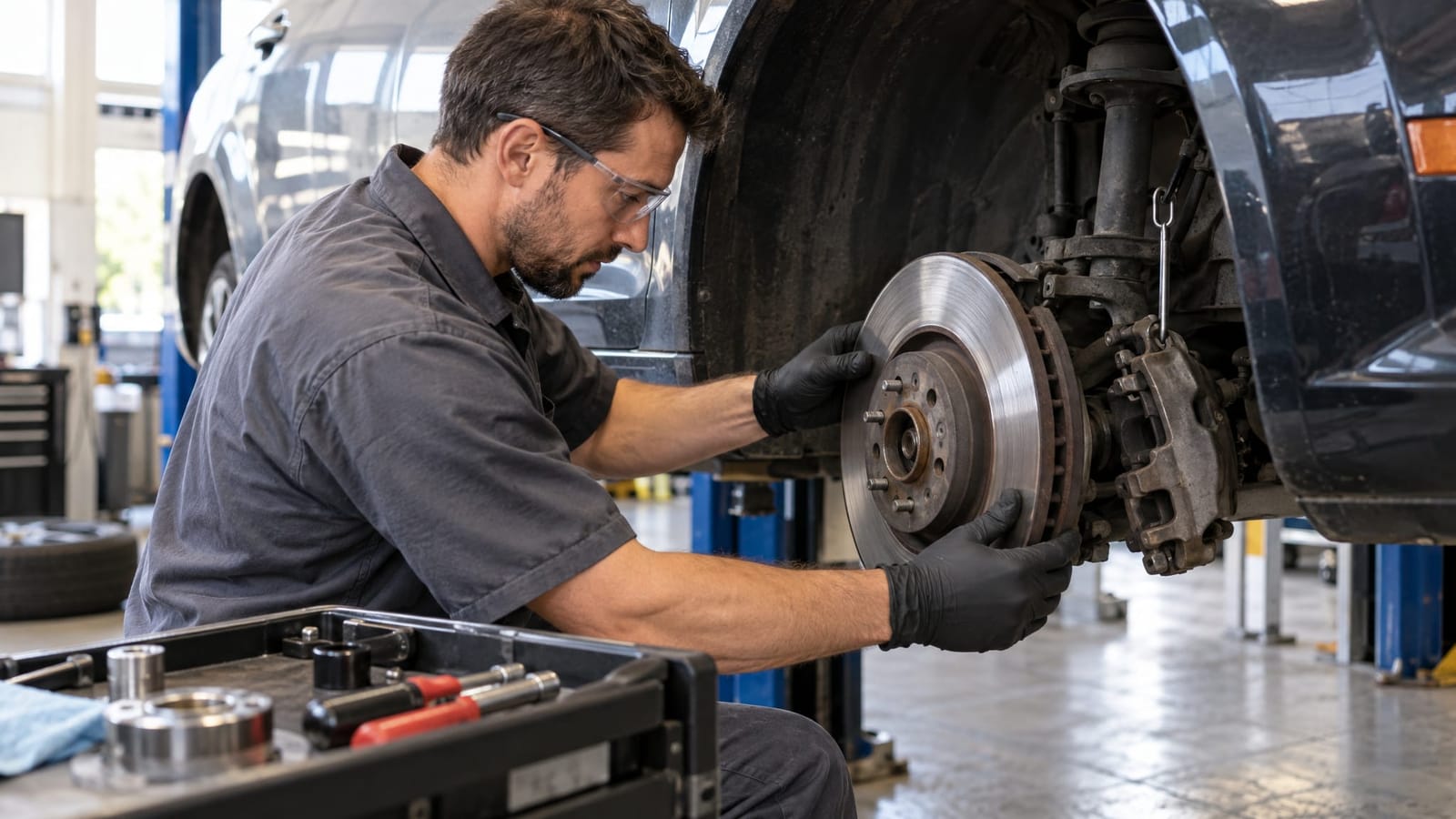
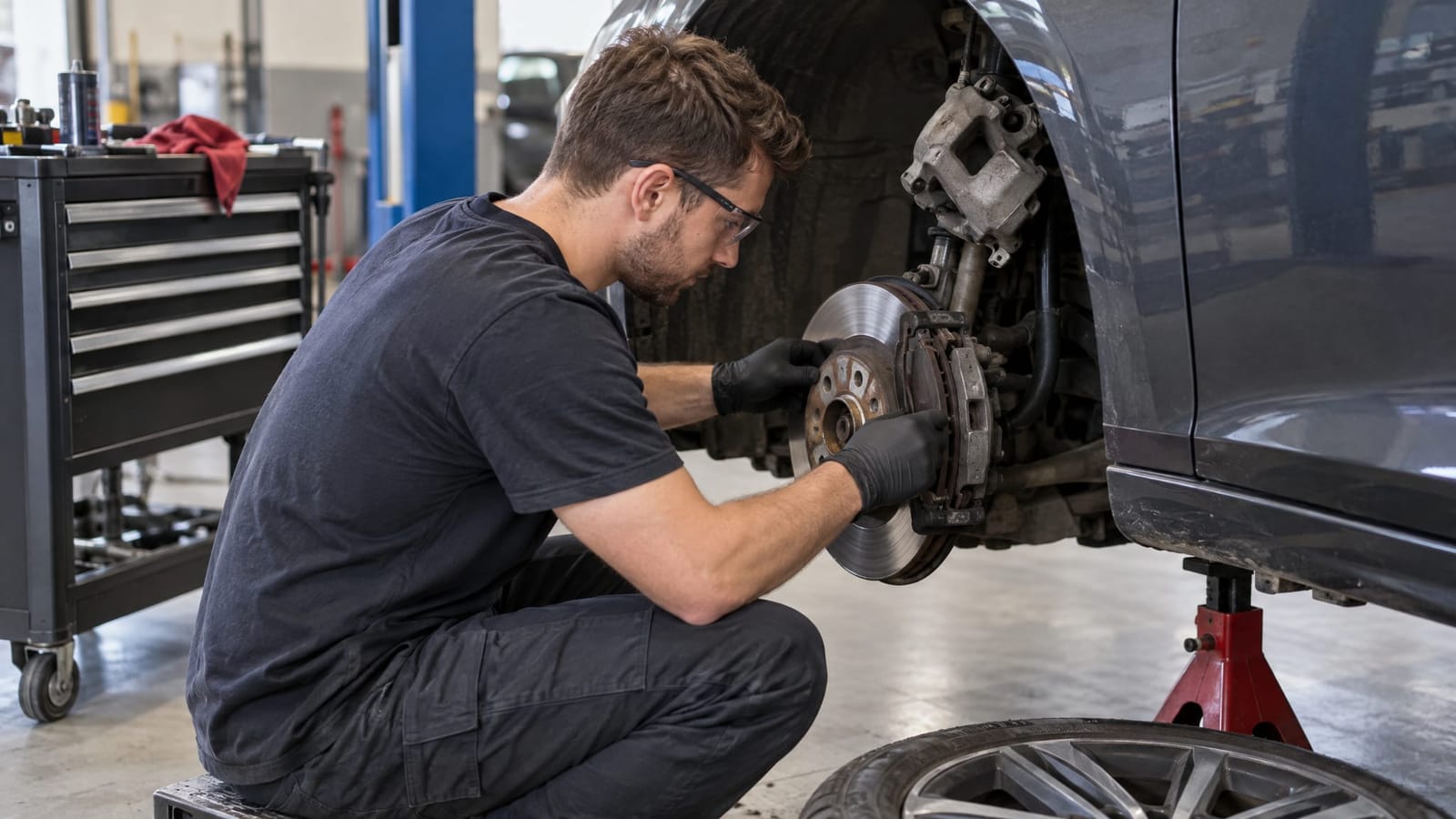
- Rotors are typically replaced more often. German vehicles, especially BMW and Mercedes, are designed with thinner rotors that wear down faster compared to some other brands. It's common, and often recommended, to replace rotors at the same time as pads rather than just resurfacing them.
- Specialized labor. Technicians working on German vehicles need to know the specific procedures for each model, including brake system resets that often require diagnostic software. That knowledge and tooling adds to the labor cost.
- Current parts pricing. Import tariffs and supply chain factors have made European parts more expensive in recent years, and that has been reflected in repair costs across the board.
None of this means your German car is a money pit: it just means brake service is a line item worth budgeting for properly.
Typical Brake Service Cost Ranges for German Cars
So what should you actually expect to pay? Brake service pricing varies depending on the vehicle model, service location, and parts used, but here are some realistic ranges to use as a reference point.
Brake Pads Only (Per Axle)
If your rotors are still in good shape and only the pads need replacement, you're looking at a lower cost. For German vehicles, quality brake pads alone typically run $150-$300 per axle at an independent shop, depending on the brand and vehicle model. Add in a wear sensor if your car uses one, and that number inches up slightly.
Brake Pads and Rotors (Per Axle)
This is the most common brake service scenario for German cars. When both pads and rotors are replaced together, which is often the right call, you're typically looking at $600-$1,100 per axle at a quality independent shop. Dealership pricing can run higher, sometimes significantly so, depending on the model. For a full four-wheel brake service, costs can range from $1,200 to $2,200 or more if all four corners need attention at once.
What Affects the Final Number
A few things can push the cost higher or lower within those ranges:
- Vehicle model: A Volkswagen Jetta will generally cost less to service than a BMW 5 Series or Mercedes-Benz GLC, simply because of parts availability and complexity.
- Front vs. rear: Rear brakes on German cars can sometimes cost more to service because of the integrated parking brake mechanism, which requires additional steps.
- Parts quality: OEM or OEM-equivalent parts cost more than aftermarket options but are generally the right choice for these vehicles to maintain proper performance and avoid warranty complications.
- Shop type: Independent shops that specialize in European vehicles often offer a good middle ground: better pricing than the dealer with the expertise to do the job right.
Is It Worth Using Quality Parts on a German Car?
It's a fair question. When you see a big price difference between budget brake pads and name-brand ones, it's tempting to go with the cheaper option. For German vehicles, though, it's generally worth spending a bit more on quality components.
German vehicles are built as systems: the brakes, suspension, and drivetrain are all tuned to work together. Using low-quality brake pads or rotors that don't meet the vehicle's specifications can lead to issues like uneven wear, vibration, and noise. More importantly, it can affect stopping performance, which is the whole point of the brake system in the first place.
Quality pads, whether ceramic or semi-metallic, matter when it comes to both performance and longevity. If you're curious about the differences between pad types and which might be right for your vehicle, our guide on ceramic vs semi-metallic brake pads breaks down the key distinctions in plain language.
Good parts also mean you won't be back in the shop as quickly, which has real value. A brake job done right with quality components should give you several years of reliable service before the next one.
How to Get the Most Value from Your Brake Service
Getting a fair price on brake service for your German car doesn't mean cutting corners: it means being informed and choosing the right shop. Here are a few practical tips:
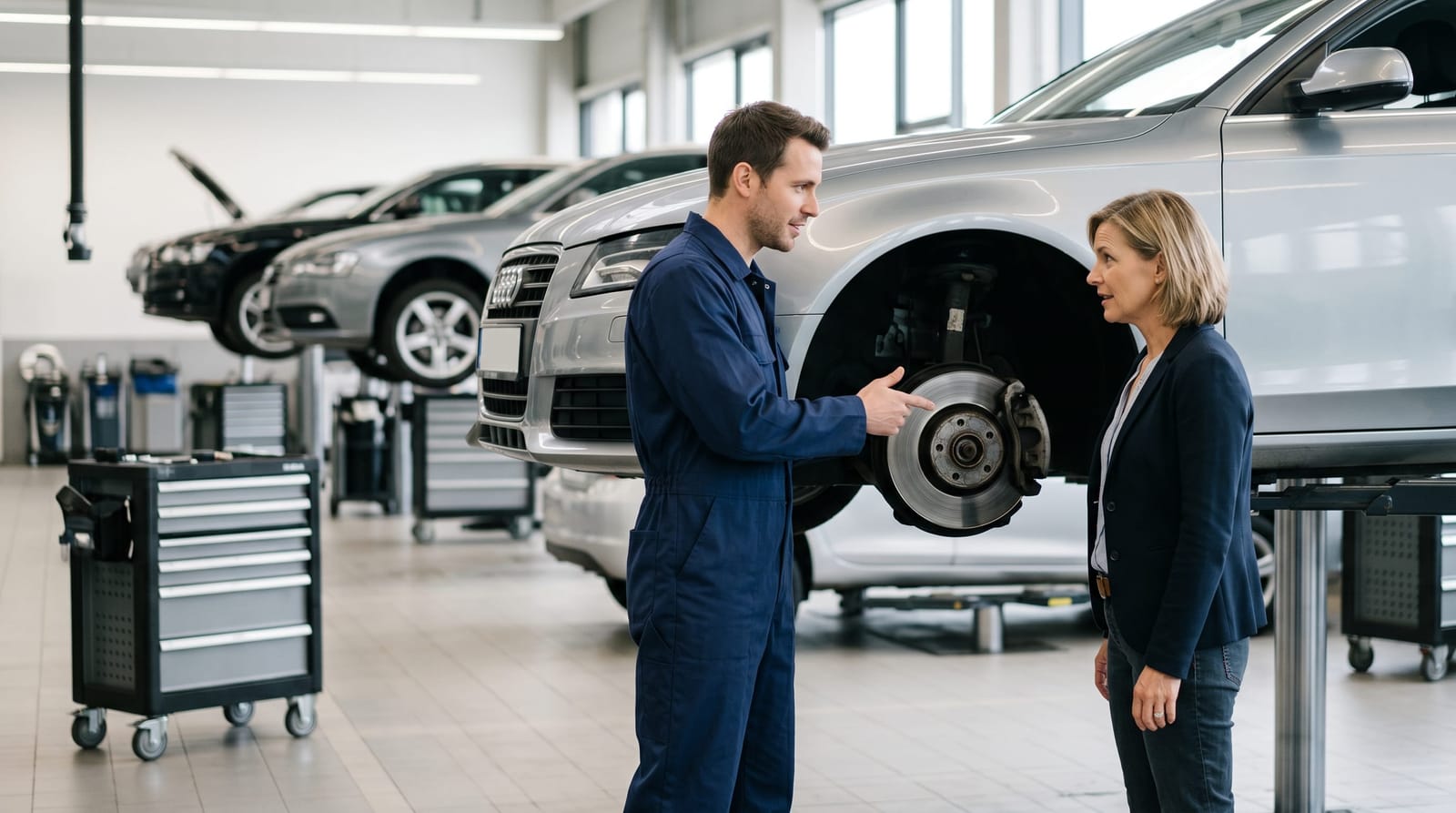
- Get a written estimate first. A reputable shop will inspect your brakes and give you a clear breakdown of what needs to be done and why before any work begins.
- Ask about parts brands. Find out whether the shop uses OEM, OEM-equivalent, or aftermarket parts, and ask why they're recommending what they are for your specific vehicle.
- Don't wait too long. Brake service that gets delayed tends to get more expensive. Worn pads that go unchecked can damage rotors, turning a pad-only job into a more involved service. Knowing the brake pad replacement signs early can help you catch issues before they escalate.
- Ask about the brake system reset. German vehicles often require a software reset after brake service. Confirm the shop has the tools to complete this step properly.
- Consider the full picture. If one axle is close to the service threshold, it often makes sense to do both at once to save on labor costs down the road.
Frequently Asked Questions
How often do German cars need brake service?
It depends on driving habits and the specific vehicle, but most German cars need brake pad inspection every 20,000-30,000 miles and may require pad and rotor replacement every 40,000-60,000 miles. City driving with frequent stopping will wear brakes faster than highway driving. Your vehicle's brake wear sensor will often alert you before the problem becomes urgent, but regular inspections are still a good habit.
Can I take my BMW or Mercedes to a regular shop instead of the dealer?
Yes. A qualified independent shop with experience on European vehicles can perform brake service to the same standard as a dealership, often at a lower price. The key is making sure the shop has technicians familiar with German makes, uses appropriate quality parts, and has the diagnostic tools needed for brake system resets. ASE-certified technicians are a good baseline indicator of training and competence.
Why are BMW rear brakes more expensive than the front?
BMW rear brakes often cost more to service because they incorporate the electronic parking brake mechanism. Servicing rear brakes on these vehicles requires a special tool or software to retract the caliper piston properly before new pads can be installed. This extra step adds labor time and requires shops to have the right equipment: both of which are reflected in the price.
Is it safe to drive if my brake wear sensor light comes on?
When the brake wear sensor light activates, it means your pads have reached a low point and need attention soon. You're not in immediate danger if the light just came on, but it's not something to delay. Schedule a brake inspection within the next few days. Continuing to drive on pads that are past their service life can damage your rotors and increase the overall cost of the repair.
The Bottom Line on German Car Brake Service
Brake service on German vehicles is genuinely more expensive than on many other makes: that's just the reality of owning a BMW, Mercedes, Audi, or Volkswagen. But it's also a manageable, predictable cost when you know what to expect and work with a shop you can trust. Quality parts, knowledgeable technicians, and timely service are the combination that keeps your vehicle safe and helps you get the most value from every repair. For a broader look at what complete brake service involves, our full Complete Brake Service Guide covers everything from inspection to long-term maintenance planning.