Tire Rotation and Maintenance: Extending Tire Life and Performance

As part of a complete approach to tire service installation in Claremont, tire rotation is one of the most straightforward and cost-effective services you can schedule for your vehicle. Yet it's also one of the most commonly skipped. If you own a quality vehicle, whether it's a family SUV, a luxury sedan, or a work truck, the tires represent a significant investment. A set of mid-range tires can easily run $600-$1,000 installed, and premium tires on high-end vehicles can cost considerably more. Tire rotation service is how you protect that investment. In this guide, we'll walk through why rotation matters, how it works, what patterns are used for different vehicles, and how to build a maintenance schedule that keeps your tires performing their best for as long as possible.
Why Tire Rotation Service Actually Matters
Tires don't wear evenly on their own, and that's not a design flaw, it's just physics. The front tires on most vehicles handle the majority of the steering and braking forces, which puts more stress on the outer edges of the front tires. Rear tires, by contrast, tend to wear more slowly and more evenly. On front-wheel-drive vehicles, the front tires also handle acceleration, which accelerates wear even further. Without regular tire rotation service, you'll often end up replacing your front tires while the rear tires still have 40-50% of their tread life remaining: that's money left on the table.
Consistent rotation redistributes those wear patterns. By moving tires to different positions on a regular schedule, you allow each tire to experience different types of stress over time, which leads to much more even wear across all four tires. Studies from tire manufacturers suggest that vehicles with regular rotation schedules can see a 20% or greater increase in overall tire lifespan compared to vehicles where rotation is skipped. Over the life of a vehicle, that can translate to one or two fewer full sets of tires purchased.
Beyond cost, even tire wear has a direct effect on how your vehicle handles. Tires that are wearing unevenly can create subtle pulling, vibration, and reduced traction: none of which you want, especially on wet or slippery roads. Regular tire rotation service helps your vehicle maintain consistent, predictable handling.
How Often Should You Schedule Tire Rotation?
The general industry recommendation for tire rotation service is every 5,000 to 7,500 miles, which conveniently aligns with a typical oil change interval. For most drivers, that means rotating tires roughly two to three times per year. However, the right interval for your vehicle depends on a few factors.
Vehicle Type and Drive Configuration
Front-wheel-drive vehicles tend to need more frequent rotations because the front tires are doing triple duty: steering, braking, and driving. All-wheel-drive vehicles also benefit from frequent rotation because uneven wear across all four tires can put stress on the drivetrain components, since the AWD system expects tires to remain close in overall diameter. Many AWD manufacturers actually recommend rotation as often as every 5,000 miles to avoid differential wear issues. Rear-wheel-drive vehicles have a bit more flexibility, but still benefit from the standard 5,000-7,500-mile schedule.
Driving Habits and Conditions
If you regularly drive in stop-and-go city traffic, take a lot of sharp turns, or frequently drive on uneven or rough surfaces, your tires may wear faster and benefit from rotation on the shorter end of the range. Highway-heavy drivers often have more flexibility. For a more detailed breakdown based on your specific situation, our guide on tire rotation schedule frequency covers these variables in depth.
Tire Manufacturer Guidelines
Always check the documentation that came with your tires. Some tire brands include specific rotation intervals as part of their warranty requirements. Skipping recommended rotations can actually void a mileage warranty on a set of performance or touring tires: worth knowing before you skip a service appointment.
Tire Rotation Patterns: Not One Size Fits All
When a technician performs a tire rotation service, they're not just swapping the front and rear tires side-to-side. There are several established rotation patterns, and the right one depends on your vehicle's drivetrain, whether your tires are directional or non-directional, and whether your vehicle uses a full-size spare as part of the rotation.
Forward Cross Pattern
This is the most common pattern for front-wheel-drive vehicles. The front tires move straight back to the rear axle, while the rear tires cross to opposite sides as they move forward. This pattern works well because it balances the heavier wear on the front axle by introducing the rear tires to the more demanding front positions gradually.
Rearward Cross Pattern
Used primarily for rear-wheel-drive and four-wheel-drive vehicles. The rear tires move straight forward, and the front tires cross to opposite sides as they move to the rear. This accounts for the increased wear on the rear axle in rear-wheel-drive configurations.
X-Pattern
All four tires cross to the opposite axle and opposite side simultaneously. This pattern is sometimes used for all-wheel-drive and front-wheel-drive vehicles, particularly when wear has become noticeably uneven and a more aggressive redistribution is needed.
Directional and Staggered Fitments
Some performance vehicles use different-sized tires on the front and rear axles: a setup called a staggered fitment. These tires often can't be cross-rotated in the traditional sense and may only be moved side-to-side, which requires dismounting and remounting them on different wheels. Directional tires (designed to rotate in only one direction for water evacuation) are also limited in how they can be rotated. Your service technician will identify the correct approach for your specific vehicle and tire setup before starting the rotation. For vehicles with specialized tire configurations, it's worth pairing the rotation with a professional tire installation service appointment if new tires are being added to the rotation pool.
What Happens During a Tire Rotation Service Appointment
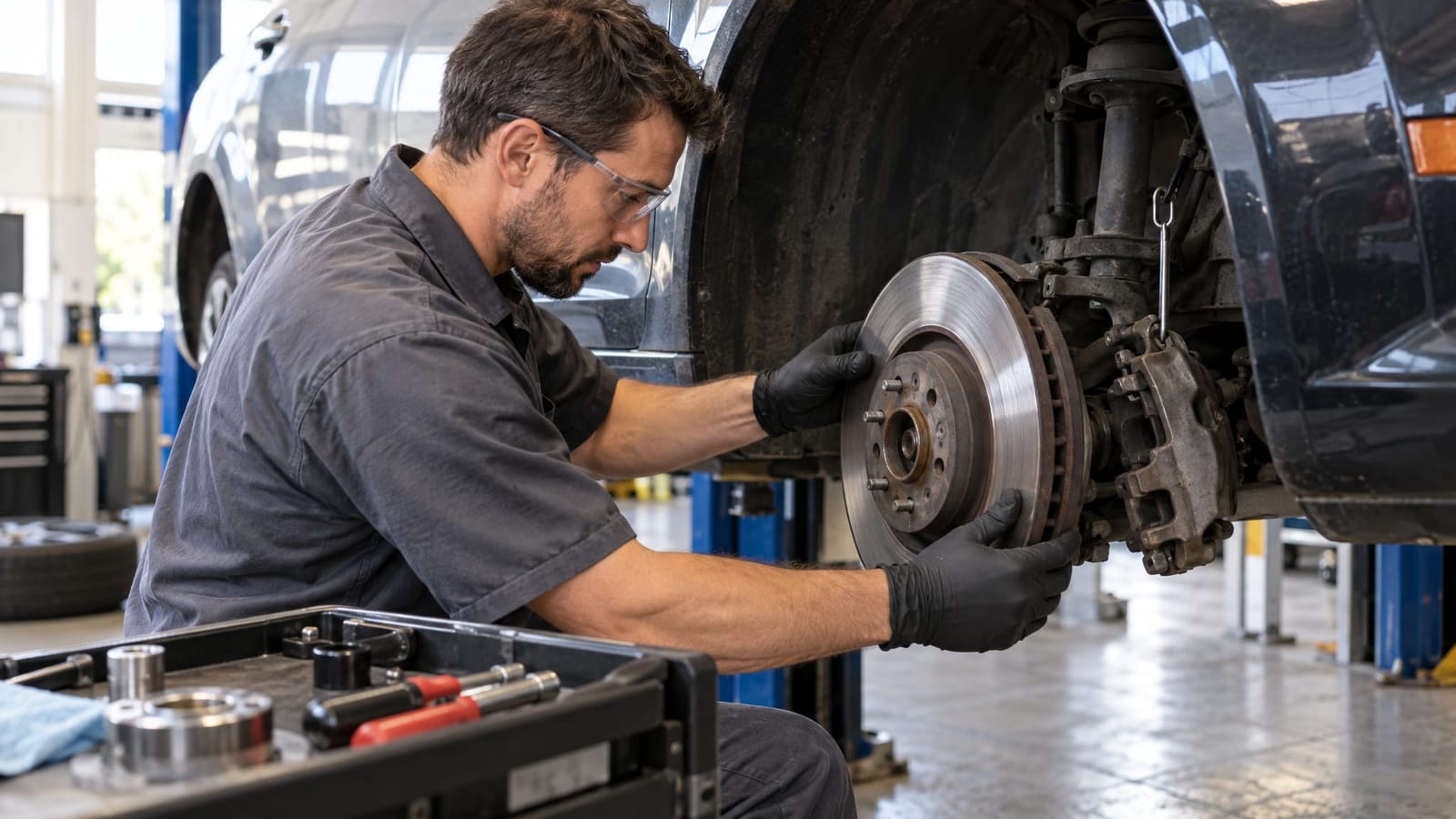
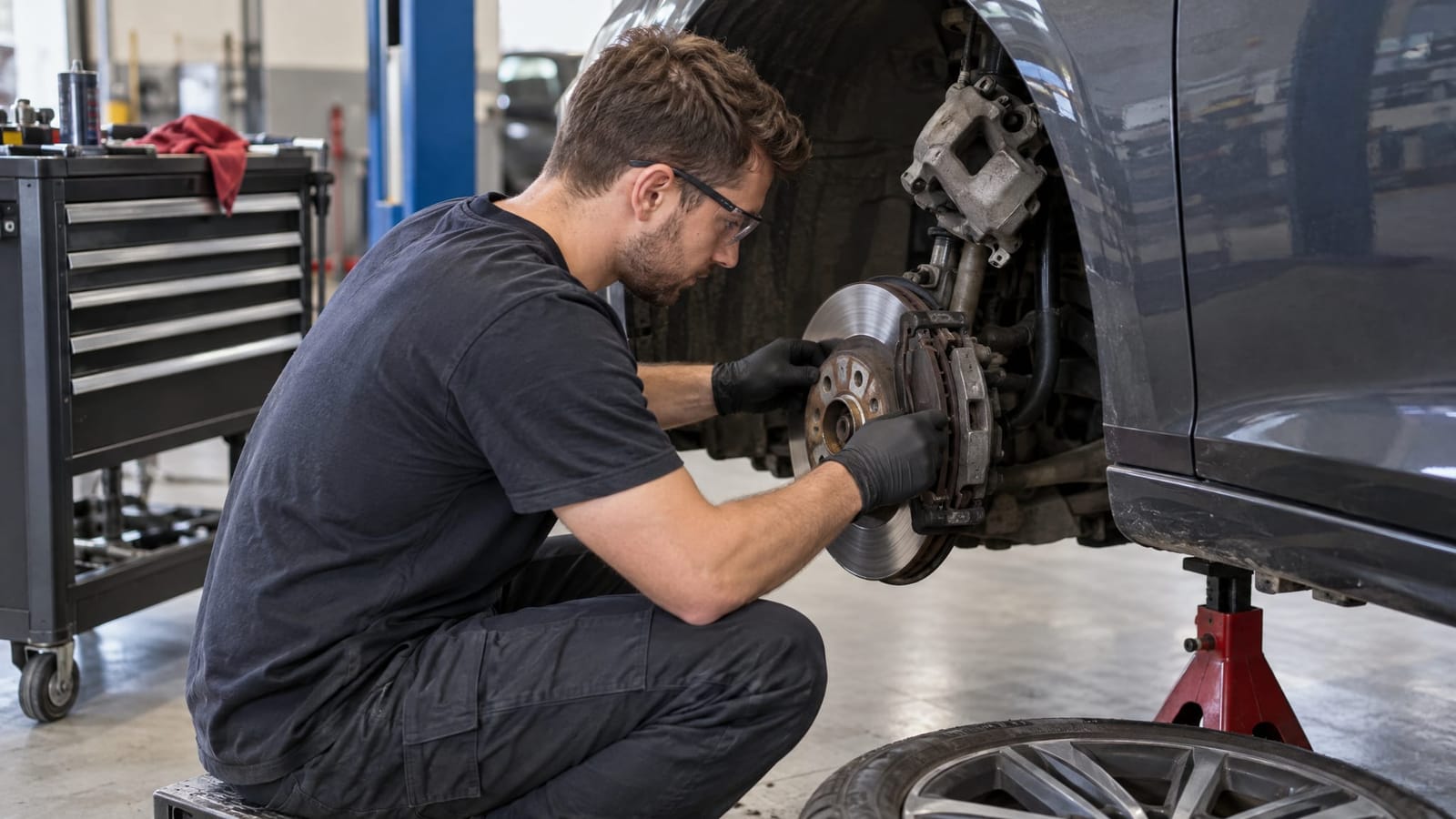
A tire rotation service appointment is typically fast: most take between 20 and 45 minutes depending on the shop and the vehicle. Here's what a professional service visit generally includes:
- Visual inspection of all four tires: The technician checks for abnormal wear patterns, sidewall damage, embedded objects, and any signs that a tire may be reaching end of life. This inspection alone is worth the visit: many tire issues are caught during routine rotation that the driver would never notice on their own.
- Tread depth measurement: Tread depth is measured across each tire, typically at multiple points. New tires start around 10/32" to 11/32" of tread depth. Tires are generally considered worn at 2/32" (the legal minimum in most states), and many safety organizations recommend replacing tires at 4/32" for adequate wet-weather traction. Knowing your current tread depth helps you plan ahead rather than being caught off guard.
- Tire pressure check and adjustment: Tires are inflated to the manufacturer-recommended PSI for your specific vehicle. This is listed on a sticker inside your driver's door frame, not on the tire sidewall. Proper inflation improves fuel efficiency, handling, and tire longevity, all at once.
- Repositioning tires per the correct pattern: Tires are remounted on the appropriate positions based on the vehicle's drivetrain and tire type.
- Torquing lug nuts to spec: Lug nuts are tightened to the vehicle manufacturer's torque specification, which matters for both safety and preventing rotor warping.
It's also a common practice to combine tire rotation with a wheel balance check. While rotation and balancing are separate services, rotation moves tires to new positions, while balancing corrects weight distribution within a tire and wheel assembly, they complement each other well and are often scheduled together.
Building a Tire Maintenance Schedule That Works
The most practical advice for tire longevity is simple: tie your tire rotation service to something you already do regularly. For most drivers, that means scheduling rotation with every oil change or every other oil change, depending on your vehicle's oil change interval. If you're on a 5,000-mile oil change schedule, rotate at every oil change. If you're on a 10,000-mile synthetic oil interval, add a mid-interval tire rotation at around 5,000 miles.
Additional Maintenance That Supports Tire Life
Tire rotation works best as part of a broader maintenance routine. A few additional practices that meaningfully extend tire life include:
- Maintaining correct tire pressure: Underinflated tires wear faster on the outer edges; overinflated tires wear faster in the center. Both reduce tread life and affect handling. Check pressure monthly and before long trips.
- Wheel alignment: Misaligned wheels cause tires to scrub against the road at a slight angle, which creates rapid, uneven wear. If you notice your vehicle pulling to one side, or if you've recently hit a significant pothole or curb, an alignment check is worth scheduling. Note that alignment is a separate service from rotation: rotation does not correct alignment issues.
- Avoiding hard braking and sharp cornering: Aggressive driving accelerates tire wear significantly. Smooth, gradual braking and cornering is easier on tires (and on fuel efficiency).
Keeping a Simple Service Log
One of the easiest ways to stay on schedule is to keep a small notebook in your glove compartment or use your phone's notes app to log your rotation dates and mileage. Many shops also provide stickers similar to oil change reminders. When you can see exactly when you last rotated, it removes the guesswork.
Related Tire Service Topics Worth Exploring
Tire rotation service is a core part of keeping your tires in good condition, but it connects to several other aspects of tire care. If you're still working out how to set up the right maintenance timeline for your specific vehicle, our detailed resource on tire rotation schedule frequency covers recommended intervals for different vehicle types, driving patterns, and tire categories. And if you're approaching the point where rotation alone isn't enough and it's time for a new set, understanding the tire installation service process, including proper mounting and balancing, helps ensure your new tires are set up correctly from the start.
Simple Service, Real Results
Tire rotation service isn't the most glamorous item on your vehicle's maintenance list, but it's one of the most consistently valuable. At roughly 5,000 to 7,500 miles per interval, regular rotations even out wear patterns, extend tire life, support safe handling, and help you get the full value from your tire investment. For quality-conscious vehicle owners, it's a straightforward service with a clear return. At Rancho Express Lube, we make it easy to keep your tires on a proper rotation schedule, and we'll flag any wear or pressure concerns during the process so you're never caught off guard. Schedule your next tire rotation service with us, and let's keep your vehicle rolling the way it should.