What's the Difference Between Tire Mounting and Balancing?
If you've recently purchased new tires or had a tire service appointment, you've probably heard the terms "mounting" and "balancing" used together. They sound similar, and they're often done at the same time, but they're actually two separate processes that do very different jobs. Understanding what each one involves helps you know what you're paying for and why both steps matter for a safe, smooth ride. This post breaks down tire mounting vs balancing in plain language so you can feel confident about your next service visit.
What Is Tire Mounting?
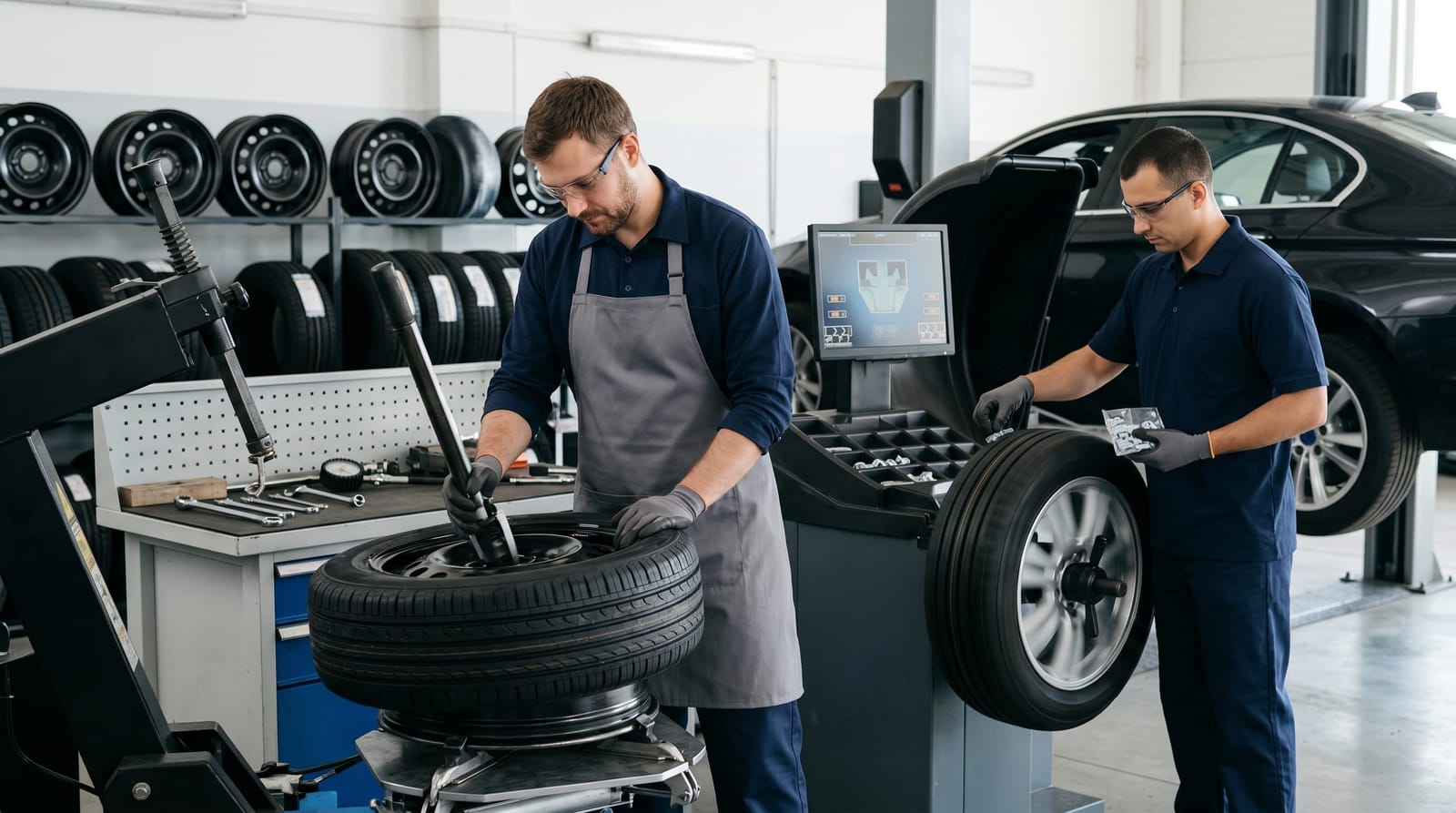
Tire mounting is exactly what it sounds like: it's the process of physically attaching a tire to a wheel (also called a rim). When you buy new tires, they arrive as just the rubber portion. They don't come pre-attached to your wheels. A technician uses a specialized piece of equipment called a tire mounting machine to carefully seat the tire onto the wheel without damaging either one.
This process involves:
- Removing the old tire from the wheel if replacing an existing one
- Lubricating the bead (the inner edge of the tire) so it seats properly on the rim
- Using the mounting machine to press the tire onto the wheel without scratching or warping the rim
- Inflating the tire to the correct pressure so the bead sets securely against the wheel
Proper mounting matters more than most people realize. If a tire isn't seated correctly on the wheel, it can cause air leaks, uneven wear, or vibration, even if the tire itself is brand new. For vehicles with alloy wheels or low-profile tires, careful handling during mounting is especially important to avoid cosmetic or structural damage to the rim.
What Is Tire Balancing?
Once a tire is mounted on a wheel, the combined assembly rarely has perfectly even weight distribution around its entire circumference. Even tiny variations in the rubber, the steel belts inside the tire, or the wheel itself can create slight imbalances. Those small imbalances might not seem like a big deal, but at highway speeds they can cause noticeable steering wheel vibration, uneven tread wear, and extra stress on your vehicle's suspension components.
Tire balancing corrects this by measuring where the weight is uneven, then attaching small counterweights to the wheel to even things out. A balancing machine spins the mounted tire and wheel together to detect any imbalance. The technician then places precision weights at specific points around the rim to compensate.
Signs that your tires may need balancing include:
- A vibrating or shaking steering wheel, especially at speeds between 50 and 70 mph
- Uneven or patchy tread wear on one or more tires
- A subtle humming or buzzing noise that changes with speed
Balancing isn't just a one-time service done with new tires. Over time, the weights can shift and normal road use can cause tires to go out of balance. Many service providers recommend checking balance every 5,000 to 7,500 miles, or any time you notice unusual vibration.
Tire Mounting vs Balancing: How They Work Together
Now that we've covered each process separately, it's worth understanding why tire mounting vs balancing isn't really an either/or conversation: both are necessary whenever new tires are installed, and skipping one step affects the other.
Think of it this way: mounting puts the tire on the wheel correctly, while balancing makes sure that the tire-and-wheel combination spins evenly. A perfectly mounted tire can still vibrate if it's out of balance. And balancing a tire that wasn't mounted properly won't fully solve the problem either.
That's why any reputable tire service provider will always perform both steps together when installing new tires. At Rancho Express Lube, mounting and balancing are part of a complete tire installation, not separate add-ons that you have to request individually.
How Is Balancing Different from Wheel Alignment?
This is one of the most common points of confusion for vehicle owners, and it's worth addressing directly. Tire balancing and wheel alignment are two entirely different services.
Balancing corrects uneven weight distribution in the tire and wheel assembly itself, affecting how smoothly the tire spins.
Alignment adjusts the angles at which your tires make contact with the road. It corrects the position of your wheels relative to each other and to your vehicle's frame. Alignment problems are typically caused by hitting a pothole, curb, or other impact, and they often show up as pulling to one side, crooked steering wheel positioning, or rapid tread wear on the inner or outer edges of a tire.
You can have balanced tires that are out of alignment, or properly aligned tires that need balancing. If you're experiencing issues on the road, it helps to describe what you're feeling to your service technician: vibration at highway speeds typically points to a balancing issue, while drifting or uneven edge wear often indicates an alignment problem.
If you're unsure whether your tires are wearing normally or it's time for a replacement, reviewing when to replace tires signs can help you understand what to look for before your next service visit.
What to Expect from Professional Tire Mounting and Balancing
If you're having tires installed at a professional shop, here's what the process typically looks like from start to finish:
- Old tires are removed from your wheels using a tire changing machine designed to protect your rims.
- The new tires are mounted onto the wheels with proper lubrication and careful positioning to ensure an airtight bead seal.
- Each tire and wheel assembly is placed on a balancing machine, which spins it to identify any heavy spots.
- Small counterweights are attached to the rim at the precise locations the machine identifies.
- Tires are installed on the vehicle, torqued to manufacturer specifications, and inflated to the recommended pressure.
The whole process for a set of four tires is typically completed in under an hour at a well-equipped shop. If you're purchasing tires online and having them shipped to a shop for installation, a professional technician will still perform the same mounting and balancing steps: the source of the tire doesn't change what's required for a safe installation.
Frequently Asked Questions
Do I need to balance my tires every time I get them rotated?
Not necessarily, but it's worth asking your service provider to check. Some shops recommend balancing with every rotation, while others suggest it every other rotation or when you notice vibration. If you're having tires rotated regularly and your ride feels smooth, balancing may not be needed every time, but a quick check during the rotation appointment costs very little and can catch issues early.
Can I just do mounting without balancing to save money?
Technically yes, but it's not a good idea. Unbalanced tires can cause vibration that makes your vehicle less comfortable to drive and puts extra wear on suspension parts over time. Since balancing is done immediately after mounting and doesn't add much time or cost to the service, it's almost always worth including. Skipping it typically costs more in the long run.
How do I know if my tires are out of balance?
The most common sign is a vibration or shaking sensation in the steering wheel that tends to appear or worsen at highway speeds, usually between 50 and 70 mph. You might also notice uneven or scalloped wear patterns on your tires. If the vibration is more noticeable at lower speeds or when turning, the cause may be something other than balance, which is worth having a technician check.
Does tire mounting damage aluminum or alloy wheels?
When done with proper equipment and care, mounting should not damage your wheels. Professional tire mounting machines are designed to handle a wide range of rim materials and styles. That said, this is one reason why having tires mounted at a reputable shop matters: improper technique or outdated equipment can scratch or chip alloy wheels. If you have premium or custom rims, it's worth confirming the shop has experience with them before proceeding.
The Bottom Line on Tire Mounting vs Balancing
Mounting and balancing serve different purposes, but they belong together as part of every professional tire installation. Mounting puts the tire on the wheel: balancing makes sure it spins evenly so your drive stays smooth and your tires wear correctly. Neither step replaces the other, and neither replaces wheel alignment, which is a separate service entirely. Understanding these differences helps you make informed decisions and ask better questions at your next service appointment. For anything related to tire service installation in Claremont, the team at Rancho Express Lube is here to make the process simple and straightforward.