30,000 Mile Service Checklist for European and Luxury Vehicles

A 30,000-mile service checklist for a European or luxury vehicle includes reviewing oil and filter needs, inspecting brakes and tires, checking fluids, and examining belts, hoses, steering, and suspension. Engine and cabin filters also deserve attention. However, reaching 30,000 miles does not automatically mean every fluid or wear item needs replacement.
For a BMW, Mercedes-Benz, Audi, Volvo, Porsche, or another luxury vehicle, the correct checklist starts with the maintenance schedule for its exact model, year, and engine. Use the steps below to separate scheduled maintenance from condition-based repairs.
Step 1: Match the Checklist to Your Vehicle’s Schedule
Before selecting a service package, compare the manufacturer’s maintenance schedule with the vehicle’s service history and dashboard maintenance reminders. Some tasks depend on mileage, others on elapsed time, and some on calculated operating conditions.
- Identify the vehicle precisely: Model year, engine, and drivetrain can change fluid specifications and service requirements.
- Review previous work: Note when oil, filters, brake fluid, and other scheduled items were last serviced.
- Sort the work: Separate items due by schedule, items needing inspection, and replacements justified by findings.
For example, an oil change completed shortly before 30,000 miles may not need repeating simply because the odometer reaches that milestone. A time-based maintenance item could still be due.
Step 2: Check Oil and Filter Requirements
For European vehicles, “full synthetic” is only part of the oil selection. The oil also needs the correct viscosity, such as the grade shown in the owner’s manual, and any required manufacturer specification or approval. Two oils with the same viscosity are not necessarily interchangeable.
- Change the engine oil and oil filter when the schedule or maintenance system calls for it.
- Use the specified oil, filter, and applicable drain-plug or filter-housing seals.
- Inspect for leakage around the drain plug, filter housing, and accessible engine areas.
- Verify the oil level using the vehicle’s specified procedure.
Oil color alone does not determine whether an oil change is due. Service history, operating conditions, and the manufacturer’s interval provide more useful guidance.
Step 3: Evaluate Both Air Filters
The engine air filter and cabin air filter perform different jobs, so they belong on separate checklist lines.
- Engine air filter: Check the scheduled replacement interval and inspect for dirt loading, damage, and proper fit in the housing.
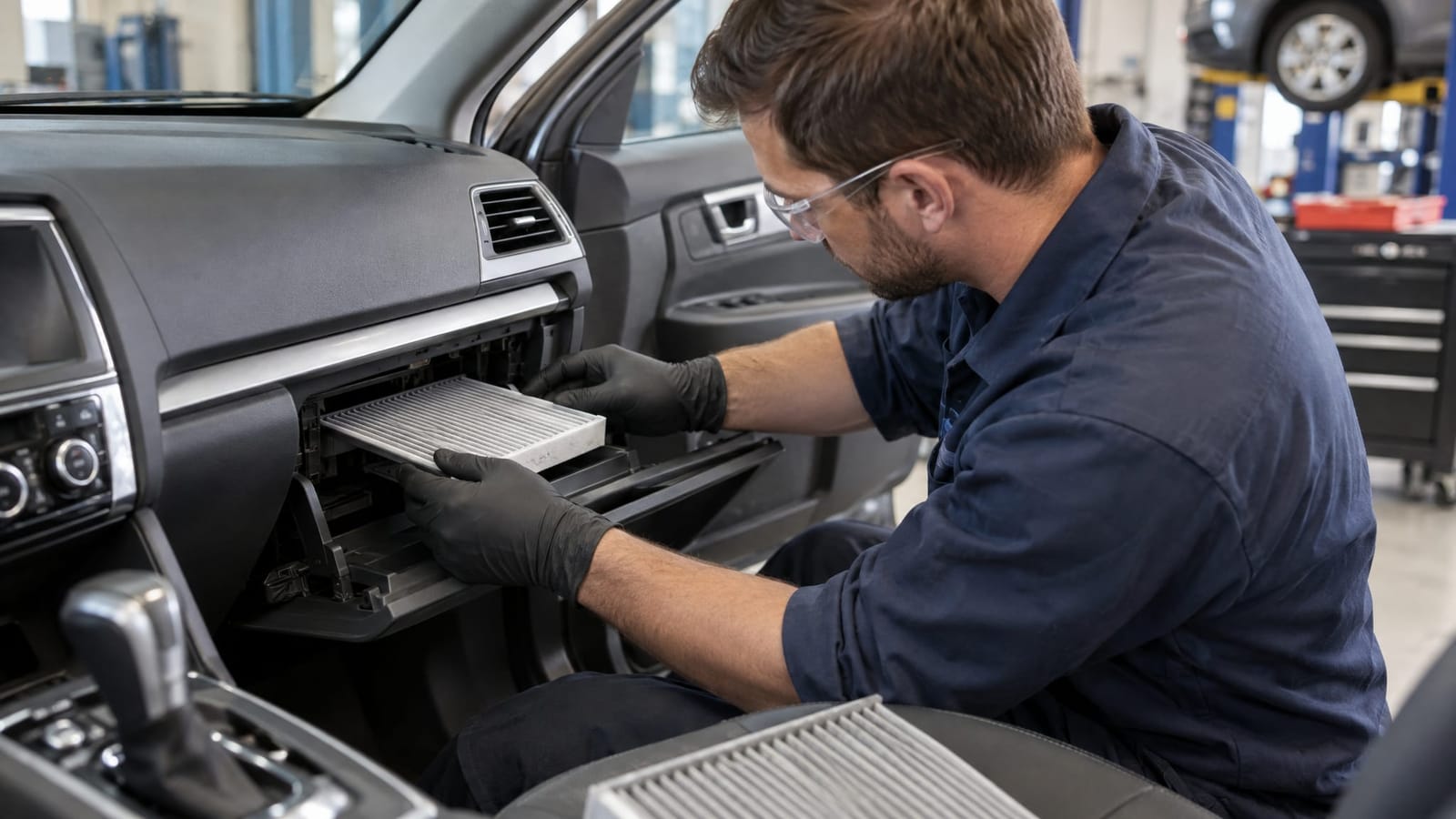
- Cabin air filter: Check for accumulated debris and replacement needs. This filter cleans air entering through the ventilation system.
Frequent driving through dusty conditions can make filter inspection especially worthwhile. Reduced vent airflow or persistent odors also merit attention, but a new cabin filter does not resolve every air-conditioning or ventilation problem.
Step 4: Inspect Brakes Before Recommending Parts
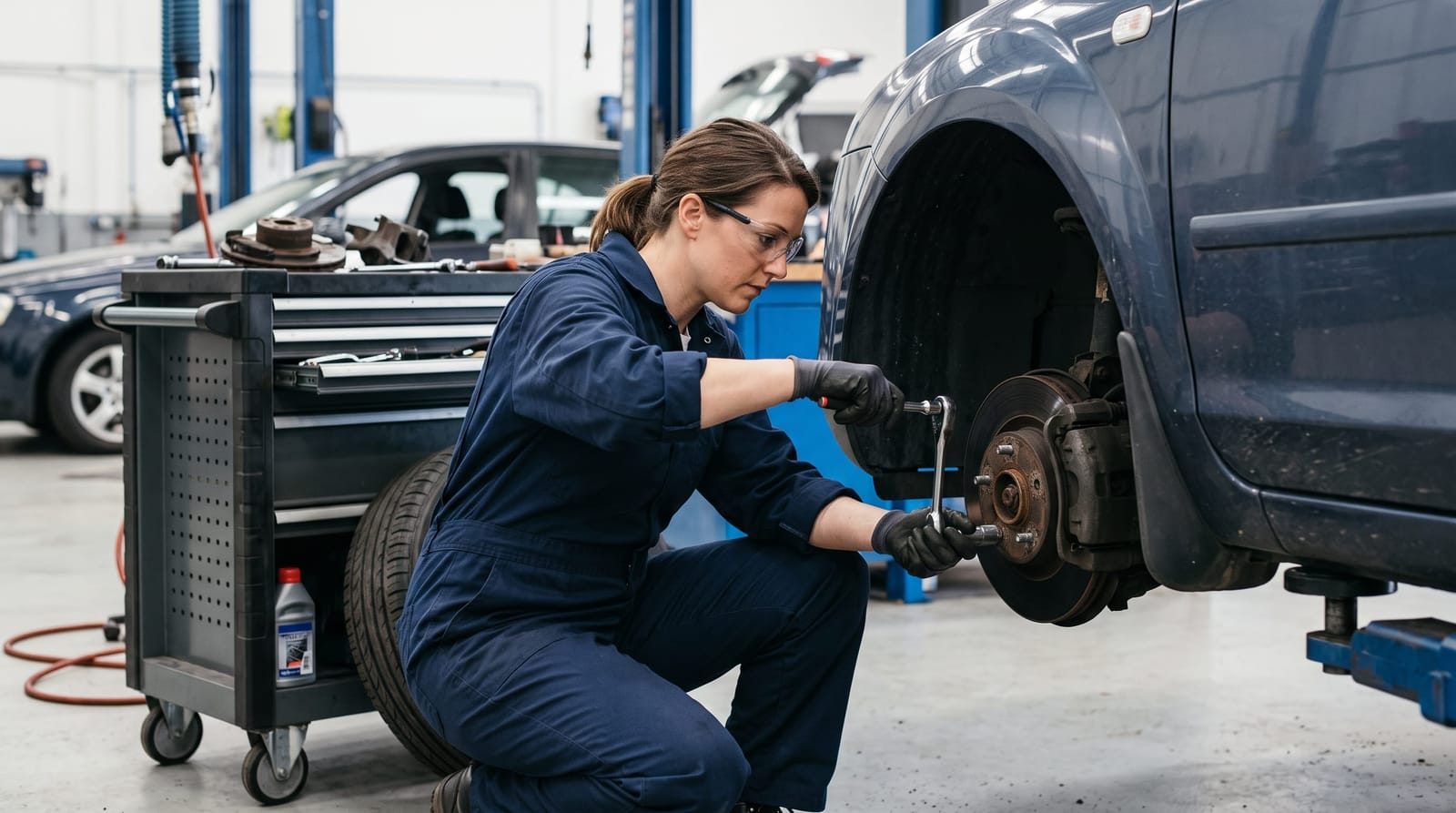
Brake replacement is generally based on wear and condition, not a universal 30,000-mile deadline. A useful inspection provides measurements and observations rather than just a recommendation to replace parts.
- Measure remaining brake-pad material and check for uneven wear.
- Inspect rotors for wear and surface condition, with measurements as needed.
- Check accessible brake hoses, lines, and calipers for leakage or damage.
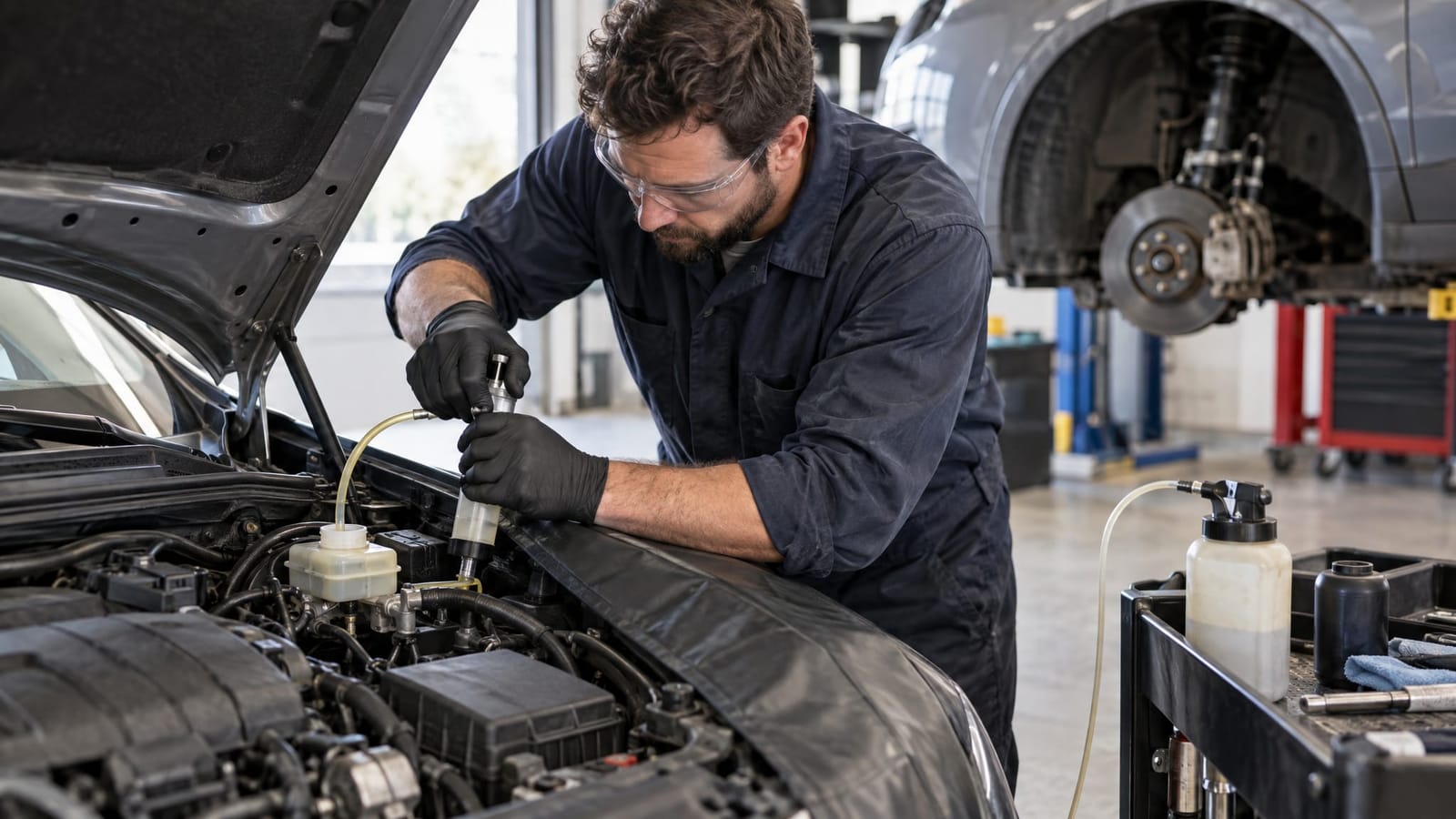
- Review brake-fluid service timing separately from pad and rotor condition.
A brake-wear warning system does not replace a physical inspection. Braking concerns need a vehicle-specific assessment by our ASE-certified technicians rather than a decision based only on mileage.
Step 5: Review Fluids Without Ordering a Blanket Flush
“Check fluids” and “replace fluids” are different tasks. The checklist needs to identify which action applies to each system.
- Brake fluid: Review the manufacturer’s time-based requirements and service record.
- Coolant: Inspect the level, visible condition, and accessible cooling-system components. Replacement depends on the specified schedule and findings.
- Transmission fluid: Check the requirements for the exact transmission. Fluid type and service procedure vary.
- Differential and transfer-case fluids: Review applicable requirements, particularly on all-wheel-drive vehicles.
- Power-steering fluid: Include this only if the vehicle uses hydraulic power steering. Electric systems do not have a hydraulic-fluid reservoir.
A low fluid level calls for checking the cause, not simply adding fluid. Likewise, 30,000 miles alone is not a reason to flush every system.
Step 6: Check Tires and Confirm Whether Rotation Applies
Tire service begins with pressure, tread, and condition checks. Rotation depends on the vehicle’s wheel and tire arrangement.
- Check cold tire pressures against the vehicle placard, not the maximum pressure molded into the tire sidewall.
- Measure tread across each tire and inspect for uneven wear or damage.
- Confirm tire sizes and directional markings before choosing a rotation pattern.
- Consider an alignment evaluation when wear patterns or handling concerns indicate a need.
Some luxury vehicles have different front and rear tire sizes. That staggered arrangement can prevent a conventional front-to-rear rotation. Alignment is also not an automatic requirement simply because the vehicle reaches 30,000 miles.
Step 7: Examine Belts, Hoses, and the Battery
Inspect accessible accessory belts for fraying, cracking, or contamination. Check visible hoses and connections for leakage, deterioration, or swelling. Belt-drive noise may also justify evaluating pulleys and tensioners.
The accessory belt is different from an engine timing belt. Timing-belt replacement follows the engine-specific schedule, not a general luxury-car checklist.
Battery checks can include case condition, secure mounting, terminal connections, and testing when appropriate. Battery age and starting behavior are more informative than mileage alone.
Step 8: Inspect Steering and Suspension Components
Complete the mechanical review with an inspection of accessible steering and suspension parts:
- Shocks and struts for leakage or damage.
- Control-arm bushings, ball joints, and steering joints for deterioration or excessive movement.
- Axle boots for tears or escaping grease.
- Air-suspension components, where fitted, for visible condition concerns.
Clunks, vibration, pulling, or uneven tire wear help direct the inspection, but they do not identify a failed part by themselves.
At Rancho Express Lube in Rancho Cucamonga, we offer European oil changes, filter replacements, brake and tire services, transmission service, steering and suspension work, and preventative maintenance. Our ASE-certified technicians service all makes and models, and we use digital inspections to document vehicle condition.
Frequently Asked Questions
What if I do not have the previous maintenance records?
Use the manufacturer’s schedule and the records available to establish a maintenance baseline. Inspection findings help prioritize condition-based work without treating every item as overdue.
Does a check engine light belong on the maintenance checklist?
List it separately as a diagnostic concern. A routine service or oil change does not identify the cause of a check engine light. We offer check engine light diagnostics.
What belongs on the completed service record?
Keep the date, mileage, work completed, oil specification, and other fluids or parts used. Brake and tire measurements, inspection findings, and deferred items make future maintenance decisions easier.
A Useful Checkpoint, Not a Universal Parts Package
The right 30,000-mile service combines scheduled maintenance with documented inspections. That approach addresses work actually due while keeping items that still have useful service life on a clear monitoring plan.