Can a Dirty Air Filter Cause a Check Engine Light?

If your check engine light just came on, your first instinct might be to worry about something serious: a failing sensor, a transmission issue, or a costly repair. But sometimes the answer is surprisingly straightforward. A dirty engine air filter can absolutely trigger a check engine light, and it happens more often than most drivers realize. Understanding why this happens, and what codes it can cause, helps you make smarter decisions about your vehicle's maintenance before small issues become bigger headaches.
1. Understand Why Airflow Matters So Much to Your Engine
Your engine needs a precise balance of air and fuel to run properly. For most modern vehicles, that ratio is approximately 14.7 parts air to 1 part fuel: a measurement known as the stoichiometric ratio. The engine's computer (called the ECU) constantly monitors and adjusts this balance using data from several sensors.
The engine air filter sits at the very beginning of this process. It cleans the air entering your engine, blocking dust, pollen, debris, and other particles before they can cause internal damage. A clean filter does this while allowing airflow to move freely. A clogged or heavily dirty filter restricts that airflow, which throws off the air-fuel balance the ECU is trying to maintain.
According to the U.S. Department of Energy, a clogged air filter can reduce engine efficiency and affect fuel economy, especially in older vehicles. Even in newer vehicles equipped with fuel injection systems, restricted airflow forces the engine to work harder to compensate, which shows up in sensor readings almost immediately.
This is why a dirty air filter check engine light situation is more common than most people expect: it's not a mechanical failure so much as a cascade of sensor responses to restricted airflow.
2. Know Which Diagnostic Codes a Dirty Filter Can Trigger
When a check engine light turns on, it stores a diagnostic trouble code (DTC) that a technician can read with a scan tool. A severely restricted air filter can trigger several specific types of codes. Here are the most common ones:
- Mass Airflow (MAF) Sensor Codes: P0100 through P0104: The MAF sensor measures how much air is flowing into the engine. When a clogged filter restricts airflow, the MAF sensor reads lower-than-expected values. The ECU flags this as a malfunction, even though the sensor itself may be perfectly fine. The filter is the root cause.
- Fuel Trim Codes: P0171 and P0172: These codes indicate the engine is running too lean (not enough fuel) or too rich (too much fuel). A restricted filter reduces incoming air, causing the ECU to compensate by injecting more fuel. If the system can't correct the imbalance, a fuel trim code is stored.
- Oxygen Sensor Codes: P0130 through P0167: Oxygen sensors monitor exhaust gases to help the ECU fine-tune the air-fuel mixture. When airflow is restricted for an extended period, the resulting imbalance shows up in the oxygen sensor readings, which can trigger additional codes even though the O2 sensors themselves are working correctly.
In each of these cases, the underlying cause isn't a faulty sensor: it's restricted airflow from a dirty filter. Replacing the sensor without addressing the filter won't resolve the problem.
3. Recognize the Other Symptoms That Often Appear Alongside the Warning Light
A check engine light rarely shows up in isolation when a dirty air filter is involved. Several other noticeable symptoms tend to appear at the same time or shortly before the light turns on. Being aware of these patterns helps you identify the issue sooner.
- Reduced fuel efficiency: If you're making noticeably more trips to the gas station, restricted airflow forcing a richer fuel mixture may be the reason. Studies suggest that a severely clogged air filter can reduce fuel economy by as much as 10% in older carbureted vehicles, with varying impacts on newer fuel-injected models.
- Sluggish acceleration: When the engine isn't getting enough clean air, throttle response suffers. The car may feel hesitant or underpowered, especially when merging onto a highway or accelerating from a stop.
- Rough idling or misfires: A rough, uneven idle, especially when the car is sitting still, can point to an air-fuel imbalance caused by restricted airflow. In some cases, this progresses to actual misfires, which have their own set of codes (P0300 series).
- Engine hesitation or surging: Some drivers describe a stuttering or "hiccup" feeling while driving at steady speeds. This inconsistency in engine behavior is another sign the ECU is struggling to manage an unbalanced air-fuel ratio.
- Unusual exhaust smell: A rich-running engine (too much fuel, not enough air) can produce a noticeable fuel smell from the exhaust. This happens when unburned fuel passes through the combustion process.
If you're experiencing two or more of these alongside a check engine light, a dirty air filter is a very reasonable place to start your diagnosis.
4. Don't Skip the Simple Fix Before Replacing Sensors
One of the most common, and frustrating, mistakes in automotive maintenance is replacing an expensive component when a simple filter swap would have resolved the problem. MAF sensors, for example, can cost anywhere from $80 to $300 or more depending on the vehicle. Oxygen sensors range from $50 to $250 each. A replacement engine air filter, by comparison, typically costs between $15 and $40 for most everyday vehicles.
Before authorizing any sensor replacement when these codes are present, a good technician will inspect the air filter first. If the filter is heavily contaminated, gray or black with debris buildup rather than its original white or off-white color, replacement is the logical starting point. In many cases, a new filter and a filter reset of the check engine light resolves the issue entirely without additional parts or labor.
This is also a good reminder that knowing how often to replace an engine air filter helps you stay ahead of situations like this. Most manufacturers recommend inspection every 15,000 to 30,000 miles, but driving conditions in dusty or high-traffic areas, like parts of the Inland Empire, can shorten that interval noticeably.
5. Know When to Have It Professionally Inspected
While a dirty air filter is one possible cause of a dirty air filter check engine light situation, it's important to have the actual codes read by a professional before drawing conclusions. Other issues can produce similar symptoms, and some code combinations may indicate more than one problem occurring at the same time.
If you're in Rancho Cucamonga and your check engine light just came on, a quick inspection of your air filter is a smart first step. Bring your vehicle in for an engine air filter replacement service in Rancho Cucamonga, and let a technician confirm whether the filter is the culprit. Having the codes read alongside the inspection gives you a clear picture of exactly what your vehicle needs: nothing more, nothing less.
Frequently Asked Questions
Can a dirty air filter cause a check engine light to come on even if the engine seems to run fine?
Yes. In early stages of restriction, the ECU can compensate well enough that you may not notice significant performance changes, but the imbalance in sensor readings can still trigger a code and illuminate the check engine light. This is one reason why regular air filter inspection is valuable even when the car "seems fine."
Will the check engine light turn off on its own after I replace the air filter?
Sometimes the light will reset on its own after several drive cycles once the underlying issue is corrected. However, in many cases it will need to be manually cleared with a scan tool. Your service technician can clear the code after confirming the repair resolved the issue.
How can I tell if my air filter is dirty enough to cause a check engine light?
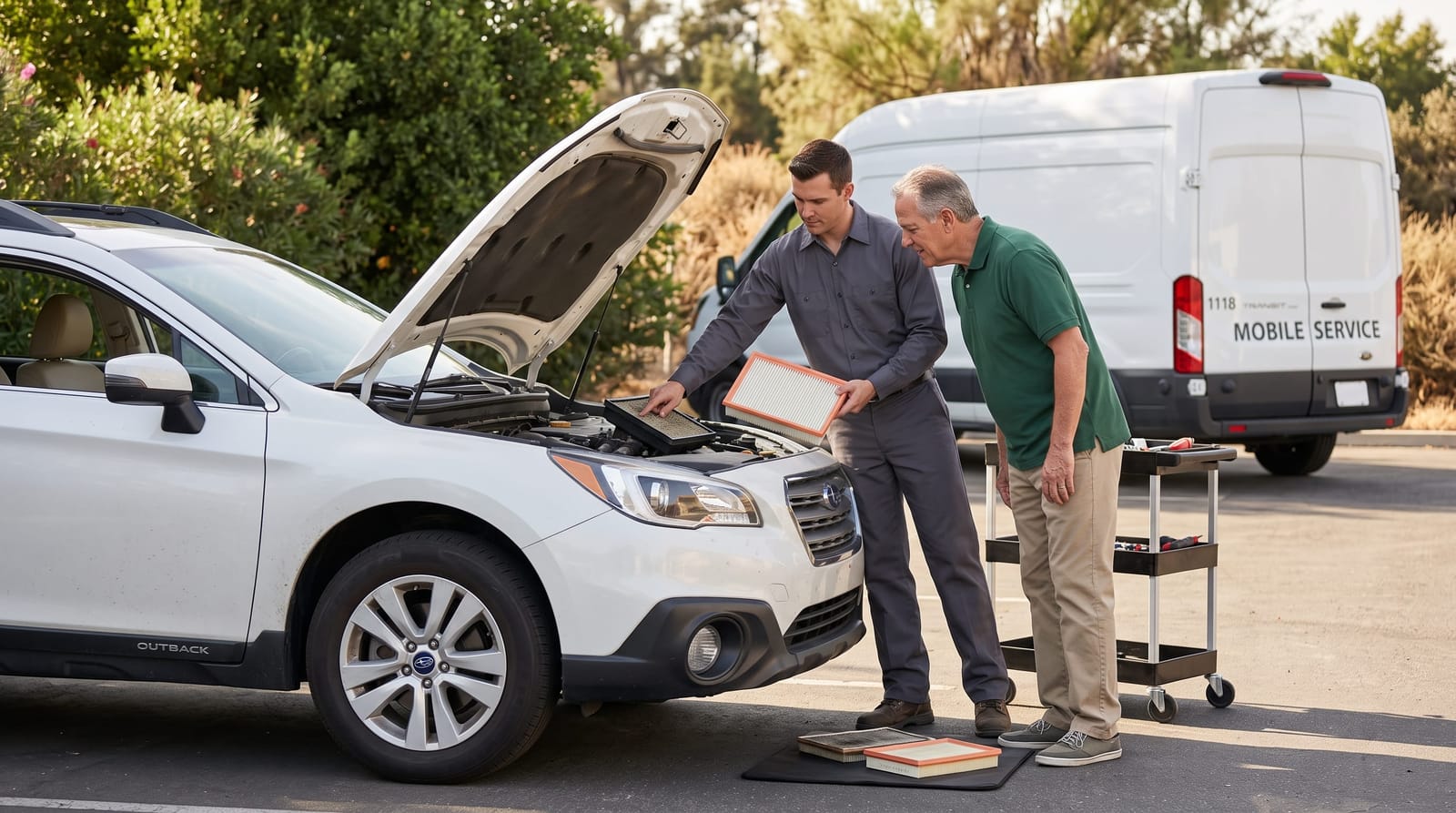
A visual inspection is the easiest way to check. Remove the filter and hold it up to natural light. A new filter is typically white or light gray. If yours is dark gray or black with visible debris, it's time to replace it. Filters that have reached that level of contamination are likely affecting your engine's airflow and sensor readings.
Is it safe to keep driving with a check engine light caused by a dirty air filter?
For short distances, it's generally not an emergency, but continuing to drive with a restricted filter and an active check engine light is not a good long-term approach. The longer the engine runs with an air-fuel imbalance, the more wear it places on sensors and other components. Getting it inspected promptly is always the better choice.
The Bottom Line
A check engine light doesn't always mean a serious or expensive problem. In many cases, it's the result of something as straightforward as a clogged engine air filter disrupting airflow and triggering sensor codes. Understanding the connection between a dirty air filter and check engine light situations helps you avoid unnecessary repairs and stay on top of basic maintenance. When in doubt, start simple, and let a trusted technician confirm what's actually going on before replacing anything more costly.