
Engine Air Filter Replacement: How a $30 Part Protects a $10,000 Engine
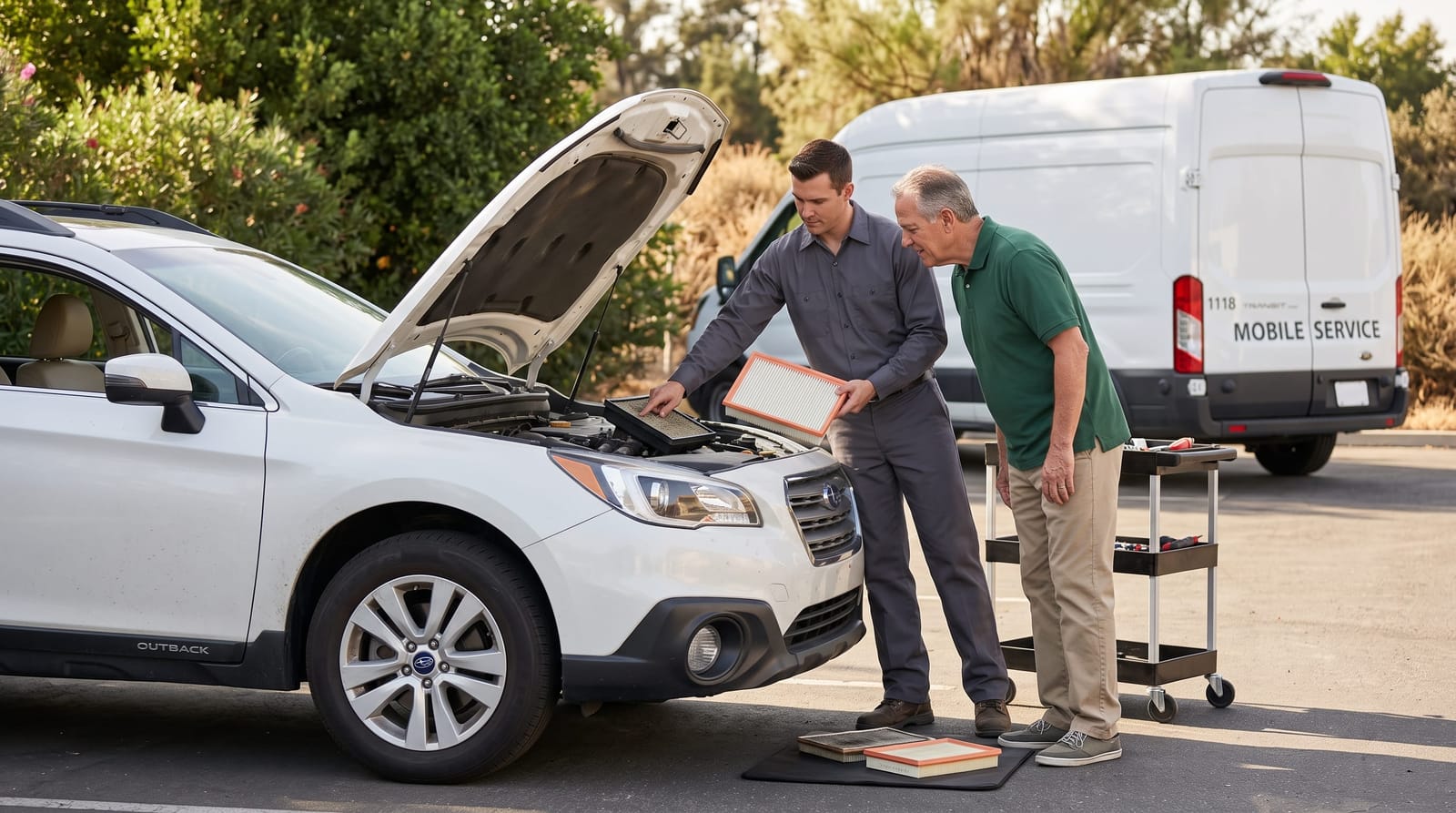
When it comes to routine vehicle maintenance, few services deliver as much protection for as little cost as a simple engine air filter replacement. As part of understanding your vehicle's overall health: a topic we cover in depth in our Vehicle Air Filtration Guide: Engine Air Filters, Cabin Filters, and Why They Matter: the engine air filter deserves its own spotlight. This small, often overlooked component quietly guards one of the most expensive parts of your vehicle every single time you drive. In this guide, we'll walk through exactly what an engine air filter does, what happens when it gets clogged, how to know when it needs replacing, and why staying on top of this one service is one of the smartest investments you can make as a vehicle owner in Fontana, CA and the surrounding Inland Empire.
What Does an Engine Air Filter Actually Do?
Your engine needs three things to run: fuel, spark, and air. Of those three, air is the one that comes from outside your vehicle, which means it arrives carrying everything the outside world has to offer. Dust. Pollen. Dirt. Road debris. Insects. Fine particles you can't even see with the naked eye.
The engine air filter sits at the entry point of your vehicle's air intake system and acts as a barrier between all of that and your engine's internal components. It's typically made of pleated paper or cotton gauze, housed in a plastic casing, and designed to trap contaminants before they ever make it into the combustion chamber.
Why Contaminants Are Such a Big Deal
Your engine's cylinders, pistons, and cylinder walls are machined to incredibly precise tolerances: sometimes as small as a few thousandths of an inch. Even tiny particles of grit or dust, if allowed to enter, can cause abrasive wear on those surfaces over time. This kind of wear doesn't happen overnight, but it's cumulative. An engine that runs unfiltered air, or air filtered poorly, simply wears out faster than one that's been properly protected.
The engine air filter is the first and most important line of defense against that kind of long-term wear. A clean, functioning filter lets the right amount of clean air through while blocking the particles that don't belong inside your engine. When it's doing its job well, you don't notice it at all, which is exactly the point.
What Happens When an Air Filter Gets Clogged?
Over time, that filter collects so much debris that it starts to restrict airflow rather than just clean it. This is where things get interesting, and where a neglected $30 part can start creating noticeable, real-world problems.
Reduced Engine Power and Performance
Engines are designed to receive a specific ratio of air to fuel in the combustion process. When airflow is restricted by a clogged filter, the engine compensates, but not always well. You may notice the vehicle feels sluggish during acceleration, hesitates when you press the gas, or just doesn't have the pull it used to. This is especially common during freeway on-ramp merges or when climbing grades, where the engine needs to work harder.
Increased Fuel Consumption
When your engine isn't getting enough clean air, it has to work harder to produce the same amount of power. That extra effort often translates directly into the fuel tank: meaning your vehicle may start burning more fuel to cover the same distance. While the change can be gradual enough to go unnoticed day-to-day, many drivers report seeing measurable improvement in fuel efficiency after replacing a severely clogged filter. The degree of improvement varies by vehicle and driving conditions, but the relationship between good airflow and efficient combustion is well-established.
Rough Idle and Starting Issues
A heavily restricted air filter can sometimes cause the engine to idle unevenly or make starting feel sluggish. In more serious cases, it can contribute to misfires: situations where the combustion cycle doesn't complete properly in one or more cylinders. If you've noticed your engine shaking at a stoplight or taking longer to turn over than it used to, a clogged air filter may be part of the picture.
Check Engine Light Triggers
Modern vehicles monitor air-to-fuel ratios with sensors that report back to the engine control unit. When airflow is significantly restricted, those sensors can detect an imbalance, and your vehicle may respond by illuminating the check engine light. It's a situation worth understanding in detail, which is why we dive deeper into it in our post on dirty air filter check engine light triggers and what to do about them.
How Often Should You Replace Your Engine Air Filter?
There's no single universal answer to this question, because several variables affect how quickly a filter reaches the end of its useful life. That said, most vehicle manufacturers provide a general recommendation, and your driving environment matters just as much as the calendar.
General Manufacturer Guidelines
Most manufacturers suggest replacing the engine air filter somewhere between every 15,000 and 30,000 miles under normal driving conditions. Your vehicle's owner's manual will include the specific recommendation for your make and model, and that's always the best starting point.
Fontana's Driving Environment Changes the Math
Here's where local context becomes important. Fontana, CA sits in the heart of the Inland Empire: an area known for warm, dry weather, frequent wind events, and significant amounts of construction activity and freeway traffic. All of those factors mean more airborne dust and particulates than you'd encounter in, say, a coastal city with mild, humid air.
Drivers who regularly travel on the 10 or 210 freeways, spend time near active construction zones, or commute through dusty conditions may find their filters reaching capacity well before the 30,000-mile mark. Shorter replacement intervals, or at least more frequent visual checks, make practical sense for Inland Empire driving.
Signs It's Time Regardless of Mileage
Mileage is a useful guide, but it's not the only one. If you notice a visible gray or dark appearance on the filter media when it's inspected, that's a reliable indicator that it's doing its job, and that the job is done. Other signs worth paying attention to include reduced acceleration, a drop in fuel efficiency, or any of the rough-idle symptoms described above. For a thorough breakdown of timing and mileage intervals, see our guide on how often replace engine air filter.
The ROI of a Simple Air Filter Replacement
Let's put the value of this service into perspective with some straightforward math. A quality replacement engine air filter for most passenger vehicles costs somewhere in the range of $15 to $40 for the part itself. Even when you factor in professional installation at a reputable shop, this is one of the most affordable maintenance services on the schedule.
Comparing the Cost to What You're Protecting
The average engine replacement or major overhaul can cost anywhere from several thousand dollars to well over $10,000 depending on the vehicle. Even less dramatic engine repairs, head gaskets, piston rings, cylinder work, regularly run into the thousands. The engine air filter isn't the only thing standing between your engine and that kind of expense, but it's a meaningful layer of protection that costs almost nothing to maintain.
Fuel Savings Over Time
If a clogged filter is contributing to reduced fuel efficiency, even modestly, that cost accumulates over months of driving. Restoring proper airflow with a fresh filter allows the engine to operate closer to its designed efficiency. The savings won't be dramatic in most cases, but over the course of a year of regular driving, the numbers tend to favor staying on schedule.
The Bigger Picture: Preventative Maintenance Thinking
One of the most valuable mindset shifts a vehicle owner can make is moving from reactive to preventative maintenance. Waiting until something breaks is almost always more expensive than catching it early, or preventing it entirely. An air filter replacement is a small, routine act of preventative care that keeps your engine operating as designed and gives you one less thing to worry about down the road.
What to Expect from a Professional Air Filter Service
Getting your engine air filter replaced by a qualified technician is a quick, straightforward service. Here's what the process typically looks like at a shop you can trust:
- Visual inspection: A technician will remove the current filter and inspect its condition, giving you an honest assessment of whether replacement is needed now or can wait.
- Filter selection: The right filter for your specific vehicle make, model, and engine is selected, not a generic substitute.
- Installation and housing check: The new filter is installed properly and the air filter housing and intake connections are checked to make sure everything is seated correctly and sealed.
- Documentation: The service is logged so you have a record for future reference and resale value.
The whole service takes just a few minutes in most cases, which means it's easy to combine with other routine maintenance like an oil change or tire rotation without adding significant time to your visit.
Related Topics Worth Exploring
The engine air filter is one part of a broader conversation about vehicle filtration. If you want to go deeper on specific aspects of air filter maintenance, these related guides cover the details:
- Wondering about the right replacement schedule for your specific vehicle and driving habits? Our post on how often replace engine air filter breaks down the variables that affect your timeline.
- If your check engine light is on and you're not sure why, learn how airflow problems can play a role in our post about dirty air filter check engine light situations, and how to tell if that's contributing to what you're seeing.
Conclusion: Small Service, Smart Protection
The engine air filter may not be the most glamorous part of vehicle ownership, but it's one of the most practical. It does a quiet, essential job every time you drive, and when it's maintained on schedule, you simply never have to think about it. For drivers in Fontana and the Inland Empire, where dusty conditions and heavy commuter traffic put extra demands on filtration systems, staying current with this service is especially worthwhile.
At Rancho Express Lube, we make air filter inspections and replacements a routine part of every vehicle service visit: fast, honest, and straightforward. If you're not sure when your filter was last replaced, or you're noticing any of the symptoms described above, stop in and let us take a look. It's one of the simplest things you can do to keep your engine running the way it was designed to.