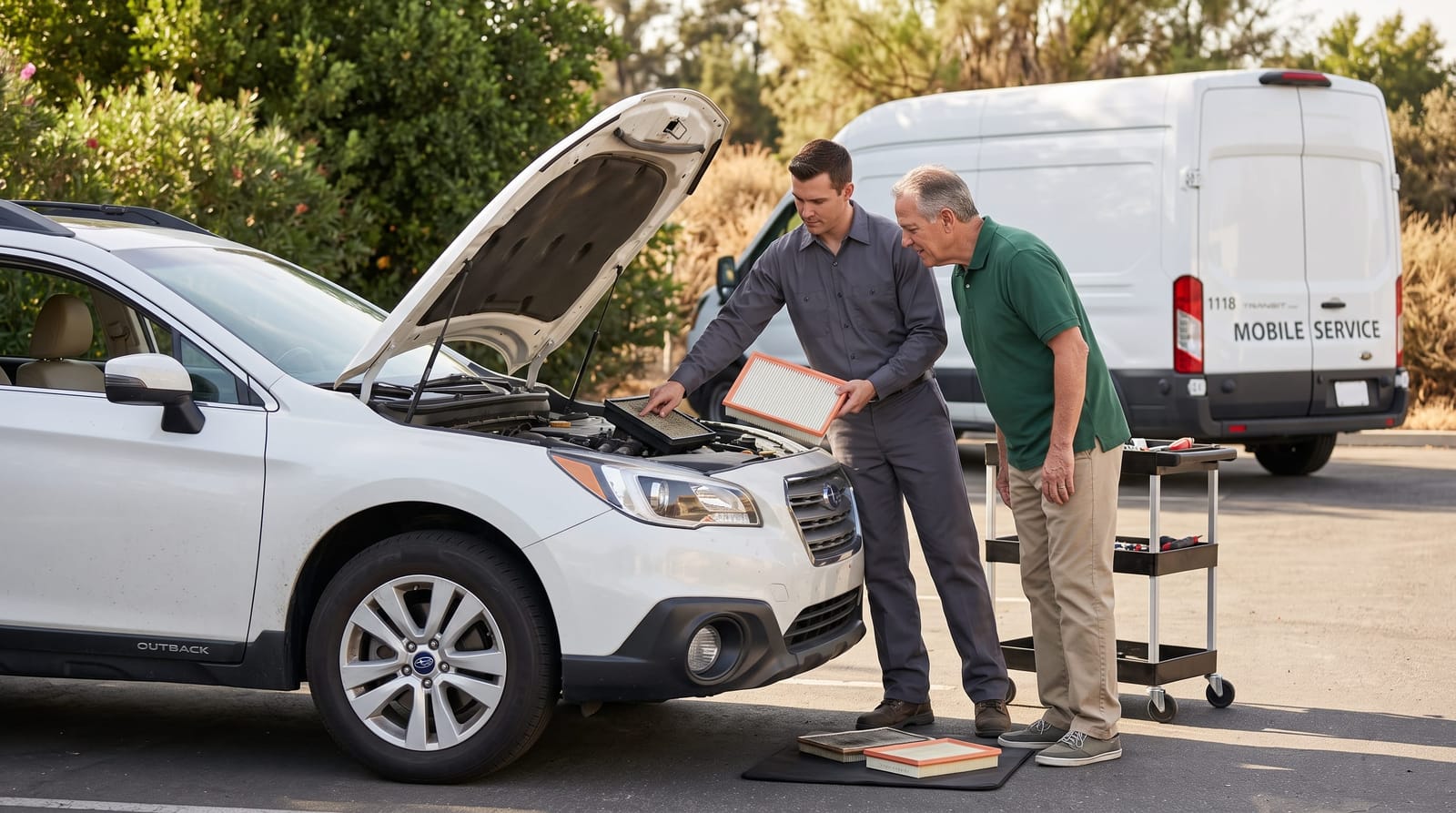
Vehicle Air Filtration Guide: Engine Air Filters, Cabin Filters, and Why They Matter
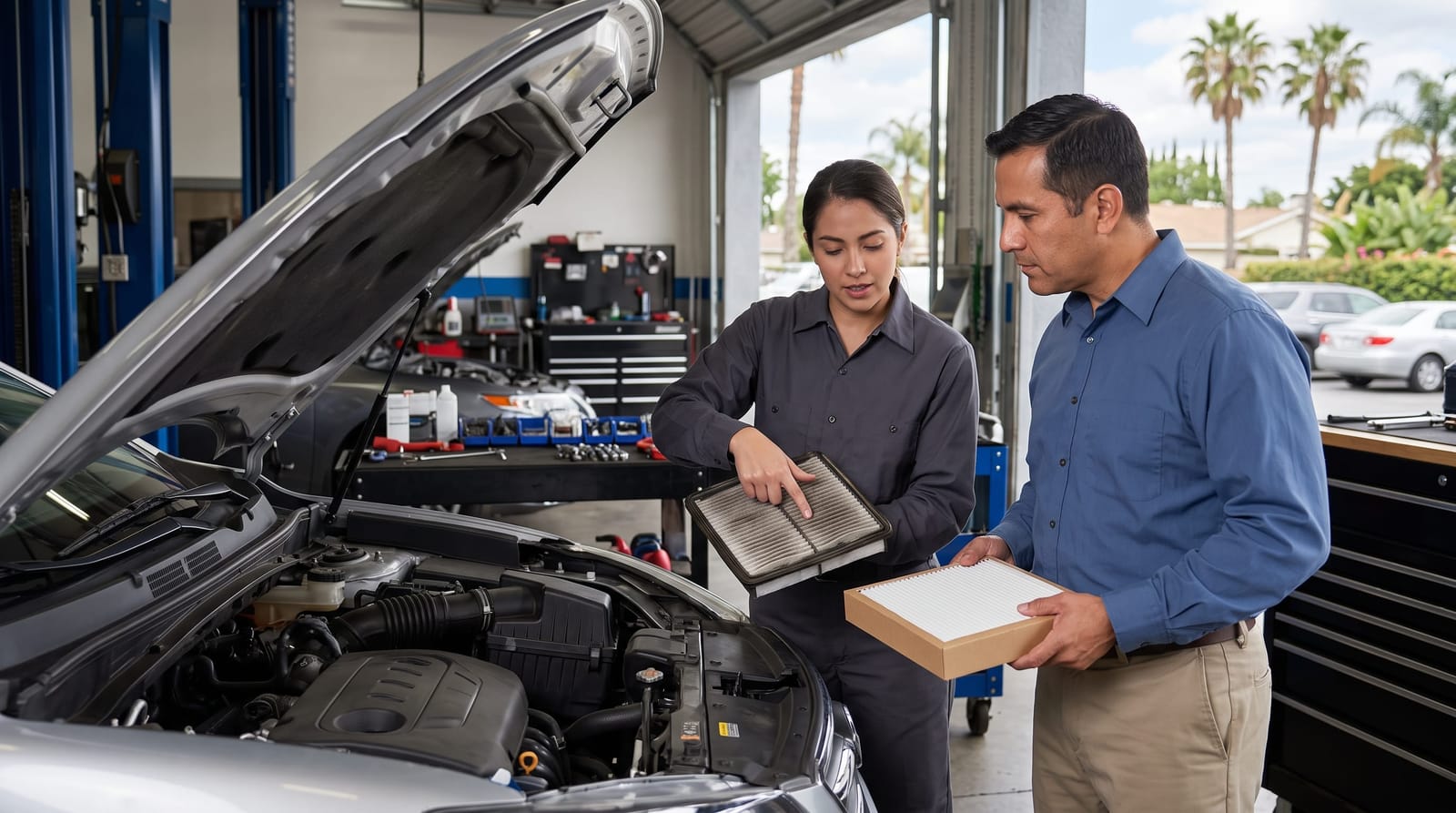
Think about the last time you replaced the air filters in your vehicle. If you're drawing a blank, or you're not entirely sure what "air filters" even refers to, you're not alone. For most drivers, air filters are one of those invisible maintenance items that quietly do their job until they quietly stop doing it.
Here's why that matters: your vehicle actually has two separate air filtration systems working at the same time. One keeps your engine running efficiently by supplying clean, unrestricted airflow. The other protects the air you breathe inside the cabin. Both degrade over time, and both have real consequences when neglected.
For drivers in Rancho Cucamonga and the broader Inland Empire, air filtration isn't just a routine checkbox: it's a more pressing concern than it might be in other parts of the country. Southern California's combination of urban smog, wildfire smoke seasons, and desert dust creates conditions that accelerate filter wear and make quality filter maintenance genuinely worthwhile.
This guide covers everything you need to know: what each filter does, how they differ, how to recognize when they need attention, what your replacement options are, and how local air quality in the Rancho Cucamonga area affects your maintenance timeline. Whether you're a first-time car owner or a seasoned driver looking to stay ahead of maintenance, this is your complete reference for vehicle air filtration.
What Is an Engine Air Filter and What Does It Actually Do?
Your engine needs two things to run: fuel and air. Specifically, it needs a precise mixture of both to ignite efficiently inside the combustion chamber. The engine air filter is responsible for making sure that incoming air is clean: free of dust, debris, pollen, and other particles that could damage internal engine components over time.
Without this filter, abrasive particles would travel through the intake system and into areas like the throttle body, fuel injectors, and cylinders. Over time, that kind of contamination causes accelerated wear on precision components. The filter acts as a barrier, trapping contaminants before they can reach those sensitive areas.
How Engine Air Filters Work
Most stock engine air filters are made from pleated paper or a similar fibrous material folded into an accordion-like shape. That pleated design increases the surface area available to capture particles without restricting airflow too severely. As the engine runs, it pulls air through this filter continuously.
Over time, the filter accumulates enough debris that airflow becomes restricted. This is where performance starts to suffer. A clogged or heavily loaded filter means the engine has to work harder to pull in the air it needs, which can affect acceleration response, fuel efficiency, and overall smoothness.
Where It's Located
In most vehicles, the engine air filter sits inside a plastic housing called the airbox, typically located near the front of the engine compartment. It's usually a relatively accessible component, though the exact location varies by make and model. Many vehicles use a rectangular or cylindrical filter element that sits inside this housing.
During a routine service visit, a technician will remove this housing, inspect the filter, and either clean it (if it's a reusable type) or recommend replacement if it's reached the end of its effective service life.
What Is a Cabin Air Filter and How Is It Different?
The cabin air filter is a separate, entirely different component, and it's one that many drivers don't even know exists. While the engine air filter protects your engine, the cabin air filter protects you and your passengers.
This filter is positioned in the vehicle's HVAC system, the heating, ventilation, and air conditioning system, and filters all air that enters the passenger compartment. Every time you turn on your heater, air conditioner, or even just run the fan, air passes through the cabin filter before it reaches the vents inside your car.
What It Filters Out
A standard cabin air filter captures dust, pollen, mold spores, and other airborne particles. Higher-grade cabin filters, including carbon-activated filters and HEPA-style options, can also reduce odors, trap smaller particulate matter, and in some cases filter out certain exhaust gases and volatile organic compounds.
For drivers with allergies or respiratory sensitivities, the cabin filter is particularly relevant. A fresh, functioning cabin filter can meaningfully reduce the concentration of airborne allergens and irritants inside the vehicle, especially important in Southern California during high pollen seasons or periods of elevated wildfire smoke.
Where It's Located
Cabin filters are typically located behind the glove box, under the dashboard, or under the hood near the base of the windshield. Unlike engine air filters, cabin filters are often tucked away in less accessible spots, which is one reason routine professional service is worth considering: a technician can inspect and replace it quickly without the guesswork.
Key Differences: Engine Air Filter vs. Cabin Air Filter
It's easy to confuse these two components, especially since they're both called "air filters." Here's a straightforward breakdown of how they differ:
- Purpose: The engine air filter protects engine components. The cabin air filter protects passenger air quality.
- Location: Engine filter is in the engine bay; cabin filter is in the HVAC system inside the vehicle.
- What passes through it: Engine filter handles outside air drawn into the intake; cabin filter handles air circulated through your vents.
- Symptoms of failure: A dirty engine filter may affect performance and fuel economy. A dirty cabin filter may reduce airflow from vents, create musty odors, or worsen air quality inside the car.
- Replacement intervals: Vary by filter type, driving conditions, and vehicle: more on this below.
Both filters matter. They serve different systems and different purposes, and the failure of one has no bearing on the condition of the other. A vehicle can have a clean engine filter and a clogged cabin filter, or vice versa. That's why checking both during routine maintenance visits makes practical sense.
Signs That Your Filters May Need Attention
Filters don't announce themselves when they're due for replacement. But there are recognizable signs that can indicate it's time to have them inspected.
Engine Air Filter Warning Signs
- Reduced acceleration or engine hesitation: If your vehicle feels sluggish when you press the accelerator, restricted airflow from a loaded filter can be a contributing factor.
- Noticeably lower fuel economy: An engine that's working harder to draw in air may use more fuel to maintain the same level of performance.
- Check engine light: In some cases, a severely restricted filter can trigger a diagnostic code. While there are many causes for a check engine light, airflow issues are among them.
- Rough idling: An imbalanced air-fuel mixture caused by restricted airflow can sometimes produce an uneven idle.
- Visible contamination: A gray, dark, or debris-filled filter when visually inspected is a straightforward indicator that it's time for replacement.
Cabin Air Filter Warning Signs
- Reduced airflow from vents: If your HVAC system seems weaker than usual even at high fan settings, a clogged cabin filter is a common culprit.
- Musty or unpleasant odor: A filter that's trapped moisture, mold spores, or excessive debris can produce noticeable odors when the system is running.
- Increased dust on interior surfaces: A filter that's no longer effectively trapping particles may allow more dust to circulate through the cabin.
- Worsening allergy symptoms while driving: If you notice your symptoms flaring specifically when you're in your vehicle, cabin air quality could be a factor worth investigating.
Replacement Intervals: How Often Should You Change Your Filters?
There's no single answer that applies to every vehicle, driver, and environment. Manufacturer recommendations typically provide a starting point, but real-world driving conditions, especially in a region like the Inland Empire, often call for more frequent attention.
General Guidelines for Engine Air Filters
Most manufacturers suggest inspecting the engine air filter every 15,000 to 30,000 miles and replacing it as needed. However, this range assumes relatively average driving conditions. In areas with heavy dust, frequent stop-and-go traffic, or elevated pollution, all common in and around Rancho Cucamonga, filters tend to load up faster. Drivers who frequently travel on unpaved roads or during high dust events should check their filter more often.
General Guidelines for Cabin Air Filters
Cabin air filters are often recommended for replacement every 15,000 to 25,000 miles, or roughly once a year for drivers with average mileage. Again, local conditions matter significantly. During active wildfire smoke events or periods of elevated smog, both of which occur regularly in Southern California, cabin filters can become saturated with fine particulate matter much faster than the standard timeline suggests.
The Best Approach
Rather than tracking mileage exclusively, the most reliable approach is to have both filters inspected at every oil change or routine service visit. A visual inspection takes only a few minutes and gives you an accurate picture of actual filter condition rather than relying on estimated intervals alone. At Rancho Express Lube, filter inspection is a standard part of the service process, so you're always working with current information rather than guesswork.
How Southern California Air Quality Changes the Equation
Drivers in Rancho Cucamonga face air quality challenges that simply don't apply in the same way in other parts of the country. Understanding these factors helps explain why filter maintenance is genuinely more important here than the national average might suggest.
Urban Smog and Vehicle Exhaust
The Inland Empire sits in a geographic basin that traps air pollutants, making it one of the regions in the U.S. with consistently elevated ozone and particulate levels. The South Coast Air Quality Management District (SCAQMD) regularly monitors and reports on air quality conditions across the region, and Rancho Cucamonga frequently experiences days that exceed federal air quality standards. That elevated baseline means your filters are constantly working against a higher contamination load than drivers in cleaner-air regions.
Wildfire Smoke Season
Southern California's wildfire season has grown in intensity and duration over the past decade. Smoke from wildfires, even fires burning miles away, introduces fine particulate matter (PM2.5) that is small enough to penetrate standard filters more readily and can overwhelm cabin filters in a matter of days during active smoke events. For sensitive individuals, upgrading to a carbon-activated or HEPA-style cabin filter during high smoke periods can provide meaningful additional protection.
Desert Dust and Wind Events
The region's proximity to desert environments means dust and particulate matter from wind events can be substantial. These particles are abrasive and can load up an engine air filter quickly when conditions are dusty. Drivers who notice increased dustiness in their environment, or who commute through areas prone to dust, should consider checking their engine filter more frequently rather than waiting for a scheduled interval.
For a deeper look at how these regional air quality factors specifically affect filter performance and longevity, see our detailed guide on Southern California air quality vehicle air filter maintenance considerations.
Your Filter Options: Standard, Carbon-Activated, and High-Performance
Not all filters are the same, and understanding your options helps you make an informed choice rather than simply accepting the default. This applies to both engine air filters and cabin air filters.
Engine Air Filter Options
OEM/Standard Paper Filters: These are the factory-style filters that come with most vehicles. They're designed to meet the engine's filtration needs under normal conditions and are typically the most affordable replacement option. For most everyday drivers, a quality OEM-spec filter is entirely appropriate.
Aftermarket Performance Filters: Some drivers opt for reusable, high-flow filters, often made from oiled cotton gauze, that claim to improve airflow and performance while lasting longer than standard disposable filters. These have legitimate uses, but they're not the right choice for everyone. The actual performance benefit in a stock, unmodified vehicle is often modest. They also require periodic cleaning and re-oiling to maintain effectiveness, which adds a maintenance step. For a thorough, honest look at whether these upgrades make sense for your situation, our guide on performance air filter upgrade worth it walks through the real-world considerations.
Cabin Air Filter Options
Standard Particulate Filters: These are the most common cabin filter type and are effective at capturing larger particles like dust, pollen, and debris. They're the standard replacement in most service scenarios and are appropriate for most drivers.
Carbon-Activated Filters: These combine particulate filtration with an activated carbon layer that helps absorb odors and some gaseous pollutants. They're a step up in filtration quality and are particularly useful in urban environments with heavier traffic exhaust or during periods of elevated air pollution.
HEPA-Style Cabin Filters: High-efficiency particulate filters, sometimes marketed as HEPA or HEPA-equivalent, offer the highest level of filtration available for passenger cabins. They're capable of capturing very fine particles, including some that standard filters allow through. These are a strong option for drivers with allergies, asthma, or other respiratory considerations, and are worth discussing during wildfire smoke season. Keep in mind that individual health decisions should always involve a medical professional who understands your specific situation.
What Happens When Filters Are Neglected? Real Performance and Efficiency Impacts
We want to be straightforward here: filter neglect doesn't instantly destroy your engine or put you at immediate risk. But over time, running with degraded filters does have measurable consequences that are worth understanding.
Engine Performance Over Time
A significantly restricted engine air filter reduces the volume of air reaching the engine. The engine's fuel management system attempts to compensate, but an imbalanced air-fuel mixture can lead to rough operation, slower throttle response, and inefficient combustion. In cases of severe restriction, it can contribute to incomplete combustion and increased emissions.
For a comprehensive look at what a neglected engine air filter actually means for your vehicle's long-term health, explained clearly without exaggeration, our focused guide on engine air filter replacement Fontana CA covers the topic in depth.
Fuel Economy
The U.S. Department of Energy has noted that a clogged air filter can affect engine performance and fuel efficiency in older carbureted vehicles more dramatically than in modern fuel-injected engines with adaptive management systems. That said, a severely restricted filter in any vehicle creates conditions where the engine is not operating at its designed efficiency. Keeping filters clean is one part of a broader approach to maintaining your vehicle's fuel economy alongside proper tire inflation, regular oil changes, and other routine service items.
Cabin Air Quality and Comfort
A clogged cabin filter makes your HVAC system work harder to push air through the vents. This can reduce defrost effectiveness, which matters for visibility, and can reduce heating and cooling efficiency throughout the cabin. Beyond comfort, a filter that's accumulated mold, bacteria, or excessive debris can actively circulate those contaminants through the cabin air instead of trapping them.
For drivers who want a complete picture of cabin filter service, what's involved, what to expect, and how it fits into overall vehicle maintenance, our dedicated guide on cabin air filter replacement service Ontario CA provides detailed, practical information.
Getting Your Filters Serviced in Rancho Cucamonga
When it comes to engine air filter replacement service in Rancho Cucamonga, drivers have several options, and we want to help you make an informed choice rather than just make a sale. Other service providers in the area, including quick lube shops and specialty repair centers, offer filter inspection and replacement. What matters most is finding a provider you trust to give you honest, accurate information about what your vehicle actually needs.
At Rancho Express Lube, filter inspection is built into every routine service visit. We inspect both the engine air filter and the cabin air filter as a standard part of the process, explain what we find in plain language, and give you the information you need to make your own decision, without pressure. If a filter is still in serviceable condition, we'll tell you that too.
We carry standard replacement filters for a wide range of makes and models, and we can discuss upgrade options like carbon-activated cabin filters if that's something you're interested in based on your driving habits or air quality concerns. The goal is always the same: give you accurate information, do quality work, and send you on your way with confidence in your vehicle.
If you're looking for a straightforward engine air filter replacement service in Rancho Cucamonga, or you want both filters checked as part of a comprehensive maintenance visit, we're here and ready to help.
Deep Dive Topics: Explore the Full Filtration Picture
This guide gives you a solid foundation across all aspects of vehicle air filtration. If you want to go deeper on any specific area, the following resources provide detailed, focused information on each major subtopic:
- Southern California Air Quality and Your Filters: Smog, wildfire smoke, and desert dust create unique filtration demands for Inland Empire drivers. Our guide on Southern California air quality vehicle air filter maintenance explains how regional conditions affect your filter lifespan and what adjustments make sense for local drivers.
- Performance Filter Upgrades: Are They Worth It? Aftermarket high-flow filters get a lot of attention, but the real-world benefit depends heavily on your vehicle and driving situation. Our honest breakdown of performance air filter upgrade worth it considerations helps you understand what these products actually deliver, and when a standard filter is the smarter choice.
- Engine Air Filter Replacement: The Full Story: Why does a relatively inexpensive filter matter so much to your engine's long-term health? Our guide on engine air filter replacement Fontana CA service explains what's at stake in clear, practical terms, without the scare tactics.
- Cabin Air Filter Replacement: What You Need to Know: From what different filter grades actually filter to how cabin filter condition affects your HVAC performance, our dedicated resource on cabin air filter replacement service Ontario CA covers the topic completely for everyday drivers.
Conclusion: Clean Filters, Better Driving
Vehicle air filtration isn't a glamorous maintenance topic, but it's a genuinely practical one, especially for drivers in Rancho Cucamonga and the surrounding Inland Empire. Between urban smog, wildfire smoke seasons, and desert particulates, your filters deal with more than the national average. Staying ahead of that maintenance curve is simply good vehicle ownership.
The key takeaways from this guide are straightforward: your vehicle has two separate air filters serving two different purposes, both degrade over time, and both have real effects on performance, efficiency, and cabin air quality when neglected. Knowing the signs of filter wear, understanding your replacement options, and checking both filters regularly as part of routine service gives you the information you need to keep your vehicle running smoothly.
At Rancho Express Lube, we make filter service simple, honest, and fast. Whether you need a routine engine air filter replacement service in Rancho Cucamonga, want your cabin filter upgraded before wildfire season, or just want both filters checked as part of an oil change visit: our team is here to help. Stop in, and let's take care of your vehicle together.