Can Transmission Service Prevent Major Repairs?
It's a fair question, and one worth answering honestly. Many vehicle owners wonder whether routine transmission service actually makes a difference, or whether it's just an extra expense that doesn't change much in the long run. The short answer is yes: regular transmission service genuinely does help prevent major repairs. But understanding why that's true can help you make smarter decisions about your vehicle's care. This post breaks it all down in plain language, including what service involves, what it costs compared to major repairs, and what happens when maintenance gets skipped.
What Transmission Service Actually Does for Your Vehicle
Your transmission is one of the most complex, and expensive, components in your vehicle. It manages the power from your engine and delivers it to the wheels, shifting through gears automatically (or manually) as you drive. To do all of that reliably, it depends on clean, properly conditioned fluid to lubricate moving parts, reduce heat, and keep internal components functioning smoothly.
Over time, that fluid breaks down. It absorbs heat, picks up microscopic metal particles from normal wear, and gradually loses its ability to protect the parts it's meant to cushion. When that happens, friction increases, heat builds up, and the transmission starts working harder than it should.
Transmission service, whether that's a fluid change or a more thorough flush, replaces that degraded fluid with fresh fluid that can actually do its job. Many service appointments also include inspection of the filter (if your vehicle has one) and a general check for early signs of wear or leaks. That inspection piece matters a lot: catching a small issue early is almost always cheaper and simpler than dealing with it after it becomes a larger problem.
In short, transmission service prevents repairs by keeping the transmission running in the conditions it was designed for: reducing wear, managing heat, and giving a technician the opportunity to spot anything developing before it escalates.
The Real Cost Comparison: Service vs. Major Repair
One of the most practical reasons to stay current on transmission maintenance comes down to simple math. Routine transmission service is a predictable, manageable cost. Major transmission repairs, or a full replacement, are not.
A standard transmission fluid service typically costs somewhere in the range of $80 to $150, depending on your vehicle type and what the service includes. A transmission flush, which replaces a larger volume of fluid and is sometimes recommended for vehicles with higher mileage or more demanding use, may run a bit more. Either way, it's a relatively modest investment spread over a maintenance schedule of every 30,000 to 60,000 miles for most vehicles.
Compare that to what happens when maintenance is skipped. Transmission repairs for issues like slipping gears, overheating damage, or internal component failure can range from several hundred dollars on the lower end to well over $3,000 or more for significant work. A full transmission replacement on many vehicles, especially newer models or trucks, can easily reach $4,000 to $7,000 or beyond when you factor in parts and labor.
Looked at that way, a few routine service visits over the course of a vehicle's life represent a small fraction of what a single major failure could cost. Regular transmission service prevents repairs not by offering any kind of guarantee, but by reducing the conditions that lead to failure in the first place.
What Happens When Transmission Service Gets Skipped
Skipping transmission service doesn't usually cause an immediate, obvious problem, and that's part of why it's easy to put off. The consequences tend to build gradually, which means by the time symptoms appear, some damage may already be done.
Here's a general picture of how neglect tends to unfold:
- Fluid breakdown: Old, degraded fluid stops lubricating effectively. Heat increases inside the transmission, and metal surfaces experience more friction than they should.
- Increased wear: As components wear faster, small metal particles circulate through the fluid, causing additional abrasion to other parts.
- Early warning signs: You may notice slight hesitation when shifting, a minor shudder, or the transmission taking a moment longer to engage. These are signals worth paying attention to.
- Escalating problems: Left unaddressed, wear compounds. Seals can fail. Internal components that could have lasted another 100,000 miles with proper care may begin to fail well ahead of schedule.
- Major failure: In more serious cases, the transmission may slip significantly, stop shifting correctly, or fail altogether: requiring either extensive repair or replacement.
None of this is meant to create alarm: most transmissions are built to last, and many vehicle owners go years without serious issues. But the ones that do tend to last longest are typically the ones that received consistent, routine care.
Which Vehicles Benefit Most from Regular Transmission Service
While every vehicle with an automatic or continuously variable transmission (CVT) benefits from regular service, some vehicles are especially worth keeping on a consistent maintenance schedule.
High-mileage vehicles have transmissions that have already been through years of use. Keeping the fluid fresh at this stage helps reduce ongoing wear and can extend the transmission's remaining service life significantly.
Trucks and SUVs used for towing or hauling put substantially more thermal stress on the transmission than a vehicle used only for regular commuting. Heat is one of the primary causes of transmission wear, so vehicles working harder need fluid that's still in good condition to manage that heat effectively.
Commercial vehicles and fleet vehicles accumulate mileage faster than personal vehicles and are often in use under demanding conditions. Regular service intervals are particularly important for keeping these vehicles reliable and on the road.
Vehicles with CVT transmissions, common in many modern sedans and crossovers, often have specific fluid requirements and can be sensitive to fluid condition. Following the manufacturer's recommended service interval is especially worthwhile for these vehicles.
If you're unsure how often your specific vehicle should be serviced, reviewing a transmission service interval schedule based on your vehicle type, mileage, and driving habits is a good starting point.
Service vs. Flush: Understanding Your Options
When you bring your vehicle in for transmission maintenance, you may hear two different service options discussed: a fluid change and a transmission flush. Both involve refreshing the transmission fluid, but they work a bit differently.
A fluid change typically drains the accessible fluid from the transmission pan, replaces or cleans the filter if applicable, and refills with fresh fluid. It's a straightforward service that addresses the majority of degraded fluid.
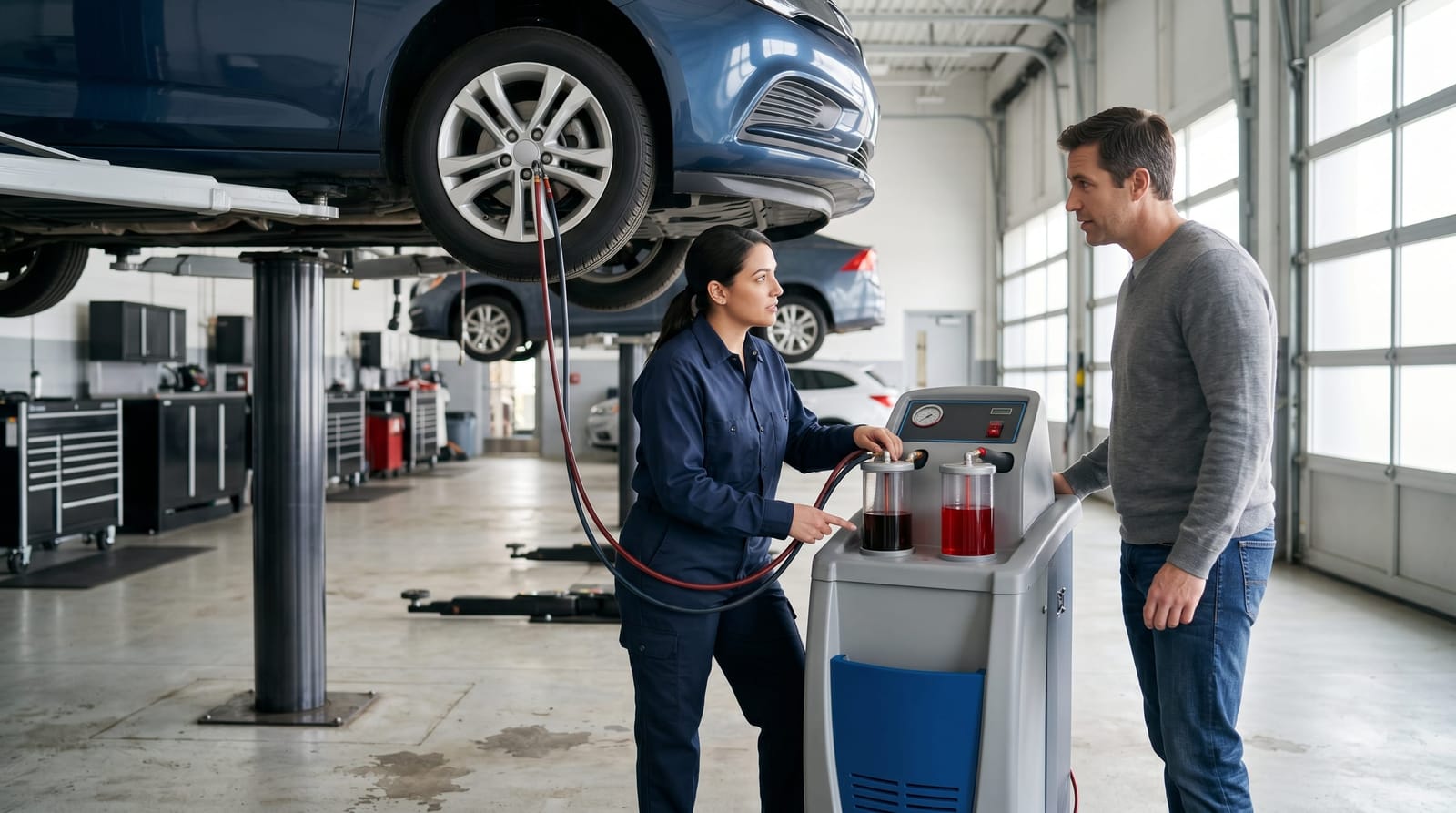
A flush uses a machine to cycle new fluid through the entire system, replacing close to 100% of the old fluid. It's more thorough and is sometimes recommended for vehicles that are behind on maintenance or that have been through demanding conditions.
Understanding the difference between these two options, including when each one makes sense for your vehicle, can help you have a more informed conversation with your service provider. For a full breakdown, see our post on transmission flush vs fluid change.
Frequently Asked Questions
How do I know if my transmission is due for service?
The clearest guide is your vehicle's owner's manual, which will include a recommended service interval based on mileage. As a general rule, many vehicles fall somewhere in the 30,000 to 60,000 mile range for transmission fluid service, though this varies by make, model, and driving conditions. If you've purchased a used vehicle and don't know when it was last serviced, it's worth having a technician check the fluid condition.
Can transmission service fix an existing problem?
Routine service is primarily a preventive measure, not a repair. If your transmission is already experiencing noticeable symptoms, hesitation, slipping, rough shifting, it's important to have the transmission inspected rather than assuming a fluid change will resolve the issue. In some mild cases, fresh fluid can help, but underlying mechanical problems require diagnosis and repair beyond standard service.
Is transmission service worth it on an older, high-mileage vehicle?
Generally, yes, as long as the transmission is currently functioning well. Fresh fluid reduces ongoing wear and helps protect what's left of the transmission's service life. One note of caution: on a vehicle with very high mileage that has never had a transmission service, a technician may want to evaluate the fluid condition before recommending a full flush, since certain situations warrant a more gradual approach.
How long does a transmission service appointment take?
For most vehicles, a standard transmission fluid service takes roughly 30 to 45 minutes. A more comprehensive flush may take a bit longer. Either way, it's a relatively quick service that fits easily into a routine maintenance visit without requiring you to leave your vehicle for an extended period.
The Bottom Line on Transmission Service and Repairs
Regular transmission service prevents repairs by doing something simple but important: keeping your transmission running in the conditions it was designed for. Clean fluid reduces friction and heat. Routine inspections catch developing issues before they become expensive ones. And consistent maintenance stretches the life of a component that would cost thousands of dollars to repair or replace. As part of a broader approach to vehicle care, including all the preventive maintenance covered in our complete transmission service guide, staying current on transmission service is one of the more cost-effective habits a vehicle owner can maintain.