Complete Preventative Car Maintenance Guide: Protect Your Vehicle Investment
Your car represents one of the most significant investments you make outside of your home. Yet most vehicle owners only think about maintenance after something goes wrong: a warning light flashes on the dashboard, a strange noise appears on the highway, or the car simply refuses to start on a Monday morning. The good news is that most of those frustrating, expensive moments are preventable.
Preventative car maintenance is exactly what the name suggests: taking action before problems develop, rather than reacting to them after they've already cost you time, money, and stress. It's a straightforward concept, but one that makes an enormous practical difference in how long your vehicle lasts and how reliably it performs every single day.
According to the Car Care Council, vehicle owners who follow a consistent preventative maintenance schedule can significantly reduce their risk of unexpected breakdowns and extend the useful life of their vehicles well beyond average. Studies suggest that Americans spend billions of dollars annually on repairs that could have been avoided with routine care.
This guide covers everything you need to know about preventative car maintenance, from understanding why it matters, to knowing which services to prioritize, to building a realistic maintenance routine that keeps your vehicle running smoothly for years to come. Whether you drive a daily commuter, a family SUV, or a work truck, the principles here apply to you.
What Is Preventative Car Maintenance and Why Does It Matter?
Preventative car maintenance refers to regularly scheduled services and inspections designed to keep your vehicle in good working condition and catch potential issues before they become serious problems. Rather than waiting for a component to fail, preventative maintenance addresses wear and degradation proactively, at predictable intervals based on mileage, time, or usage patterns.
Think of it like routine health checkups. You don't visit a doctor only when you're sick. Regular checkups help catch concerns early, when they're easier and less expensive to address. The same logic applies directly to your vehicle.
The Real Cost of Skipping Maintenance
The numbers tell a clear story. According to AAA, the average cost of a vehicle breakdown is between $500 and $600 per incident when you factor in towing, emergency repairs, and associated expenses. A neglected engine that runs low on clean oil can eventually require a full replacement: a repair that can cost anywhere from $3,000 to $10,000 or more depending on the vehicle. By contrast, a routine oil change typically costs a fraction of that amount.
Preventative car maintenance isn't an expense: it's a cost management strategy. Spending a modest amount consistently on scheduled services protects you from far larger, unpredictable repair bills down the road.
Vehicle Longevity and Reliability
Consumer Reports data consistently shows that vehicles maintained according to manufacturer schedules tend to last significantly longer and retain higher resale value. Many well-maintained vehicles reach 200,000 miles or beyond without major mechanical failure. The vehicles that fall apart early are often those that missed routine services at critical intervals.
Preventative car maintenance also means your vehicle is safer to drive. Worn brake pads, degraded tires, and failing belts don't just inconvenience you: they create hazardous conditions on the road for you, your passengers, and everyone around you.
Essential Preventative Car Maintenance Services Every Owner Should Know
Not all maintenance services are created equal in terms of frequency or urgency, but certain core services form the foundation of any solid preventative car maintenance program. Understanding what these services do, and why they matter, helps you make informed decisions about your vehicle's care.
Oil Changes: The Most Important Routine Service
Engine oil lubricates moving parts, reduces friction, carries heat away from critical components, and helps clean the engine of harmful deposits. Over time and miles, oil breaks down and becomes contaminated with dirt, metal particles, and combustion byproducts. Once degraded, it can no longer do its job effectively.
Most modern vehicles with conventional oil recommend changes every 3,000 to 5,000 miles. Vehicles using full synthetic oil may go 7,500 to 10,000 miles or more between changes, depending on manufacturer specifications. The exact interval for your vehicle is found in your owner's manual, and following it is one of the single most impactful preventative car maintenance steps you can take.
Skipping or delaying oil changes is one of the most common causes of premature engine wear. The cost difference between keeping up with oil changes and replacing a damaged engine is dramatic.
Tire Maintenance and Rotation
Tires are your vehicle's only contact with the road, which makes their condition directly relevant to both safety and performance. Tire rotation, moving tires to different positions on the vehicle, helps them wear evenly and last longer. Most manufacturers and tire companies recommend rotation every 5,000 to 8,000 miles, often timed with oil changes for convenience.
Proper tire inflation also matters more than many drivers realize. Under-inflated tires wear unevenly, reduce fuel efficiency, and increase the risk of a blowout. The U.S. Department of Energy estimates that properly inflated tires can improve fuel economy by up to 3%, while the National Highway Traffic Safety Administration (NHTSA) reports that under-inflated tires are a contributing factor in thousands of accidents each year.
Check tire pressure monthly and before long trips. The correct pressure for your vehicle is listed on a sticker inside the driver's door jamb, not on the tire sidewall itself.
Brake System Inspection and Service
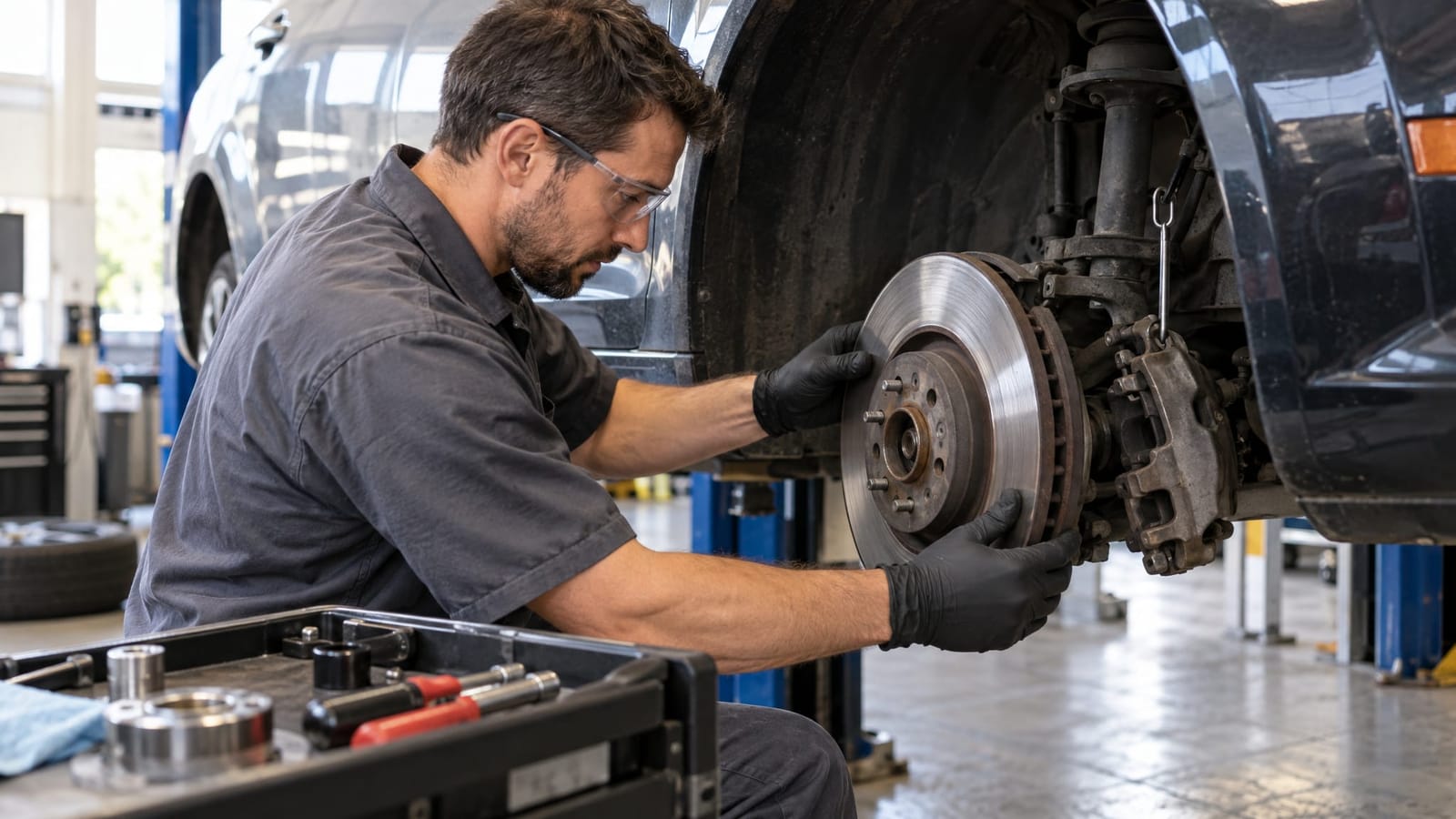
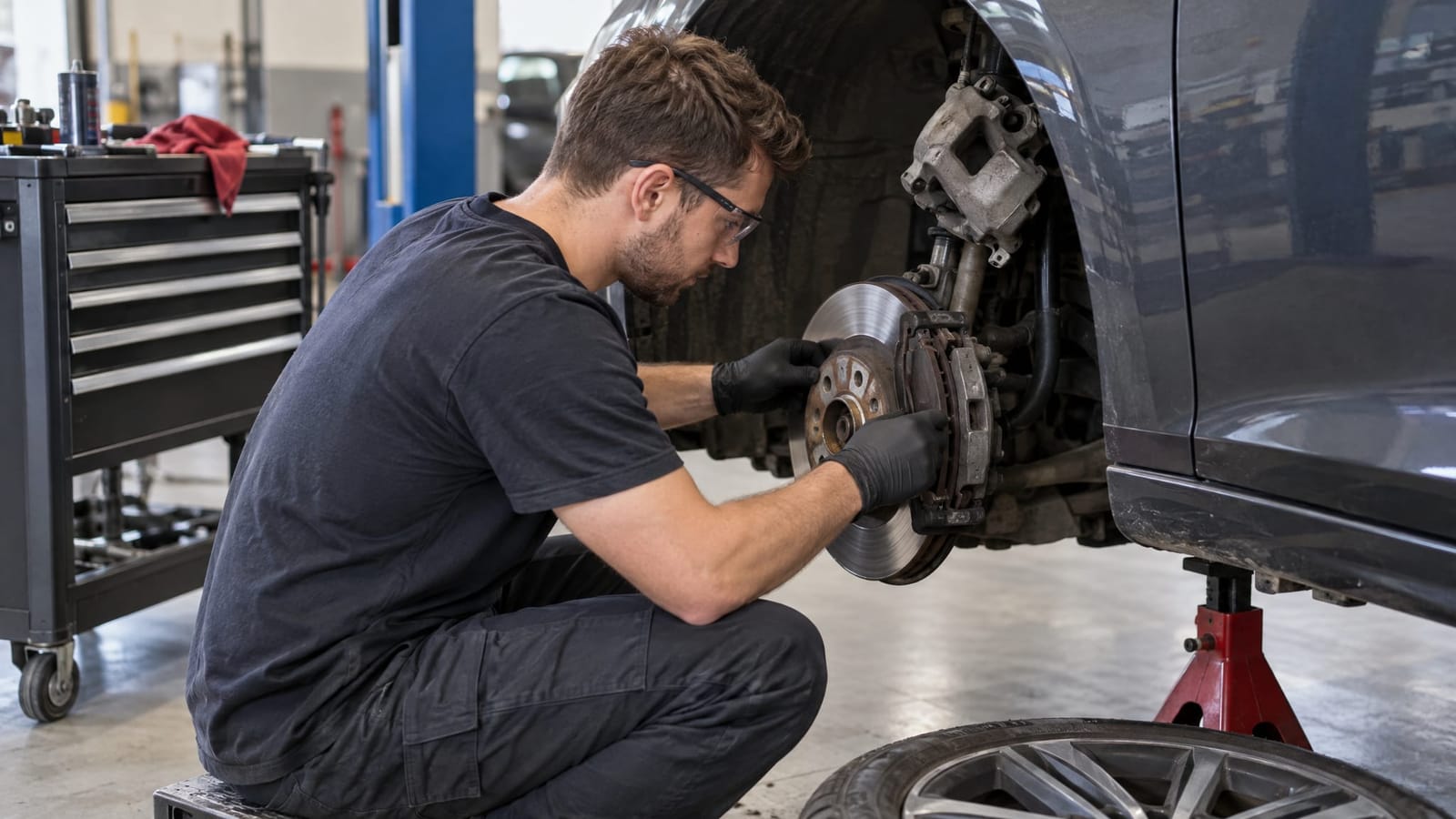
Brakes are a non-negotiable safety system. Brake pads typically need replacement every 25,000 to 70,000 miles depending on driving habits, pad material, and vehicle type. City driving with frequent stopping accelerates pad wear considerably compared to highway driving.
Warning signs that brakes need attention include squealing or grinding noises, a pulsing sensation when braking, increased stopping distances, or a brake warning light. But as part of a preventative car maintenance approach, brake inspections should happen regularly, not just when symptoms appear.
Fluids, Belts, and Hoses: The Supporting Systems That Keep Everything Running
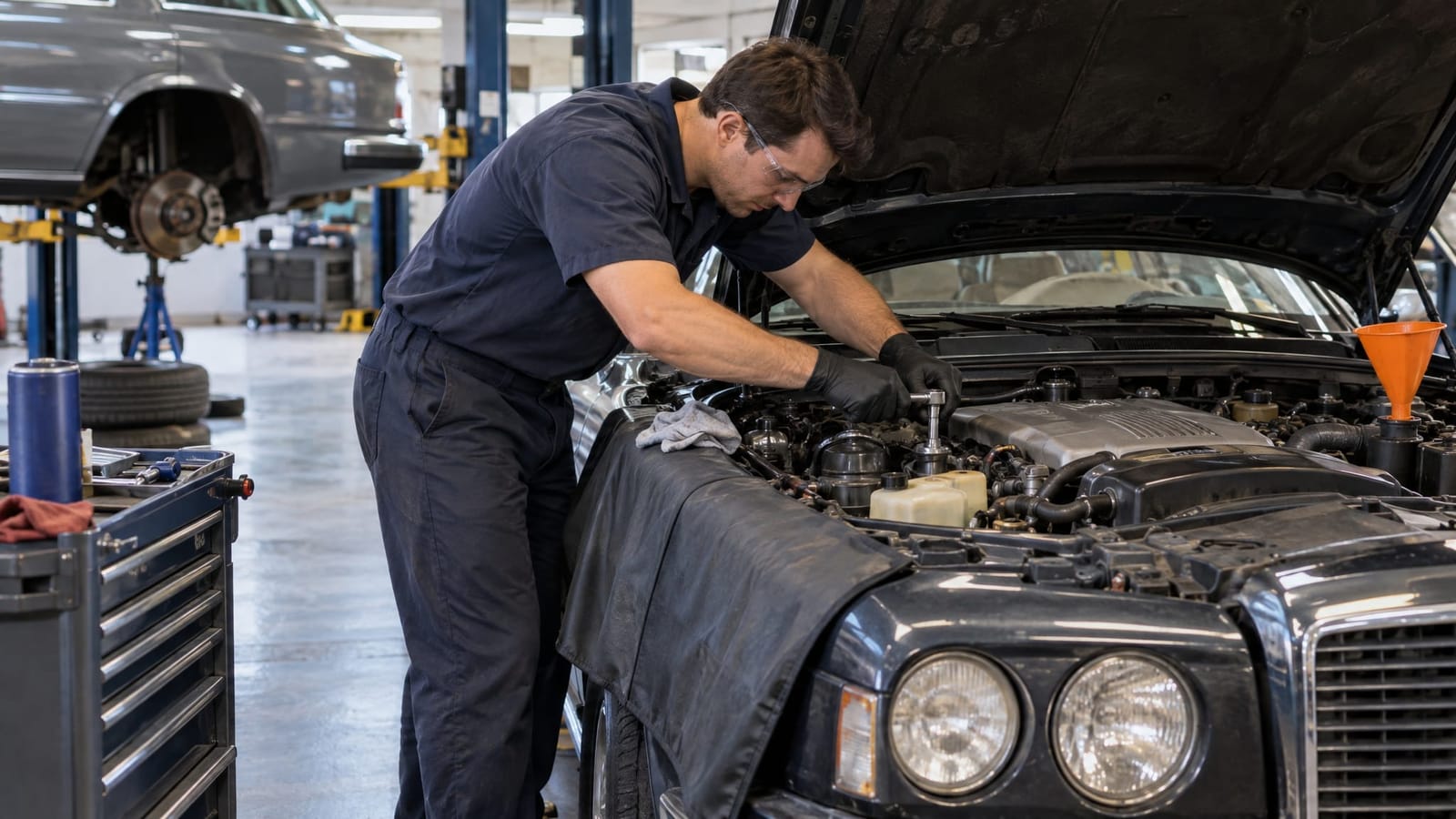
Beyond oil and tires, your vehicle depends on a network of fluids, belts, and hoses working in coordination. These components are easy to overlook because they don't demand daily attention, but when they fail, the consequences can be immediate and significant.
Fluid Checks and Replacements
Modern vehicles rely on multiple specialized fluids, each serving a specific purpose. Coolant (antifreeze) regulates engine temperature and prevents overheating. Transmission fluid lubricates the transmission and keeps gear changes smooth. Brake fluid transmits the force from your brake pedal to the brake components. Power steering fluid (where applicable) keeps steering responsive. Windshield washer fluid keeps your visibility clear.
Each of these fluids has a service life. They break down over time, become contaminated, or lose their effectiveness. Regular checks and timely replacements are a core element of preventative car maintenance that many vehicle owners underestimate. For a thorough look at all the fluid services your vehicle may need, explore our guide to vehicle fluid service maintenance.
Belts and Hoses
Drive belts and timing belts are critical components that power various engine systems, from the alternator to the water pump to the camshaft. A snapped timing belt, for example, can cause severe internal engine damage in many vehicle designs, and it's a repair that can cost thousands of dollars. Yet timing belts are typically recommended for replacement every 60,000 to 100,000 miles as part of scheduled preventative car maintenance.
Hoses, including radiator hoses and heater hoses, carry fluids throughout the engine and cooling system. Over time, rubber hoses become brittle, crack, or soften and collapse. A burst radiator hose in traffic means an immediate stop and a tow. A scheduled inspection catches that vulnerability before it becomes a roadside emergency.
Inspecting belts and hoses for cracking, fraying, swelling, or leaks is a standard part of professional multi-point inspections and should be performed at regular intervals based on your vehicle's age and mileage.
Following Your Vehicle Maintenance Schedule: The Owner's Manual Is Your Best Resource
Every vehicle comes with a manufacturer-recommended maintenance schedule published in the owner's manual. This schedule reflects thousands of hours of engineering and real-world testing specific to your vehicle's engine, transmission, and components. It outlines when each service should occur, typically expressed in mileage intervals or time periods: whichever comes first.
Despite being the most reliable reference available to vehicle owners, the owner's manual is one of the most commonly ignored resources in the glove compartment. Many drivers rely on general advice, word of mouth, or habits they developed with older vehicles, all of which may not accurately reflect what their current vehicle actually needs.
Understanding "Normal" vs. "Severe" Driving Conditions
Most owner's manuals include two maintenance schedules: one for normal driving conditions and one for severe conditions. Severe conditions include frequent short trips under 5 miles, stop-and-go traffic, extreme heat or cold, towing, hauling heavy loads, and dusty or dirty environments.
Here's the important reality: for many drivers, especially those in warmer climates, urban areas, or who regularly tow trailers or haul cargo, "severe" driving conditions apply more often than not. If your driving matches any of those patterns, the more frequent maintenance intervals in your owner's manual likely apply to your vehicle.
A qualified service technician can help you interpret your owner's manual recommendations and apply them to your specific driving habits. To explore how manufacturer schedules work in more detail, our vehicle maintenance schedule guide walks through the process step by step.
Digital Reminders and Service Tracking
One practical way to stay consistent with preventative car maintenance is to use a maintenance tracking system. Many service shops provide records and reminders. Your vehicle may also have a built-in maintenance reminder system that monitors mileage and driving patterns to alert you when service is due.
Keeping a simple log of services performed, including the date, mileage, and service type, creates a maintenance history that's valuable when diagnosing problems, planning future services, and demonstrating care to potential buyers if you ever sell the vehicle.
Early Detection: How Preventative Inspections Save You Money
One of the most valuable components of preventative car maintenance is systematic inspection: examining your vehicle's systems before problems become failures. Early detection is the difference between a $50 belt replacement and a $4,000 engine repair. Between catching a slow tire leak in the shop and experiencing a blowout at highway speeds.
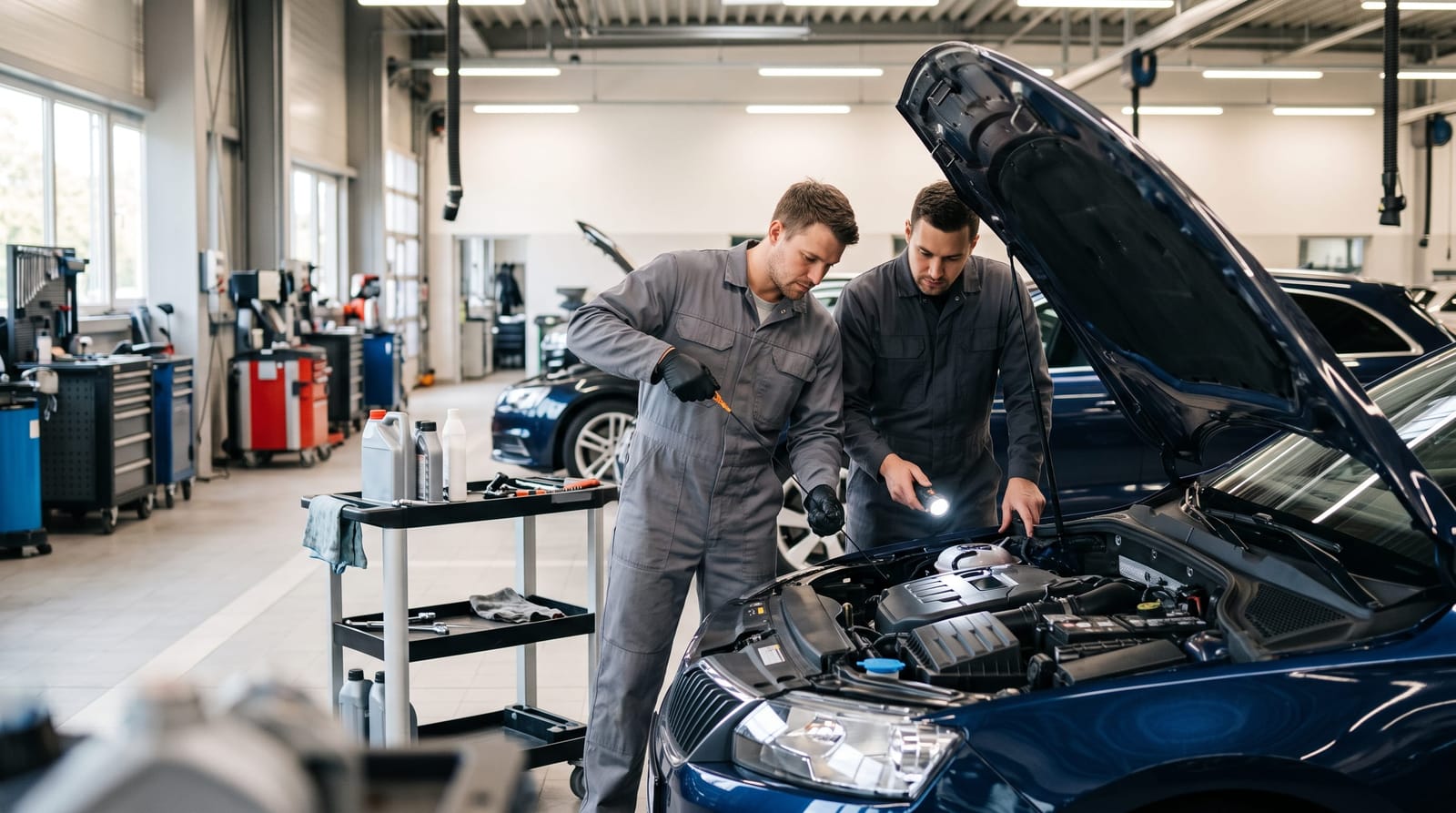
Professional multi-point inspections evaluate dozens of vehicle components in a single visit, giving you a clear picture of your vehicle's current condition. Technicians check brakes, tires, lights, suspension components, fluid levels, belts, hoses, battery condition, filters, and more, all in a structured, systematic process.
What a Multi-Point Inspection Covers
A thorough multi-point inspection typically evaluates:
- Brake pad and rotor thickness
- Tire tread depth and inflation pressure
- Fluid levels and fluid condition (oil, coolant, brake fluid, transmission fluid)
- Battery charge and terminal condition
- Belt and hose condition
- Wiper blade effectiveness
- Exterior lighting (headlights, brake lights, turn signals)
- Air filter condition
- Suspension and steering components
- Shocks and struts (typically recommended for inspection every 50,000 miles)
The goal isn't to find problems: it's to know your vehicle's actual condition so you can address anything that needs attention on your terms, with time to plan, rather than in reaction to a breakdown. Learn more about what this process involves in our guide to multi point vehicle inspection.
Addressing Small Issues Before They Escalate
Many significant vehicle repairs begin as small, inexpensive problems that go unnoticed or unaddressed. A minor coolant leak that costs little to repair can lead to an overheated engine if ignored. A worn CV boot that fails costs far less to replace than the CV axle damage that follows. Catching these conditions during routine inspections is exactly what preventative car maintenance is designed to accomplish.
Preventative Car Maintenance and Your Vehicle's Long-Term Value
Consistent preventative car maintenance isn't just about avoiding repair bills: it's also a strategy for protecting the long-term financial value of your vehicle. Vehicles depreciate in value over time, but that depreciation is significantly influenced by mechanical condition, service history, and overall care.
Resale Value and Service Records
When you sell or trade in a vehicle, documented maintenance history is a genuine asset. Buyers and dealerships recognize the difference between a well-maintained vehicle with service records and one without. A complete maintenance history demonstrates that the vehicle has been cared for responsibly: reducing uncertainty and supporting a higher asking price.
According to Carfax research, vehicles with complete service records can command meaningfully higher resale values compared to equivalent vehicles with no documented maintenance history. For a vehicle worth $15,000 to $30,000, that difference can be substantial in real dollars.
Extended Vehicle Life
The average age of vehicles on American roads has been rising steadily. According to S&P Global Mobility, the average age of a light vehicle in the U.S. reached a record 12.5 years in 2023. Many of those older vehicles are still reliable because their owners invested in preventative car maintenance consistently over the years.
Extending a vehicle's useful life by even two or three additional years through diligent maintenance can represent significant savings compared to taking on a new vehicle payment: particularly in today's automotive market.
Building Your Own Preventative Car Maintenance Routine
Understanding the importance of preventative car maintenance is one thing. Building a realistic routine that actually fits your life is another. The good news is that it doesn't need to be complicated. A consistent, simple approach done regularly outperforms an elaborate plan that gets abandoned.
The Foundation: Interval-Based Services
Start with the core interval-based services and treat them as non-negotiable calendar items. Oil changes are the anchor of most maintenance schedules. Tire rotations are often paired with oil changes for efficiency. These two services alone account for a significant portion of routine preventative car maintenance and keep you in regular contact with a technician who can flag anything else that needs attention.
From there, layer in annual inspections, seasonal checks (particularly around winter and summer when temperature extremes stress vehicle systems), and the longer-interval services specified in your owner's manual, like transmission fluid changes, coolant flushes, spark plug replacement, and timing belt service.
Between-Service Habits That Matter
Preventative car maintenance isn't limited to shop visits. Simple habits between professional services contribute meaningfully to vehicle health:
- Check engine oil level monthly or every few fill-ups
- Check tire pressure monthly and before long road trips
- Watch for dashboard warning lights and address them promptly
- Notice changes in how your vehicle sounds, handles, or performs
- Keep the fuel tank above one-quarter full to protect the fuel pump
- Clean or replace wiper blades before rainy seasons
None of these habits require mechanical expertise. They require only a few minutes of attention and the habit of paying mild, regular attention to a vehicle you depend on.
Choosing a Reliable Service Provider
Consistency with a trusted service provider adds an important layer to your preventative car maintenance program. When a technician becomes familiar with your specific vehicle, its age, mileage, quirks, and service history, they're better positioned to notice changes and catch developing issues. A shop that keeps accurate records and communicates clearly makes it easier to stay on schedule and make informed decisions about your vehicle's care.
Deep Dive Topics: Explore the Full Preventative Maintenance Cluster
Preventative car maintenance covers a broad range of services, systems, and strategies. The following guides explore the most important subtopics in greater depth, giving you comprehensive, actionable information on each area of vehicle care.
Fluid Services and Replacements
Your vehicle depends on multiple fluids working together to protect its mechanical systems. From engine oil and coolant to transmission fluid and brake fluid, each plays a critical role, and each has a service life. Our vehicle fluid service maintenance guide covers every major fluid service, when it's needed, and what happens when it's neglected too long.
Vehicle Maintenance Schedule Guide
Understanding how to read and follow your manufacturer's recommended maintenance schedule is one of the most empowering things you can do as a vehicle owner. Our vehicle maintenance schedule guide breaks down how these schedules work, how to apply them to your driving habits, and how to stay organized so nothing falls through the cracks.
Multi-Point Vehicle Inspection
Systematic inspection is the engine behind effective preventative car maintenance. Our guide to multi point vehicle inspection explains exactly what technicians examine, why each checkpoint matters, and how early detection of small issues prevents expensive repairs later on.
Fleet Preventative Maintenance
For businesses that rely on vehicles to operate, preventative maintenance isn't just a best practice: it's a financial necessity. Our guide to fleet preventative maintenance program covers how to manage maintenance across multiple vehicles, reduce downtime, control operating costs, and keep your team moving reliably.
Conclusion: Preventative Car Maintenance Is the Smartest Investment You Can Make in Your Vehicle
Your vehicle works hard for you every day. Preventative car maintenance is how you make sure it can keep doing that: reliably, safely, and for as long as possible. The core message is simple: consistent, scheduled care costs far less than emergency repairs, protects your vehicle's value, and gives you confidence on the road.
You don't need to be a mechanic to take great care of your car. You need a basic understanding of what matters, a reliable service provider you trust, and the habit of staying consistent with scheduled maintenance. The vehicles that last the longest and perform the best are rarely exceptional machines: they're vehicles that received exceptional care at regular intervals, year after year.
Whether you're establishing a maintenance routine for a newer vehicle or catching up on care for one that's been running on good luck alone, the best time to start is now. Small, consistent actions today protect you from much bigger problems tomorrow.
At Rancho Express Lube in Fontana, our team is here to make preventative car maintenance straightforward and stress-free. Stop in for an oil change, a multi-point inspection, or any routine service, and let us help you keep your vehicle running at its best for the long haul.