Diesel Engine Diagnostics: Professional Problem Detection and Repair
Diesel engines are built to work hard. Whether you're driving a pickup truck, managing a commercial fleet, or operating heavy equipment, your diesel engine is expected to deliver consistent power day after day. But even the most durable engines develop issues over time, and catching those issues early is what separates a minor repair from a major headache. That's where professional diesel engine diagnostics service comes in. As part of a complete diesel vehicle maintenance approach, diagnostics gives technicians a clear picture of what's happening inside your engine before small problems grow into larger ones. In this post, we'll walk through how diesel diagnostics works, what it can detect, and why it's a smart part of any diesel maintenance routine.
What Is Diesel Engine Diagnostics Service?
Diesel engine diagnostics service is the process of using specialized tools and software to read, interpret, and act on data from your engine's electronic control systems. Modern diesel engines are equipped with dozens of sensors that monitor everything from fuel pressure and exhaust temperature to turbocharger performance and emissions output. When something falls outside normal operating range, the engine's computer logs a fault code and may trigger a warning light on your dashboard.
A diagnostic scan retrieves those fault codes and gives technicians a starting point for identifying the root cause of a problem. But good diagnostics goes beyond just reading codes: it involves live data monitoring, component testing, and comparing readings against manufacturer specifications to understand what's actually causing the issue.
Electronic Control Units and Fault Codes
Most diesel trucks and commercial vehicles built after 2000 use an Electronic Control Unit (ECU): essentially the engine's computer brain. The ECU continuously monitors sensor data and stores diagnostic trouble codes (DTCs) when it detects a reading outside acceptable limits. There are thousands of possible fault codes across different makes and models. A skilled technician reads those codes in context, not in isolation, to build an accurate picture of what the engine is experiencing.
Live Data Monitoring
Beyond stored fault codes, diesel engine diagnostics service also involves monitoring live data streams while the engine runs. This allows technicians to see how components behave under real conditions: something a static code read alone can't show. For example, a fuel injector may test fine at idle but perform poorly under load. Live data monitoring catches that kind of dynamic problem.
Common Issues Diesel Diagnostics Can Detect
One of the most valuable aspects of diesel engine diagnostics is its ability to identify a wide range of issues: some obvious, some less so. According to industry data, diesel fuel system problems account for roughly 30% of all diesel engine service visits, making them one of the most common categories diagnostics technicians encounter.
Here are some of the most frequently identified problems during a diesel engine diagnostics service visit:
- Fuel injector wear or failure: Injectors that aren't delivering the right amount of fuel at the right pressure can cause rough idling, reduced power, and increased fuel consumption. Diagnostics can measure injector return rates and spray patterns to pinpoint problems.
- Turbocharger issues: Turbo boost pressure that's too high or too low shows up clearly in diagnostic data. Worn seals, stuck actuators, and clogged intercoolers all affect turbo performance.
- EGR system faults: The Exhaust Gas Recirculation (EGR) system reduces emissions by recirculating a portion of exhaust gases back into the intake. Carbon buildup and valve sticking are common problems that diagnostics identifies quickly.
- DPF regeneration problems: The Diesel Particulate Filter (DPF) traps soot particles from exhaust. When regeneration cycles aren't completing properly, the filter becomes restricted and engine performance suffers.
- Glow plug faults: Glow plugs help diesel engines start in cold temperatures. A single failed glow plug can cause hard starts and rough warm-up performance.
- Coolant temperature irregularities: Overheating or running too cool both affect diesel efficiency and long-term engine health. Diagnostics flags temperature sensor readings that fall outside normal ranges.
For a deeper look at the specific problems diesel diagnostics commonly uncovers, our post on common diesel engine problems covers each one in practical detail.
Emission System Diagnostics: A Growing Priority
Emission system health has become one of the most critical areas of modern diesel engine diagnostics service. Diesel emission systems are complex, and they're subject to significant stress over time, especially in vehicles that do a lot of stop-and-go driving or short-trip city use where exhaust temperatures don't get high enough to complete a normal DPF regeneration cycle.
DPF and DEF System Health
The Diesel Particulate Filter and the Diesel Exhaust Fluid (DEF) injection system, used in Selective Catalytic Reduction (SCR) setups, are two of the most commonly diagnosed emission components. Studies suggest that DPF-related faults are among the top 5 fault categories for diesel vehicles over 100,000 miles. Diagnostics can measure DPF soot load levels, check differential pressure readings across the filter, and verify that DEF dosing is occurring correctly.
EGR Valve and Cooler Testing
EGR system faults generate some of the highest fault code frequencies in diesel diagnostics databases. Carbon deposits accumulate inside EGR valves and coolers over time, restricting flow and causing the system to operate outside its intended parameters. Diagnostic testing measures EGR valve position, flow rate, and response time to determine whether cleaning or replacement is needed.
Why Emission Faults Shouldn't Be Ignored
Beyond the environmental reasons to keep emission systems functioning properly, neglected emission faults can affect engine performance, fuel efficiency, and long-term component durability. If your check engine light is related to an emission system fault, addressing it promptly is the practical choice, not just the responsible one.
Specialized Equipment Used in Diesel Diagnostics
Diesel engine diagnostics service requires equipment specifically designed for diesel systems. A generic code reader designed for passenger cars won't communicate with the full range of diesel-specific systems or provide the data resolution needed for accurate diagnosis.
Diesel-Specific Scan Tools
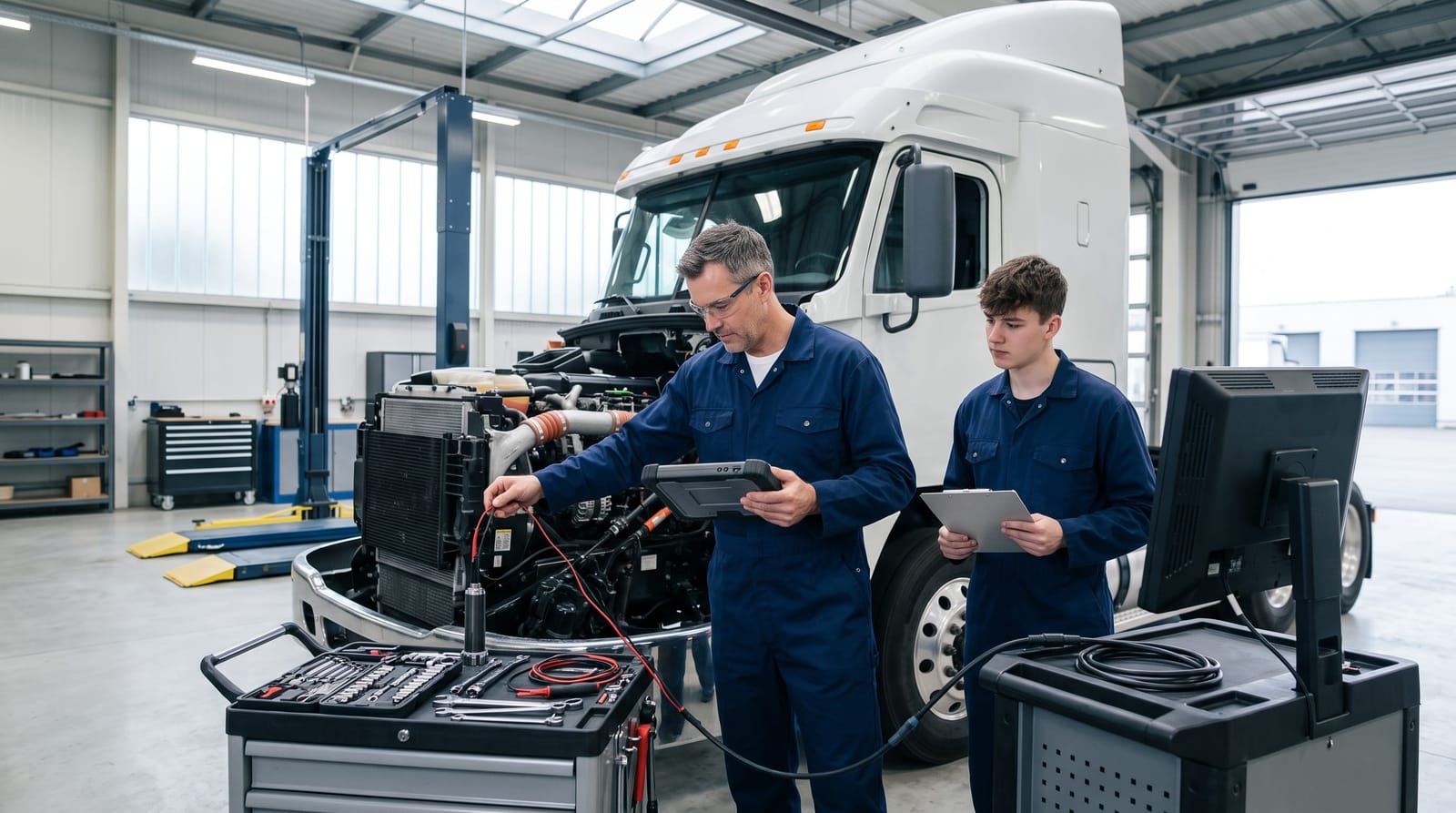
Professional diesel diagnostics uses heavy-duty scan tools that can communicate with diesel ECUs across multiple manufacturers, including Cummins, Duramax, Power Stroke, and others. These tools access proprietary data streams that standard OBD-II scanners can't reach. They also allow bi-directional control, meaning the technician can command specific components to activate during testing.
Fuel System Pressure Testing Equipment
High-pressure common rail diesel fuel systems operate at pressures exceeding 30,000 PSI in some applications. Specialized pressure gauges and flow meters are required to safely and accurately test these systems. Measuring fuel pressure at multiple points in the system helps identify restrictions, weak pumps, and leaking injectors.
Smoke Meters and Exhaust Gas Analyzers
Exhaust opacity testing and gas analysis tools help technicians evaluate combustion quality. Excessive black smoke typically indicates a fueling or air supply issue. White smoke at startup may point to glow plug problems or coolant intrusion. Blue smoke suggests oil consumption. These visual indicators, confirmed with analyzer data, narrow down diagnostic possibilities quickly.
To learn more about the specific tools technicians use during a diesel diagnostic visit, our detailed overview of diesel engine diagnostic tools explains each one in practical, easy-to-follow terms.
How Diesel Diagnostics Fits Into a Broader Maintenance Plan
Diesel engine diagnostics service isn't just something you do when the check engine light comes on. For fleet operators and high-mileage diesel truck owners, scheduled diagnostic checks are a proactive way to catch developing issues before they become costly repairs.
Think of it this way: a diagnostic scan takes roughly 45 to 90 minutes for most diesel vehicles. That's a small investment compared to the downtime and repair costs associated with a fuel system failure or a plugged DPF that wasn't caught early. Many commercial fleet managers incorporate diagnostic scans into their regular service intervals: typically every 50,000 kilometres or alongside major service milestones.
Pairing routine diagnostics with consistent diesel oil change service gives you a comprehensive picture of engine health. Oil analysis during a service visit can reveal signs of coolant contamination, excessive metal particles, or fuel dilution, all of which point to specific mechanical issues that diagnostics can then confirm and isolate.
For operators managing multiple vehicles, diagnostics plays an especially important role in uptime planning. Our resource on diesel truck fleet maintenance covers how diagnostic scheduling fits within a broader commercial vehicle management strategy.
What to Expect During a Diesel Diagnostic Appointment
If you've never had a professional diesel engine diagnostics service performed, here's a straightforward look at what the process typically involves.
First, the technician will connect a diagnostic scan tool to your vehicle's OBD-II port and retrieve any stored fault codes. They'll also review freeze frame data, a snapshot of conditions at the moment a fault was recorded, to understand the context of each code.
Next, the technician will likely start the engine and monitor live data streams to observe how components behave during operation. Depending on the symptoms you've described or the codes retrieved, they may perform additional tests: fuel pressure checks, injector balance testing, turbo boost verification, or DPF soot load measurement.
At the end of the diagnostic process, a good technician will explain what was found in plain language: what the fault codes mean, what they're likely causing, and what the recommended next steps are. You should leave with a clear understanding of the situation, not a confusing list of part numbers and codes.
Related Topics Worth Exploring
If you're researching diesel engine diagnostics as part of a broader interest in diesel vehicle maintenance, these related topics provide useful additional detail:
- Understanding the most common diesel engine problems and how they're typically diagnosed and resolved.
- A closer look at the diesel engine diagnostic tools technicians rely on and what each one measures.
Conclusion
Diesel engine diagnostics service gives you accurate, specific information about your engine's condition, and that information is the foundation of smart maintenance decisions. Whether you're troubleshooting an active warning light, scheduling a proactive health check, or managing a fleet of working trucks, professional diagnostics helps you act on facts rather than guesswork. At Rancho Express Lube, our team is equipped to handle diesel diagnostics with the specialized tools and knowledge these engines require. If your diesel vehicle needs a diagnostic check, we're ready to help: quickly, honestly, and without the runaround. Stop by or give us a call to book your diesel engine diagnostics service appointment today.