Diesel Oil Change Service: Specialized Maintenance for Diesel Engines
Diesel engines are built differently from gasoline engines, and they require a different approach to maintenance. If you own a diesel truck, work van, or commercial vehicle, understanding what goes into a proper diesel oil change service helps you make smarter decisions about your vehicle's care. This post is part of our Complete Diesel Vehicle Service Guide, which covers everything diesel owners need to know about keeping their engines running well. Here, we'll focus specifically on diesel oil specifications, service intervals, filter requirements, and why diesel maintenance differs from what you'd do for a standard gasoline engine.
Why Diesel Engines Need a Different Kind of Oil Change
Diesel engines work harder than most people realize. They operate at higher compression ratios, generate more torque, and often run for longer continuous periods, especially in fleet or commercial settings. All of that puts extra stress on the engine oil.
Gasoline engines and diesel engines share the same basic function, but the conditions inside a diesel are more demanding. Diesel combustion produces more soot and byproduct contamination than gasoline combustion. Standard gasoline engine oil isn't designed to handle that level of contamination over time.
Here's what makes diesel engine oil different:
- Higher detergent content: Diesel oils contain stronger detergent additives to keep soot and carbon deposits from building up inside the engine.
- Stronger base formula: Diesel oils have a higher Total Base Number (TBN), which helps neutralize the acidic byproducts of diesel combustion.
- Viscosity ratings designed for diesel: Common diesel oil weights like 15W-40 or 5W-40 are formulated to handle the heat and pressure of a diesel engine, not just a standard car engine.
- Longer drain interval capability: Quality diesel oils are engineered to handle longer service intervals, though actual intervals depend on usage and engine type.
Using the wrong oil in a diesel engine isn't just a minor issue. Over time, it can lead to accelerated wear and reduced engine efficiency. A proper diesel oil change service starts with using the right product for the job.
Diesel Oil Specifications: What the Numbers Mean
Walking into an auto parts store and staring at a wall of oil labels can feel overwhelming. For diesel engines, the labels include API ratings, viscosity grades, and manufacturer-specific approvals. Here's a straightforward breakdown.
API Service Categories for Diesel
The American Petroleum Institute (API) rates engine oils for both gasoline and diesel engines. For diesel trucks and commercial vehicles, look for the "C" category ratings on the label. Common ratings include:
- CK-4: Current standard for high-speed, four-stroke diesel engines. Suitable for most modern diesel trucks.
- FA-4: A newer category designed for specific fuel economy requirements in newer engines. Not compatible with all older diesel engines.
- CJ-4: An older rating still found in some products. Acceptable for many engines but may not meet newer standards.
Viscosity Grades Common in Diesel Service
Viscosity describes how thick or thin the oil is. For diesel engines, common choices include:
- 15W-40: A traditional diesel workhorse oil. Performs well in warmer climates and is widely used in heavy-duty trucks.
- 5W-40: Better cold-weather performance while still handling high-temperature diesel operation well.
- 10W-30: Sometimes specified for lighter diesel engines or specific manufacturer requirements.
Your owner's manual is always the best starting point. If you're unsure, a qualified diesel oil change service technician can help you identify the right specification for your engine and driving conditions. For a deeper look at choosing the right product, see our guide on diesel engine oil type requirements.
How Often Does a Diesel Engine Need an Oil Change?
One of the most common questions diesel owners ask is how frequently they need service. The answer isn't one-size-fits-all: it depends on the engine, the oil used, and how the vehicle is operated.
General Interval Guidelines
Here are typical diesel oil change service intervals based on vehicle type and use:
- Light-duty diesel trucks (personal use), Often every 5,000 to 7,500 kilometers, depending on oil type and manufacturer guidance.
- Heavy-duty diesel trucks: Can range from 15,000 to 25,000 kilometers or more with the right oil, though many fleet operators prefer shorter intervals for added protection.
- Commercial vehicles in demanding service: Towing, hauling, or stop-and-go city driving may require more frequent oil changes regardless of the vehicle's general rating.
- Diesel vehicles sitting idle for extended periods: Time-based intervals may apply even when mileage is low, as moisture and contamination can still degrade oil.
Factors That Affect Your Interval
Several factors can push your diesel oil change service interval shorter than the standard recommendation:
- Frequent towing or heavy hauling
- Extreme temperatures: very hot summers or very cold winters
- High idling time (common in construction or fleet vehicles)
- Dusty or dirty operating environments
- Older engines with higher mileage
For a complete breakdown of service intervals based on driving conditions and engine type, take a look at our detailed post on diesel truck oil change interval guidance.
Diesel Oil Filters: A Critical Part of Every Service
A diesel oil change service isn't just about the oil. The filter plays an equally important role, and diesel engines often require more robust filtration than gasoline engines.
Why Diesel Filters Work Harder
Diesel combustion generates more soot particles and carbon byproducts than gasoline combustion. The oil filter has to trap those particles before they circulate through the engine. A filter that isn't up to the job, or one that's left in service too long, can allow contaminants to reach engine bearings and other precision components.
Types of Filters Used in Diesel Service
- Full-flow oil filters: Filter all of the oil passing through the engine. Standard on most diesel vehicles.
- Bypass filters: Filter a small portion of oil at very fine levels. Sometimes used as supplemental filtration in heavy-duty applications.
- Combination systems: Some heavy-duty engines use both types together for maximum protection.
Beyond the oil filter, diesel engines also use fuel filters and, in many cases, coolant filters: components that don't exist in most gasoline vehicles. These are often serviced at the same time as the oil, making a diesel service appointment more comprehensive than a standard oil change. Our post on diesel engine filter requirements explains the full filtration picture in more detail.
What a Professional Diesel Oil Change Service Includes
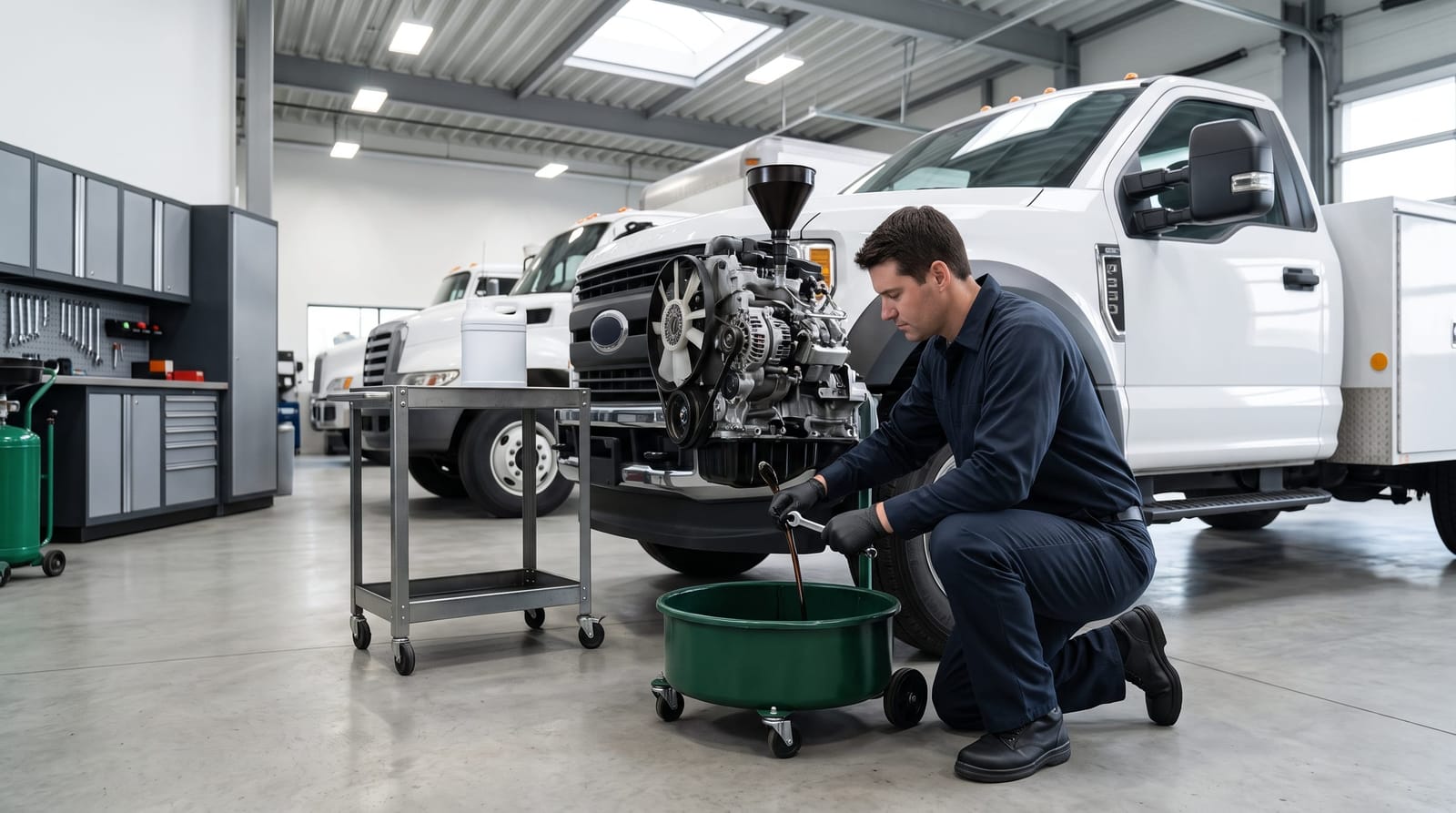
A diesel oil change service done properly involves more than draining old oil and pouring in new. Here's what a thorough service typically covers:
- Draining the old oil completely: Allowing the used oil to fully drain before adding fresh oil.
- Replacing the oil filter: Installing a diesel-rated filter appropriate for the engine and oil type.
- Inspecting for leaks: Checking the drain plug, filter housing, and accessible seals for any signs of oil seepage.
- Adding the correct diesel-rated oil: Using the right viscosity grade and API rating for the specific engine.
- Checking fluid levels: Topping up or noting the condition of coolant, brake fluid, and other fluids.
- Visual inspection of accessible components: Belts, hoses, and other under-hood items a technician can reasonably assess during a service visit.
- Resetting the oil life monitor, Where applicable, resetting the vehicle's oil monitoring system to track the new interval accurately.
Diesel trucks and commercial vehicles vary by make and model. Not every shop has the experience or equipment to properly service all diesel engines. Working with a provider that understands diesel-specific requirements makes a meaningful difference in service quality. For details on which diesel vehicles can be serviced, see our overview of diesel truck service all makes.
Diesel vs. Gasoline Oil Change: A Side-by-Side Comparison
If you've previously owned only gasoline-powered vehicles, some of the differences in diesel service can come as a surprise. Here's a clear comparison:
- Oil type: Diesel requires heavy-duty, high-detergent oil with specific API ratings. Gasoline engines use a different oil category entirely.
- Oil quantity: Diesel engines typically hold more oil than gasoline engines. A diesel truck may require 10 to 15 liters per service versus 4 to 5 liters in a standard car.
- Filter complexity: Diesel vehicles often have additional filtration systems, including fuel filters and water separators, that aren't part of a gasoline oil change.
- Service cost, Because of the additional oil volume and more robust filters, a diesel oil change service typically costs more than a gasoline service. Diesel oil changes generally range from $55 to $100 or more depending on the vehicle and oil used.
- Service intervals: Many diesel trucks can go longer between oil changes than gasoline vehicles, though this varies significantly based on duty cycle and manufacturer recommendations.
- Technician knowledge: Diesel engines benefit from service by technicians who understand diesel-specific requirements, not just general oil change procedures.
Related Details Worth Exploring
Diesel engine maintenance covers a lot of ground. If you want to go deeper on any of the topics touched on here, these related posts are a good next step:
- Understanding diesel truck oil change interval recommendations based on your specific engine and use case.
- Choosing the right product with our breakdown of diesel engine oil type requirements.
- Learning about the full filtration picture with our guide on diesel engine filter requirements.
- Finding out whether your truck is covered in our post on diesel truck service all makes.
Keeping Your Diesel Running Well Starts With the Right Service
A diesel oil change service is one of the most important routine maintenance tasks you can stay on top of as a diesel vehicle owner. Using the correct oil specification, replacing the appropriate filters, and following service intervals that reflect how your vehicle is actually used: these are the basics that protect your engine over the long haul.
At Rancho Express Lube, we understand that diesel engines have their own requirements and deserve service that reflects that. Whether you drive a personal diesel truck or manage a fleet of commercial vehicles, our team is here to make sure your diesel gets the right care. Stop in for a diesel oil change service and let us help you keep your vehicle on the road where it belongs.