Do All Transmissions Have Filters That Need Replacement?
If you've ever scheduled a transmission service and wondered whether your vehicle actually has a filter that needs changing, you're not alone. It's one of the more common questions vehicle owners ask, and the honest answer is: it depends on your transmission type. Not every vehicle has a serviceable filter, and replacement intervals vary widely depending on design and how the vehicle is used. This guide breaks down the different filter setups, what they do, and what transmission filter replacement necessity actually looks like for your specific vehicle.
What Does a Transmission Filter Actually Do?
Before getting into whether your vehicle has one, it helps to understand the job a transmission filter performs. Your transmission relies on pressurized fluid to keep internal components lubricated, cool, and functioning correctly. Over time, that fluid picks up tiny metal particles, clutch material, and other debris from normal wear inside the transmission.
A transmission filter sits between the fluid pan and the pump, capturing that debris before it circulates through sensitive valves and hydraulic passages. Without a working filter, contaminants can cause sluggish shifting, increased wear on internal parts, and eventually more serious transmission problems.
According to industry service guidelines, transmission filters are typically recommended for replacement every 30,000 to 60,000 miles, though this number shifts significantly depending on your vehicle manufacturer's specifications and the type of transmission you have. Some vehicles with sealed systems have no serviceable filter at all, while others have filters that should be inspected at every fluid change.
Internal vs. External Filters: What's the Difference?
Transmission filters generally fall into two categories: internal filters and external filters. Understanding which one your vehicle has matters a great deal when discussing transmission filter replacement necessity.
Internal Filters
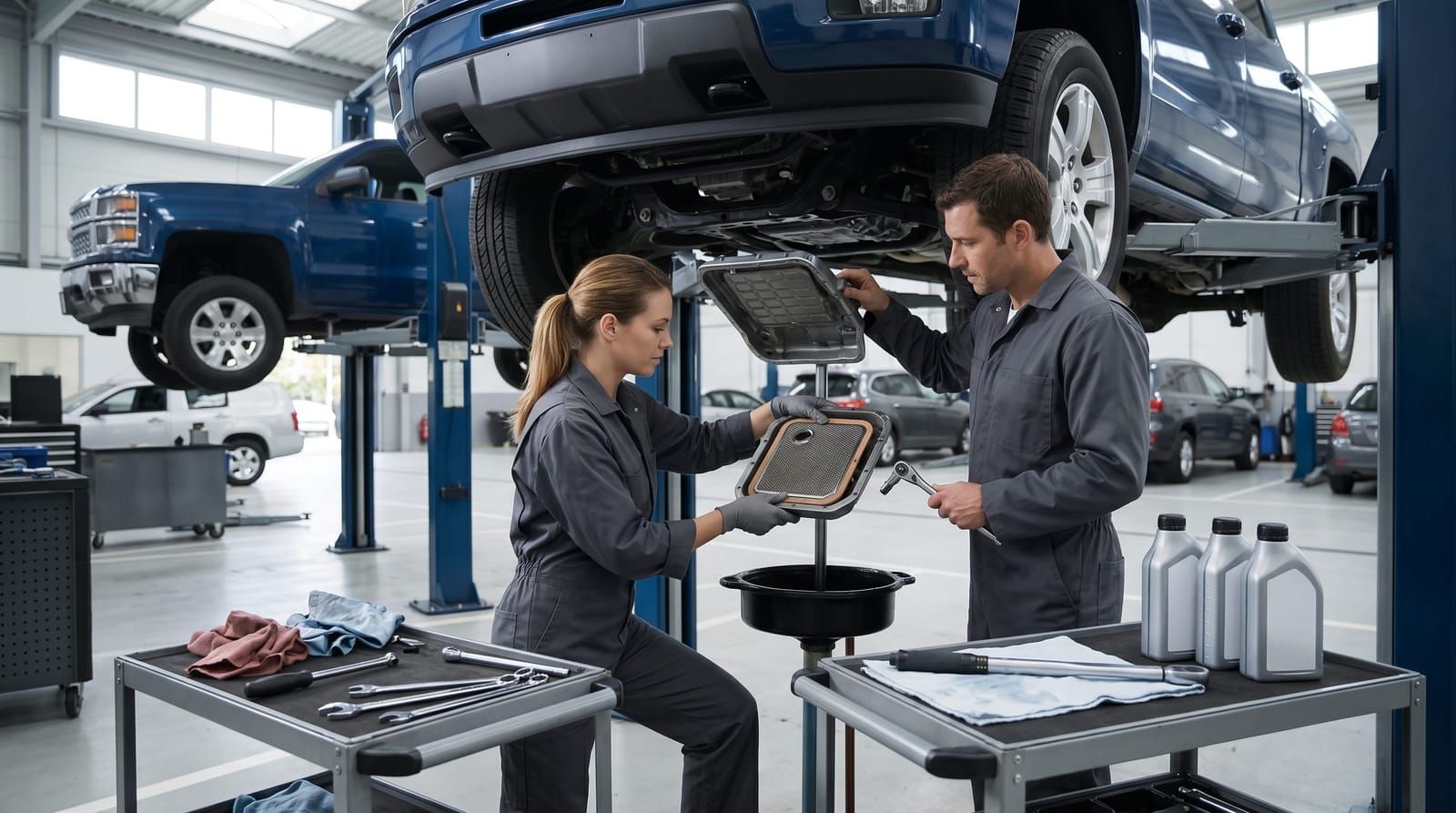
Most traditional automatic transmissions use an internal filter located inside the transmission pan. These filters are typically made of a fine mesh screen or a paper/felt element mounted to a pickup tube that draws fluid up into the pump. To replace an internal filter, a technician removes the transmission pan, drains the old fluid, installs the new filter, and reinstalls the pan with a fresh gasket. This type of service typically replaces 30 to 40 percent of the total transmission fluid at the same time: the rest remains in the torque converter and other passages. Vehicles with this setup include many older domestic models, trucks, and SUVs.
External Inline Filters
Some vehicles, particularly certain European models and a number of trucks with transmission coolers, use an external inline filter located in the transmission cooler line. These are much easier to access and replace without dropping the transmission pan. They function similarly to an oil filter: fluid passes through the element, debris is captured, and clean fluid continues through the system. External filters are often overlooked during routine maintenance, but their replacement necessity is just as real as internal units.
Not All Transmissions Have Serviceable Filters
Here's where things get more nuanced. A growing number of modern vehicles, especially those with continuously variable transmissions (CVTs) and many dual-clutch automatic transmissions, use what manufacturers call "lifetime" fluid systems. These designs often have internal filters that are not meant to be replaced independently of the entire transmission unit.
This doesn't mean the fluid never needs attention. In fact, many transmission specialists recommend servicing CVT fluid every 30,000 to 45,000 miles despite the "lifetime" designation, because real-world driving conditions, stop-and-go traffic, towing, hot weather, break down fluid faster than laboratory test cycles suggest.
Vehicles with sealed transmissions typically include many Honda CVTs, Nissan CVTs, and certain Toyota models. If you're unsure which category your vehicle falls into, a quick check of your owner's manual or a conversation with a service advisor will clarify whether a filter replacement is part of your transmission service or whether a fluid exchange alone is the appropriate service.
How Transmission Type Affects Filter Service Intervals
The type of transmission your vehicle uses is one of the biggest factors in determining transmission filter replacement necessity. Here's a general breakdown by transmission type:
- Traditional automatic transmissions: Most commonly have serviceable internal filters. Replacement is typically recommended every 30,000 to 60,000 miles depending on the manufacturer and driving conditions.
- CVT transmissions: Most do not have a separately replaceable filter. Fluid exchanges are the primary service requirement, often recommended between 30,000 and 45,000 miles for vehicles used in moderate to heavy driving conditions.
- Dual-clutch transmissions (DCT): Service intervals and filter availability vary by manufacturer. Some dual-clutch units have serviceable filters; others do not. Fluid changes are commonly recommended around every 40,000 miles.
- Manual transmissions: Manual gearboxes generally do not use a filtration system. Gear oil replacement is the primary service need, typically every 30,000 to 60,000 miles.
Because service requirements vary this much from one vehicle to the next, it's always worth checking your specific vehicle's maintenance schedule rather than assuming a universal interval applies to your situation.
Signs That a Transmission Filter May Need Attention
Even if you know your service interval, there are a few signs that your transmission filter may be restricted or overdue for service before you hit that mileage milestone. These aren't cause for alarm, but they are worth noting:
- Delayed or hesitant gear engagement, especially when first shifting into drive or reverse
- Rough or jerky shifts that weren't present before
- Transmission fluid that appears dark brown or has a burnt smell when checked
- Slight slipping sensation when accelerating from a stop
None of these symptoms automatically mean your filter is the culprit, fluid condition and overall transmission health matter too, but they're good reasons to have a technician take a look rather than waiting until the next scheduled interval.
Frequently Asked Questions
Does every vehicle need a transmission filter replacement?
No. Not every vehicle has a serviceable transmission filter. Many modern vehicles with CVT or sealed automatic transmissions use filters that are internal to the unit and not designed for independent replacement. For these vehicles, a fluid exchange is the recommended service. Vehicles with traditional automatic transmissions typically do have a replaceable filter, usually serviced every 30,000 to 60,000 miles.
What happens if a transmission filter is never replaced?
In vehicles that have a serviceable filter, a clogged or saturated filter restricts fluid flow through the transmission. This can lead to sluggish shifting, reduced hydraulic pressure inside the transmission, and accelerated wear on internal components over time. Regular service keeps the filter clean and fluid circulating properly.
Is a transmission filter replacement the same as a transmission flush?
Not exactly. A filter replacement usually involves dropping the transmission pan, replacing the filter, and reinstalling the pan with fresh fluid: replacing roughly 30 to 40 percent of the total fluid volume. A transmission flush uses equipment to exchange a higher percentage of the fluid without removing the pan. Some shops recommend both together for a more thorough service, but the right approach depends on your vehicle and its current condition.
How do I know if my vehicle has an internal or external transmission filter?
Your owner's manual is the best first resource. A qualified service technician can also identify your transmission type and filter configuration quickly. If you're scheduling a transmission service, asking your service advisor directly is the simplest way to understand exactly what your vehicle needs.
The Bottom Line on Transmission Filter Replacement
Transmission filter replacement necessity is real, but it's not universal. Whether your vehicle needs a filter replaced depends on the transmission type, the manufacturer's design, and your driving conditions. Traditional automatic transmissions with serviceable filters benefit from replacement every 30,000 to 60,000 miles, while many newer sealed systems focus on fluid exchange instead. The key is understanding what your specific vehicle requires and staying consistent with that schedule. Keeping up with routine transmission maintenance is one of the more straightforward ways to protect a system that's expensive and complex to repair.