Do You Need a HEPA Cabin Air Filter? Are They Worth the Extra Cost?
If you've recently had your cabin air filter replaced, or you're shopping around for one, you may have noticed that HEPA-rated options cost noticeably more than standard filters. That naturally raises the question: is the upgrade actually worth it, or is it just clever marketing? The answer depends on who you are, where you live, and what you're breathing inside your vehicle every day. This guide breaks down what HEPA cabin air filters actually do, who benefits most, and how to decide if the cost makes sense for your situation.
What Does "HEPA" Actually Mean in a Cabin Air Filter?
HEPA stands for High-Efficiency Particulate Air. It's a filtration standard, not a brand name, that specifies a filter must capture at least 99.97% of airborne particles as small as 0.3 microns. To put that in perspective, a human hair is roughly 50-70 microns wide. HEPA filters are designed to catch things that are essentially invisible to the naked eye, including fine dust, pollen, mold spores, bacteria, and even some viral particles.
In the automotive context, a HEPA cabin air filter sits in the same location as your standard cabin filter, typically behind your glove box or under the dashboard, and performs the same basic job of filtering the air that flows through your vehicle's heating, ventilation, and air conditioning (HVAC) system before it reaches you and your passengers. The key difference is the level of filtration efficiency. A standard factory cabin air filter does a solid job catching larger particles like leaves, dust, and debris. A HEPA-rated filter catches significantly finer particles that a standard filter would let through.
It's worth noting that true HEPA-certified cabin filters are not available for every vehicle. Some products marketed as "HEPA-style" or "HEPA-grade" are high-quality filters but may not meet the strict certified standard. If filtration performance matters to you, it's worth confirming the filter's actual specifications before purchasing.
Who Benefits Most from a HEPA Cabin Air Filter?
Not everyone needs the highest-grade cabin filtration available, but for certain groups, the upgrade is a genuinely meaningful one, not just a feature to check off a list.
Allergy and Asthma Sufferers
If you or a family member deals with seasonal allergies, asthma, or chronic respiratory sensitivity, a HEPA cabin air filter can make a real difference in comfort during your commute. Pollen, fine dust, and airborne allergens that trigger symptoms are exactly the kind of particles HEPA filters are built to capture. Your vehicle's cabin is a small, enclosed space: the air quality inside it matters more than most people realize.
Families with Young Children
Children's respiratory systems are still developing, which makes air quality a reasonable consideration for parents. If you spend significant time driving kids to school, activities, or appointments, cleaner cabin air is a practical benefit, especially in areas with higher pollution levels or during wildfire season.
Drivers in Southern California
This one hits close to home. The Rancho Cucamonga area, like much of Southern California, faces unique air quality challenges, from smog and particulate pollution to seasonal wildfire smoke. In fact, wildfire smoke car air filter replacement frequency becomes a real concern during fire season, when fine smoke particles can rapidly clog or saturate a filter regardless of type. In these conditions, having the highest-grade filtration available inside your vehicle makes practical sense. A HEPA cabin air filter offers an added layer of protection when outdoor air quality is at its worst.
Is a HEPA Cabin Air Filter Worth the Extra Cost?
Here's the honest answer: it depends on your priorities. A standard cabin air filter typically costs between $15 and $30 for the part itself, while a HEPA-rated option might run $40 to $80 or more depending on the vehicle. That's a real price difference, and it's fair to ask whether it's justified.
If you're a generally healthy driver without respiratory sensitivities, who lives in an area with relatively clean air and doesn't spend long hours commuting, a standard high-quality cabin filter will likely serve you well. The performance gap won't translate into a noticeable day-to-day benefit for your situation.
However, if any of the groups described above sounds like you, or if you simply want the cleanest possible air circulating in your vehicle, the upgrade cost is modest in the context of overall vehicle maintenance. You're not replacing it every week. Most cabin filters, including HEPA versions, are serviced every 15,000 to 25,000 miles under normal driving conditions (though that interval can shorten significantly with heavy smoke or dust exposure).
One thing to keep in mind: because HEPA filters are denser and more efficient, they can slightly reduce airflow through your HVAC system compared to a standard filter. This makes staying on schedule with replacements especially important. A clogged HEPA filter that's overdue for service can strain your HVAC blower motor and reduce air output noticeably. Timely replacement is the key to getting the benefit without the downside.
How to Know If Your Vehicle Supports a HEPA Cabin Air Filter
Not all vehicles are compatible with HEPA cabin filters: it comes down to the size and configuration of the filter housing. Some manufacturers, like Tesla, have made HEPA filtration a factory feature on certain models. For most vehicles, third-party HEPA-rated options exist for popular makes and models, but availability varies.
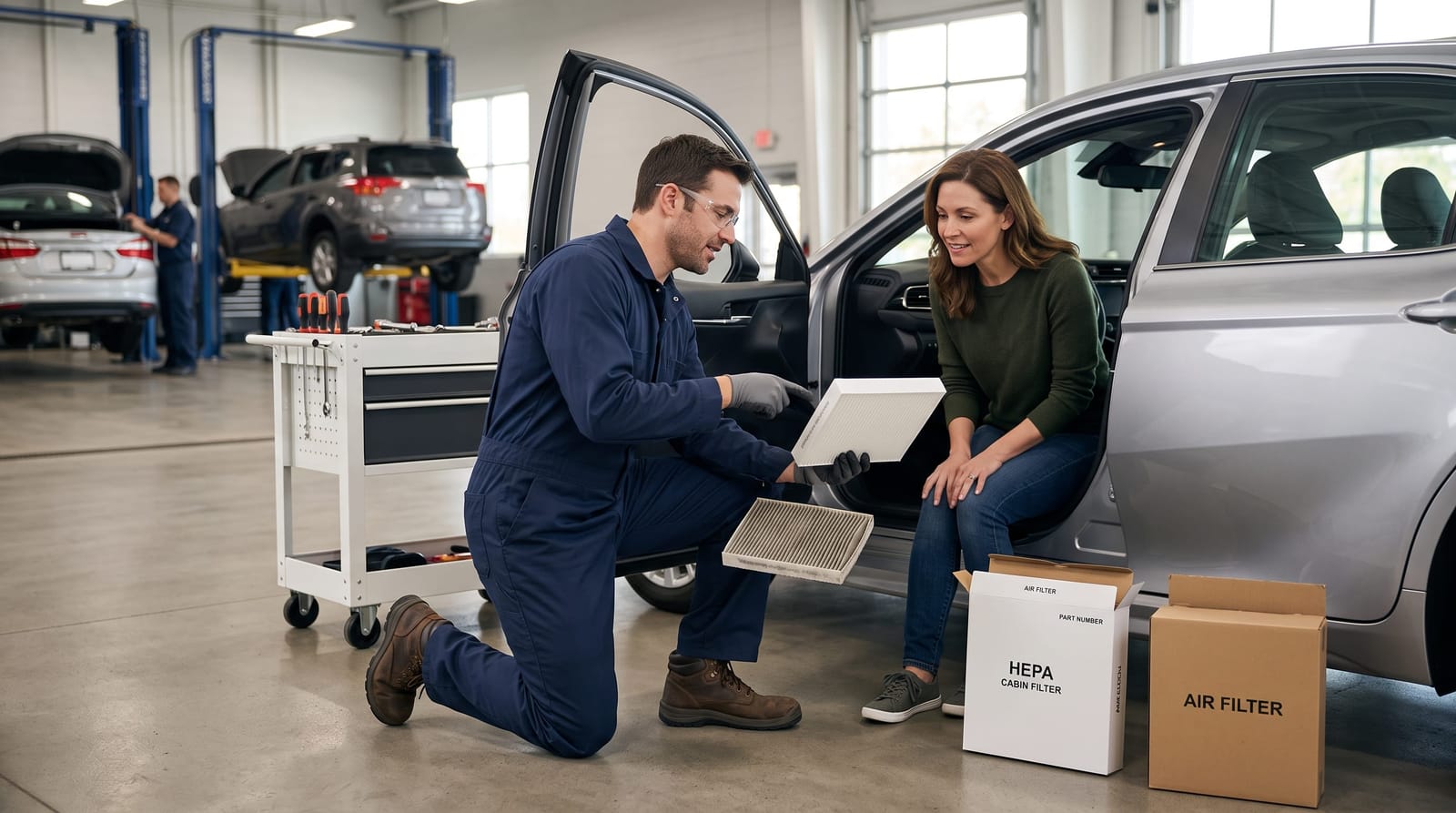
The easiest way to find out whether a HEPA upgrade is available for your specific vehicle is to ask at your next service appointment. At Rancho Express Lube, technicians can check your vehicle's cabin filter compatibility and walk you through the available options, including whether a HEPA upgrade is practical for your make and model. There's no obligation to upgrade; the goal is simply to give you the information you need to make a decision that fits your situation.
HEPA vs. Standard vs. Activated Carbon: Choosing the Right Filter
While this post focuses on HEPA filtration, it helps to understand where it fits in the broader range of cabin filter options:
- Standard particulate filters: The most common type. Captures larger particles like pollen, dust, and debris. Adequate for most drivers in moderate air quality conditions.
- Activated carbon (charcoal) filters: Adds an odor-blocking layer that absorbs exhaust fumes, smoke smells, and chemical odors in addition to particulate filtration. A popular middle-ground option for drivers in urban or high-traffic areas.
- HEPA-rated filters: Highest level of particulate capture. Best for those with allergies, asthma, or extended exposure to poor air quality. Some HEPA options also include an activated carbon layer for combined odor and particle control.
None of these options is universally "the best": the right filter is the one that matches your environment, your health needs, and your budget.
Frequently Asked Questions
How often does a HEPA cabin air filter need to be replaced?
Under normal driving conditions, most cabin air filters, including HEPA versions, are recommended for replacement every 15,000 to 25,000 miles, or roughly once a year for average drivers. However, in areas with heavy dust, smoke, or high pollution levels (like Southern California during wildfire season), you may need to replace it more frequently. A technician can visually inspect the filter at your next service and let you know if it's due.
Will a HEPA cabin air filter affect my AC performance?
Because HEPA filters are denser than standard filters, they can slightly reduce airflow through your HVAC system when first installed, and more noticeably so when they become clogged from extended use. This is why keeping up with replacements on schedule is important. A clean HEPA filter should not cause any meaningful performance issues in a properly functioning HVAC system.
Are HEPA cabin air filters available for all vehicles?
Not every vehicle has a HEPA-compatible cabin filter option available. Availability depends on the make, model, and year of your vehicle. Checking with a knowledgeable service technician is the most reliable way to confirm whether a HEPA upgrade exists for your specific car.
Is a HEPA cabin air filter worth it if I don't have allergies?
It can still be a reasonable choice depending on where you live and how much time you spend in your vehicle. For drivers in high-pollution areas or regions prone to wildfire smoke, like the Inland Empire, improved cabin air filtration offers real-world benefits even without a specific health condition. For drivers in areas with generally good air quality who don't commute heavily, a standard quality filter is usually sufficient.
The Bottom Line on HEPA Cabin Air Filters
A HEPA cabin air filter is a worthwhile upgrade for the right driver: particularly those dealing with allergies, asthma, young children in the car, or regular exposure to poor air quality conditions like smog and wildfire smoke. For others, a standard or activated carbon filter will perform well and cost less. The best approach is to make the decision based on your specific situation rather than treating it as either a must-have or a waste of money. Next time you're in for service at Rancho Express Lube, ask about what's available for your vehicle: it's a quick conversation that can help you make a more informed choice for your cabin air quality.