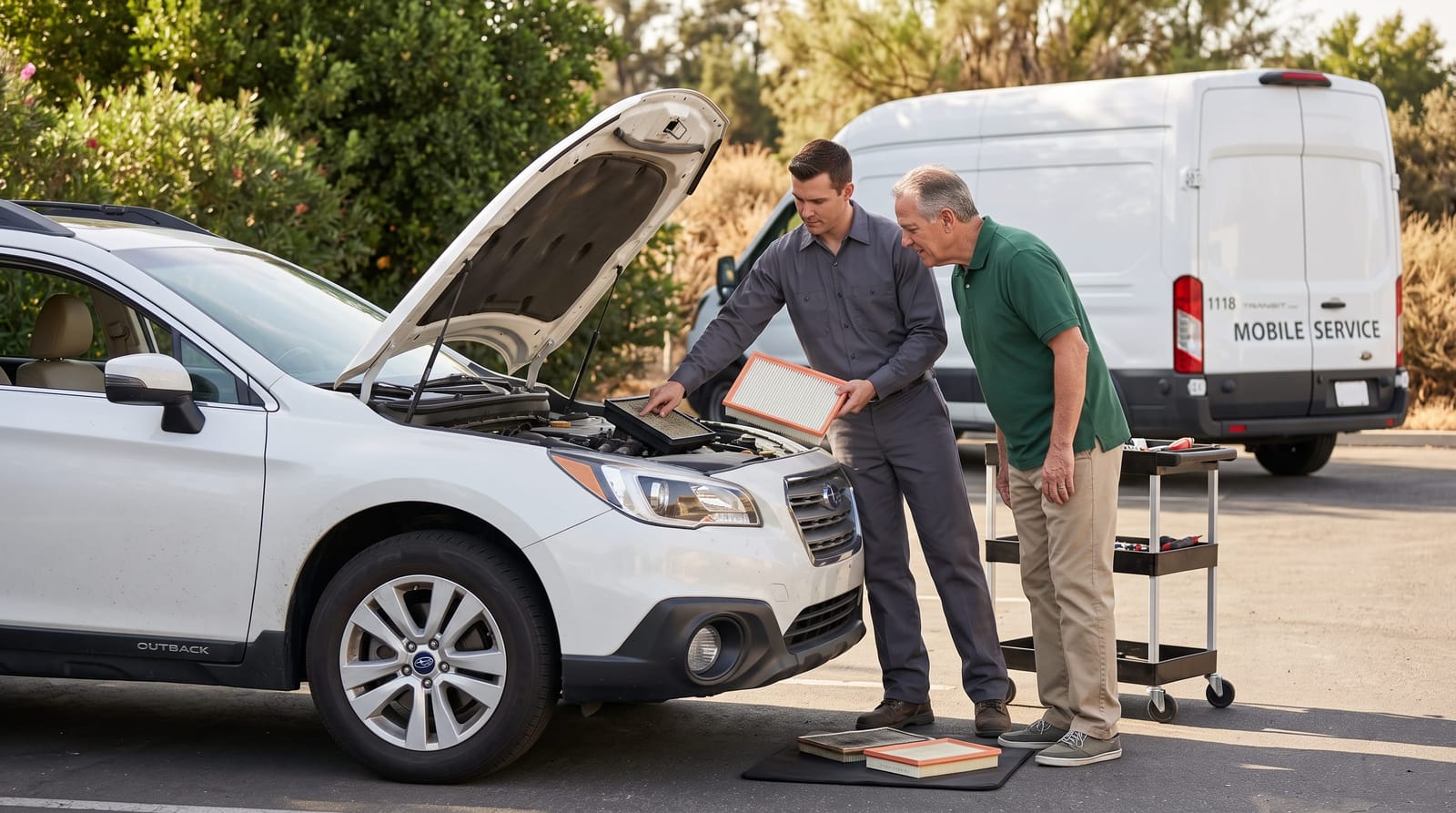
How Does a Clogged Cabin Air Filter Affect AC Performance?

If your car's AC feels weaker than it used to, less airflow, slower cooling, or a slightly stale smell when you turn it on, your first instinct might be to schedule an AC recharge. But before you spend money on refrigerant, there's a simpler culprit worth checking: your cabin air filter. A clogged cabin air filter's effect on AC performance is one of the most overlooked causes of weak cooling in everyday vehicles, and it's a surprisingly easy fix. This guide walks you through exactly what's happening and how to tell if this is your issue.
What Is a Cabin Air Filter and What Does It Do?
Your vehicle has two separate air filters that serve completely different jobs. The engine air filter keeps dust and debris out of your engine. The cabin air filter, located in a different part of the car entirely, filters the air that comes through your heating, ventilation, and air conditioning (HVAC) system before it enters the passenger compartment.
Every time you run your AC, heat, or fan, air gets pulled from outside (or recirculated from inside the cabin) and pushed through this filter before it reaches the vents. The filter catches dust, pollen, leaves, road debris, and even small insects so that the air you're breathing inside the car stays cleaner.
Over time, typically every 15,000 to 25,000 miles depending on your driving environment, that filter collects enough material to start restricting the airflow moving through it. When that happens, your entire HVAC system has to work harder to push air through, and the performance you notice at the vents goes down noticeably.
How a Clogged Cabin Air Filter Affects Your AC Specifically
Understanding clogged cabin air filter AC performance issues starts with knowing how your car's air conditioning actually cools the air. Your AC system works by pulling warm cabin air across a cold component called the evaporator coil. As air passes over it, heat and moisture are removed, and cooler, drier air gets pushed out through your vents.
Here's the problem: that process depends on a steady, consistent volume of air moving through the system. When a clogged cabin air filter restricts that flow, less air reaches the evaporator coil per minute. The result is slower, weaker cooling, even if your refrigerant level and compressor are both perfectly fine.
Think of it like trying to drink through a straw that's partially pinched. The liquid is still there, but the restriction makes everything harder and slower. Your AC system is in the same situation when the filter is packed with debris.
Specifically, a clogged filter can cause:
- Noticeably reduced airflow at your vents even on the highest fan setting
- The cabin taking much longer to cool down on a hot day
- Uneven cooling where some vents perform better than others
- The blower motor working harder (and sometimes making more noise) to compensate
- Increased strain on your HVAC system over time
None of these symptoms mean your AC is broken. They mean it's being choked off by a filter that needs to be replaced.
The Misdiagnosis That Costs Drivers Unnecessary Money
This is where many drivers end up spending more than they need to. Weak AC output feels like a refrigerant problem. So a lot of people head to a shop and pay for an AC recharge, sometimes $100 to $200 or more, only to find that the cooling feels the same afterward.
That's because refrigerant wasn't the issue. The airflow was.
A cabin air filter replacement typically costs between $20 and $40 for the part, with a straightforward installation that takes just a few minutes. In many vehicles, the filter is accessible without any tools at all: it's often located behind the glove box or under the dashboard on the passenger side.
Getting this checked before assuming you need an AC recharge can save you time, money, and frustration. A good shop will inspect the cabin air filter as part of any AC service visit rather than jumping straight to refrigerant.
Other Symptoms That Point to a Clogged Cabin Filter
Beyond weak AC performance, a clogged cabin air filter often shows up in a few other ways that are easy to recognize once you know what to look for.
Musty or stale odor when the AC or heat turns on. When a filter is saturated with moisture, dust, and organic debris, it can develop a musty smell. That odor gets pushed right into the cabin every time air moves through the system. If you notice a smell that fades after a few minutes of driving, the filter is a likely cause. For more detail on what these odors actually indicate, dirty cabin air filter smell causes covers the different types of odors and what they mean.
Foggy or slow-to-defrost windows. Your defroster relies on the same airflow system as your AC. A restricted filter means less air movement across the windshield, which can make defrosting take longer, especially frustrating on cold mornings or during rain.
Higher than normal fan noise. When the blower motor has to work against a restricted filter, it may run louder or sound strained at higher settings. This is usually a subtle change, but if your fan suddenly seems noisier, it's worth checking the filter.
Increased dust inside the car. A heavily clogged filter may actually start allowing particles to bypass it or lose its effectiveness. If you're noticing more dust on your dashboard even though you're not driving on dirt roads, that's a clue.
How to Self-Diagnose Before Your Next Service Visit
You don't need to be a mechanic to get a general sense of whether your cabin air filter might be the problem. Here's a simple process to check:
- Note when the symptoms started. Did the weak AC develop gradually over months, or was it sudden? Gradual decline points more toward a clogged filter; sudden loss of cooling is more likely a refrigerant or mechanical issue.
- Check your last service record. Look at your maintenance history, if you can't find a cabin air filter replacement in the last 15,000 to 25,000 miles, it's probably overdue regardless of other symptoms.
- Run the AC on max fan and hold your hand near a vent. Weak airflow on the highest setting is one of the clearest indicators of a restricted filter. Proper AC should deliver a strong, consistent blast of cold air.
- Pay attention to smell. Turn on the AC fresh after the car has been sitting. A musty or dusty smell in the first few seconds is a reliable sign the filter is holding moisture and debris.
If two or more of these point toward a clogged filter, a quick inspection at your next oil change or service visit will confirm it.
Frequently Asked Questions
Can a clogged cabin air filter actually damage my AC system?
A severely restricted filter over a long period can strain the blower motor because it has to work harder to move air through the system. While a single overdue replacement isn't likely to cause immediate damage, consistently neglecting the filter adds unnecessary wear. Replacing it on schedule is the simplest way to keep your HVAC system running without added stress.
How often should I replace my cabin air filter?
Most manufacturers recommend every 15,000 to 25,000 miles, but this varies depending on your vehicle and where you drive. If you spend time on dirt roads, in areas with heavy pollen, or in dusty environments like parts of the Inland Empire, your filter may need replacement more frequently. Checking it annually is a reasonable habit for most drivers.
Will replacing the cabin air filter definitely fix my weak AC?
If restricted airflow is the cause, yes: a fresh filter should restore normal airflow and cooling performance. If your AC is weak and the filter turns out to be clean, then the issue likely involves refrigerant level, the compressor, or another component that a technician can diagnose properly.
Is a cabin air filter replacement something a shop does quickly?
In most vehicles, yes. The filter is typically accessible without specialty tools and replacement takes just a few minutes. At Rancho Express Lube, we check the cabin air filter during AC service visits so you get a complete picture of what's affecting your system, not just one piece of the puzzle.
The Simple Fix That's Easy to Overlook
Clogged cabin air filter AC performance problems are common, easy to miss, and inexpensive to fix, which makes them worth ruling out before you invest in more involved AC service. If your car's cooling feels sluggish, the airflow seems weak, or there's a faint musty smell when the system kicks on, start with the filter. At Rancho Express Lube in Rancho Cucamonga, we inspect your cabin air filter as part of every AC service visit, so you're not guessing at what's wrong. It's a small part of vehicle maintenance that connects directly to the broader topic of vehicle air filtration, and it's one of the easiest ways to get your comfort system performing the way it should again.