Is Preventative Maintenance Worth It on Older Luxury Cars?
If you own an older BMW, Mercedes-Benz, Audi, or Lexus, you've probably asked yourself this question at least once: at what point does keeping up with maintenance stop making financial sense? It's a fair thing to wonder. Older luxury vehicles can be expensive to service, and repair costs can feel unpredictable. But when you look at the full picture, preventative maintenance on older luxury cars often makes more financial sense than people expect, and skipping it almost always costs more in the long run. Here's how to think through the decision clearly.
Understanding the True Value of an Older Luxury Vehicle
Older luxury cars hold a unique position in the automotive world. They were engineered with higher-grade materials, more refined components, and tighter tolerances than their non-luxury counterparts. A well-maintained 10-year-old Lexus or Volvo, for example, can still deliver a driving experience that many newer economy cars simply can't match: along with features, comfort, and build quality that age remarkably well.
That quality doesn't disappear as the car gets older. What does change is the need for more consistent care to keep those systems performing as intended. The suspension components, transmission, engine, and cooling systems on a luxury vehicle were built to last, but only when they're properly maintained. When maintenance lapses, those precisely engineered parts wear faster and fail sooner than they otherwise would.
The financial value argument is straightforward: if your vehicle is paid off and worth $12,000 to $18,000, spending $800 to $1,200 per year on scheduled maintenance keeps it running reliably without the burden of a new car payment. Routine oil changes, fluid top-offs, filter replacements, and tire rotations protect a meaningful asset at a fraction of the cost of replacing it.
Which Preventative Services Matter Most for Aging Luxury Cars
Luxury vehicles often have more complex systems than standard vehicles: things like air suspension, multi-speed automatic transmissions, advanced cooling systems, and more sensors and electronics. That complexity means the right preventative services can make a significant difference.
Here are the services that tend to have the most impact on older luxury vehicles:
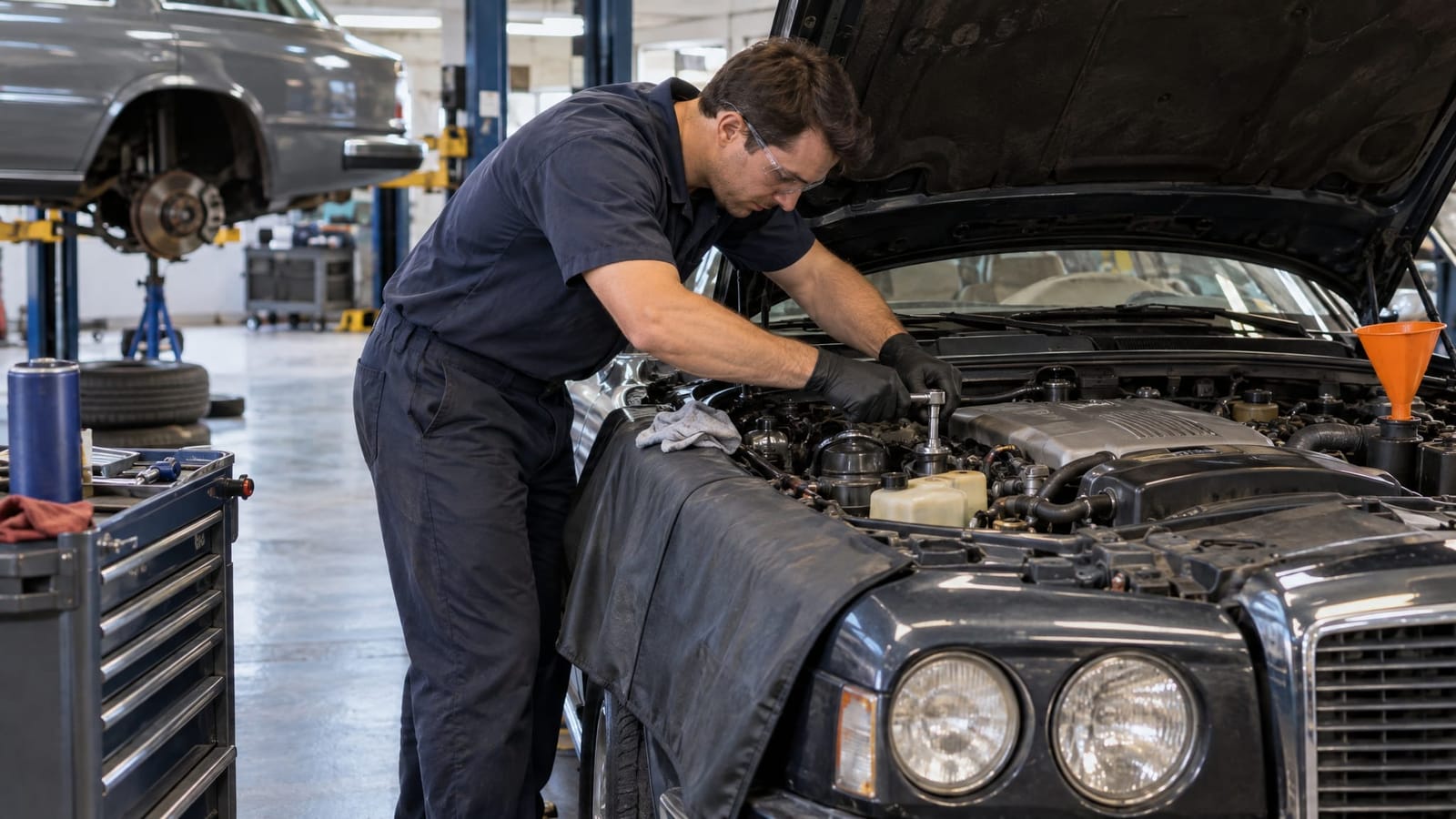
- Oil changes with the right specification: Luxury engines often require full synthetic oil with a specific viscosity rating. Using the correct oil matters more than it does in simpler engines. Staying on schedule, typically every 5,000 to 7,500 miles depending on the manufacturer, prevents sludge buildup and reduces wear on precision components.
- Transmission fluid service: Many older luxury vehicles have automatic transmissions that benefit significantly from periodic fluid changes. Degraded transmission fluid is one of the leading causes of costly transmission repairs in high-mileage luxury cars.
- Coolant system maintenance: Overheating is particularly damaging in precision-engineered luxury engines. Keeping the coolant fresh and the system free of leaks is a low-cost service that prevents high-cost engine damage.
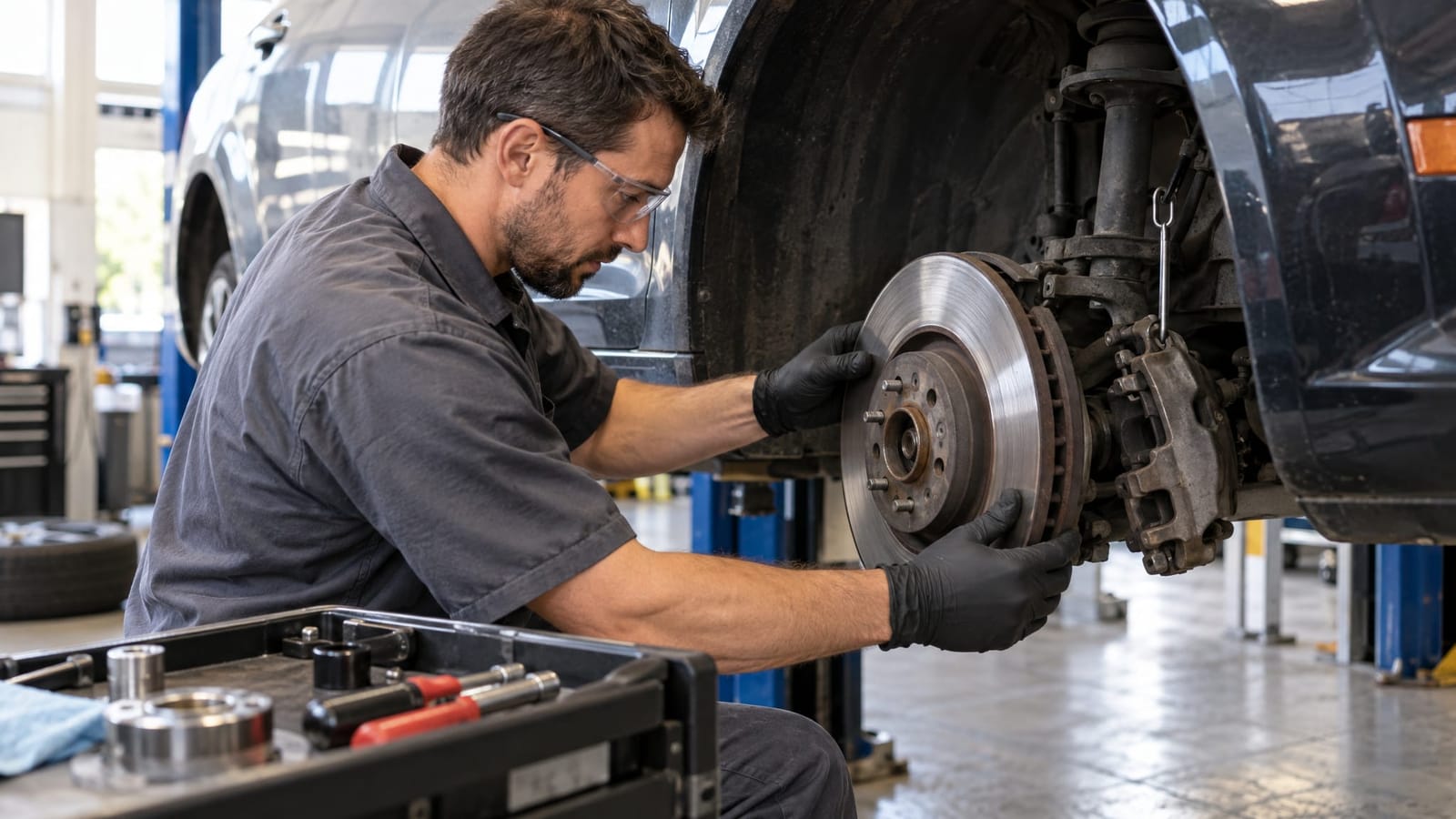
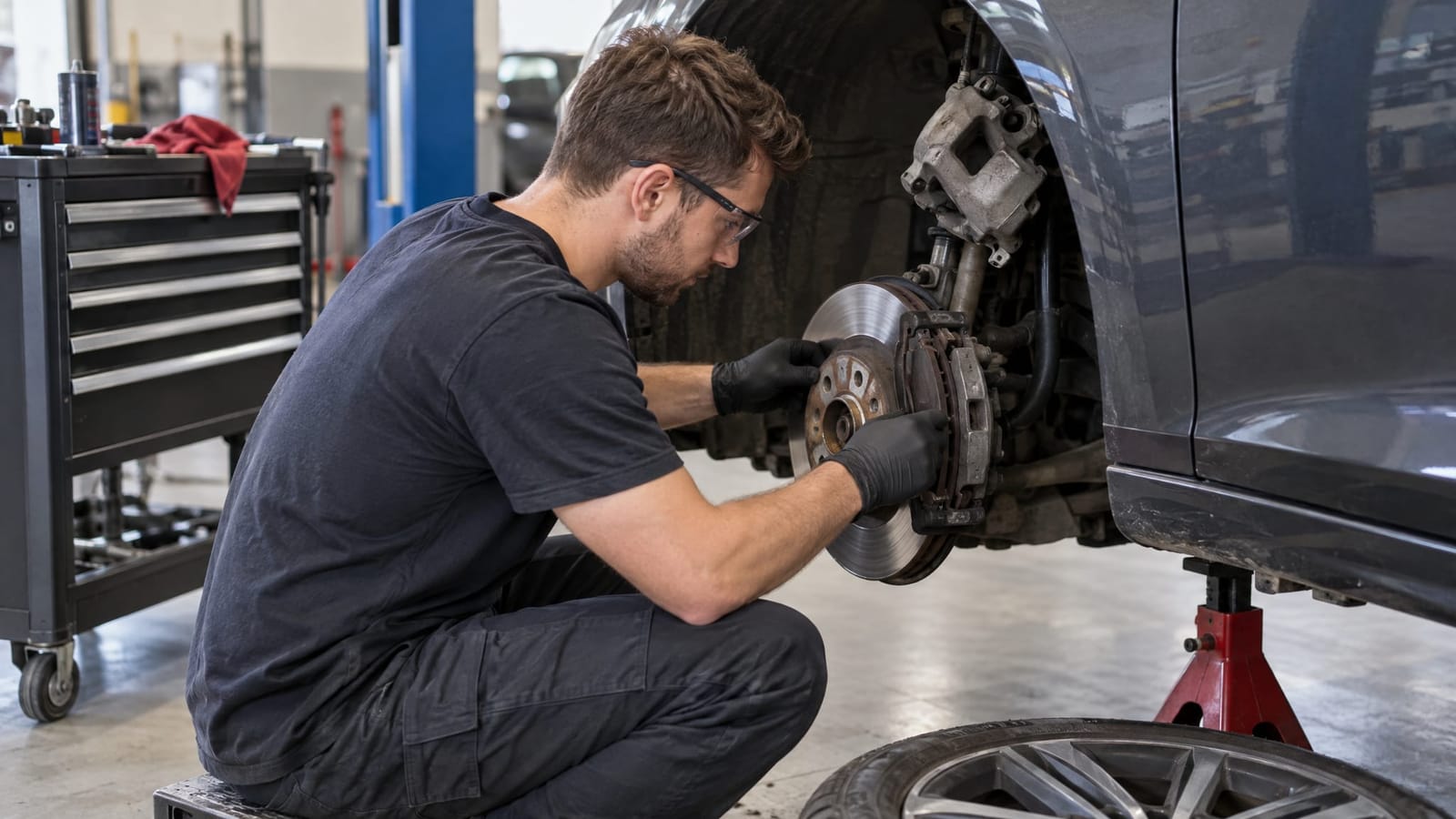
- Brake fluid replacement: Brake fluid absorbs moisture over time, which reduces its effectiveness and can damage brake components. Many luxury manufacturers recommend replacement every two years regardless of mileage.
- Tire rotation and alignment: Luxury vehicles often have larger, more expensive tires. Keeping them evenly worn through regular rotation extends their life and protects the suspension system.
If your vehicle is approaching a higher mileage milestone, reviewing a 30,000 mile service checklist can help you identify which services are due and plan accordingly.
When Preventative Maintenance Makes Clear Financial Sense
The decision to invest in preventative maintenance on an older luxury car comes down to a few honest questions: Is the car structurally sound? Is it free of major rust or frame damage? And does the cost of consistent upkeep fall significantly below the cost of replacing it with something comparable?
If the answer to those questions is yes, preventative care is almost always the smarter financial choice. Consider this: a single deferred maintenance issue, like skipping transmission fluid changes, can lead to a $3,000 to $5,000 repair. That same amount of money could have covered four or five years of routine maintenance. The math consistently favors proactive care.
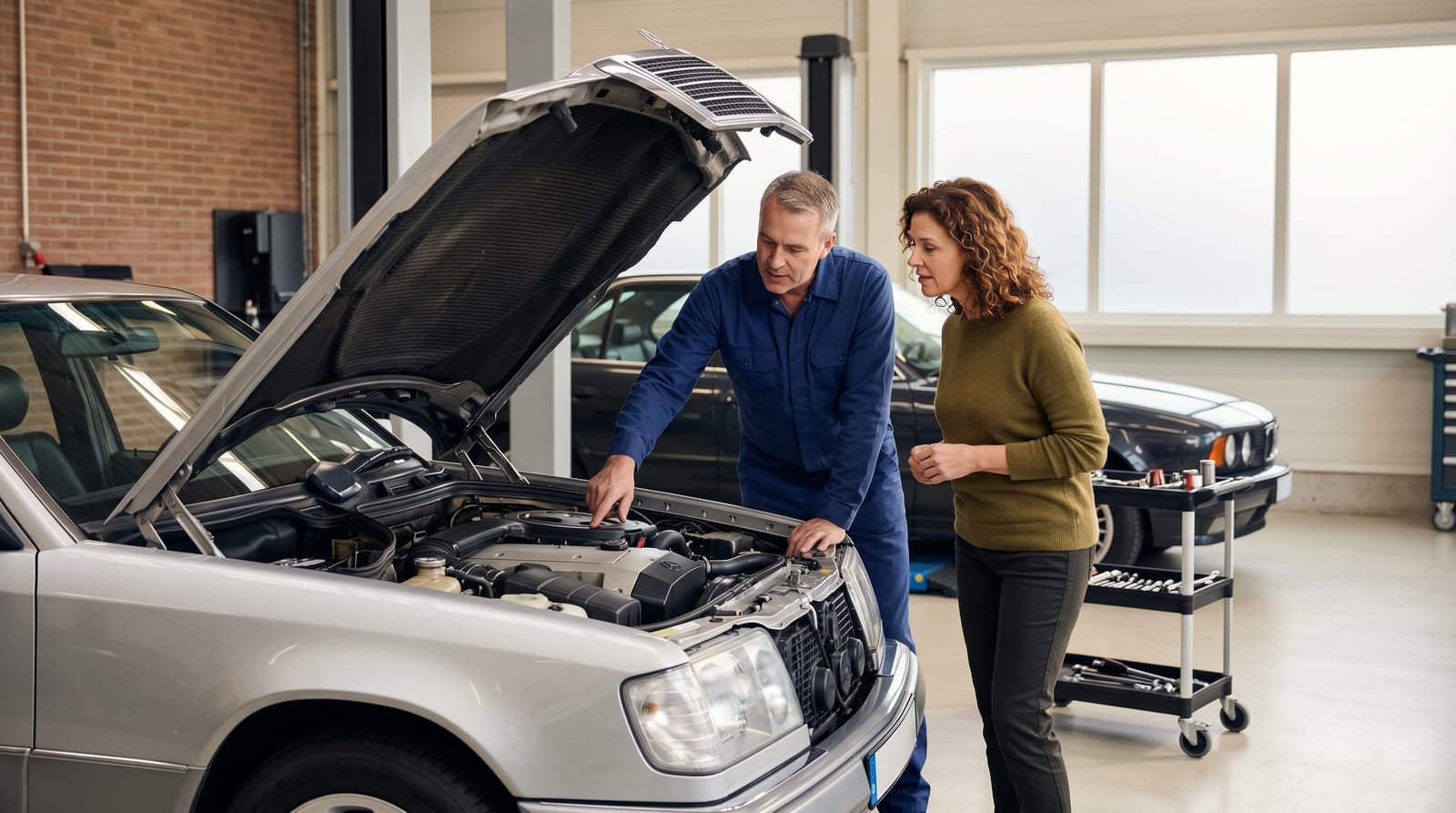
On the other hand, if a vehicle has significant pre-existing mechanical issues, high-cost repairs already pending, or structural problems that maintenance can't address, it's worth having an honest conversation with a trusted shop about whether continued investment makes sense. A good shop will give you a realistic assessment rather than just telling you what you want to hear.
Drivers who don't put many miles on their vehicles each year may feel uncertain about service intervals, but low-mileage driving has its own maintenance considerations. A low mileage car maintenance schedule can help clarify which services are time-based rather than mileage-based: a common situation for older luxury vehicles used as secondary or weekend cars.
How Consistent Care Preserves Resale and Long-Term Value
Beyond the mechanical benefits, documented preventative maintenance has a real impact on the resale value of older luxury cars. Buyers in the used luxury vehicle market are often willing to pay a premium for a car with a clean service history, and they're quick to walk away from vehicles with maintenance gaps or unknown service records.
Keeping organized records of every oil change, fluid service, tire rotation, and inspection creates a paper trail that demonstrates responsible ownership. For older luxury vehicles, that documentation can be the difference between selling at a strong price and struggling to find a buyer.
Consistent maintenance also gives you a clearer picture of your vehicle's health over time. Small issues caught early: a minor coolant leak, slightly low brake fluid, a tire wearing unevenly: are inexpensive to address when they're found during routine service. Left unnoticed, those same issues can develop into repairs that cost several times more.
Frequently Asked Questions
How often should I service an older luxury car?
Most older luxury vehicles follow a service schedule similar to standard vehicles, but with some specialized requirements. Oil changes typically fall every 5,000 to 7,500 miles, while other services like transmission fluid, coolant, and brake fluid have time-based intervals that apply regardless of mileage. Following the manufacturer's recommended schedule, or working with a shop familiar with luxury makes, is the best approach.
Is it more expensive to maintain a luxury car as it ages?
Older luxury vehicles can have higher parts costs than standard vehicles, but routine preventative maintenance services, oil changes, fluid top-offs, tire rotations, are generally in a similar price range. The key is staying consistent so that routine services don't turn into major repairs, which is where costs can increase significantly.
What's the biggest maintenance mistake owners of older luxury cars make?
The most common mistake is extending oil change intervals beyond what the vehicle actually needs. Older luxury engines can be more sensitive to oil quality and freshness, and pushing past the recommended interval accelerates internal wear. Using the correct oil specification is just as important as staying on schedule.
At what point should I stop investing in an older luxury vehicle?
This varies by situation, but a general guideline is to compare annual maintenance costs against what you'd spend on a replacement vehicle, including payments, insurance, and depreciation. If preventative care keeps costs well below that threshold and the vehicle is otherwise sound, continued investment usually makes sense. A trusted shop can help you assess whether upcoming repairs are worth the expense given your specific vehicle's condition.
The Bottom Line
For most owners of older luxury vehicles, consistent preventative maintenance is absolutely worth it. These cars were built to last when properly cared for, and the cost of routine service is modest compared to the value they deliver, or the expense of replacing them. The key is staying proactive rather than reactive, following the manufacturer's service recommendations, and working with a shop that understands what your vehicle actually needs. Taking care of what you already own is almost always the smarter, more affordable path forward.