Should I Service the Transmission in My High-Mileage Vehicle?
If your vehicle has 100,000 miles or more on it, you've probably wondered whether servicing the transmission is still worth it, or whether it might actually cause more harm than good. It's a fair question, and one that a lot of vehicle owners quietly worry about. The short answer is: it depends on your vehicle's service history, the current condition of the fluid, and what kind of service is being considered. This post walks you through what you need to know so you can make a confident, informed decision.
Why High-Mileage Transmission Service Feels Complicated
There's a widely repeated theory in the automotive world that says you should never service a high-mileage transmission: the idea being that fresh fluid will somehow disturb sediment that's been sitting quietly and suddenly cause the transmission to fail. This creates a real dilemma for vehicle owners who are trying to do the right thing.
Here's what's actually true: transmission fluid breaks down over time. It loses its ability to lubricate, protect internal components, and manage heat effectively. When fluid is dark, burnt-smelling, or has visible debris in it, that's a sign it's no longer doing its job. Driving on degraded fluid is what causes wear, not a properly performed fluid service.
The concern about "disturbing sediment" has some basis, but it's really a reason to be careful about how a high-mileage transmission is serviced, not a reason to skip service entirely. A qualified shop will assess fluid condition, check for any early warning signs, and recommend the right type of service based on what they find. That's very different from a blanket "never touch it" approach.
What the Numbers Actually Tell Us
Most manufacturers recommend changing transmission fluid somewhere between every 30,000 and 100,000 miles depending on the vehicle, driving conditions, and transmission type. Some newer vehicles with sealed transmissions specify longer intervals, but many older models, and most vehicles used for towing, city driving, or stop-and-go commuting, fall on the shorter end of that range.
If a vehicle has 120,000 miles on it and there's no record of a transmission fluid change, the fluid could be well past its effective service life. Studies and real-world inspections consistently show that fluid in this condition is darker, thinner, and contaminated with small metal particles from normal wear. Running degraded fluid doesn't protect the transmission: it accelerates the wear that was already happening.
On the flip side, a vehicle that received proper high mileage transmission service at regular intervals is in a very different situation. That transmission has been protected throughout its life, and continuing that service schedule makes complete sense. The key variable isn't the mileage: it's the service history and current fluid condition.
How to Assess Whether Your Vehicle Needs Service
Before deciding anything, it helps to gather a few basic pieces of information:
- Check your owner's manual. Look for the manufacturer's recommended transmission service interval. This is your baseline.
- Review your service history. If you have records showing regular transmission service, you're in a better position than someone with an unknown history.
- Have the fluid inspected. A technician can check the fluid's color, smell, and consistency: this tells you a lot about its current condition without any guesswork.
- Note any symptoms. Delayed shifting, rough gear changes, or a slight shudder when the transmission engages are worth mentioning. These don't necessarily mean something is wrong, but they're useful details for a technician to know.
If you purchased a used vehicle and don't have a full service history, having the transmission fluid inspected before deciding on a service approach is especially important. You want to know what you're working with before making any decisions. You can also review our guide on transmission service interval schedules to better understand what regular maintenance looks like across different vehicle types.
Fluid Change vs. Flush: Why It Matters for High-Mileage Vehicles
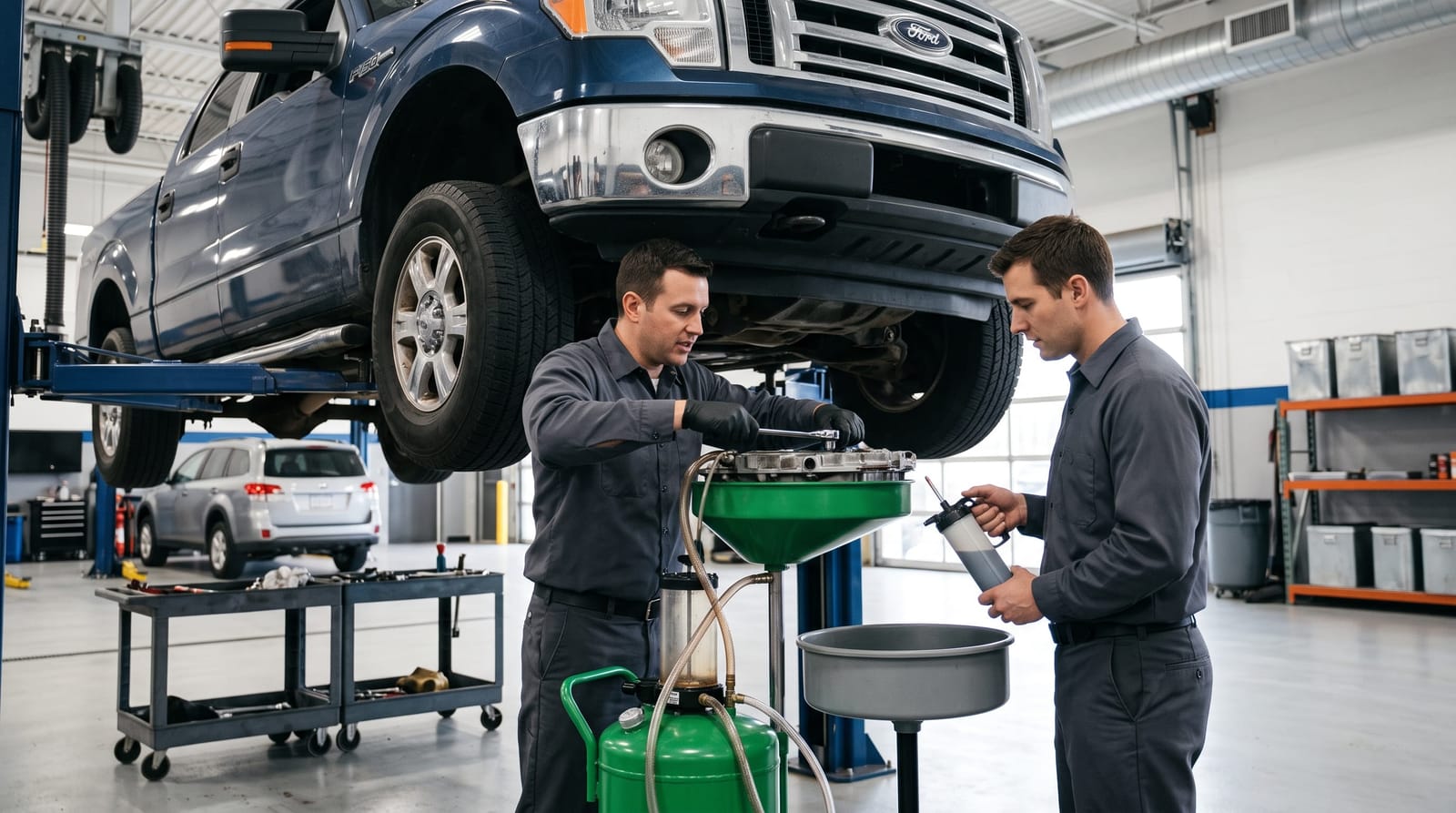
Not all transmission service is the same, and this distinction matters quite a bit for high-mileage vehicles. A transmission fluid change typically involves draining the old fluid and refilling with fresh fluid: it's a more straightforward process. A transmission flush uses equipment to push all of the old fluid out of the system, including from the torque converter, and replaces it completely.
For vehicles with a documented service history and fluid in reasonable condition, either service may be appropriate depending on the recommendation. For vehicles with heavily degraded fluid and an unknown history, some technicians prefer a more gradual approach, a standard fluid change first, to avoid any abrupt changes to the transmission's internal environment.
The best way to understand which service makes sense for your specific situation is to have a professional look at the fluid and discuss your vehicle's history. For a closer look at how these two services differ, our post on transmission flush vs fluid change covers the key differences in plain language.
The Real Cost of Skipping Service
Transmission repairs are among the most expensive services a vehicle owner can face. Depending on the vehicle, a rebuilt or replaced transmission can run anywhere from $1,800 to $5,000 or more. A routine transmission fluid service, by comparison, typically costs a fraction of that.
For high-mileage vehicles that are otherwise in good condition, maintaining the transmission properly is one of the smartest investments you can make. Many vehicles are fully capable of reaching 200,000 miles or beyond with consistent maintenance. Skipping service doesn't make a high-mileage transmission safer: it just leaves it running on fluid that's no longer protecting it.
Frequently Asked Questions
Is it safe to change the transmission fluid in a high-mileage vehicle?
In most cases, yes: provided the service is done correctly based on the vehicle's current condition. If the fluid is degraded, leaving it in place causes more harm than changing it. A professional inspection of the fluid helps determine the right service approach for your specific vehicle.
What if my high-mileage vehicle has never had the transmission serviced?
This is actually a common situation. The best first step is to have the fluid inspected by a technician. Based on what they find, they can recommend whether a standard fluid change, a flush, or a more cautious approach makes the most sense. Skipping service altogether isn't the answer.
How do I know if my transmission fluid needs to be changed?
Fresh transmission fluid is typically a translucent red or pink color. Fluid that has degraded will appear dark brown or nearly black and may have a burnt smell. If you're unsure, a technician can pull a sample and assess its condition in just a few minutes.
Can servicing the transmission extend the life of a high-mileage vehicle?
Yes, it can. Transmission fluid that's in good condition reduces heat and friction inside the transmission, which are the two main causes of internal wear. Vehicles that receive consistent transmission maintenance tend to experience fewer major failures and often remain reliable well past 150,000 miles.
The Bottom Line
High mileage transmission service isn't a one-size-fits-all decision, but skipping it entirely out of fear is rarely the right answer. The condition of your fluid and your vehicle's service history matter far more than the mileage number alone. With a professional assessment and the right service approach, maintaining your transmission at any mileage is a practical step toward protecting your vehicle for the long haul. If you have questions about where your vehicle stands, the team at Rancho Express Lube is happy to take a look and give you an honest answer.