Transmission Filter Replacement: Protecting Your Investment with Clean Filtration
Transmission maintenance covers a lot of ground, from fluid condition to mechanical wear, but one component often gets overlooked during routine service: the transmission filter. As part of a complete approach to transmission service, filter replacement plays a quiet but important role in keeping your vehicle's transmission running smoothly over time. A clogged or worn filter can compromise fluid flow, increase internal wear, and shorten the life of an expensive system. In this guide, we'll walk through how transmission filters work, when to replace them, what the service involves, and why it matters, especially if you're driving a high-mileage vehicle or managing a commercial fleet.
What Does a Transmission Filter Actually Do?
Your vehicle's automatic transmission contains dozens of moving parts that rely on pressurized fluid to function. That fluid does three jobs at once: it lubricates moving components, transfers power between mechanical parts, and carries heat away from the system. As the fluid circulates, it picks up fine metal particles, clutch material, and other debris created by normal wear.
The transmission filter sits between the fluid pan and the transmission pump. Its job is to catch that debris before it reaches sensitive valves, clutch packs, and hydraulic components. Think of it like a coffee filter: it keeps unwanted particles out of what gets delivered downstream.
What Happens When the Filter Gets Clogged?
Over time, the filter collects enough material that fluid flow begins to slow. When the pump has to work harder to pull fluid through a restricted filter, transmission pressure drops. Lower pressure means slower, less precise gear shifts. It can also mean components that should be bathed in fluid aren't getting adequate lubrication.
A restricted filter doesn't cause immediate failure in most cases. The effects are gradual: slightly rough shifting, a small increase in operating temperature, and added strain on internal parts over thousands of miles. That's why transmission filter replacement service is best treated as preventive care rather than a reactive fix.
How Often Should You Replace the Transmission Filter?
Service intervals for transmission filter replacement vary by vehicle make, model, and how the vehicle is used. Most manufacturers recommend inspecting or replacing the filter every 30,000 to 60,000 miles as part of a full transmission service. Some newer vehicles with sealed transmission systems use filters designed to last longer, but that doesn't mean they last forever.
Driving conditions also influence how quickly a filter loads up with debris. Vehicles used in stop-and-go traffic, towing applications, or commercial fleet service tend to generate more transmission heat and internal wear material. For these vehicles, sticking to the lower end of the recommended interval: around 30,000 miles: makes practical sense.
Signs the Filter May Be Due for Replacement
Most of the time, a transmission filter doesn't announce itself. But there are a few patterns worth paying attention to:
- Gear shifts that feel hesitant, delayed, or slightly rough
- Transmission fluid that appears dark brown or has a burned smell
- A subtle increase in transmission operating temperature
- More than 30,000 to 40,000 miles since the last full transmission service
If you're unsure when your last transmission service was performed, a quick inspection of the fluid condition can offer useful clues. Dark, dirty fluid is often a sign that the filter is overdue for replacement as well. You can learn more about how fluid condition connects to overall system health in our guide to transmission fluid service.
What the Transmission Filter Replacement Service Includes
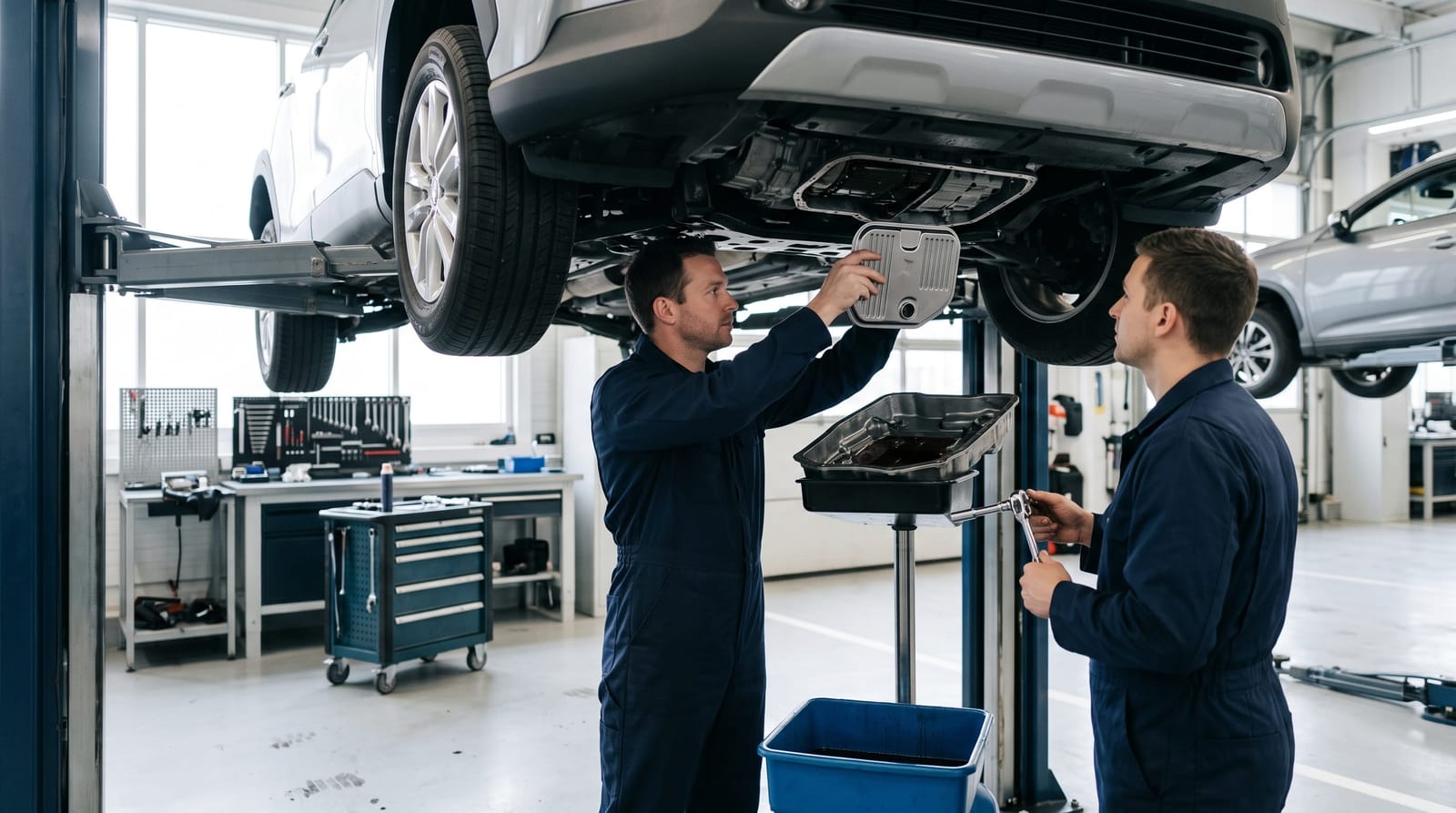
A proper transmission filter replacement service involves more than just swapping out the filter. Because most automatic transmission filters are located inside the transmission pan, a sealed metal housing at the bottom of the transmission, the service requires draining the fluid, removing the pan, and accessing the filter from inside.
Step-by-Step Service Overview
- Drain the transmission fluid: The old fluid is removed through the drain plug or by loosening the pan.
- Remove the transmission pan: This gives the technician access to the filter and allows inspection of the pan for debris.
- Inspect the pan: A small amount of fine metal dust in the pan is normal. Larger particles or chunks can indicate more significant internal wear worth noting.
- Replace the filter: The old filter is removed and replaced with a new one matched to your vehicle's specifications.
- Replace the pan gasket: The gasket that seals the pan is typically replaced at the same time to prevent leaks.
- Reinstall the pan and refill fluid: The pan is reattached and the transmission is refilled with the correct type and quantity of fluid.
The full service typically takes about 1 to 2 hours depending on vehicle design. When performed together, filter, pan gasket, and fresh fluid, this service gives the transmission a clean, fresh starting point that supports reliable operation going forward.
It's also worth noting that transmission filter replacement necessity varies by vehicle type. Some modern transmissions use different filtration systems, and not every vehicle follows the same service process.
Why Filter Replacement Matters for High-Mileage Vehicles
Transmission filter replacement service becomes especially valuable once a vehicle crosses the 75,000-mile mark. By that point, the transmission has accumulated years of heat cycles, fluid degradation, and incremental internal wear. The filter has been doing its job the entire time, and in many cases, it hasn't been replaced once.
Vehicles with over 100,000 miles that have never had a transmission service often have filters that are fully saturated with debris. In these cases, the filter replacement, combined with fresh fluid, can noticeably improve shift quality and reduce the heat load on the transmission. Studies from transmission service providers suggest that vehicles serviced at regular intervals experience up to 40% fewer transmission-related failures compared to those with no service history.
What About Very High-Mileage Vehicles?
One common question is whether it's safe to service a transmission that has never been touched at, say, 150,000 miles. The honest answer is: it depends on the vehicle's condition and history. In most cases, replacing the filter and refreshing the fluid is still beneficial: clean fluid is better than dirty fluid at any mileage. A trained technician can assess the fluid condition and pan debris to help determine the right approach for your specific vehicle.
Transmission Filter Service vs. Transmission Flush: Understanding the Difference
These two services are often confused, but they're not the same thing. A transmission flush uses a machine to push all of the old fluid out of the system, including fluid in the torque converter and cooler lines, and replace it with fresh fluid. A transmission filter replacement service focuses on changing the filter, inspecting the pan, replacing the gasket, and refilling the fluid from the pan drain.
Both services have their place. A transmission flush replaces a larger volume of fluid: approximately 10 to 12 quarts in a typical passenger vehicle compared to 4 to 6 quarts for a pan service. However, the flush process alone doesn't include filter replacement. For the most complete service, many technicians recommend combining both: replace the filter during the pan service, then perform a fluid exchange to refresh the full system.
Understanding the distinction helps you make informed decisions about your service schedule. Our overview of transmission fluid service covers fluid types and exchange intervals in more detail.
The Cost of Skipping This Service
Transmission filter replacement service is among the more affordable preventive maintenance items you can perform on your vehicle. Depending on the vehicle, the service typically ranges from $100 to $250 when performed as part of a complete transmission service.
Compare that to the cost of a transmission rebuild, which averages between $2,500 and $5,000, or a full replacement, which can exceed $7,000 for many makes and models. Regular filter replacement and fluid service doesn't guarantee a transmission will last indefinitely, but it significantly reduces the rate of internal contamination and wear that leads to premature failure.
For commercial vehicles and fleet operators, the math is even more straightforward. Downtime from a transmission failure can cost a business hundreds to thousands of dollars per day in lost productivity. Consistent preventive maintenance, including transmission filter replacement service, is one of the most practical ways to protect that investment.
Related Transmission Topics Worth Exploring
Transmission filter replacement is one piece of a larger maintenance picture. If you want to go deeper on specific aspects of transmission care, these related topics provide useful detail:
- Not every vehicle uses the same type of filter or requires the same service process. Learn more about transmission filter replacement necessity across different vehicle types and transmission designs.
- Fluid condition is closely tied to filter performance. Understanding transmission fluid degradation helps you recognize when service is due before problems develop.
Keeping Your Transmission in Good Shape for the Long Haul
Transmission filter replacement service isn't the most exciting item on a maintenance checklist, but it's one of the most practical things you can do to extend the life of your vehicle's transmission. A clean filter supports steady fluid pressure, consistent shift quality, and reduced internal wear over time.
For most vehicles, scheduling a full transmission service every 30,000 to 45,000 miles, including filter replacement, pan inspection, and fresh fluid, is a reasonable starting point. If you drive in demanding conditions or manage a commercial fleet, staying toward the lower end of that range is a smart habit.
At Rancho Express Lube, we perform transmission filter replacement service as part of our complete transmission maintenance offerings. If you're unsure when your last service was or want an honest assessment of your transmission fluid condition, stop by and let us take a look. We'll give you a straightforward recommendation based on what we actually see: no pressure, just practical advice.