Vehicle Maintenance Schedule: Following Manufacturer Recommendations for Optimal Performance

Keeping your vehicle running well doesn't require guesswork. It requires a plan. A solid vehicle maintenance schedule guide gives you a clear roadmap for caring for your car at the right intervals, before small issues have a chance to grow into bigger ones. This concept sits at the heart of any smart preventative maintenance strategy. When you follow your manufacturer's recommended schedule, you protect your investment, improve reliability, and avoid unexpected repair bills. In this guide, we'll walk through how maintenance schedules work, what the major service milestones mean, and how to adjust your schedule based on your specific driving habits and vehicle type. Whether your car has 15,000 miles or 150,000 miles on it, this information applies directly to you.
What Is a Vehicle Maintenance Schedule and Why Does It Matter?
A vehicle maintenance schedule is a structured timeline of service tasks recommended by your vehicle's manufacturer. It tells you when to change your oil, rotate your tires, inspect your brakes, replace filters, and perform other routine checks. These schedules are built on real engineering data specific to your make and model.
Think of it like a health checkup calendar. You don't wait until something hurts to see a doctor. You go in for routine visits to catch problems early. The same logic applies to your car.
Following a consistent vehicle maintenance schedule guide offers several real advantages:
- It keeps your warranty valid during the coverage period
- It helps maintain resale value when you decide to sell or trade in
- It reduces the likelihood of being stranded by an unexpected breakdown
- It gives a trained technician regular opportunities to spot wear before it becomes a problem
The good news is that most schedules are straightforward. Once you understand the basic structure, staying on track becomes a simple habit rather than a stressful task.
The Foundation: Understanding the 30/60/90 Schedule
Most vehicle manufacturers organize their service recommendations around a 30/60/90 framework. This means specific inspections and replacements are due at 30,000, 60,000, and 90,000 miles. These milestones are the backbone of any complete vehicle maintenance schedule guide.
The 30,000-Mile Service
At 30,000 miles, your vehicle reaches its first major checkpoint. This service typically includes an air filter replacement, a fuel filter check, a thorough inspection of brake components, and a review of belts and hoses. Tires are inspected for wear patterns. Fluid levels are checked and topped off where needed.
This is also a good time to review your battery's condition. Many batteries begin showing signs of weakening around this mileage range depending on climate and usage. For a detailed breakdown of what this service covers, see our 30000 mile service checklist.
The 60,000-Mile Service
At 60,000 miles, your vehicle needs more attention. Spark plugs often require replacement at this stage. Brake pads may be due for replacement depending on your driving habits. Transmission fluid should be inspected and likely changed. Coolant may also need to be flushed and replaced at this interval.
This service milestone is also a good opportunity to evaluate your tires. By 60,000 miles, many original tires are reaching the end of their useful life.
The 90,000-Mile Service
At 90,000 miles, your vehicle has seen significant use. This service often mirrors the 30,000-mile inspection but with a closer look at components that experience long-term wear. Timing belts, on vehicles that use them, are often due for replacement around this mileage. Power steering fluid, differential fluid, and transfer case fluid (on all-wheel-drive vehicles) may also need attention.
Completing this service properly sets your vehicle up for another strong leg of reliable driving.
Routine Maintenance Between the Major Milestones
While the 30/60/90 milestones get a lot of attention, day-to-day vehicle health depends on the smaller, more frequent tasks you take care of in between. A complete vehicle maintenance schedule guide covers both the major checkpoints and the routine services you need along the way.
Oil Changes
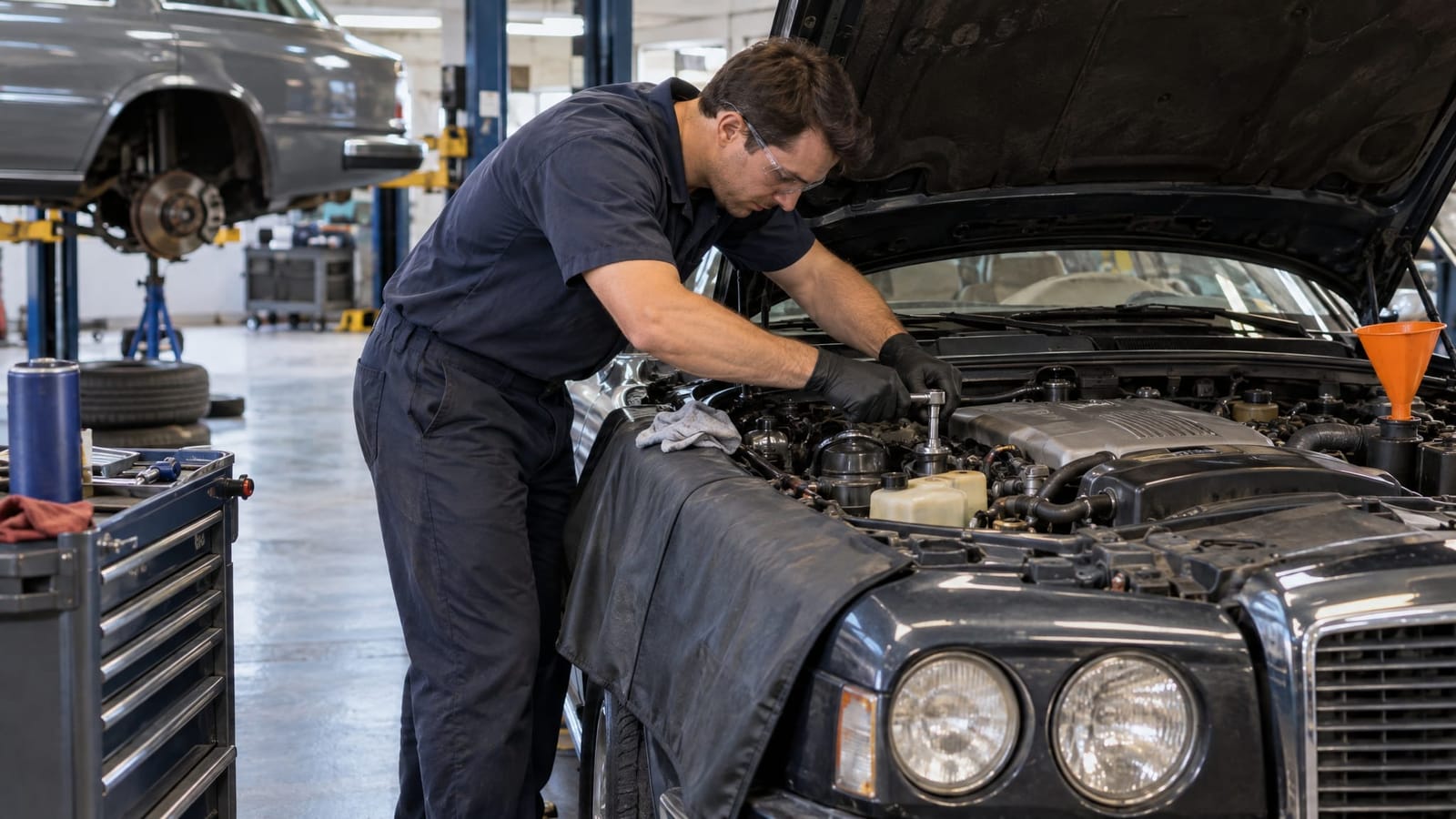
Oil changes are the most common maintenance task for a reason. Engine oil lubricates moving parts and breaks down over time. Most manufacturers recommend oil changes every 5,000 to 7,500 miles for modern vehicles using synthetic oil. Older vehicles or those using conventional oil may need changes every 3,000 miles.
Always follow your owner's manual. The right interval depends on your specific engine and the type of oil your vehicle requires.
Tire Rotations
Rotating your tires every 6,000 to 8,000 miles helps them wear evenly. Uneven tire wear shortens tire life and can affect how your vehicle handles. Many shops recommend pairing tire rotations with oil changes to make it easy to remember.
Fluid Checks
Between major services, keep an eye on brake fluid, coolant, power steering fluid, and windshield washer fluid. Many of these can be visually checked without any tools. Low fluid levels sometimes signal a leak worth addressing early.
Brake Inspections
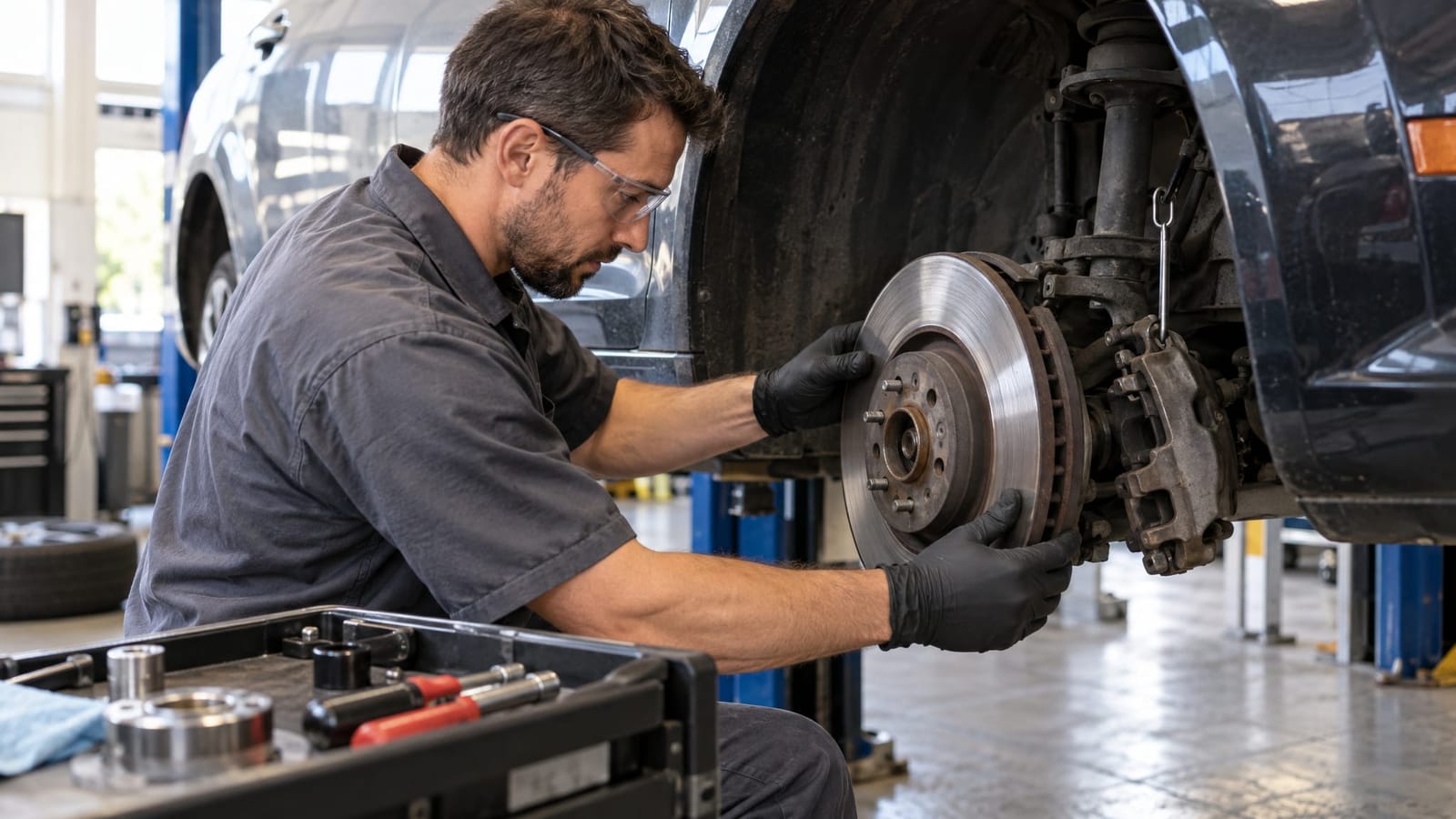
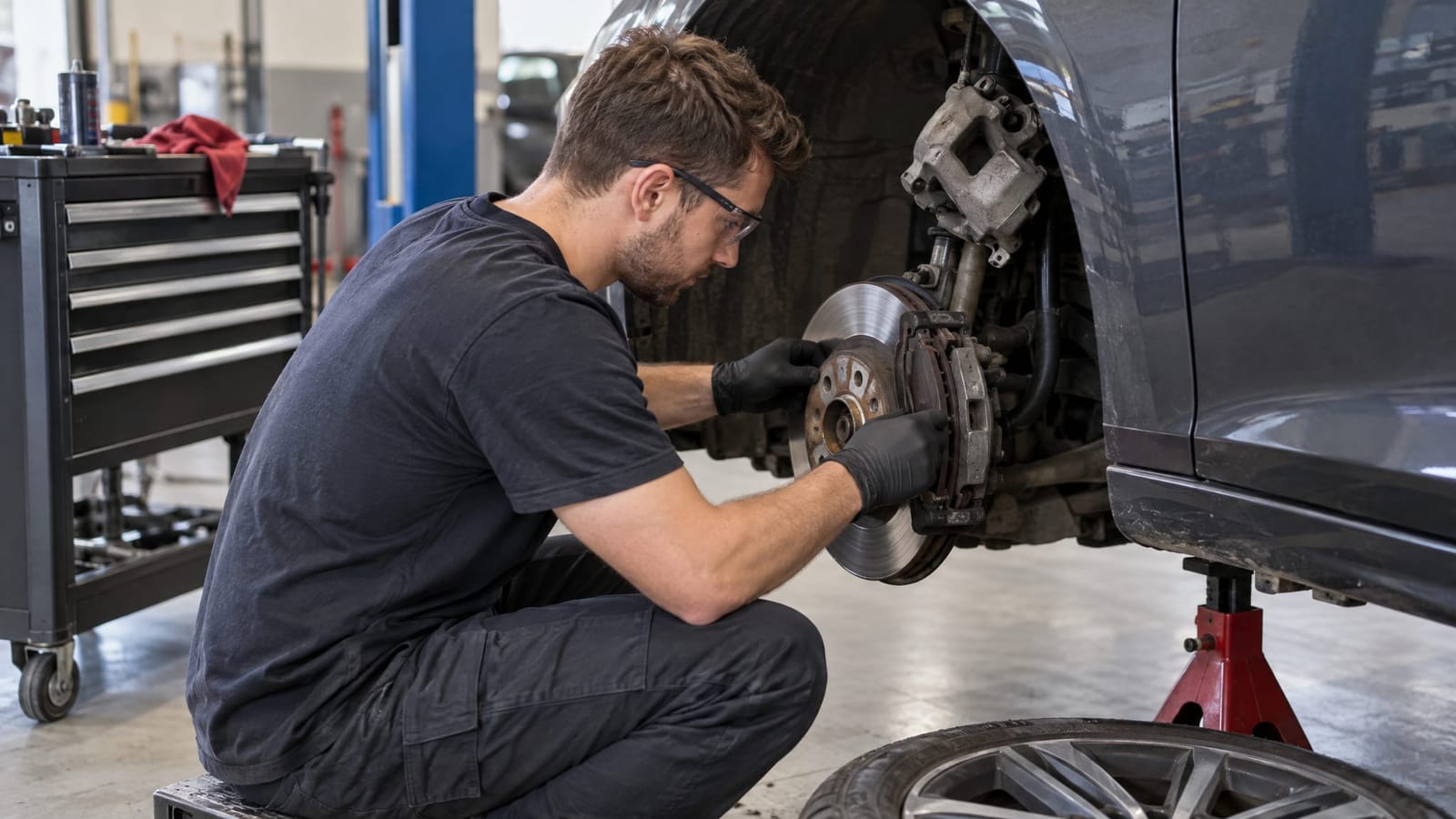
Brake pads wear at different rates depending on how and where you drive. City driving with frequent stops wears pads faster than highway driving. Most technicians inspect brakes during oil changes and flag pads that are getting thin.
Adjusting Your Schedule for Your Driving Conditions
Manufacturer schedules are designed for average driving conditions. But not everyone drives the same way or in the same environment. A good vehicle maintenance schedule guide helps you identify when your situation calls for more frequent service.
Manufacturers often list two maintenance schedules in the owner's manual: one for normal conditions and one for severe conditions. Severe conditions include:
- Frequent short trips under five miles
- Driving in stop-and-go traffic regularly
- Operating in extreme heat or cold
- Towing or hauling heavy loads regularly
- Driving on dusty or unpaved roads
Here in the Inland Empire, summer heat puts real stress on cooling systems, batteries, and tires. If you spend time in stop-and-go traffic on the 210 or I-15, your vehicle is working harder than the average maintenance schedule assumes. Adjusting your oil change and fluid check intervals accordingly is a smart move.
Drivers who don't put many miles on their vehicle each year face a different challenge. Low mileage doesn't always mean low maintenance needs. Time-based degradation still affects oil, coolant, and rubber components even when miles are low. Understanding the right service intervals for your situation is important, especially for those who drive less frequently. Our guide on low mileage car maintenance schedule covers this in more detail.
Maintenance Schedules for Older and Higher-Value Vehicles
As a vehicle ages, staying on schedule becomes even more important, not less. Older vehicles have components that have experienced more wear. Small issues that a newer vehicle might tolerate can become more significant in an aging one.
This is especially true for older luxury vehicles. Premium cars from brands like BMW, Mercedes-Benz, and Lexus often have longer service intervals built into their designs. But they also have more complex systems that need careful attention when service is due. Skipping or delaying maintenance on a luxury vehicle can lead to repair costs that far exceed what regular service would have cost.
If you own an older luxury vehicle and are weighing the value of keeping up with a full maintenance schedule, the answer is usually yes: it's worth it. A well-maintained older luxury car can continue to perform reliably for many years. For a closer look at this topic, our post on preventative maintenance older luxury cars breaks down the specifics.
For standard vehicles approaching higher mileage, the same principle applies. A 150,000-mile car with documented, consistent maintenance history is far more reliable than a 100,000-mile car with no service records.
How to Use Your Owner's Manual as a Maintenance Tool
Your owner's manual is the most accurate vehicle maintenance schedule guide available for your specific car. It's written by the engineers who designed your vehicle and covers exact intervals, fluid specifications, and service requirements.
Here's how to make the most of it:
- Find the maintenance section. It's usually near the back and labeled clearly. Look for both the normal and severe driving condition schedules.
- Note the mileage and time-based intervals. Some services are recommended every X miles or every X months: whichever comes first. Time-based intervals matter for lower-mileage drivers.
- Record your services. Keep a simple log, either in the manual itself or in a notes app, of what was done and when. This helps you track what's coming up next.
- Ask questions at your service appointment. A good shop will review your maintenance history and let you know what's due or approaching.
If you've lost your owner's manual, most manufacturers make digital versions available on their website. Your service advisor can also help you identify what your vehicle needs based on its age, mileage, and service history.
Related Maintenance Details Worth Exploring
A complete vehicle maintenance schedule covers a lot of ground. Some situations call for a deeper look at specific service needs. If you're approaching 30,000 miles and want to know exactly what that service includes, our 30000 mile service checklist walks through every item. Drivers who put fewer miles on their car each year may need to think about maintenance differently: our guide on low mileage car maintenance schedule addresses that directly. And for anyone weighing the cost of upkeep on a higher-end older vehicle, the post on preventative maintenance older luxury cars offers honest perspective on when and how to invest in your vehicle's longevity.
Putting Your Vehicle Maintenance Schedule Into Practice
A vehicle maintenance schedule guide is only useful if you actually use it. The most effective approach is a simple one: know your mileage, know your next service interval, and make the appointment before it slips past.
Set a reminder on your phone for every 5,000 miles or every six months. Check your oil level once a month: it takes about two minutes. When you bring your vehicle in for routine service, ask the technician to flag anything approaching its next recommended interval. Small steps like these keep your vehicle maintenance schedule from becoming something you have to scramble to catch up on.
Consistency is what separates vehicles that run well for 200,000 miles from those that struggle at 100,000.
Conclusion
Following a structured vehicle maintenance schedule is one of the most practical things you can do as a vehicle owner. It protects your car, gives you peace of mind, and helps you avoid costly repairs down the road. The 30/60/90 framework gives you clear milestones. Routine services like oil changes and tire rotations keep your vehicle healthy between those milestones. And adjusting your schedule for your specific driving conditions ensures your car gets the right care at the right time.
At Rancho Express Lube, we're here to help Fontana drivers stay on schedule with fast, honest, and reliable maintenance service. Bring your vehicle in and let us help you build a maintenance plan that works for your mileage, your budget, and your driving habits. We'll make sure you're always one step ahead.