What Are the Signs Your Luxury Car's Brake Pads Need Replacement?
Common brake pad replacement signs include persistent squealing, grinding, a brake-pad wear message and visibly thin friction material. Vibration or longer stopping distances also deserve attention, but they do not prove the pads are worn. Those symptoms can involve rotors, tires or other brake-system components.
The clearest confirmation is a measurement showing that the pads have reached the vehicle manufacturer's replacement limit. European and luxury vehicles follow the same basic braking principles as other cars, although their warning systems, brake materials and service procedures vary. These six tips explain what each symptom can tell you and what an inspection needs to establish.
1. Persistent squealing can be a pad-wear warning
Some brake pads have a small metal wear indicator that contacts the rotor, the disc the pads clamp against, when the friction material wears down. This can create a high-pitched squeal during braking.
Not every squeal means replacement is due. Moisture, surface rust after sitting and the characteristics of the pad material can also produce noise. An occasional sound during the first few stops is different from a squeal that continues after the brakes warm up.
Useful details to note include:
- Whether the noise occurs only during the first drive of the day.
- Whether it happens during light braking, firmer braking or both.
- Whether it began recently or has become more frequent.
A luxury badge does not make persistent brake noise automatically normal. Pad thickness and contact surfaces help distinguish a wear indicator from another source of noise.
2. Grinding needs more than a pad-only assumption
A harsh scraping or grinding sound can occur when a pad's friction material is exhausted and its metal backing contacts the rotor. Debris or another brake component can also create scraping, so sound alone cannot identify the cause.
The important distinction is that grinding calls for an assessment of the entire contact area, not simply an assumption that new pads will resolve it. An inspection can reveal rotor scoring, uneven wear or a component that is not moving correctly.
For example, grinding whenever the brake pedal is pressed provides different diagnostic information from scraping that continues while the vehicle rolls without braking.
3. A brake-pad message is different from a general brake warning
Some BMW, Mercedes-Benz, Audi, Volvo and Porsche models use electronic pad-wear sensors. Depending on the vehicle, the display may show a pad-wear message, a service reminder or a brake-related symbol. Equipment varies by model and year, so the wording and the owner's manual matter more than the brand name.
These distinctions help:
- A pad-wear message: This may indicate that a monitored pad has reached the sensor's wear point.
- A maintenance estimate: A displayed service estimate is not the same as a physical measurement of every pad.
- A general brake or ABS warning: This may concern another part of the braking system rather than pad thickness.
A clear dashboard does not establish that every pad has adequate material remaining. Sensors may not monitor every pad, and inner and outer pads can wear differently.
4. Vibration often points to rotor contact, not just worn pads
A steering-wheel shake or pedal pulse during ordinary braking is often associated with variations in the rotor surface or thickness. Pads and rotors work together, but replacing pads alone may leave the vibration unchanged.
When it happens helps narrow the inspection. A shake that appears only while braking differs from a vibration that also occurs while cruising. Brief pedal pulsing when the anti-lock braking system activates is also different from repeated pulsing during gentle stops on a dry road.
An inspection can assess the rotors, pad wear and related components before identifying the appropriate repair.
5. Longer stopping distances can indicate a broader problem
Needing more distance or pedal effort to slow down is not a reliable measure of remaining pad thickness. Worn pads are one possible concern, but reduced braking can also involve overheated friction surfaces, hydraulic problems or tire traction.
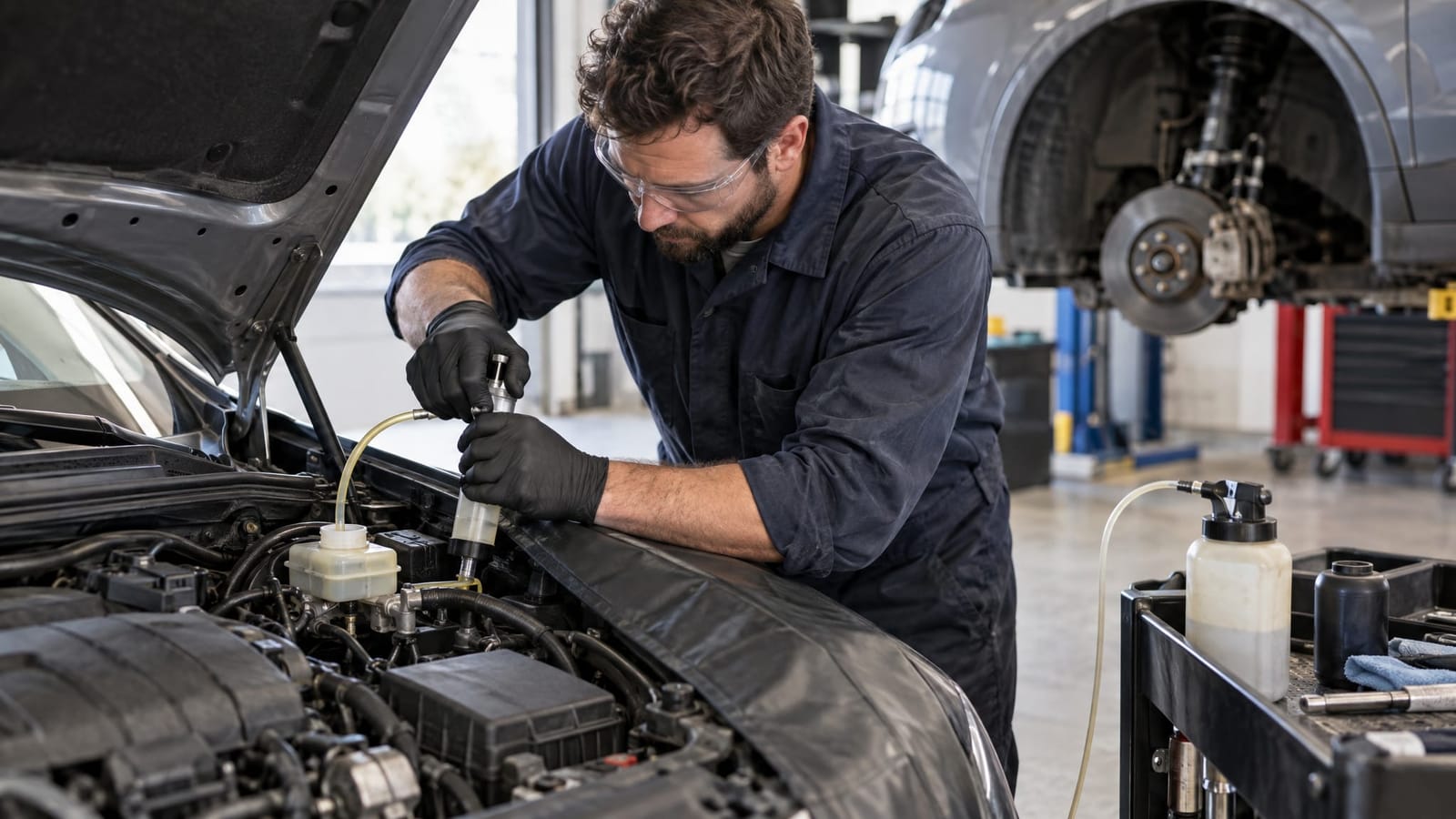
Pedal feel provides another clue. A soft or sinking pedal points toward a different diagnostic path than a normal-feeling pedal accompanied by squealing. Brake fluid and brake pads also have separate maintenance needs. Understanding why change brake fluid helps explain why pad replacement does not address every braking complaint.
Safety note: A sudden reduction in braking or a sinking pedal can make continued driving unsafe. Transporting the vehicle rather than driving it allows our licensed shop's ASE-certified technicians to assess the problem without relying on compromised braking.
6. Measured pad thickness confirms what symptoms cannot
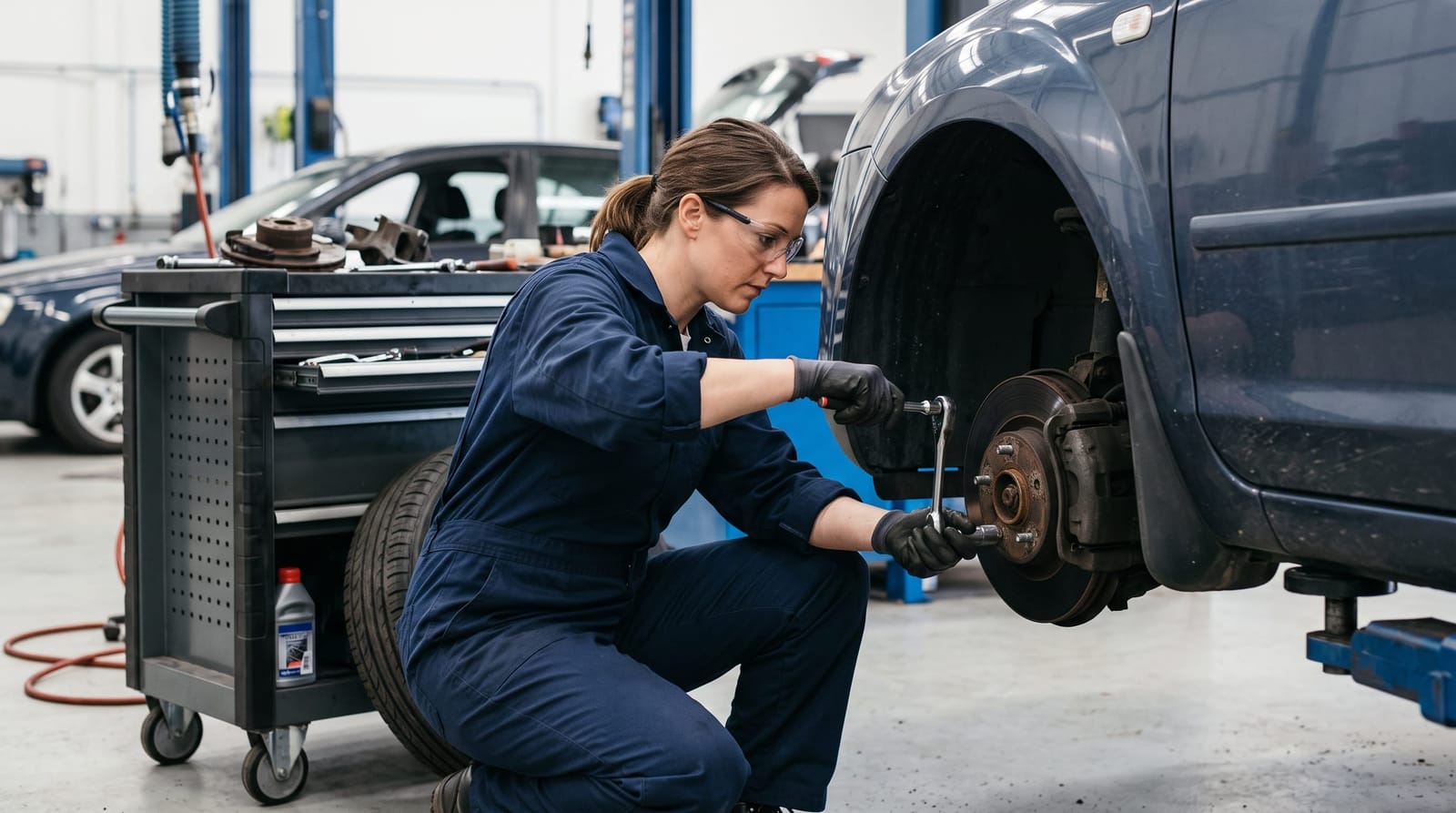
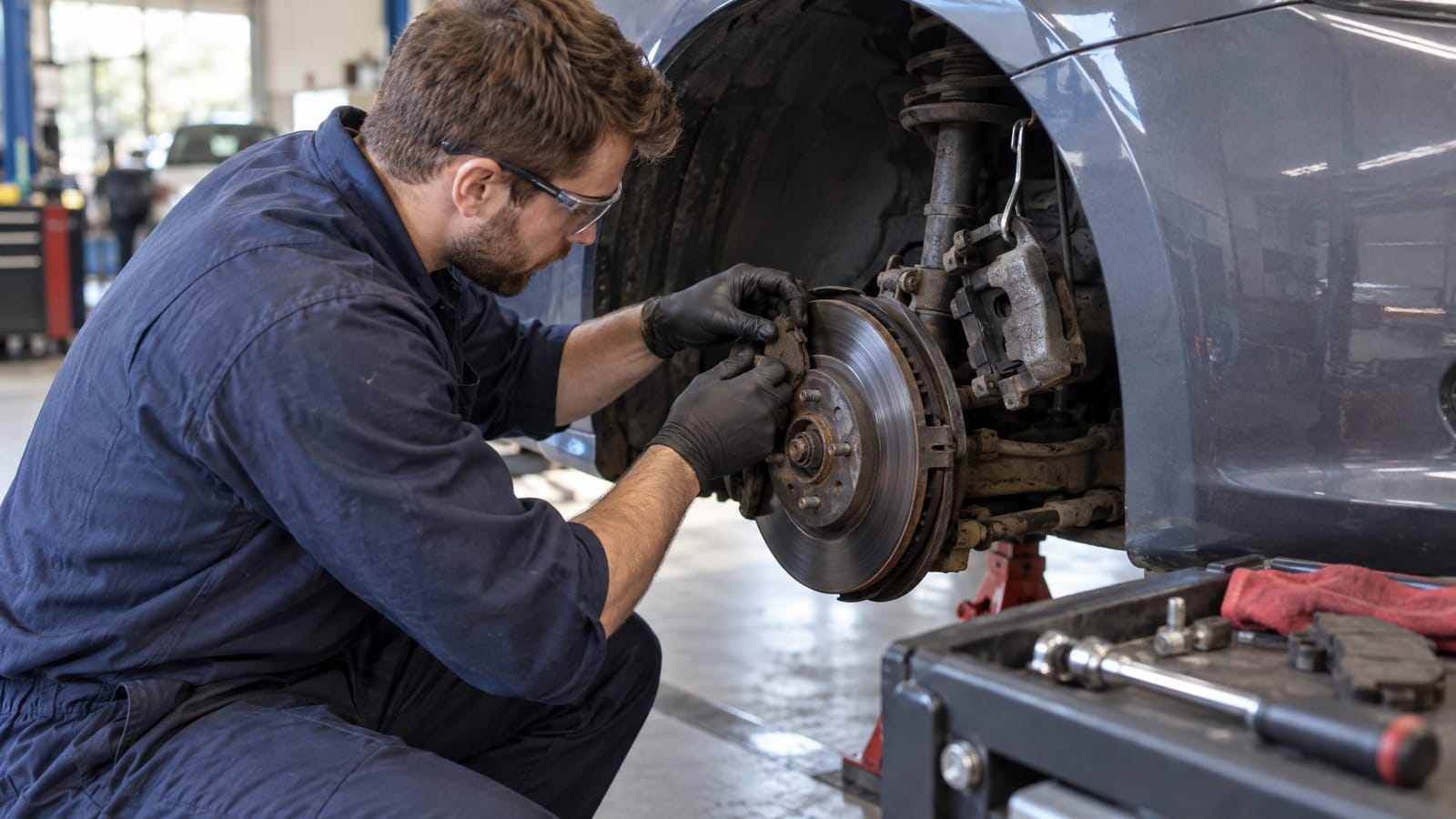
Looking through a wheel may reveal part of an outer brake pad, but it rarely provides a complete assessment. The inner pad can have a different amount of wear, and the metal backing plate is not usable friction material.
A meaningful inspection compares the remaining friction material with the manufacturer's specifications for that brake system. It also checks for uneven wear, cracking or contamination that can affect whether a pad remains suitable for service.
At Rancho Express Lube in Rancho Cucamonga, we offer brake services for all makes and models, and we use digital inspections. Our ASE-certified technicians can evaluate pad wear alongside rotor and brake-component condition.
Frequently asked questions
How many miles should luxury-car brake pads last?
There is no single mileage interval that fits every vehicle. Stop-and-go driving, hills, vehicle weight and braking habits affect wear. Pad measurements and the vehicle's maintenance guidance are more useful than assuming all luxury cars need replacement at the same mileage.
Do all four wheels need new pads at once?
Not necessarily. Front and rear pads can wear at different rates. Pads are generally replaced as a matched set across an axle, with inspection determining whether the other axle also needs service. When comparing replacement materials, ceramic vs semi metallic brake pads explains the tradeoffs; compatibility with the vehicle's brake system remains essential.
Does replacing brake pads always mean replacing rotors?
No. Rotor thickness, surface condition and the manufacturer's service limits determine whether the rotors can remain in use. Deep scoring, excessive wear or other damage may change the repair scope. European and luxury vehicles can have different rotor designs, so a blanket replacement rule is not useful.
Warning signs begin the diagnosis
Noise, warning messages and changes in braking provide clues. Measuring the pads and checking the surrounding components establishes whether replacement is needed and helps avoid treating a rotor, fluid or hardware problem as pad wear alone.