What Does a Dirty Cabin Air Filter Smell Like?

If you've noticed an odd smell coming from your car's vents, something musty, stale, or vaguely like a wet gym bag, your cabin air filter might be the culprit. It's one of those maintenance items that's easy to overlook, but when it gets heavily clogged, your nose will usually let you know before anything else does. This beginner's guide breaks down exactly what a dirty cabin air filter smells like, why those odors happen, and what you can do to get fresh, clean air flowing through your car again.
What Does a Dirty Cabin Air Filter Actually Smell Like?
The smell isn't subtle once it sets in. Most drivers describe it as one or more of the following:
- Musty or moldy, like a damp basement or old cardboard
- Stale and dusty: similar to air that hasn't circulated in a long time
- Mildew-like: a sour, slightly earthy odor that intensifies when the AC or heat kicks on
- Faintly rotten or organic, in more severe cases, when debris and moisture have built up over a long period
The smell often gets worse the moment you turn on the fan or air conditioning because air is being pushed directly through the contaminated filter media and into the cabin. If you notice the odor peaks right when you crank up the AC on a warm Rancho Cucamonga afternoon, that's a strong sign the filter is to blame.
It's worth noting that a dirty cabin air filter smell causes more than just discomfort: it signals that the air quality inside your vehicle has declined, which is worth addressing, especially if you spend a lot of time in your car or have passengers with allergies or sensitivities.
Why Does a Dirty Cabin Air Filter Smell That Way?
Understanding the cause makes it easier to address. A cabin air filter's job is to trap dust, pollen, dirt, and other particles before outside air enters your car's interior through the heating and air conditioning system. Over time, typically every 15,000 to 25,000 miles, depending on your driving environment, that filter accumulates a significant amount of debris.
Here's where the smell comes from:
Trapped Moisture and Mold Growth
When your AC system runs, it produces condensation as part of the cooling process. Some of that moisture can contact the cabin air filter. A filter packed with organic debris, pollen, leaves, insects, dust, gives mold and mildew spores the perfect environment to grow. Studies on indoor air quality consistently show that mold thrives in humid conditions with an organic food source, and a saturated filter provides exactly that. Once mold colonies establish themselves in the filter media, the air passing through carries those spores and that distinctive musty odor directly into your car's cabin.
Bacterial Buildup
Beyond mold, bacteria can also accumulate in a heavily clogged filter. Organic material trapped in the filter, especially in warmer climates where heat and humidity are a factor, creates conditions for bacterial growth. This contributes to that sour, unpleasant smell that many drivers notice but struggle to identify.
Stagnant Air and Reduced Airflow
A clogged filter significantly restricts airflow through the ventilation system. Research suggests that a heavily blocked cabin air filter can reduce airflow by up to 25%, meaning air sits longer in the system and picks up more odor before reaching you. Less air movement also means moisture doesn't dry out efficiently, which makes the mold and mildew problem worse over time.
How to Get Rid of the Smell: Step by Step
The good news is that addressing a dirty cabin air filter smell is straightforward. Here's how to approach it:
Step 1: Replace the Cabin Air Filter
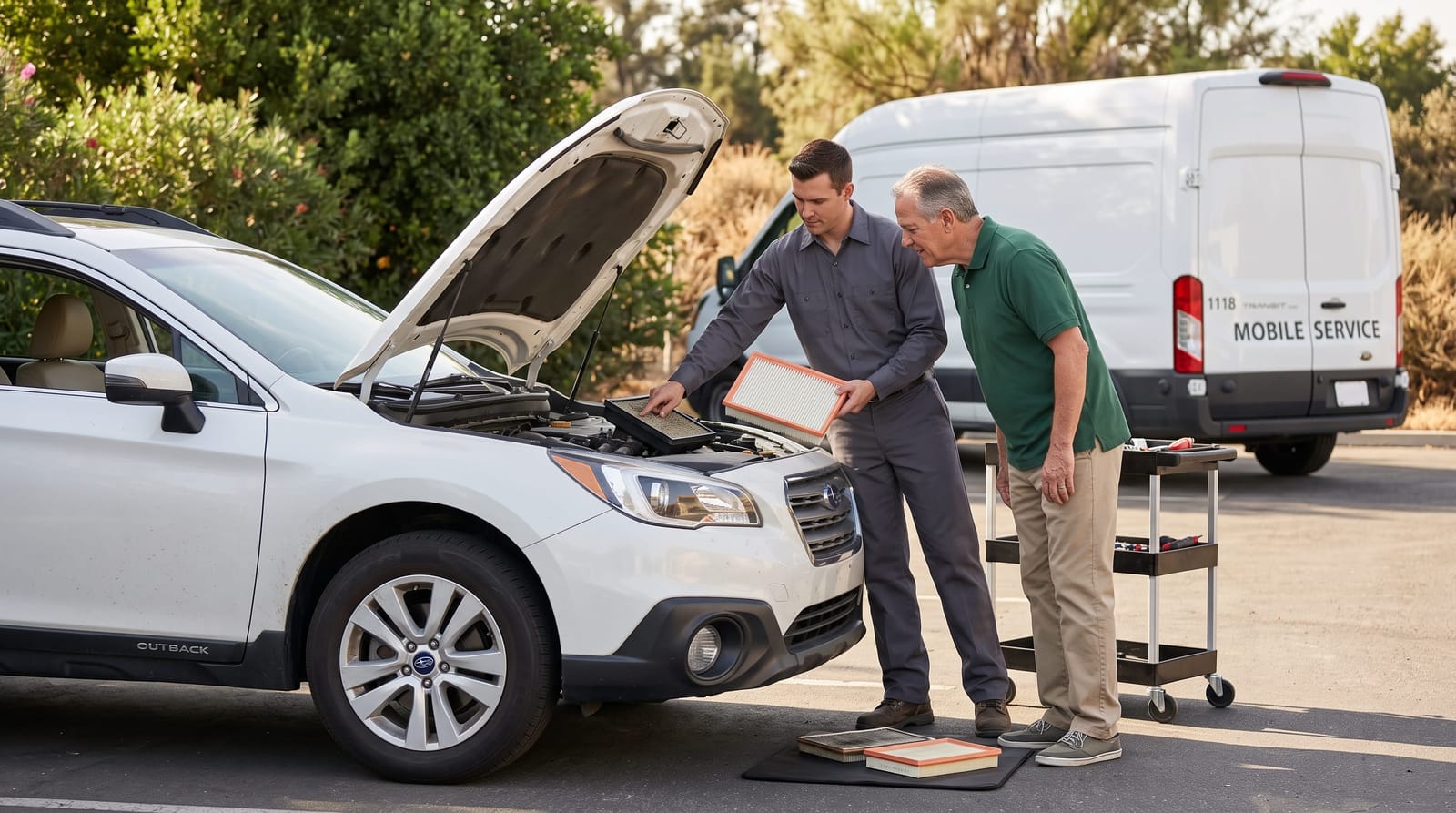
This is the most important step. Sprays and fresheners won't fix the underlying problem if the contaminated filter is still in place: you'd just be masking the odor temporarily. A new filter removes the mold, bacteria, and debris causing the smell at the source. Cabin air filter replacement is a relatively quick service, and most filters are priced accessibly.
Step 2: Consider an Interior Vent Spray or Duct Treatment
In some cases, particularly if the filter has been neglected for a long time, mold or mildew may have spread to the ductwork or the evaporator coil inside the HVAC system. An antimicrobial vent spray applied after the filter replacement can help sanitize those surfaces and eliminate any lingering odor. A service technician can advise whether this additional step makes sense for your situation.
Step 3: Run the Fan on Fresh Air (Not Recirculate)
After a new filter is installed, running your fan on the fresh air setting (rather than the recirculate setting) for 10 to 15 minutes helps flush out any remaining stale air and allows the new filter to begin doing its job. This is a simple habit that also helps prevent moisture buildup going forward.
Step 4: Follow a Regular Replacement Schedule
Prevention is easier than treatment. Most manufacturers recommend replacing the cabin air filter every 15,000 to 25,000 miles, but if you drive frequently in dusty conditions, something common in the Inland Empire, you may benefit from checking it closer to the lower end of that range. A visual inspection takes only a moment and can tell you a lot about the filter's condition.
If you've also noticed that your AC isn't blowing as cold or as strong as it used to, the filter could be contributing to that problem too. A clogged cabin air filter affecting AC performance is a related issue worth understanding: the filter and your air conditioning system work together, and one impacts the other.
What Happens If You Keep Ignoring the Smell?
A musty odor is unpleasant, but it's also a useful early warning. If the filter continues to go unserviced, the odor tends to worsen as mold growth increases. Air quality inside the cabin declines, which can be particularly noticeable for anyone who spends significant time commuting. The restricted airflow also means your HVAC system has to work harder to push air through, which can reduce its efficiency over time.
The straightforward fix, a new cabin air filter, is a routine, affordable maintenance service. Addressing it early keeps the inside of your car fresh and avoids the more involved (and more expensive) process of cleaning mold from your vehicle's ductwork.
Frequently Asked Questions
How do I know if my cabin air filter is causing the smell or if something else is?
The most reliable indicator is timing. If the odor is strongest when you first turn on the fan or AC, and diminishes once the car has been running for a few minutes, the cabin air filter is the most likely source. If the smell persists regardless of whether the HVAC system is running, the cause may be elsewhere, like a spill in the carpet or an issue with the drain that removes condensation from the AC system.
Can I just use an air freshener to fix the smell?
An air freshener will mask the odor temporarily, but it won't remove the mold, bacteria, or debris causing it. Until the filter itself is replaced, the source of the smell remains active. Think of it like covering a smoke alarm rather than putting out the fire: the freshener helps short-term but doesn't solve the problem.
How often should I replace my cabin air filter in Rancho Cucamonga?
General guidance is every 15,000 to 25,000 miles, but in areas with higher dust levels, which is common in parts of Southern California and the Inland Empire, checking the filter closer to the 15,000-mile mark is a sensible habit. Your service technician can visually inspect it during routine maintenance and let you know if it's time for a replacement.
Will replacing the cabin air filter immediately get rid of the smell?
In most cases, yes: replacing the filter eliminates the primary source of the odor and the smell clears up relatively quickly. If the mold or mildew has spread into the ductwork or HVAC components, a vent spray treatment alongside the filter replacement will address any residual odor. Your technician can assess the situation and recommend the right approach.
The Bottom Line
A musty, stale, or moldy smell from your car's vents is one of the clearest signs that your cabin air filter needs attention. Trapped moisture and organic debris create the perfect environment for mold and bacteria to grow inside the filter, and every time you run your fan, those contaminants get pushed right into the air you're breathing. The fix is simple: a fresh cabin air filter, and if needed, a vent spray to clean up any residual buildup. If you're ready to breathe easier on your commute, the team at Rancho Express Lube can take care of your cabin filter replacement quickly and get your car's air quality back to where it should be.