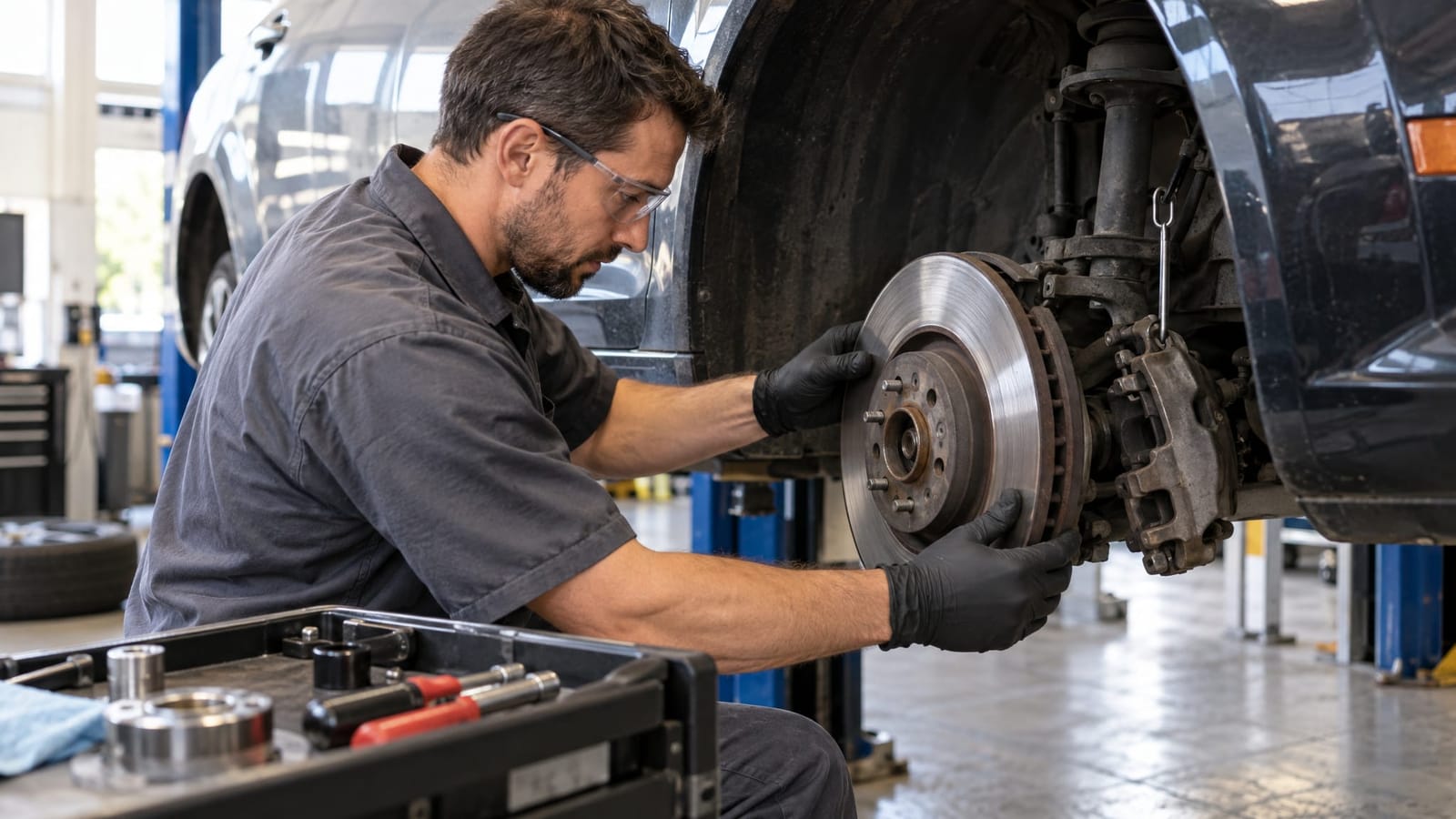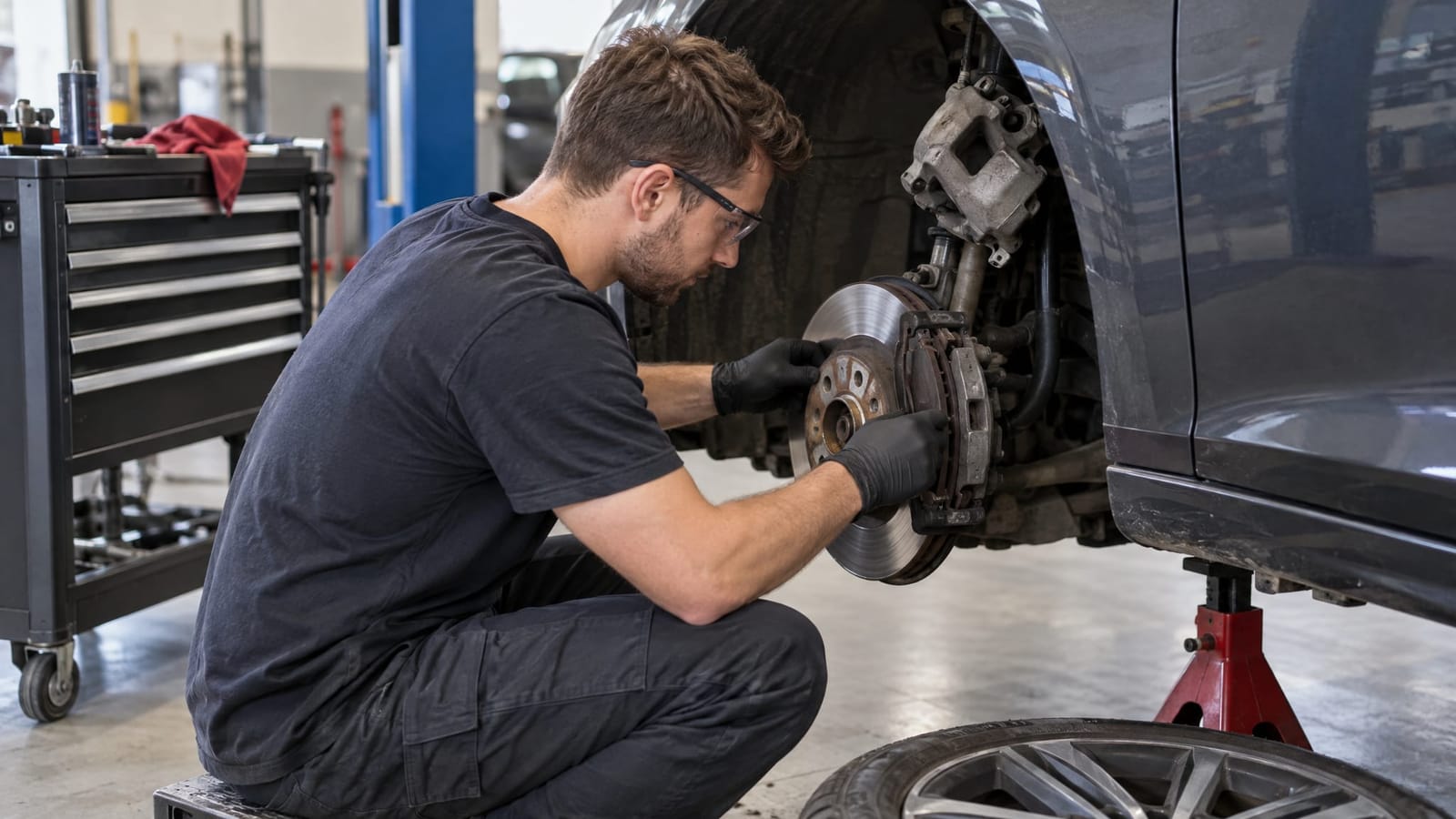
What's the Difference Between Ceramic and Semi-Metallic Brake Pads?

If you've ever had a shop ask whether you want ceramic or semi-metallic brake pads, you might have nodded along without really knowing what either one means, and that's completely understandable. It's one of the most common questions that comes up during brake service, and it deserves a straight answer. This post breaks down what each type is made of, how they perform in everyday situations, and which one makes the most sense for your vehicle. Whether you drive a daily commuter, an SUV, or a heavier-duty work truck, choosing the right brake pad material is one of the simplest ways to get more out of every brake service.
What Are Ceramic and Semi-Metallic Brake Pads Made Of?
The difference between these two pad types starts with what's inside them, and it has a bigger impact on performance than most drivers realize.
Ceramic brake pads are made from dense ceramic fibers mixed with fine copper strands and bonding agents. The result is a compact, hard pad that generates friction in a controlled, consistent way. The ceramic compound is specifically engineered to work quietly and to break down into a very fine, light-colored dust rather than the darker, grittier particles you might see on your wheels from other pad types.
Semi-metallic brake pads, by comparison, are made from a mix of metal materials, typically steel wool, copper, and iron, combined with friction modifiers and fillers. According to AAA Automotive, semi-metallic pads contain anywhere from 30 to 70 percent metal by composition. That high metal content is what makes them grip so firmly and handle heat so effectively, but it also means they behave differently depending on temperature and driving conditions.
Understanding those material differences helps explain everything else: noise, dust, wear rate, and which vehicles each type is best suited for.
How Do They Compare on Noise, Dust, and Comfort?
For most everyday drivers, these three factors matter more than raw stopping power, and this is where ceramic and semi-metallic pads separate most clearly.
Noise
Ceramic pads are widely recognized as the quieter option. Their dense compound dampens vibration well, which means less squealing, less chatter at low speeds, and a quieter overall experience during normal city and highway driving. Semi-metallic pads, because of their metal content, can produce more noise: particularly during cold morning starts or when the pads haven't fully warmed up. This doesn't mean they're defective; it's simply a characteristic of the material.
Brake Dust
If you've ever noticed a dark, sooty residue coating your wheels, that's brake dust, and the amount and type varies significantly between these two pad materials. Ceramic pads produce a lighter, finer dust that's less visible on wheels and easier to wash off. Semi-metallic pads produce more ferrous (iron-containing) dust, which tends to be darker and can cling to wheel surfaces more stubbornly. For drivers of vehicles with premium wheels or light-colored alloys, this is worth factoring in.
Ride Comfort
Ceramic pads generally deliver a smoother, more linear braking feel: the kind of consistent, predictable response that makes everyday driving more comfortable. Semi-metallic pads can feel slightly more aggressive in their bite, which some drivers prefer but others find less smooth during light, gradual stops.
Stopping Power and Heat Management: Where Semi-Metallic Shines
If ceramic pads win on comfort and cleanliness, semi-metallic pads make a strong case when the demands on your braking system go up.
Metal is an excellent conductor of heat, and semi-metallic pads are designed to move heat away from the brake rotor quickly. In situations where your brakes are working hard, think mountain driving, frequent highway braking, or towing and hauling heavy loads, that heat dissipation matters. Brake fade, which is when brakes lose their responsiveness after getting too hot, is a real concern in high-demand scenarios, and semi-metallic pads handle those conditions more effectively than ceramic pads do.
Studies and independent testing have consistently shown that semi-metallic pads maintain more consistent stopping distances in high-temperature conditions. In moderate, everyday driving, the difference in stopping distance between the two types is minimal, but push either pad type hard enough, and the semi-metallic advantage becomes meaningful.
It's also worth noting that semi-metallic pads can be harder on rotors over time due to their abrasive metal content. This doesn't make them a poor choice, but it's something to keep in mind for vehicles where rotor replacement costs are significant, such as German luxury cars or other high-value vehicles where parts pricing is higher. If you're wondering whether brake service costs look different for those vehicles, that's a topic worth exploring on its own.
Which Pad Type Is Right for Your Vehicle?
The honest answer is that there's no universal winner: it depends on how and what you drive.
Ceramic Pads Work Well For:
- Daily commuter vehicles driven primarily in city and suburban traffic
- Passenger cars and crossover SUVs not used for towing
- Drivers who prioritize a quiet, low-dust experience
- Vehicles with premium alloy wheels where keeping wheel surfaces clean matters
- Luxury sedans and vehicles where ride quality is a priority
Semi-Metallic Pads Work Well For:
- Trucks and vans used for hauling or towing regularly
- Vehicles that frequently travel mountain roads or steep grades
- Commercial fleet vehicles with higher daily mileage and heavier braking demands
- Drivers who do a significant amount of highway driving with frequent heavy stops
- Larger SUVs where braking load is consistently higher
For the majority of drivers in Rancho Cucamonga handling everyday commutes, school pickups, and weekend errands, ceramic pads are a practical and comfortable choice. But if your truck spends weekends pulling a trailer or your work van logs 200 miles a day, semi-metallic pads are the more appropriate fit.
Knowing the signs that your brake pads need replacement is equally important, because even the highest-quality pad won't perform safely if it's worn down past its usable life.
Lifespan and Cost: What to Expect from Each Type
Neither pad type lasts forever, but they do wear at different rates depending on the vehicle and how it's driven.
Ceramic brake pads typically last between 50,000 and 70,000 miles under normal driving conditions. Semi-metallic pads often fall in the 30,000 to 70,000 mile range, with the lower end of that spectrum more common in heavy-use applications like commercial vehicles or trucks used for towing. Aggressive braking habits, hilly terrain, and frequent stop-and-go traffic all reduce pad life regardless of material type.
In terms of upfront cost, ceramic pads generally run slightly higher than semi-metallic pads: typically $10 to $30 more per axle depending on the vehicle. However, when you factor in the reduced wear on rotors from ceramic pads, the total long-term cost of ownership can even out for many drivers. On vehicles where rotor replacement is expensive, that's a meaningful consideration.
The most cost-effective approach is always to match the right pad type to your vehicle's actual use, rather than choosing purely on price.
Frequently Asked Questions
Can I switch from semi-metallic to ceramic pads, or vice versa?
Yes, in most cases you can switch between ceramic and semi-metallic brake pads as long as the pads are the correct size and specification for your vehicle. Your service technician can confirm compatibility. Many drivers who originally had semi-metallic pads installed switch to ceramic at their next brake service to reduce noise and dust.
Are ceramic brake pads worth the extra cost?
For most everyday drivers, yes. Ceramic pads deliver a quieter, cleaner experience and can be gentler on rotors over time, which may reduce total maintenance costs across the life of the vehicle. For heavy-duty applications, though, the extra cost of ceramics may not be justified since semi-metallic pads are better suited to those demands anyway.
Do ceramic brake pads wear out faster than semi-metallic pads?
Generally, no. Ceramic pads tend to have a comparable or longer service life in moderate driving conditions. Semi-metallic pads can wear faster in high-heat or high-demand situations where they're being used more intensively. Actual lifespan for both types depends heavily on driving habits, vehicle weight, and local driving conditions.
Will changing my brake pads affect how my brakes feel?
Yes, slightly, especially if you're switching between pad types. Ceramic pads typically deliver a smoother, more gradual response, while semi-metallic pads can feel firmer at the point of initial contact. Most drivers adapt quickly, and either pad type will perform safely and effectively when correctly matched to the vehicle.
The Right Pad for the Right Vehicle
Choosing between ceramic vs semi metallic brake pads comes down to understanding your vehicle and how you use it. Ceramic pads offer a quieter, cleaner experience that suits the majority of everyday passenger vehicles well. Semi-metallic pads bring better heat management and stopping confidence to trucks, commercial vehicles, and heavier driving demands. Neither is universally better: they're designed for different needs. A good brake service isn't just about putting new pads on; it's about putting the right pads on. If you're due for a brake inspection or have questions about what's best for your vehicle, the team at Rancho Express Lube is happy to walk you through your options without the guesswork.