What's the Difference Between Transmission Flush and Fluid Change?
If you've ever scheduled transmission service and been asked whether you want a flush or a fluid change, you're not alone in wondering what the difference actually is. These two services sound similar, but they work differently and aren't always interchangeable. Understanding the distinction helps you make a confident, informed decision rather than just guessing at the counter. This post breaks down both services clearly: what each one does, when each one makes sense, and how to choose the right option for your vehicle.
How Each Service Works
The core difference between a transmission flush and a fluid change comes down to how much old fluid gets removed from the system, and how thoroughly the transmission is cleaned in the process.
What Happens During a Transmission Fluid Change
A transmission fluid change is sometimes called a drain-and-refill. A technician drains the old fluid from the transmission pan, may remove and clean the pan, replace the filter if your vehicle has one, and then refill the system with fresh fluid. It's a straightforward process that's been used for decades.
The catch is that a standard drain-and-refill doesn't remove all of the old fluid. Automatic transmissions have a torque converter and other internal passages that hold fluid even when the pan is drained. Depending on the vehicle, anywhere from 30% to 50% of the old fluid may remain in the system after a conventional fluid change. The new fluid mixes with what's left behind, which dilutes some of its benefit but still improves overall fluid condition.
What Happens During a Transmission Flush
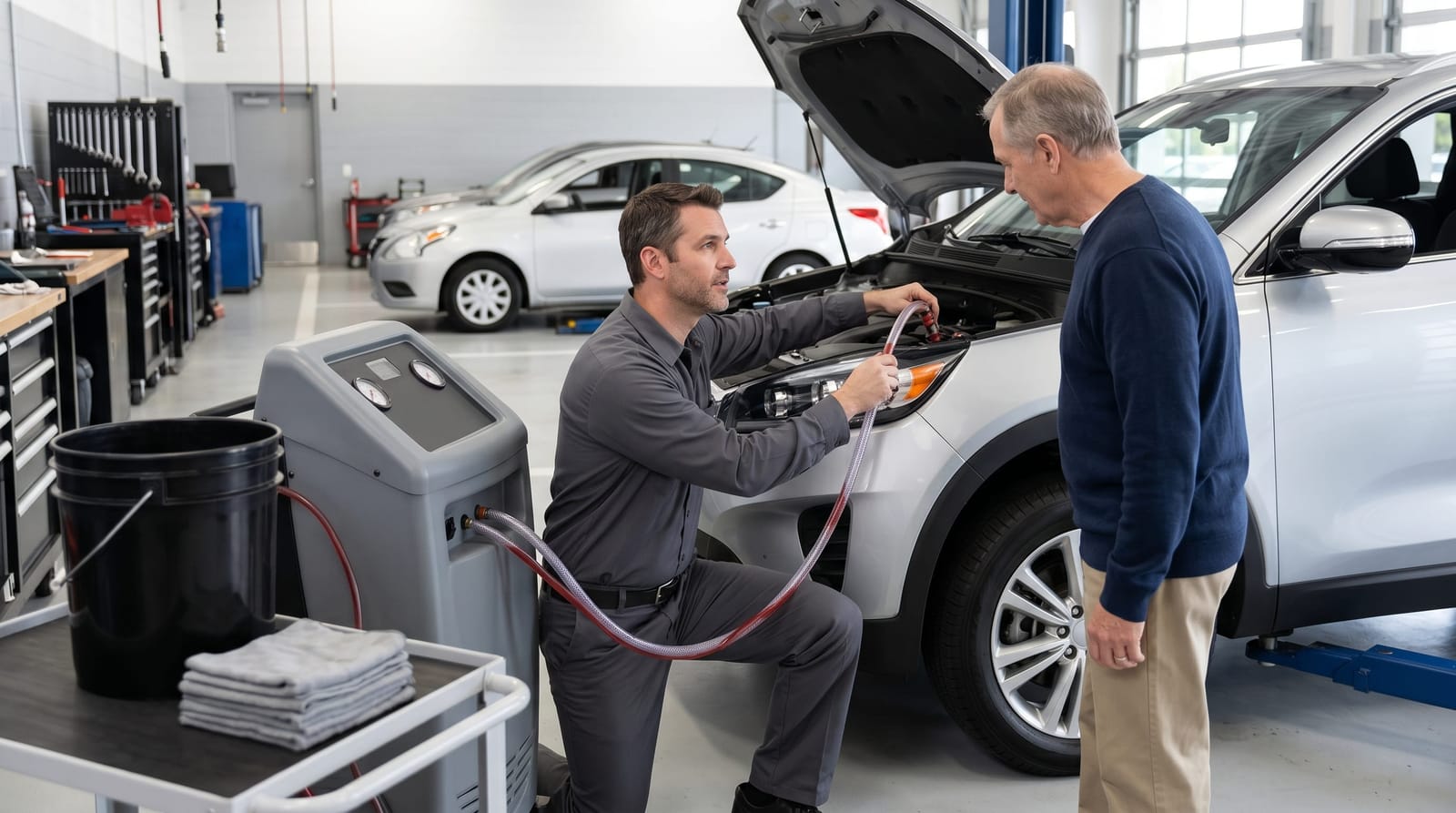
A transmission flush uses specialized equipment to push all the old fluid out of the system, including fluid from the torque converter and cooler lines, and replace it with fresh fluid in a single continuous cycle. The machine essentially circulates new fluid through the transmission while expelling the old fluid, so virtually none of the degraded fluid remains.
Because the process is more thorough and requires more fluid and equipment, a flush costs more. Most drivers can expect to pay roughly $125 to $250 for a transmission flush, compared to approximately half that for a conventional fluid change. The higher cost reflects both the additional fluid required and the specialized equipment involved.
Which Service Is Better for Your Vehicle?
Neither service is universally better: the right choice depends on your vehicle's condition, age, mileage, and service history. Here's how to think through it.
When a Fluid Change Makes Good Sense
A fluid change is a solid choice for routine, on-schedule maintenance when your transmission fluid is being changed regularly and hasn't been neglected. If you've been keeping up with your transmission service interval schedule and the fluid hasn't been sitting for an extended period, a drain-and-refill is often completely adequate. It's also a practical option when budget is a consideration: getting a partial fluid change is meaningfully better than skipping service altogether.
For many vehicles operating under normal driving conditions with consistent maintenance, a fluid change every 30,000 to 60,000 miles keeps the transmission in good working order without the added expense of a full flush every time.
When a Transmission Flush Is Worth Considering
A flush becomes more valuable in situations where you want a truly fresh start for the fluid system. Common scenarios include:
- You've purchased a used vehicle and don't have a complete service history
- The fluid is overdue for service and has become noticeably dark or has a burned smell
- You're preparing a high-mileage vehicle for an extended road trip or heavy-duty use
- Your manufacturer's service schedule specifically recommends a complete fluid exchange
A flush ensures that virtually all of the degraded fluid is removed, giving your transmission the full benefit of fresh, clean fluid throughout the entire system, not just in the pan.
Common Concerns About Transmission Flushes
You may have heard some hesitation around transmission flushes, particularly the idea that flushing an older, high-mileage transmission can cause problems. This concern deserves a straightforward answer.
The concern typically applies to transmissions that have been neglected for a very long time: cases where the fluid has broken down significantly and the internal components have accumulated deposits. In those situations, some shops are cautious about aggressive flushing because the sudden change in fluid characteristics could affect how internal parts behave. However, this is a nuanced situation, not a reason to avoid all flushes.
When performed by a knowledgeable technician on a transmission in reasonably good condition, a flush is a safe and effective service. The key is having a technician assess the fluid condition before recommending a service method. A good shop won't push the most expensive option by default: they'll look at your specific situation and give you an honest recommendation.
If you're uncertain about whether your transmission needs attention, it's worth having a professional take a look. Signs like delayed engagement when shifting, unusual sounds, or fluid that looks very dark or smells burnt are worth getting checked out before choosing a service method.
Transmission Flush vs Fluid Change: A Side-by-Side Summary
Here's a quick comparison to help clarify the decision:
- Fluid removed: Partial (30-50%) with a fluid change; nearly complete with a flush
- Typical cost: Lower for a fluid change; roughly twice as much for a flush
- Service time: Both are generally completed in under an hour
- Best for: Fluid changes work well for on-schedule maintenance; flushes are a better fit when a more thorough reset is needed
- Filter service: Often included with a fluid change; may or may not be included with a flush depending on the shop
When you're comparing the transmission flush vs fluid change question in real-world terms, it's less about one being superior and more about matching the right service to your vehicle's actual situation.
Frequently Asked Questions
Is a transmission flush always necessary, or can I just do a fluid change?
For most vehicles on a regular maintenance schedule, a fluid change is sufficient and perfectly appropriate. A flush offers a more complete fluid replacement, but it isn't required every time. Your service technician can assess your fluid condition and recommend the right approach based on what your vehicle actually needs.
How do I know if my transmission fluid needs to be changed or flushed?
Fresh transmission fluid is typically a clear pink or red color. As it ages, it darkens and can develop a burnt smell. If your fluid looks dark brown or black, it's overdue for service. A technician can also check for debris or contamination in the fluid. In general, if you're unsure how long it's been since the last service, that's a good reason to have it looked at.
Will a transmission flush fix shifting problems?
Fresh fluid can improve shifting quality if degraded fluid was contributing to the issue. However, a flush isn't a repair: it's a maintenance service. If you're noticing consistent shifting problems, hesitation, or slipping, those symptoms are worth diagnosing properly rather than assuming a fluid service will resolve them.
How often should I get transmission service?
Service intervals vary by vehicle, driving habits, and whether the vehicle sees heavy use like towing. Many manufacturers recommend transmission service every 30,000 to 60,000 miles, but some modern vehicles with sealed systems have different intervals. Checking your owner's manual or consulting a trusted service technician is the most reliable way to stay on schedule.
Choosing the Right Service for Your Situation
The transmission flush vs fluid change decision doesn't have to be complicated. A fluid change is a cost-effective, well-established maintenance service that works well when performed on a consistent schedule. A flush provides more complete fluid replacement and can be the better fit when a more thorough service is warranted. The most important thing is that your transmission fluid gets serviced regularly: fresh fluid protects internal components and helps your transmission do its job reliably.
If you're due for transmission service in the La Verne area and want a straightforward recommendation based on your vehicle's actual condition, the team at Rancho Express Lube is happy to take a look and walk you through your options without pressure. We'll help you choose the service that makes sense, not just the most expensive one on the menu.