Brake Fluid Service: Critical Maintenance for Brake System Performance
When most vehicle owners think about brake maintenance, they picture brake pads and rotors. Those are important, no question, but there's a quieter component of your brake system that deserves equal attention: your brake fluid. As part of a complete approach to brake service in Rancho Cucamonga, brake fluid service is one of the most overlooked yet genuinely important routine maintenance items for any vehicle. This guide explains what brake fluid does, why it degrades over time, how moisture contamination affects your braking, and when different types of vehicles should schedule a brake fluid flush service. Whether you drive a family SUV, a luxury sedan, or manage a commercial fleet, understanding this service helps you make confident, informed decisions about your vehicle's safety and long-term reliability.
What Brake Fluid Actually Does
Brake fluid is a hydraulic fluid that transfers the force from your brake pedal through the brake lines to your brake calipers and wheel cylinders. When you press the pedal, that physical pressure travels through the fluid and squeezes the brake pads against the rotors, slowing your vehicle down. This process happens in a fraction of a second, every single time you brake.
For this system to work correctly, the fluid needs to maintain certain properties: it must resist compression, withstand high temperatures, and protect the metal components inside the brake lines from corrosion. Fresh brake fluid does all of this well. The problem is that brake fluid doesn't stay fresh on its own: it gradually absorbs moisture from the surrounding environment through the brake system's rubber hoses and seals, and that moisture changes everything.
Understanding why change brake fluid starts with recognizing that it's a living part of your brake system: one that breaks down over time and needs periodic replacement to keep doing its job effectively. It's not a "set it and forget it" fluid like some vehicle owners assume.
The Role of Boiling Point in Brake Safety
One of the most important properties of brake fluid is its boiling point. Brake systems generate significant heat during normal use, and even more heat during heavy or repeated braking: think stop-and-go traffic, long downhill stretches, or frequent highway deceleration. If the fluid boils, it creates vapor bubbles inside the brake lines. Unlike liquid, vapor compresses easily, which means pressing the pedal may not translate into effective braking force. This is sometimes described as "brake fade," and it's exactly the condition that fresh, properly maintained brake fluid is designed to prevent.
How Moisture Contamination Degrades Brake Fluid
Brake fluid is hygroscopic: meaning it naturally absorbs moisture from the air over time. This isn't a flaw in the design; it's actually intentional, because the fluid is meant to draw moisture away from sensitive metal brake components to prevent localized corrosion. But as the fluid absorbs more water, its boiling point drops significantly.
Fresh DOT 3 brake fluid has a dry boiling point around 401°F. Once it absorbs just 3.7% water by volume, that boiling point drops to around 284°F. That's a substantial reduction, and it happens gradually, often without any obvious symptoms until you're in a situation where your brakes are working hard.
What Contaminated Fluid Does to Brake Components
Beyond the boiling point issue, moisture-laden brake fluid can cause real damage to the internal components of your brake system over time. Corrosion can develop inside brake lines, calipers, wheel cylinders, and the master cylinder: the central component that controls your entire hydraulic system. Rubber seals and hoses can also degrade more quickly when exposed to fluid that's carrying moisture and acidic byproducts from oxidation.
For owners of higher-value vehicles, European sedans, luxury SUVs, or well-maintained trucks, this kind of internal corrosion can be expensive to address once it takes hold. A routine brake fluid flush service performed on schedule is far less costly than replacing corroded brake lines or a damaged master cylinder.
Signs That Your Brake Fluid May Need Attention
- Brake fluid that appears dark brown or black instead of clear or light yellow
- A spongy or soft feeling when you press the brake pedal
- Longer stopping distances than usual
- A low fluid level in the reservoir (though this can also indicate a leak or worn pads)
- It's been more than two to three years since your last brake fluid service
These aren't reasons to panic: they're simply signals that your brake system may benefit from a closer look and, in most cases, a brake fluid flush service.
Brake Fluid Flush vs. Brake Bleed: Understanding the Difference
These two services are sometimes confused, and it's worth explaining the difference clearly so you know what you're getting when you schedule service.
A brake bleed is a targeted procedure that removes air bubbles from the brake lines. Air can enter the system during brake repairs when lines are opened and not fully purged. Bleeding removes that air so the brakes feel firm and responsive again. It doesn't necessarily replace all of the old fluid in the system.
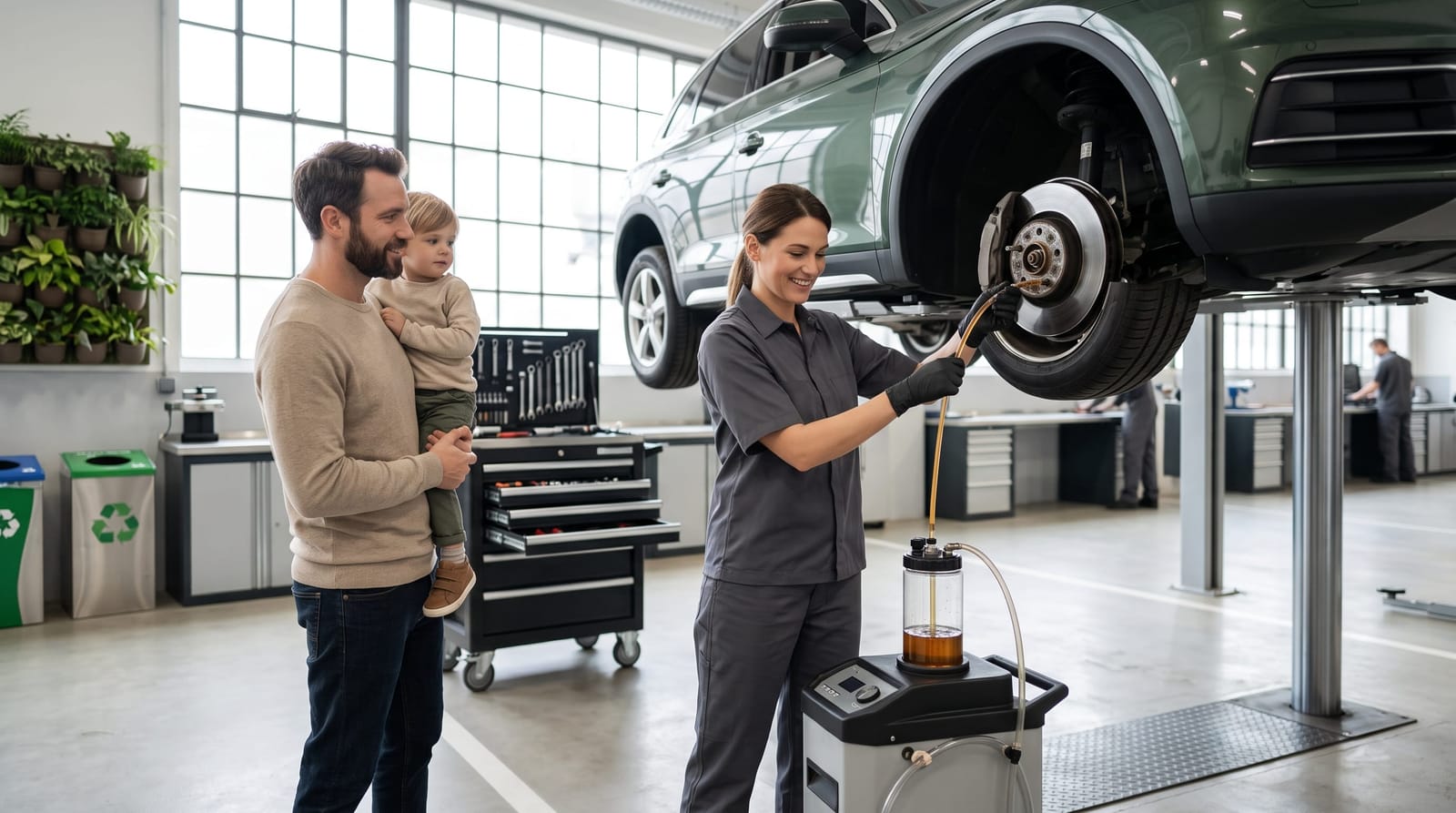
A brake fluid flush service, on the other hand, is a complete fluid exchange. The old fluid, along with the moisture, contaminants, and byproducts it's accumulated, is fully removed from the system. Fresh, clean fluid is introduced throughout the entire hydraulic circuit. This is a more comprehensive service and the one that addresses long-term fluid degradation rather than just isolated air pockets.
For routine maintenance, a full brake fluid flush service is the appropriate service interval item. A brake bleed may be performed as part of a brake repair, but it's not a substitute for replacing aged fluid.
Recommended Service Intervals for Different Vehicle Types
Service intervals for brake fluid vary depending on the vehicle type, how it's driven, and the manufacturer's recommendations. Here's a practical breakdown:
Standard Passenger Vehicles
For most everyday cars, trucks, and SUVs, a brake fluid flush service is generally recommended every two to three years or approximately 25,000 to 30,000 miles: whichever comes first. This interval is a reasonable guideline for average driving conditions in areas like the Inland Empire, where stop-and-go traffic and warm temperatures can accelerate fluid degradation.
Luxury and High-Value Vehicles
Many European luxury brands, BMW, Mercedes-Benz, Audi, Volvo, actually specify brake fluid changes every two years regardless of mileage. These vehicles use sophisticated braking systems with more sensitive components, and their manufacturers recognize that fluid condition matters more than mileage alone in these systems. If you drive a luxury vehicle, checking your owner's manual or asking a knowledgeable service provider about the manufacturer's recommended interval is always the right move. This connects directly to the broader conversation around brake pad replacement luxury cars, where quality and proper maintenance intervals protect your investment.
Commercial and Fleet Vehicles
Fleet vehicles, delivery vans, service trucks, work vehicles, often operate under much heavier braking demands than personal vehicles. Frequent stops, loaded cargo weight, and high daily mileage all put additional stress on the brake system. For fleet operators, a more frequent brake fluid inspection schedule, potentially every year or 15,000 miles, is worth considering. Keeping brake fluid fresh is one piece of a larger fleet brake maintenance service program that keeps vehicles reliable and drivers safe.
Older Vehicles and High-Mileage Cars
Vehicles with 100,000 or more miles have brake systems that have been working hard for a long time. If there's no clear service record showing when the brake fluid was last changed, a brake fluid flush service is a sensible first step before other brake work is performed. Fresh fluid going into a brake inspection or pad replacement ensures the entire system is starting from a clean baseline.
What a Professional Brake Fluid Flush Service Includes
When you bring your vehicle in for a brake fluid flush service, a qualified technician will typically start by inspecting the current fluid condition: either visually or with a simple moisture-content test strip. This helps confirm whether a full flush is genuinely needed or whether the fluid is still within acceptable range.
From there, the process involves evacuating the old fluid from the master cylinder reservoir and flushing the hydraulic system at each wheel until only clean, fresh fluid is flowing through. The technician will also check the reservoir cap seal and inspect for any signs of leaks at the calipers or brake lines while the system is being serviced.
The cost for a professional brake fluid flush service typically runs in the range of $100 to $160 depending on the vehicle and fluid type required. That's a modest investment compared to what degraded fluid can cost in brake system repairs over time. It's also worth noting that this service pairs naturally with other brake inspections, if you're already having your brake rotor replacement service evaluated, a fluid check and flush can be done at the same visit without much additional time.
Choosing the Right Brake Fluid for Your Vehicle
Not all brake fluid is the same. The most common types are DOT 3, DOT 4, and DOT 5.1, all of which are glycol-based and compatible with most hydraulic brake systems. DOT 4 and DOT 5.1 have higher boiling points and are often specified for performance-oriented or European vehicles. DOT 5 is a silicone-based fluid used in some specialty applications and is not interchangeable with the others.
Always use the fluid type specified in your owner's manual or recommended by a qualified technician. Mixing incompatible fluid types can affect braking performance and cause seal degradation. A trustworthy service provider will always verify the correct fluid specification before performing a brake fluid flush service on your vehicle.
Related Brake System Topics Worth Knowing
Brake fluid is just one part of a complete brake system. If you'd like to go deeper on the fundamentals, our overview of why change brake fluid covers the chemistry and aging process in more detail. We also cover the full range of brake service topics, from pad wear to rotor condition to fleet maintenance schedules, as part of our commitment to helping Rancho Cucamonga drivers stay safe and informed.
Keeping Your Brake System in Good Shape
Brake fluid service isn't glamorous, but it's one of those maintenance items that quietly protects everything else in your brake system. Fresh fluid maintains the hydraulic performance your brakes depend on, reduces internal corrosion risk, and helps ensure your brake pads, rotors, and calipers last as long as they should.
The straightforward recommendation: schedule a brake fluid flush service every two to three years or 25,000 to 30,000 miles for most vehicles, and follow your manufacturer's specific recommendation if you drive a luxury or European brand. If you're unsure when your fluid was last changed, bring your vehicle in and we'll take a look.
At Rancho Express Lube, our ASE-certified technicians are happy to inspect your brake fluid condition, walk you through what we find, and recommend service only when it's genuinely needed. No pressure, no guesswork, just honest, straightforward brake service in Rancho Cucamonga you can count on. Stop by or give us a call to schedule your brake fluid inspection today.