Complete Brake Service Guide: Professional Brake Repair and Maintenance
When was the last time you thought about your brakes, not when you used them, but really thought about the condition they're in right now? For most drivers, brakes are one of those systems that stay invisible until something goes wrong. And by the time you hear the grinding or feel the spongy pedal, you're already past the point where a simple inspection could have caught the issue early.
Your brakes are the single most safety-critical system on your vehicle. According to the National Highway Traffic Safety Administration (NHTSA), brake-related issues are a contributing factor in approximately 22% of all vehicle crashes caused by mechanical failure. That's a meaningful number, and it underscores why professional brake service isn't just a maintenance checkbox. It's one of the most important investments you make in the safety of everyone in your vehicle and on the road around you.
This guide is designed to give you a clear, thorough understanding of how your brake system works, what professional brake service actually involves, and why choosing a certified technician makes a real difference, especially if you're driving a high-value vehicle, managing a commercial fleet, or simply trying to get the most out of your car for years to come.
Whether you're due for a routine inspection or noticing early warning signs, you'll find everything you need here to make confident, informed decisions about your brakes.
How Your Brake System Works: A Plain-Language Overview
You don't need to be a mechanic to understand your brakes, but knowing the basics helps you recognize when something isn't right and communicate more effectively with your service technician. Modern brake systems are a carefully coordinated set of components, and each one plays a specific role in bringing your vehicle to a safe stop.
The Core Components
Most vehicles on the road today use a hydraulic disc brake system on the front wheels and either disc or drum brakes on the rear. Here's a quick breakdown of the key parts involved:
- Brake Pads: These are the friction material that press against your brake rotors to create stopping force. Brake pads are consumable parts: they wear down over time and need periodic replacement. Most brake pads last between 30,000 and 70,000 miles depending on driving habits, pad material, and vehicle type.
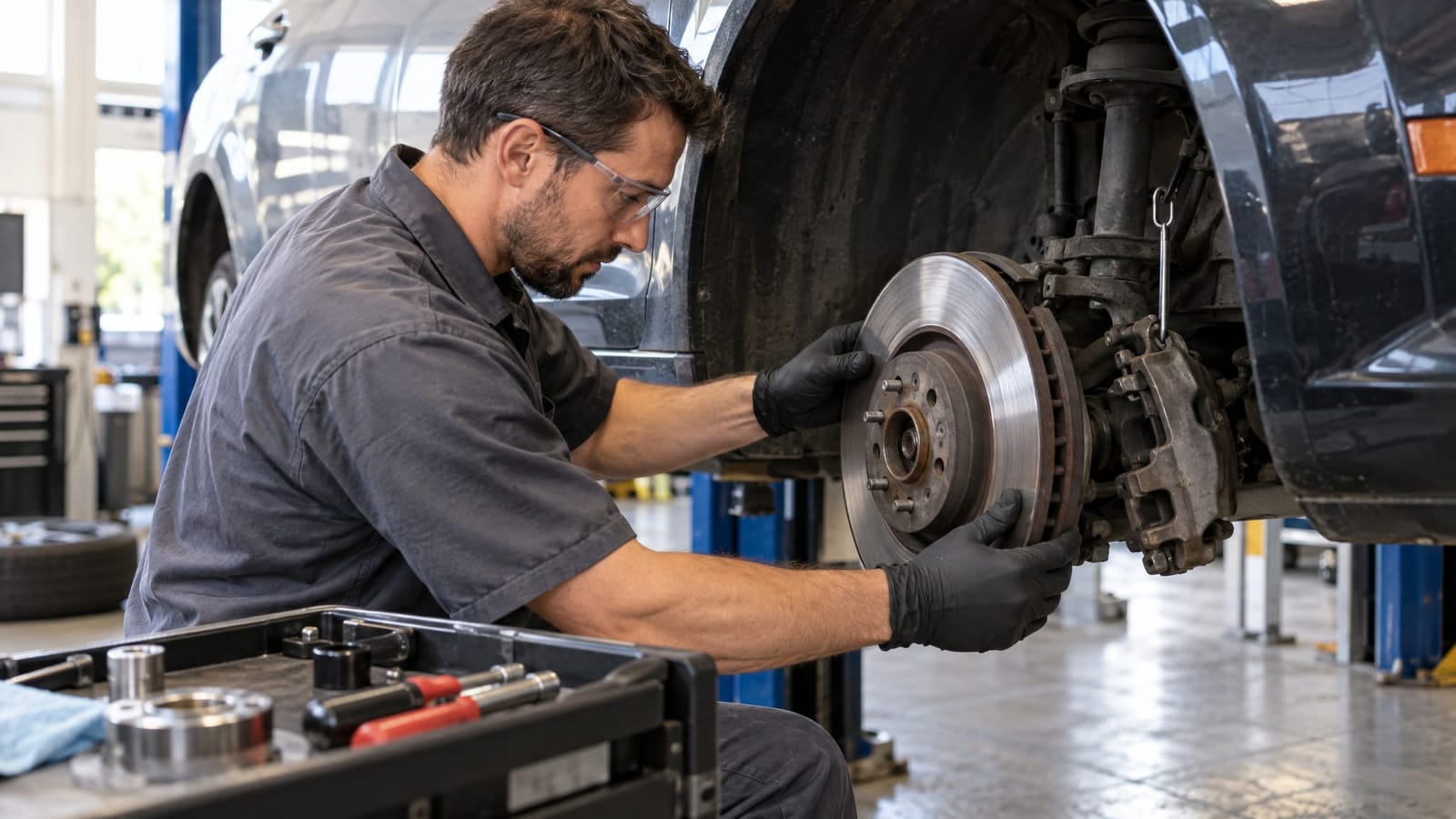
- Brake Rotors: Also called brake discs, these are the large flat metal rings that your brake pads clamp against. Rotors can warp from heat or wear thin from repeated use, which is why they're evaluated during every professional brake service.
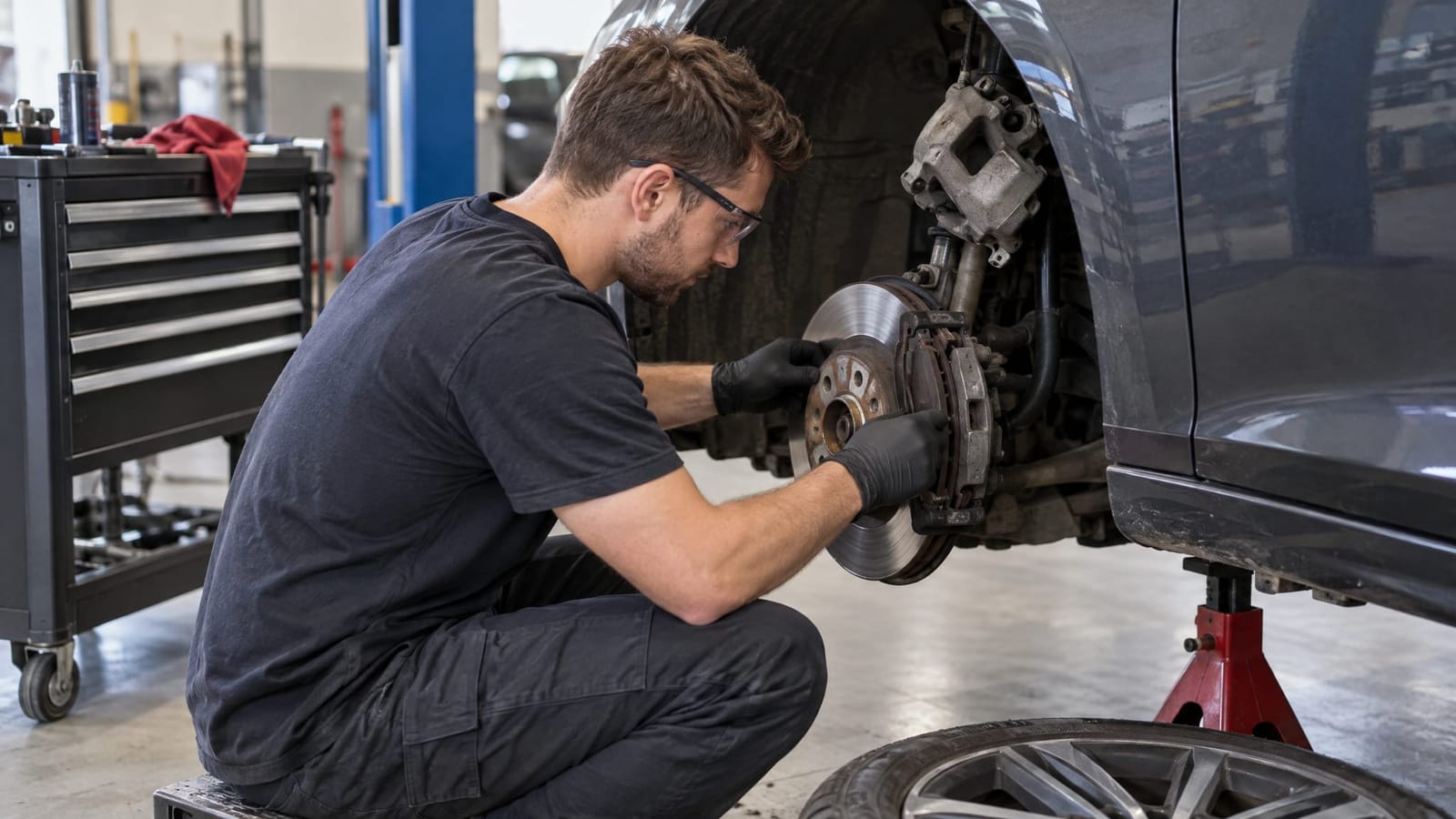
- Brake Calipers: These house the brake pads and use hydraulic pressure to squeeze them against the rotor. A sticking or seized caliper can cause uneven brake wear and reduced stopping performance.
- Brake Fluid: This is the hydraulic fluid that transfers the force from your brake pedal through the system. Brake fluid absorbs moisture over time, which lowers its boiling point and can reduce braking effectiveness: particularly during heavy use.
- Brake Lines and Hoses: These carry the brake fluid throughout the system. Cracks, leaks, or deterioration in the lines can lead to a significant drop in braking performance and should be inspected regularly.
- Master Cylinder: This is the reservoir that holds your brake fluid and generates the hydraulic pressure when you press the pedal. A failing master cylinder is a serious issue that requires prompt attention.
Understanding these components helps you see why professional brake service is more than just swapping out pads. A thorough inspection evaluates the entire system, not just the parts that are most visible or most frequently replaced.
What Professional Brake Service Actually Includes
The phrase "brake service" gets used broadly, but what it should mean, and what it does mean at a reputable shop, involves a comprehensive evaluation of the entire braking system, not just the pads. Here's what a professional brake service typically covers:
Inspection and Measurement
A quality brake inspection starts with measurement. Technicians use calipers and specialized tools to measure brake pad thickness (measured in millimeters), rotor thickness, and rotor runout (a measurement of how much a rotor wobbles as it spins). Brake pads are generally considered worn when they reach 2mm or less; most manufacturers recommend replacement at 3-4mm to maintain a safe margin. Rotors have a minimum thickness specification stamped on the edge: going below that minimum means the rotor needs replacement, not resurfacing.
Fluid Check and Condition Assessment
Brake fluid is one of the most overlooked parts of brake maintenance. Because it's hygroscopic, meaning it absorbs moisture from the air, brake fluid degrades over time regardless of mileage. Moisture contamination can lower the fluid's boiling point significantly, increasing the risk of brake fade under heavy use. Most manufacturers recommend replacing brake fluid every 2 years or 30,000 miles. A professional inspection includes checking fluid level, color, and moisture content.
Hardware and Caliper Evaluation
Brake hardware, the small clips, shims, and springs that hold brake pads in place, plays a bigger role in performance and longevity than most drivers realize. Worn or corroded hardware can cause brake pad drag, uneven wear, and noise. Professional technicians replace brake hardware during pad replacement rather than reusing old components, which extends the life of new pads and ensures quieter, more consistent performance.
Visual Inspection of Lines, Hoses, and Connections
Brake hoses are made of rubber and can develop cracks or internal deterioration over time, especially in vehicles with higher mileage. A professional inspection includes checking all accessible brake lines and hoses for leaks, swelling, cracking, or corrosion. The NHTSA estimates that brake fluid leaks account for a notable portion of brake-related mechanical failures: catching a compromised hose early is a straightforward way to prevent a serious problem.
Why ASE Certification Matters for Brake Work
Not all brake service is created equal, and the difference often comes down to who's doing the work. The Automotive Service Excellence (ASE) certification is the industry's standard credential for automotive technicians in the United States. To earn ASE certification in brakes (Certification A5), technicians must pass a rigorous written exam and demonstrate at least two years of hands-on experience in brake system service and repair.
ASE-certified technicians are tested specifically on hydraulic system diagnosis, drum and disc brake service, antilock brake systems (ABS), and electronic brake control systems. This isn't a general automotive certification: it's brake-specific knowledge that translates directly to more accurate diagnosis and higher-quality repairs.
Why does this matter for your vehicle? Consider that modern vehicles, particularly luxury vehicles, SUVs, and trucks, feature increasingly complex braking systems that include ABS, electronic stability control (ESC), and in some cases, regenerative braking. These systems require a technician who understands not just the mechanical components, but how the electronic systems interact with them. A technician working without the proper training and certification on these systems can easily misdiagnose an issue or create new problems while attempting a repair.
For high-value vehicles especially, the cost difference between certified and uncertified service is minimal compared to the cost of a repair that has to be redone, or worse, a safety failure on the road. Professional brake service from an ASE-certified technician gives you documented expertise, accountability, and confidence in the work being done.
Brake Service for High-Value and Luxury Vehicles
Owners of luxury vehicles, trucks, and high-end SUVs face a specific challenge when it comes to brake maintenance: the components in these vehicles are designed to higher tolerances and often require OEM-quality or OEM-equivalent parts to perform as intended. Using lower-grade brake components on a vehicle engineered for premium parts can result in reduced stopping performance, increased noise, and premature wear.
The Case for Quality Parts
Brake pad materials vary significantly across product lines. Economy pads typically use organic compounds that are quieter but wear faster. Mid-grade semi-metallic pads offer better heat resistance and longevity. Premium ceramic and OEM-spec pads are engineered for specific vehicle platforms, offering the best combination of stopping power, noise reduction, rotor friendliness, and dust control.
For vehicles like BMW, Mercedes-Benz, Lexus, or Audi, using the correct pad specification isn't just about performance: it's about protecting rotors that cost several hundred dollars each to replace. Mismatched brake pads can cause aggressive rotor wear that turns a pad replacement into a full pad and rotor replacement.
Rotor Considerations for Premium Vehicles
Many luxury and performance vehicles use larger, more complex rotor designs, including cross-drilled or slotted rotors, that require specific resurfacing techniques or outright replacement when worn. Attempting to resurface a rotor on a machine not calibrated for that rotor's specification can result in runout that causes pedal pulsation and vibration. Professional brake service for these vehicles includes access to the correct tooling and the knowledge to determine when resurfacing is appropriate versus when replacement is the right call.
Fleet Vehicle Brake Maintenance: A Different Set of Priorities
Commercial fleets present a unique set of brake service challenges. Whether you're managing a delivery fleet, service vehicles, or company trucks, the braking demands placed on fleet vehicles are significantly higher than those on personal passenger cars. Higher vehicle weights, frequent start-stop cycles, and consistent heavy payloads accelerate brake wear considerably.
Fleet vehicles are often on the road 10 to 12 hours a day or more, which means brake maintenance intervals are compressed. A personal vehicle might need brake pads every 40,000-50,000 miles; a delivery or service vehicle in similar conditions might need them every 20,000-25,000 miles. Missing that service window on a fleet vehicle doesn't just risk a repair: it risks driver safety and potential liability for the company operating the vehicle.
Proactive fleet brake maintenance programs help businesses schedule service during off-hours, track vehicle-by-vehicle brake wear, and avoid the costly downtime that comes from an emergency brake failure. Professional brake service providers who work with commercial fleets understand these pressures and can structure maintenance schedules that keep vehicles road-ready without disrupting operations.
Recognizing the Warning Signs: When to Schedule Brake Service
One of the most practical things you can do as a vehicle owner is know what early brake wear looks and feels like. Catching brake issues in the early or moderate stages is almost always less expensive, and less stressful, than waiting until a warning sign becomes an urgent problem.
Sounds to Pay Attention To
- Squealing or squeaking: Most brake pads include a small metal wear indicator that begins to squeal when pads reach approximately 2-3mm of remaining material. This is a designed-in early warning: you have time to schedule service, but you shouldn't wait.
- Grinding: A grinding sound typically means pads have worn through completely and metal is contacting metal. This can damage rotors quickly and should be addressed as soon as possible.
- Chirping on first use in the morning: Light surface rust on rotors can cause a brief chirping sound that goes away after a few stops. This is usually normal. If it persists throughout your drive, have it checked.
Sensations to Notice
- Pedal pulsation: A pulsing or vibrating sensation in the brake pedal often indicates warped or unevenly worn rotors.
- Soft or spongy pedal: If your brake pedal feels like it's sinking further than usual before engaging, this can indicate air in the brake lines or deteriorating brake fluid and should be inspected promptly.
- Pulling to one side: If the vehicle drifts to one side during braking, it could indicate uneven pad wear, a sticking caliper, or uneven fluid pressure in the system.
- Brake warning light: Most modern vehicles have a dedicated brake warning light. If it illuminates, have the system inspected, even if the brakes feel fine to you at the moment.
A good rule of thumb: if you're experiencing any of these signs, schedule a professional brake inspection rather than waiting for your next scheduled maintenance visit. Brake inspections are typically quick and straightforward, and they give you clear information about what's needed and what can wait.
How Often Should You Schedule Professional Brake Service?
Brake service intervals aren't one-size-fits-all. The right schedule depends on your driving habits, your vehicle type, the environment you drive in, and the quality of the brake components installed on your vehicle. That said, there are some practical benchmarks that apply to most drivers.
General Service Intervals
- Brake Inspection: Every 12 months or 12,000 miles, whichever comes first. Many shops perform a visual brake inspection as part of routine oil change service.
- Brake Pads: Typically every 30,000-70,000 miles, depending on pad type, driving conditions, and vehicle weight. City driving with frequent stops will wear pads faster than highway driving.
- Brake Rotors: Rotors often last through 2-3 sets of brake pads, but this varies. Have them measured during each pad replacement to determine whether resurfacing or replacement is appropriate.
- Brake Fluid: Every 2 years or 30,000 miles, or per your vehicle manufacturer's recommendation. This is one of the most frequently skipped maintenance items and one of the most important.
- Brake Hoses and Lines: Inspect annually; replace as needed based on condition rather than mileage.
Factors That Accelerate Brake Wear
If any of the following apply to you, lean toward the shorter end of recommended service intervals:
- Frequent city or stop-and-go driving
- Towing or hauling heavy loads regularly
- Driving in hilly or mountainous terrain
- Operating a commercial or work vehicle
- High mileage accumulation (over 15,000 miles per year)
Deep Dive Topics: Explore the Full Brake Service Guide
This guide covers the broad landscape of professional brake service, but some topics deserve a closer look on their own. The following resources dive deeper into specific areas of brake maintenance and repair: each one built to give you clear, practical information you can use.
- Fleet Brake Maintenance: Commercial fleets have unique brake service needs that go beyond standard passenger vehicle maintenance. Learn how proactive scheduling, proper documentation, and consistent inspections keep service vehicles operating safely and efficiently. Explore our complete guide to fleet brake maintenance service for everything you need to know about managing brake upkeep across a vehicle fleet.
- ASE Certified Brake Technicians, Certification matters, but understanding why helps you make better decisions about who services your vehicle. Our detailed look at what it means to work with an ASE certified brake technician covers the testing process, what the certification covers, and why it's particularly important for complex or high-value vehicles.
- Brake Pad Replacement for Premium Vehicles, Not all brake pads are appropriate for all vehicles. If you drive a luxury or high-performance car, understanding pad materials and OEM specifications can protect both your rotors and your investment. Get the full breakdown in our guide to brake pad replacement luxury cars.
- Brake Rotor Service: Resurfacing vs. Replacement, When a rotor is worn or warped, the right answer isn't always replacement. Learn when resurfacing is appropriate, when it isn't, and how to evaluate rotor condition in our in-depth guide to brake rotor replacement service.
- Brake Fluid Service: Brake fluid is frequently overlooked and rarely understood. Our dedicated guide to brake fluid flush service explains why this maintenance item matters, what moisture contamination does to braking performance, and how often your vehicle's fluid should be replaced.
Why Professional Brake Service in Rancho Cucamonga Matters
Choosing where to have your brakes serviced is a decision worth thinking about carefully. The right shop isn't necessarily the closest or the cheapest: it's the one that combines certified expertise, quality parts, transparent communication, and a genuine commitment to getting the work done right.
At Rancho Express Lube in Rancho Cucamonga, professional brake service is approached the same way every routine maintenance visit is: with care, honesty, and attention to detail. Our technicians are trained to evaluate your entire brake system, not just the components that are due for replacement, and to communicate clearly about what they find and what it means for your vehicle.
For drivers of luxury vehicles and high-end SUVs, we use OEM-quality parts appropriate to your specific vehicle. For fleet operators, we offer flexible scheduling and consistent documentation so you can track brake wear across your vehicles. And for every customer, our goal is the same: give you accurate information, do the work right, and help you keep your vehicle safe and reliable for the long haul.
Whether you're due for a routine brake inspection, hearing an unfamiliar sound when you slow down, or managing maintenance for a small fleet, professional brake service in Rancho Cucamonga is what we're here to provide.
Conclusion: Safe Brakes Start with Professional Service
Your brakes work hard every single day, often without any visible sign that they're doing it. The goal of professional brake service is to keep them working quietly, reliably, and safely, long before a problem becomes apparent on the road.
The key takeaways from this guide are straightforward. Brake systems are more complex than most drivers realize, and a thorough professional brake service covers far more than just the pads. ASE certification is a meaningful credential that reflects genuine expertise: particularly important for modern vehicles with complex electronic braking systems. Quality parts matter, especially for high-value vehicles where using the wrong components can accelerate wear and cost more in the long run. And proactive maintenance, based on realistic service intervals, is always more cost-effective than reactive repairs.
If you're in Rancho Cucamonga and looking for professional brake service you can trust, Rancho Express Lube is ready to help. Schedule your brake inspection today and drive with confidence knowing your stopping system is in good hands.