Does My Car Battery Weaken in Cold Weather? SoCal Winter Battery Tips
If you've ever turned the key on a cold January morning and heard your engine crank slowly, or not at all, your battery may be the reason. Cold weather affects how car batteries perform, even here in Southern California. While our winters are mild compared to other parts of the country, a brief cold snap can expose a battery that was already running low on reserve power. This beginner's guide explains exactly what happens to your battery when temperatures drop, what to watch for, and how to stay ahead of a no-start situation this winter.
How Cold Weather Affects Your Car Battery
Car batteries work through a chemical reaction that produces electrical current. The problem is that cold temperatures slow down that chemical process, which reduces the amount of power the battery can deliver. The colder it gets, the harder your battery has to work just to produce a normal start.
At the same time, cold weather increases the effort your engine needs to start. Engine oil thickens slightly when temperatures drop, which means the starter motor draws more power from the battery to get things moving. You have a battery producing less power while the engine is demanding more, and that's where problems begin.
In Southern California, temperatures can dip into the 30s and 40s overnight during winter months, especially in inland areas like the Inland Empire. That range is enough to reveal a battery that's been quietly losing capacity over time. You might not have noticed any issues through the summer, but a few cold nights can quickly change the picture.
Why a Battery That "Survived" Summer Can Still Fail in Winter
This is one of the most common surprises for drivers in warm climates. A battery that made it through the heat of summer doesn't automatically mean it's in good shape for winter. In fact, the opposite can be true.
High summer temperatures actually cause more long-term battery damage than cold weather does. Heat accelerates the breakdown of the internal components inside a battery, slowly reducing its capacity month by month. By the time fall arrives, a battery that experienced a hot Inland Empire summer may have lost a significant portion of its original power, even if it technically still starts the car.
That marginal battery might work just fine on warm mornings, but once temperatures drop overnight, the reduced cold-weather performance pushes it past its limit. The car fails to start, and it feels like it "came out of nowhere." In reality, the battery had been declining all along, and the cold weather simply finished the job.
This is why late fall, before cold snaps hit, is a smart time to have your battery tested, even if it seems to be working fine.
Understanding CCA Ratings: What They Mean for Cold Starts
When shopping for or evaluating a car battery, you'll come across the term CCA, which stands for Cold Cranking Amps. This rating tells you how much electrical current a battery can deliver for 30 seconds at 0°F (-18°C) while maintaining enough voltage to start an engine.
A higher CCA rating means the battery has more starting power available in cold conditions. Your vehicle's manufacturer specifies a minimum CCA requirement for your particular engine, and it's important not to go below that number when replacing a battery.
For Southern California drivers, CCA ratings may seem less critical since we rarely see temperatures near zero. But as we covered above, even mild cold reduces battery output, so a battery that meets your vehicle's CCA requirement gives you an appropriate margin of safety for those chilly Inland Empire mornings. If your current battery is aging and its actual capacity has dropped below its rated CCA, that margin disappears quickly.
When you have a battery tested, a good test will measure both the battery's current voltage and how well it performs under a load: giving you a more accurate picture than a simple voltage reading alone.
Signs Your Battery May Be Weakening
Before a battery fails completely, it usually shows some warning signs. Learning to recognize them early gives you time to address the issue on your schedule rather than in a parking lot.
- Slow engine cranking: If the engine sounds like it's turning over more slowly than usual when you start the car, especially on cold mornings, that's a sign the battery is struggling to deliver full power.
- Dim lights when starting: Headlights or interior lights that dim noticeably while the engine cranks can indicate low battery output.
- Age over three to five years: Most standard car batteries last between three and five years depending on conditions and usage. In warm climates like Southern California, heat exposure can shorten that lifespan.
- Needing a jump-start: If you've needed a jump-start once, treat it as a serious warning sign, not just bad luck. Have the battery tested promptly.
- Battery warning light: If this light appears on your dashboard, have the electrical system checked. It may indicate the battery, alternator, or charging system needs attention.
None of these signs are a guarantee of imminent failure, but any one of them is a good reason to get a battery test before the coldest weeks of winter arrive.
What a Battery Check Involves: and Where to Get One
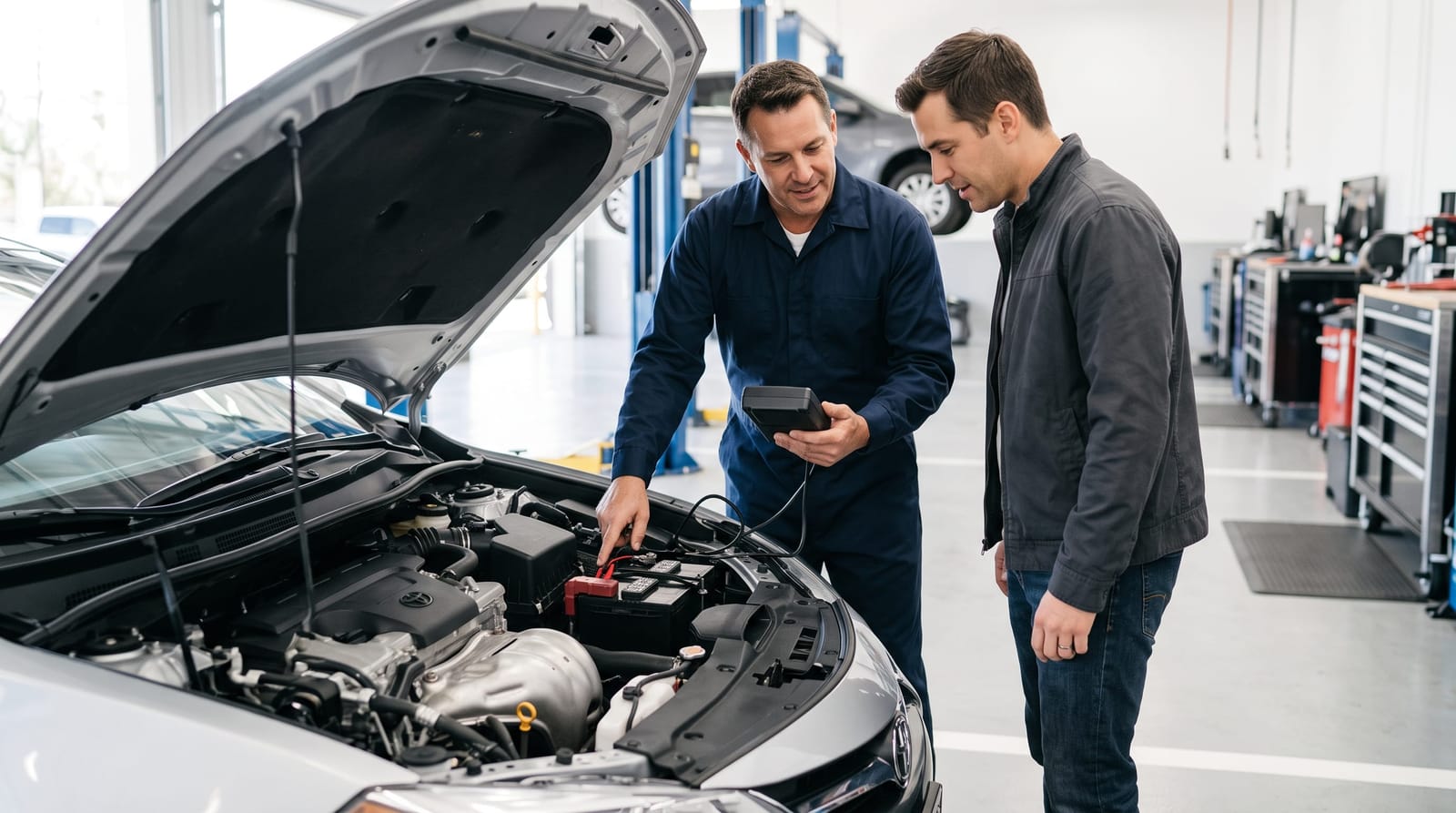
A basic battery check is quick, non-invasive, and gives you real information about your battery's current health. A technician will typically check the battery's voltage at rest and then perform a load test: applying a controlled draw to simulate the conditions of starting the engine. This reveals not just whether the battery has charge, but whether it can actually deliver power when it matters.
At Rancho Express Lube, a car battery cold weather Southern California winter concern is something our team addresses as part of our multi-point inspection. When you bring your vehicle in, we include a battery check as part of that process, so you'll know where your battery stands without needing a separate appointment. It's a simple way to head into winter with one less thing to worry about.
If you're also curious about other fluids that matter in cooler weather, our post on whether Southern California drivers actually need antifreeze and how coolant works in warm climates is a helpful companion read to this one.
Frequently Asked Questions
How cold does it need to get to affect my car battery in Southern California?
Even temperatures in the 35-45°F range, which are common overnight in the Inland Empire during winter months, can reduce battery output enough to cause slow cranking or a no-start on a battery that's already weakened. You don't need sub-freezing temperatures for cold weather to have an impact.
My battery is only two years old. Should I still have it tested?
Age is just one factor. A two-year-old battery that has been exposed to repeated extreme heat, like a full Inland Empire summer, may have experienced more wear than its age suggests. If you've had any symptoms like slow cranking or dim lights, testing is always worthwhile regardless of age.
Can I test my car battery myself at home?
A basic multimeter can give you a resting voltage reading, which provides some information. However, a professional load test gives a much more accurate picture of how the battery performs under real starting conditions. Resting voltage alone won't tell you whether the battery will hold up when temperatures drop and the engine demands full power.
What happens if my battery fails completely in cold weather?
A completely failed battery typically means the car won't start at all. You'll need a jump-start to get the vehicle moving, and the battery will need to be tested and likely replaced. If you're in this situation, have the charging system checked at the same time: a failing alternator can also drain a battery and cause repeated no-start issues.
The Bottom Line on Cold Weather and Car Batteries
Cold weather doesn't ruin a healthy battery, but it does expose one that's been quietly losing capacity over time. In Southern California, where summer heat can silently wear down a battery before winter even arrives, heading into the cooler months with a quick battery check is simply smart preventive maintenance. Understanding CCA ratings, knowing the warning signs, and getting a professional test are all steps that keep you in control of your vehicle's reliability. Stop by Rancho Express Lube this season and let us include a battery check in your next visit: it's a small step that can prevent a frustrating morning.