Summer Car Maintenance Checklist: How to Protect Your Vehicle in Inland Empire Heat

If you've spent a summer in Rancho Cucamonga or Fontana, you already know what that heat feels like, and your vehicle feels it too. Temperatures in the Inland Empire regularly climb above 100°F from June through September, putting real stress on everything from your engine coolant to your tires to your air conditioning system. As part of a year-round approach to vehicle care, summer preparation deserves its own focused attention. This checklist walks through the most important maintenance areas to address before and during the hottest months, so you can drive with confidence whether you're commuting on the 210, running errands around Ontario, or heading out on a weekend trip. Getting ahead of these checks now is far easier, and less disruptive, than dealing with an unexpected problem in triple-digit heat.
1. Air Conditioning: Your First Line of Defense Against Inland Empire Heat
When outside temperatures hit 105°F in Fontana, which happens regularly during July and August, a functioning air conditioning system isn't a luxury, it's a safety consideration. An AC system that blows cool air in mild weather can struggle significantly once ambient temperatures rise. If your system takes a long time to cool the cabin, produces a musty or weak airflow, or doesn't seem as cold as it used to be, it may be low on refrigerant or have a component that needs attention.
What Gets Checked During an AC Inspection
- Refrigerant level: Low refrigerant is one of the most common reasons AC performance drops. A technician can check the charge level and recharge the system if needed.
- Compressor function: The compressor is the heart of the AC system. Unusual noises or inconsistent cooling can sometimes point to compressor wear.
- Belt and hose condition: These components are also affected by heat cycling over time and are worth a visual check during any AC service.
Getting your AC system evaluated before the heat peaks, ideally in April or May, means you're not scrambling for an appointment when every other Inland Empire driver has the same idea in late June. To learn more about evaluating your system before summer arrives, see our post on car AC ready for summer Southern California.
2. Coolant System: Keeping Your Engine Temperature in Check
Your vehicle's cooling system is what prevents the engine from overheating, and it works hardest when outdoor temperatures are highest. In the Inland Empire, where Rancho Cucamonga regularly sees summer highs between 98°F and 108°F, the cooling system doesn't get much of a break during the warmest months. Low or degraded coolant is one of the leading causes of summertime overheating.
Coolant Check Basics
Coolant, also called antifreeze, doesn't just prevent freezing in winter. It also raises the boiling point of the fluid in your radiator, which is exactly what you need when the engine is working hard in high heat. Over time, coolant loses its effectiveness and can become acidic, which can cause damage to internal components. Most manufacturers recommend a coolant flush at regular intervals, though the specific timeline varies by vehicle: your owner's manual is the best reference point.
During a coolant check, a technician will look at the fluid level, test the concentration, and inspect hoses and the radiator cap for wear. A cracked or softened hose that might hold up fine in mild weather can become a problem under sustained heat stress. Catching these issues during a routine check is much simpler than dealing with them on the side of the freeway.
3. Oil and Lubrication: Choosing the Right Viscosity for Hot Weather
Motor oil is what keeps your engine's internal components lubricated and protected, and heat affects how it performs. Oil becomes thinner as temperatures rise, which is normal, but oil that's already low or degraded has even less ability to protect moving parts under those conditions.
Oil Viscosity and Summer Driving
You've probably seen numbers like 5W-30 or 10W-40 on oil containers. The second number refers to the oil's viscosity at high operating temperatures. In hotter climates, some vehicles may benefit from an oil with a slightly higher high-temperature viscosity rating, though this always depends on what the manufacturer specifies for your engine. The most important thing is staying current on oil changes: old, broken-down oil loses its protective properties more quickly in heat.
If you're driving in Rancho Cucamonga during a stretch of 100°F-plus days, especially with a lot of stop-and-go traffic, your engine is working harder than usual. That's a good reason to make sure your oil change isn't overdue and that the oil being used is appropriate for your vehicle and driving conditions. A quick conversation with a service advisor can clarify what's right for your car.
4. Tire Pressure: Why Heat Changes the Numbers
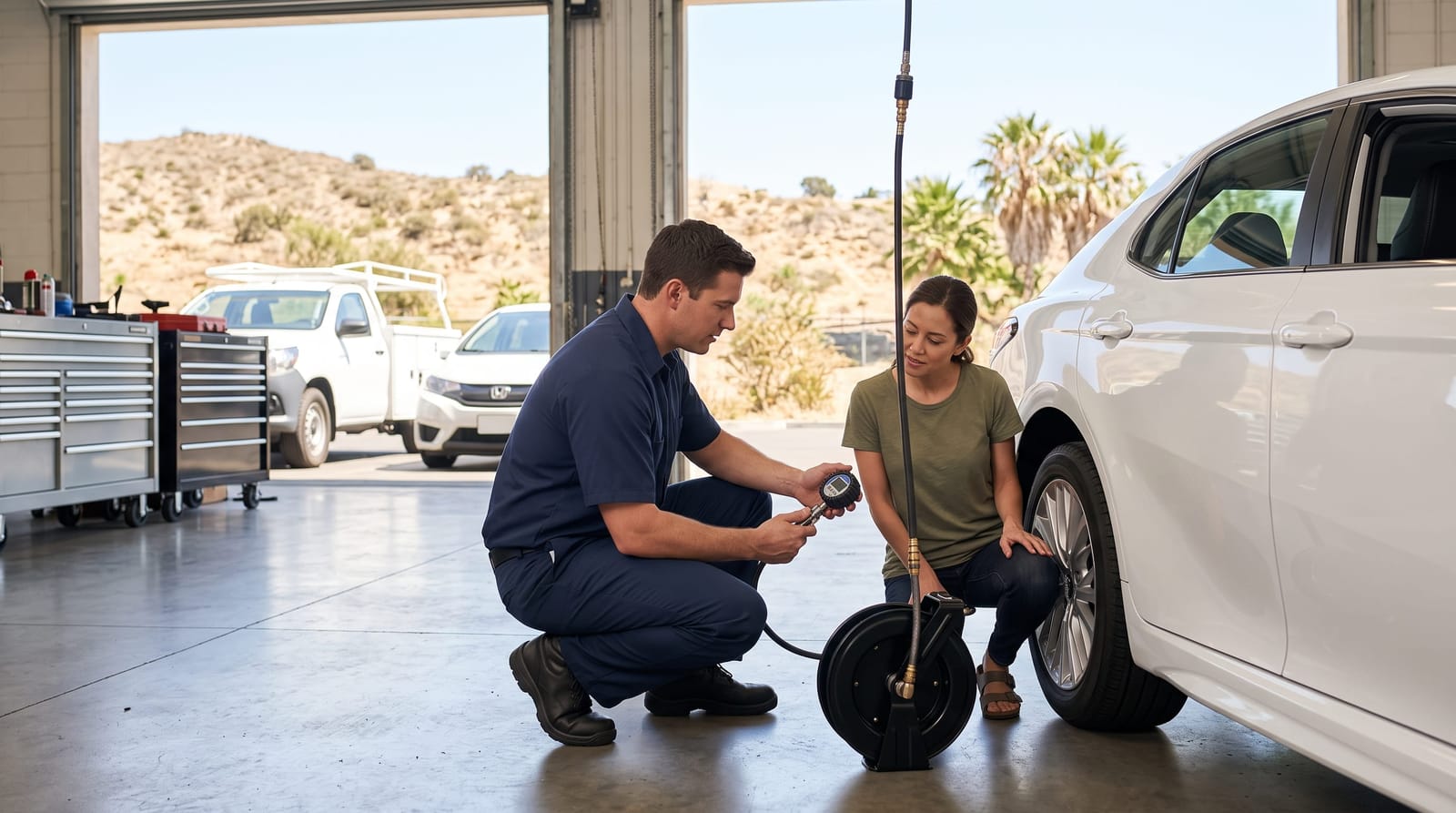
Tire pressure and temperature have a direct relationship. For roughly every 10°F increase in ambient temperature, tire pressure increases by about 1 PSI. That means a tire that was properly inflated on a 65°F morning in March may be over-inflated when you're driving through Fontana on a 105°F July afternoon, or when the road surface itself is radiating heat upward.
The Practical Impact of Incorrect Tire Pressure
- Over-inflation: Reduces the tire's contact patch with the road, affecting handling and increasing wear in the center of the tread.
- Under-inflation: Causes the tire to flex more than it should, generating additional heat, which is particularly risky in already-hot conditions, and wearing the outer edges of the tread faster.
- Both extremes: Can affect braking distances and overall vehicle stability.
The best practice is to check tire pressure when the tires are "cold": meaning the vehicle hasn't been driven for at least a few hours. Use your vehicle's recommended PSI (found on the driver's door jamb sticker or in the owner's manual), not the maximum PSI printed on the tire sidewall. For a deeper look at how Inland Empire temperatures affect your tires specifically, our article on hot weather tire pressure Southern California covers this topic in detail.
5. Battery Health: Heat Is Harder on Batteries Than Cold
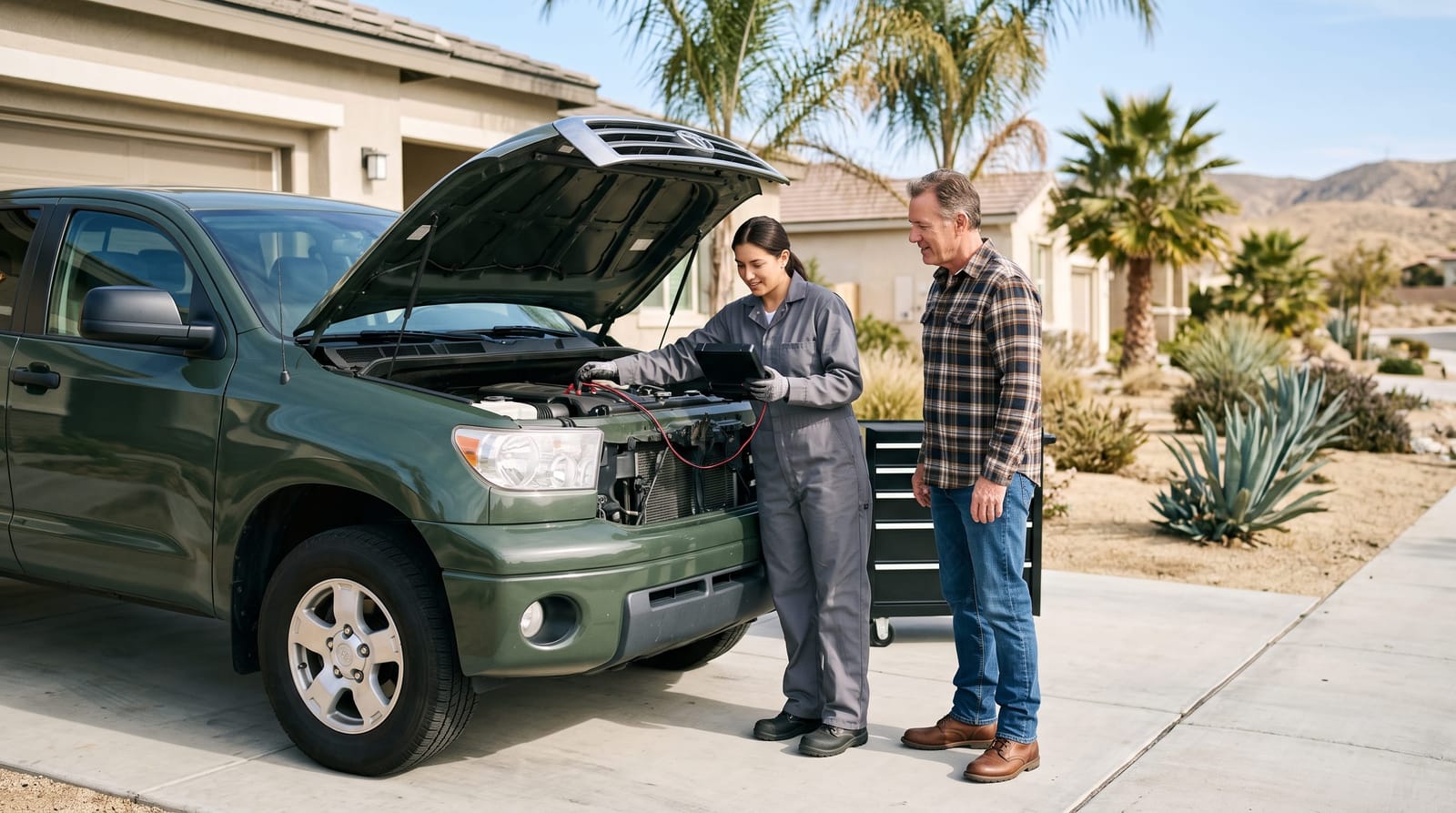
Many drivers associate battery problems with winter, but heat is actually more damaging to automotive batteries over the long term. High temperatures accelerate the internal chemical reactions inside a battery and can cause fluid evaporation, which degrades the battery's capacity and shortens its overall lifespan. A battery that's already several years old may get through a mild winter just fine, and then fail during a heat wave.
Signs Your Battery May Need Attention
- Slow engine cranking when you start the vehicle, especially in hot weather
- Dashboard warning light related to the charging system
- Battery case that looks swollen or bloated (a sign of heat damage)
- Battery is 3 or more years old and hasn't been tested recently
A battery test is quick, non-invasive, and gives you a clear picture of where the battery stands before you need to find out the hard way. Most automotive service shops can test your battery's health during a routine visit. Given that Rancho Cucamonga regularly sees weeks of 100°F-plus temperatures during peak summer, it's a worthwhile addition to any pre-summer checklist.
6. Brake Fluid and Cabin Air Filter: Two Often-Overlooked Summer Services
These two items don't always make it onto the average driver's radar, but both are worth paying attention to as temperatures climb.
Brake Fluid and Heat
Brake fluid is hygroscopic, meaning it absorbs moisture from the air over time. As it absorbs water, its boiling point drops. This matters in summer because heavy braking, especially on hills or during stop-and-go traffic, generates significant heat in the braking system. Brake fluid that's been contaminated with moisture can boil under these conditions, which can cause the brakes to feel spongy or less responsive. This is often called "brake fade," and it's more likely to happen when the fluid is old and moisture-laden.
Brake fluid flushes are recommended at intervals that vary by manufacturer, and the fluid can be tested to see how much moisture it has absorbed. If your brake fluid hasn't been changed in several years, summer is a good time to have it evaluated, not because brake failure is imminent, but because maintaining fresh fluid is part of keeping the whole braking system working as it should.
Cabin Air Filter and Air Quality
The Inland Empire is no stranger to poor air quality days, and summer often brings higher ozone levels and particulate matter alongside the heat. Your cabin air filter is what cleans the air that flows through your AC and ventilation system before it reaches you and your passengers. A clogged or dirty cabin air filter reduces airflow, which directly impacts how well your AC cools the interior, and allows more contaminants into the cabin.
Cabin air filter replacement is typically inexpensive and quick, and it makes a noticeable difference in both air quality and AC performance. If your filter hasn't been replaced in the past year or 12,000-15,000 miles, adding it to your summer service visit is a smart move, especially if you or your passengers have allergies or respiratory sensitivities.
Related Details Worth Exploring
The items covered in this checklist connect to broader maintenance topics that are worth understanding in more depth. If you want to go further on any of these areas, our related posts cover the specifics of car AC ready for summer Southern California and the mechanics behind hot weather tire pressure Southern California: both of which go deeper into what's happening with those systems during Inland Empire summers.
Ready to Get Your Vehicle Summer-Ready?
Summers in Rancho Cucamonga and Fontana are long, hot, and demanding on vehicles. The good news is that most of the maintenance on this checklist is straightforward, affordable, and quick to complete, especially when you handle it before the heat peaks rather than after a problem develops. Checking your AC, coolant, oil, tires, battery, brake fluid, and cabin air filter before June gives you a reliable vehicle through the hottest months of the year and peace of mind on every drive.
The team at Rancho Express Lube is here to help you work through this checklist efficiently, whether you need one service or several. Stop in or schedule a summer readiness appointment today: we'll take a thorough look at your vehicle and let you know exactly where things stand, with no pressure and no surprises.