Winter Car Maintenance in Southern California: What Inland Empire Drivers Still Need to Do
A lot of Inland Empire drivers assume winter is a non-issue when it comes to vehicle care. After all, Southern California is known for sunshine and mild weather, not blizzards and black ice. But skipping a fall and winter vehicle check is a common mistake that can leave you stranded or dealing with a preventable problem. Winter car maintenance in Southern California's Inland Empire matters more than most drivers realize. Temperatures do drop. Mornings get cold. Higher-elevation areas like Claremont and La Verne occasionally see frost. And your vehicle's battery, brakes, coolant, and wipers all respond to those changes. This guide walks through exactly what you need to check, and why, so you can head into the cooler months with confidence.
Why Inland Empire Winters Are More Demanding Than You Think
Southern California winters are not severe by national standards. But that does not mean your car is off the hook. The Inland Empire sits at varying elevations, and winter mornings here can drop into the upper 20s and low 30s in foothill communities like Claremont, La Verne, Upland, and Rancho Cucamonga. Even in lower-elevation cities like Ontario, Fontana, and Rialto, overnight temperatures regularly dip below 40°F from December through February.
These temperature swings, warm afternoons, cold mornings, are actually harder on certain vehicle components than a consistently cold climate. Your car's battery, for example, is asked to perform in a wide range of conditions throughout the day. Your brakes collect moisture overnight and have to work through it first thing in the morning. Your coolant has to handle both heat and unexpected cold snaps.
The good news: a straightforward fall and winter check covers all of this. It does not require major repairs or expensive upgrades. It is just about making sure your vehicle is ready for the conditions it will actually face. Think of it as the cold-weather companion to a broader summer car maintenance checklist Rancho Cucamonga drivers should already be familiar with.
Your Car Battery and Cold Mornings
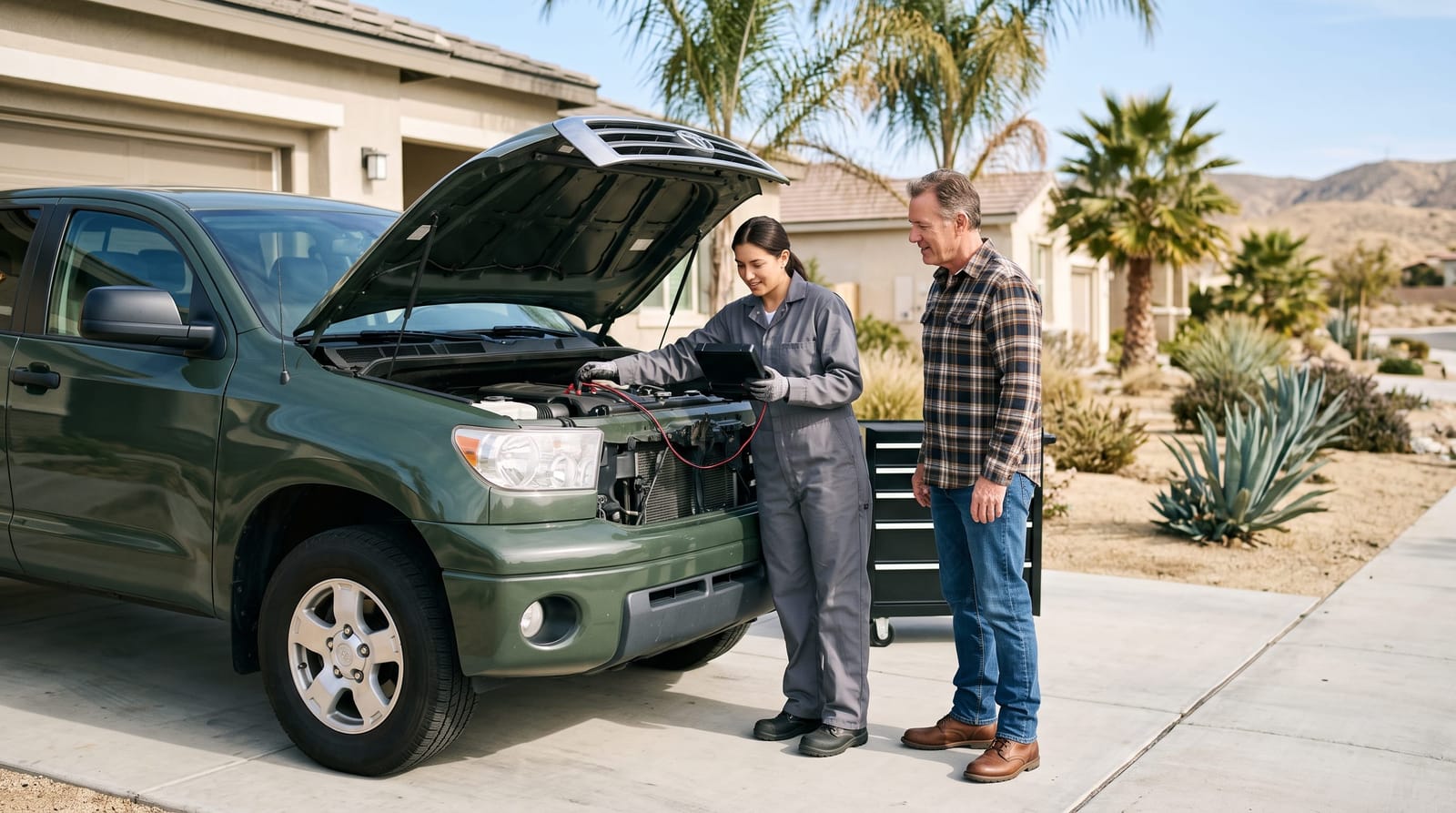
Battery health is one of the most overlooked parts of winter car maintenance in Southern California's Inland Empire. It is easy to dismiss because our winters are mild. But cold temperatures reduce a battery's ability to deliver power, and a battery that is already aging will feel that effect most strongly.
How Cold Affects Battery Performance
Car batteries work through a chemical reaction. Cold weather slows that reaction down. A battery operating at full health in warm weather can lose a meaningful portion of its cranking power when temperatures drop into the 30s. If your battery is already a few years old or showing signs of weakness, a cold morning can be enough to leave you with a car that will not start.
Most automotive batteries have a useful lifespan of three to five years. If yours is approaching or past that range, having it tested before winter is a smart move. A battery test is quick, straightforward, and takes the guesswork out of whether your battery will hold up through the cooler months.
Signs Your Battery May Be Struggling
- Slow engine cranking when you start the car, especially on cold mornings
- Dim headlights or interior lights when the vehicle is idling
- A battery warning light on your dashboard
- The battery is three or more years old and has never been tested
For a deeper look at how cold weather specifically affects batteries in Southern California, our post on car battery cold weather Southern California winter covers the topic in detail.
Morning Brake Moisture and Cold-Weather Brake Care
Here is something many drivers never think about: overnight moisture can collect on brake rotors. When you first pull out of the driveway on a cold, damp morning, you may notice a brief grinding or scraping sound from your brakes. In many cases, this is surface rust that clears after the first few stops. It is usually harmless.
But that morning behavior is also a reminder that your brakes are exposed to the elements. And if your brake pads are already worn thin or your rotors have seen better days, cold and moisture can make existing issues more noticeable.
What to Check on Your Brakes Before Winter
You do not need to be a mechanic to notice early warning signs. Pay attention to these:
- Squealing or squeaking that continues after the first few stops
- A soft or spongy feeling when pressing the brake pedal
- Vibration or pulsing when you brake at higher speeds
- Your vehicle pulling to one side when slowing down
If your brakes have not been inspected in a while, fall is a good time to have a technician take a look. Cold-weather driving, even in Southern California, means occasional wet roads, more cautious stopping distances, and driving conditions where reliable brakes matter.
Frost in the Foothills: Coolant and Antifreeze Basics
This might surprise some drivers: Southern California does get frost. If you live or commute through foothill communities like Claremont, La Verne, Alta Loma, or the mountain passes above Rancho Cucamonga, you may encounter frozen windshields and near-freezing road surfaces in January and February.
Your engine's cooling system uses a mixture of coolant (also called antifreeze) and water to regulate temperature. In warm climates, the emphasis is usually on preventing overheating. But the coolant-to-water ratio also determines the freeze point of the fluid. If the mixture is too diluted, heavy on water, light on coolant, it can freeze in extreme cold, which causes problems for hoses, the radiator, and the engine itself.
What the Right Coolant Ratio Looks Like
A 50/50 mix of coolant and distilled water is the standard recommendation for most climates and offers protection to well below freezing. In Southern California, this ratio is generally appropriate. Some drivers in especially warm areas might run a slightly lower coolant concentration, but heading into winter is a good time to verify where your mixture stands.
A technician can check your coolant level and the strength of the mixture with a simple test. If your coolant has not been replaced in several years, a coolant flush may be worth discussing as part of your seasonal maintenance. To get the full picture on this topic, our post on antifreeze needed Southern California warm climate breaks down when and why coolant service matters here.
Wiper Blades: A Small Detail That Makes a Big Difference
Southern California does not get much rain. But when it does rain, usually from November through March, drivers quickly find out whether their wiper blades are up to the job. A wiper blade that smears, skips, or leaves streaks across the windshield creates a serious visibility problem, particularly when you are driving into low winter sun combined with a wet or dirty windshield.
How to Know When Wiper Blades Need Replacing
Wiper blades degrade over time from UV exposure, heat, and dry conditions. Because our summers are so dry and sunny, blades can deteriorate even without much use. A blade that looks fine sitting still may perform poorly when it matters most.
Check your blades by running them across a wet windshield and watching the result. They should clear the glass in a clean, smooth stroke with no streaking or skipping. If they are leaving smears or you can see visible cracking or brittleness in the rubber, it is time for a replacement. Most wiper blades are an inexpensive, quick swap, and one of the easiest maintenance items on the list.
Also check your washer fluid level. Inland Empire drivers deal with road dust and debris year-round. A full reservoir of washer fluid keeps your windshield clear when you need it most.
Oil Viscosity and Tire Pressure in Cooler Temperatures
Two more items round out a solid winter vehicle check: your oil and your tires.
Engine Oil in Cold Weather
Motor oil thickens slightly in cold temperatures. Most modern vehicles use multi-viscosity oils designed to handle a wide temperature range, so this is rarely a dramatic issue in Southern California. That said, if you are overdue for an oil change heading into winter, cold morning starts put more strain on an engine running on old, degraded oil.
Fresh oil flows more freely. It lubricates engine components faster on cold starts. Keeping up with your oil change schedule, whatever interval your vehicle manufacturer recommends, is one of the simplest things you can do to protect your engine year-round.
Tire Pressure Drops with the Temperature
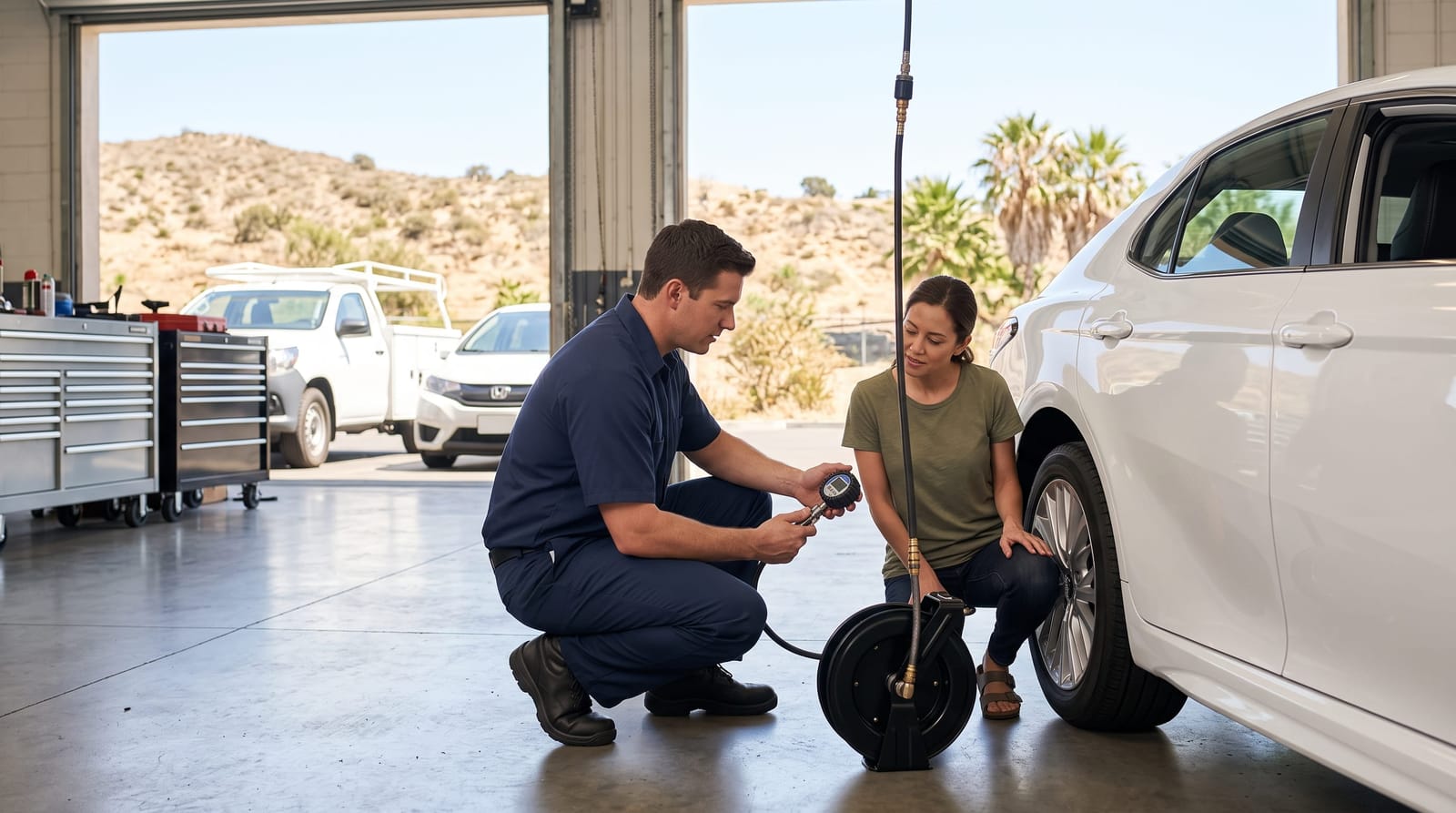
For every 10-degree drop in outside temperature, tires lose roughly one pound per square inch (PSI) of pressure. Inland Empire mornings that drop from 75°F in October to 45°F in January represent a meaningful shift. Under-inflated tires affect handling, braking distance, and fuel efficiency.
Check your tire pressure on a cool morning, not after you have been driving, and compare it to the recommended PSI found on the sticker inside your driver's door. While you are at it, inspect the tread for uneven wear and look for any visible damage to the sidewalls. If you are planning any winter travel, our guide to road trip car preparation checklist Fontana CA is a good next read.
Related Winter Maintenance Topics Worth Exploring
This guide covers the core areas of winter car maintenance in Southern California's Inland Empire. If you want to go deeper on specific topics, we have detailed posts that address two of the biggest questions drivers ask this time of year:
- Battery health in the cold: Our post on car battery cold weather Southern California winter explains exactly how cold affects your battery and what to watch for.
- Coolant in warm climates: Many Inland Empire drivers wonder whether antifreeze is even necessary here. Our post on antifreeze needed Southern California warm climate answers that question clearly.
And if you have a teen driver heading back to school this season, the seasonal overlap of fall and winter makes our post on back to school car safety check Rancho Cucamonga a helpful companion resource.
Getting Your Vehicle Ready Before Winter Arrives
Winter car maintenance in Southern California's Inland Empire does not require a major overhaul. It requires paying attention to the right things at the right time. Your battery, brakes, coolant, wipers, oil, and tires all respond to cooler temperatures and changing conditions. A quick fall check covers all of it, and keeps you from dealing with a preventable issue on a cold January morning.
At Rancho Express Lube, we make seasonal vehicle checks fast and straightforward. Our team will walk through the key inspection points, answer your questions honestly, and help you head into the cooler months knowing your vehicle is ready. Stop by or give us a call: we are here to help Inland Empire drivers stay safe and confident on the road, all year long.