Road Trip Car Preparation: Everything to Check Before You Hit the Highway
Planning a drive from the Inland Empire to Las Vegas, San Diego, or up to Big Bear Lake is one of the best parts of living in Southern California. But before you load up the car and head out, taking time to walk through a solid road trip car preparation checklist, especially one tailored to Fontana, CA and the surrounding region, can make the difference between a smooth, enjoyable trip and an unexpected breakdown on the side of the freeway. This guide covers every essential checkpoint, from tires and fluids to your AC system and emergency kit. Whether you're heading out for a weekend getaway or a longer haul, these are the things worth checking before you leave the driveway.
For a broader look at keeping your vehicle in shape all year long, our seasonal car maintenance checklist for Inland Empire drivers covers everything from summer heat prep to winter cold-snap readiness.
---Tip 1: Start With Your Tires: They're Doing All the Work
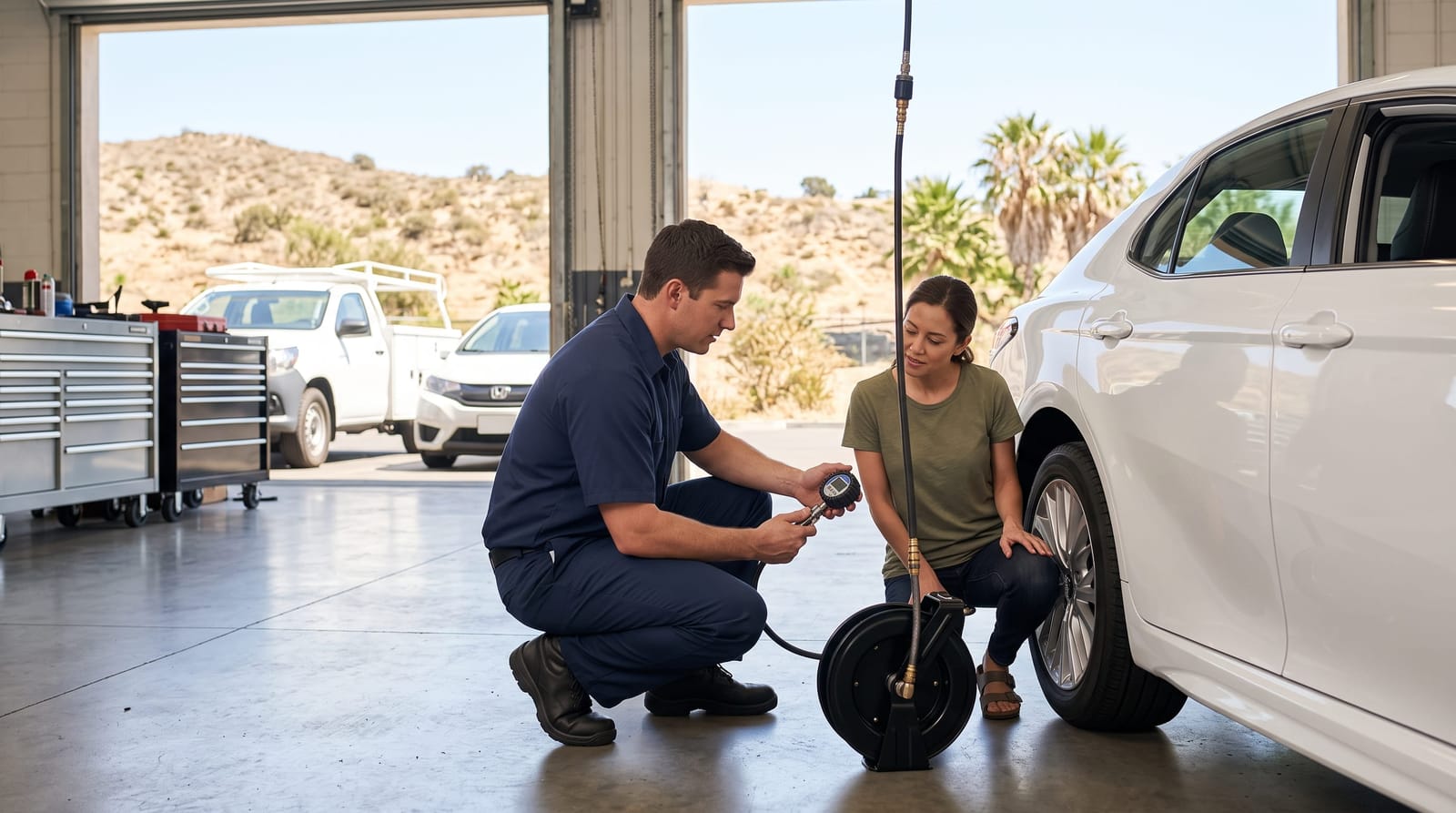
Your tires are your vehicle's only point of contact with the road, which makes them the most important thing to inspect before any long drive. A tire problem at 70 mph on the I-15 isn't something you want to deal with, and most tire-related issues are completely preventable with a quick check before you leave.
Tire Pressure
Tire pressure should match the recommended PSI listed on the sticker inside your driver's side door jamb, not the maximum pressure printed on the tire sidewall. Those are two different numbers, and using the wrong one can affect your handling and fuel efficiency. According to the U.S. Department of Energy, properly inflated tires can improve gas mileage by up to 3%, which adds up on a longer drive. More importantly, underinflated tires generate excess heat: a real concern on hot Inland Empire summer days when road surface temperatures can exceed 150°F.
Tread Depth
Worn tires lose their ability to grip the road, especially in rain or on mountain roads heading up to Big Bear. The legal minimum tread depth in California is 2/32 of an inch, but most safety experts recommend replacing tires at 4/32 of an inch for improved wet-weather performance. Learning how to check tire tread before a road trip is a simple skill: the quarter test is one easy method to get a quick reading at home.
Don't Forget the Spare
Pull out your spare and confirm it's properly inflated and in usable condition. Many drivers discover their spare is flat only when they actually need it. Also check that your jack and lug wrench are in the vehicle and accessible. Some newer vehicles come with a temporary "donut" spare rated for limited speeds and distances: know what type you have before you rely on it.
---Tip 2: Check All Fluid Levels Before You Roll Out
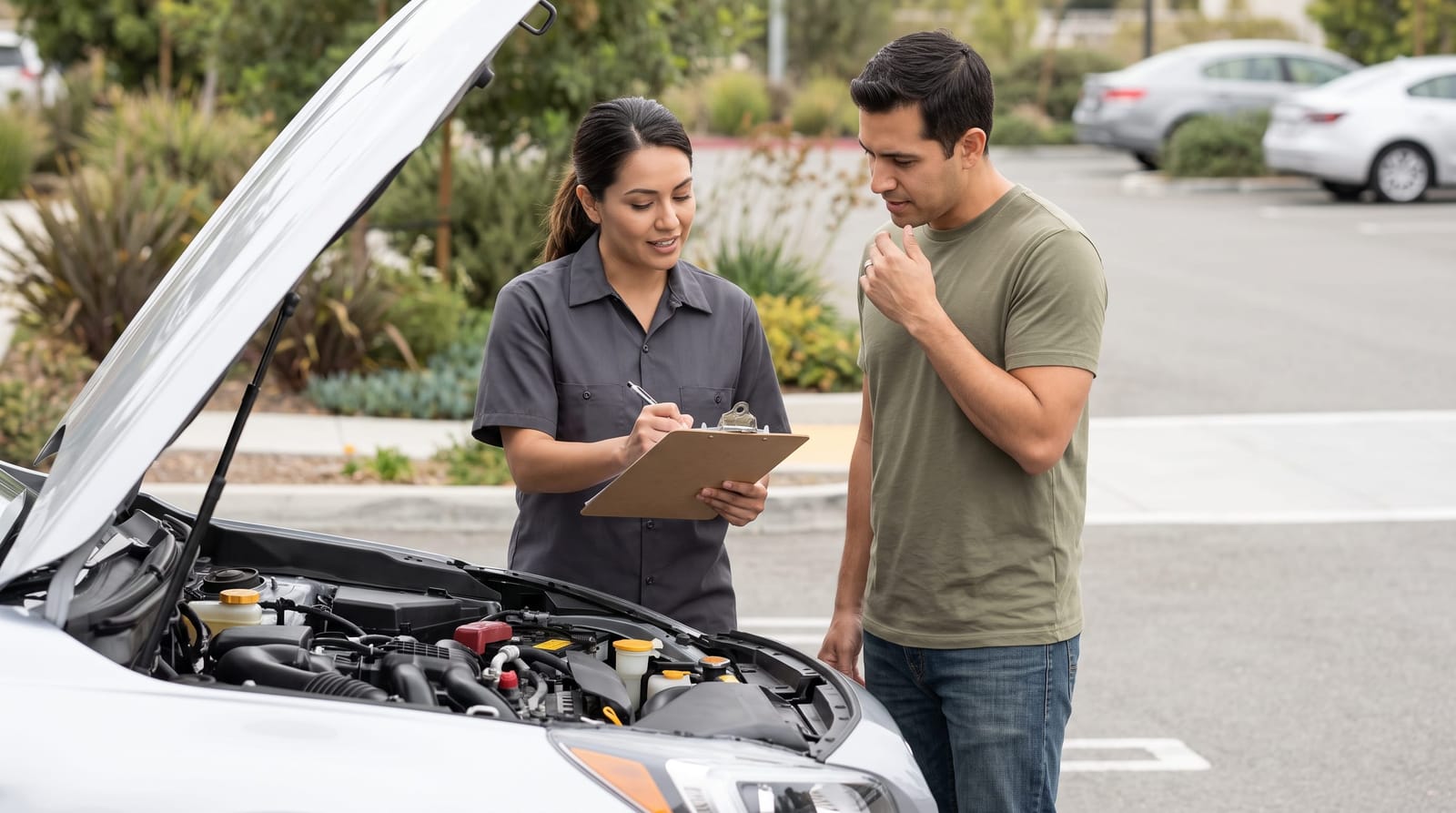
Fluids keep your engine cool, your brakes responsive, your transmission smooth, and your windshield clear. Checking them takes about ten minutes in your driveway and can prevent problems that cost significantly more to fix on the road.
Engine Oil
Oil is the most frequently checked fluid for good reason. Low or dirty oil puts added stress on your engine, especially during extended highway driving. Check your dipstick when the engine is cool: oil should be between the minimum and maximum marks and should appear amber-brown rather than black and gritty. If you're approaching your oil change interval, it's worth getting it done before the trip rather than after. Most vehicles follow a 3,000-5,000 mile interval for conventional oil and 5,000-7,500 miles or more for synthetic, but always defer to your owner's manual.
Coolant
Coolant (antifreeze) regulates your engine temperature. A long desert drive to Las Vegas in July, with outside temperatures often exceeding 110°F, puts real thermal demand on your cooling system. Check the coolant reservoir when the engine is cold and look for the fill line markings. If the reservoir looks low or the coolant appears discolored or rusty, that's worth addressing before your trip.
Brake Fluid, Power Steering, and Washer Fluid
Brake fluid should be clear to light yellow: dark, murky brake fluid can indicate it's absorbed moisture over time, which affects braking performance. Power steering fluid (if your vehicle uses it) and windshield washer fluid are quick visual checks. On a road trip, especially driving through dusty desert or mountain terrain, clean windshield visibility matters more than most people expect.
---Tip 3: Inspect Your Brakes: Especially Before Mountain Routes
If your road trip includes any elevation changes, Big Bear Lake, for example, sits at around 6,750 feet, your brakes will work harder than they do on flat highway driving. Sustained downhill braking generates heat, and brakes that are already worn can fade under those conditions.
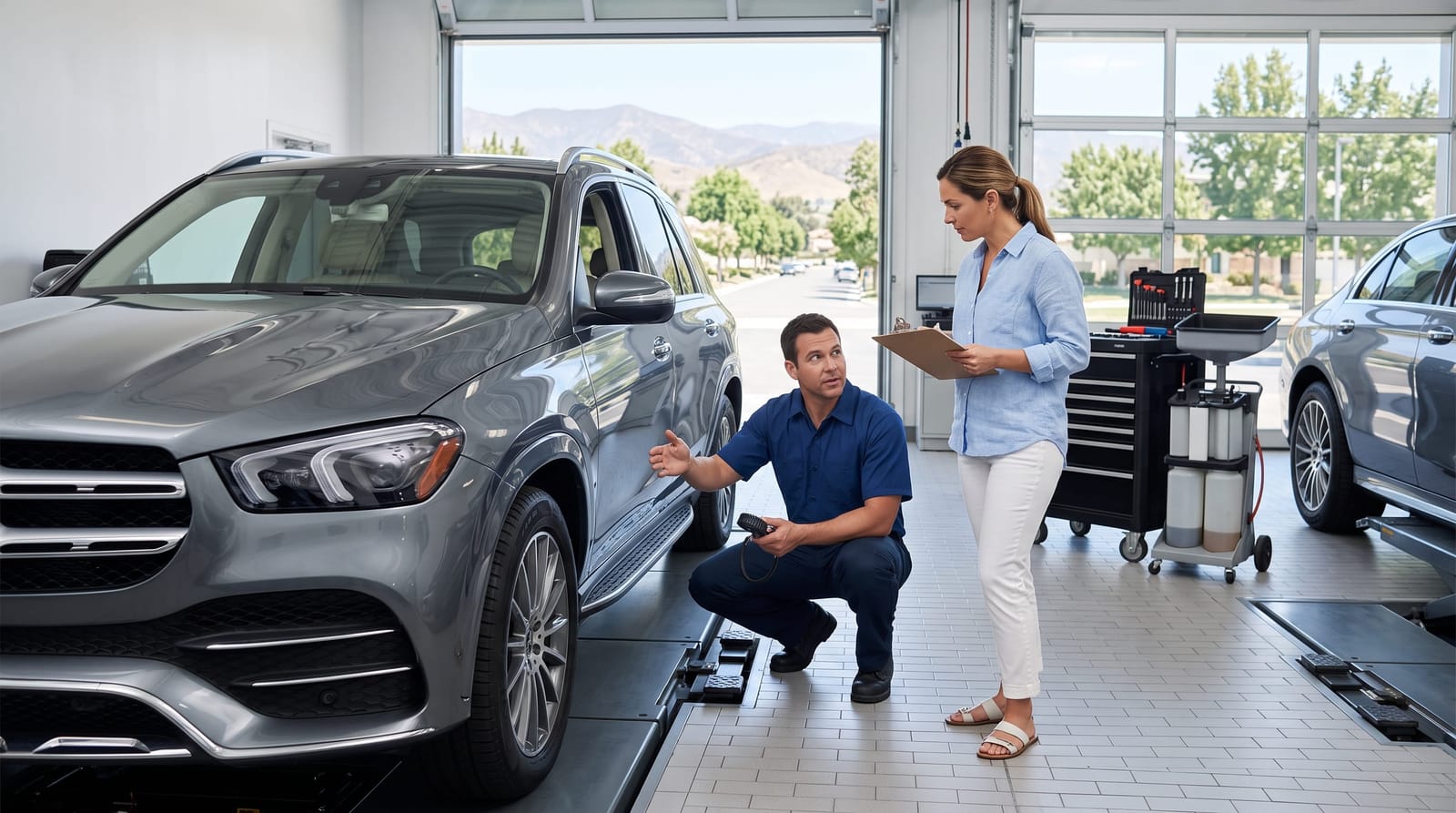
Signs that your brakes may need attention before a trip include squealing or grinding sounds when stopping, a pulsing sensation in the brake pedal, or a vehicle that pulls to one side when braking. Brake pad thickness should be checked by a qualified technician if you're unsure: pads worn below 3mm are generally considered due for replacement. If it's been a while since your brakes were last inspected, a quick mechanic road trip check in the Inland Empire is one of the most practical ways to get peace of mind before heading out.
---Tip 4: Test Your AC, Battery, and Lights
These three systems don't always get the attention they deserve during routine maintenance, but each one can significantly affect your comfort and safety on a road trip.
Air Conditioning
Driving through the Mojave Desert or sitting in I-15 traffic outside of Barstow in August without functioning AC is genuinely dangerous, not just uncomfortable. Turn your AC on at home and let it run for a few minutes: it should reach noticeably cold temperatures within that window. If it's blowing warm or lukewarm air, a refrigerant check or system service before the trip is worth scheduling. Our post on the summer car maintenance checklist for Rancho Cucamonga goes into more detail about AC readiness during hot weather months.
Battery
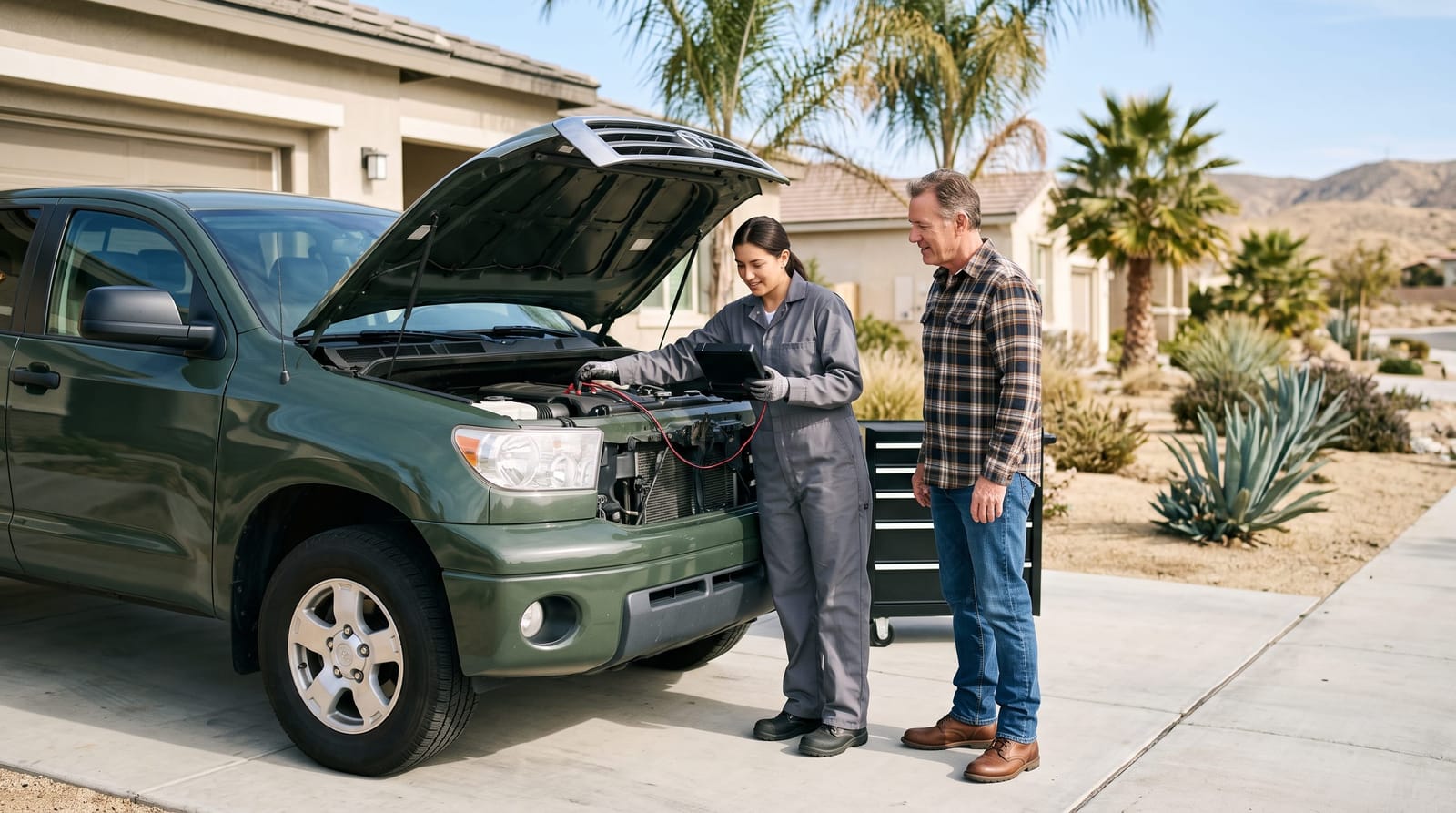
Car batteries have an average lifespan of 3-5 years, and extreme heat is one of the leading causes of early battery failure in Southern California. AAA reports that battery-related calls are among the most common roadside assistance requests nationwide. If your battery is more than 3 years old or you've noticed slow engine cranking, getting the battery tested before a trip is a smart step. Battery testing is typically quick and inexpensive at most auto service shops.
Lights
Walk around your vehicle and confirm that headlights, taillights, brake lights, and turn signals are all working. A burned-out light is a simple fix before you leave and a potential traffic stop or safety hazard if you don't. This is especially important if you plan on driving after dark or in early morning hours before sunrise.
---Tip 5: Check Your Air Filter and Cabin Filter
Two filters often overlooked during road trip prep are your engine air filter and cabin air filter. Neither is glamorous, but both affect how your vehicle performs and how comfortable the ride feels.
Your engine air filter keeps dust and debris out of the engine intake. A clogged filter can reduce fuel efficiency and engine responsiveness. Given that much of the Inland Empire's road network passes through or near dusty, high-particulate environments, filters tend to get dirty faster here than in some other regions. The EPA estimates that replacing a clogged air filter can improve fuel economy on older carbureted vehicles, and on modern fuel-injected vehicles, it supports better overall engine performance.
Your cabin air filter cleans the air circulated through your AC and heating system. A dirty cabin filter reduces airflow, makes your AC work harder, and can introduce unpleasant odors into the passenger compartment. If you can't remember the last time it was replaced, or if your AC airflow seems weaker than it used to, it's worth checking.
---Tip 6: Build a Basic Emergency Kit for the Road
Even well-maintained vehicles can have unexpected issues, and being prepared for a roadside situation is simply smart travel. An emergency kit doesn't need to be elaborate: a few key items can make a significant difference if something goes wrong between Fontana and your destination.
- Jumper cables or a portable jump starter: compact and useful if your battery dies
- Flashlight with fresh batteries, for nighttime flat tire changes or checking under the hood
- Reflective triangles or road flares, to alert other drivers if you're stopped on the shoulder
- Basic first aid kit: bandages, antiseptic wipes, and pain reliever
- Water and non-perishable snacks: particularly important on desert routes where services can be 30+ miles apart
- Phone charger or portable power bank: a dead phone during a breakdown can complicate everything
- Blanket: useful if you travel to Big Bear or other mountain areas where temperatures drop significantly after dark
If a breakdown does happen, the most important thing is to stay calm, get your vehicle as far off the road as safely possible, turn on your hazard lights, and call for help from a safe distance away from traffic. Having a roadside assistance plan through your insurance or auto club is also worth considering before a long trip.
---Related Road Trip Prep Topics
If you want to go deeper on specific aspects of your road trip preparation, we've put together focused guides on some of the most important areas:
- Learn what a qualified technician should examine in our guide to mechanic road trip checks in the Inland Empire, especially valuable if you haven't had a professional inspection recently.
- Get a step-by-step breakdown of how to check tire tread before a road trip, including the penny test and what to look for beyond just depth.
Ready to Head Out? Make Sure Your Vehicle Is Too.
A little preparation before a road trip goes a long way, and most of the items on this road trip car preparation checklist for Fontana, CA and the Inland Empire can be addressed in a single visit to a trusted automotive service shop. Tires, fluids, brakes, AC, battery, filters, and a stocked emergency kit cover the essentials. The goal isn't to worry about what could go wrong: it's to feel confident that your vehicle is genuinely ready for the miles ahead.
At Rancho Express Lube, we offer multi-point inspections designed to catch exactly the kind of issues that show up on road trips. Stop in before your next drive to Las Vegas, San Diego, or Big Bear and we'll help make sure you're starting the journey in the best shape possible.