Fluid Services and Replacements: Essential Maintenance for Vehicle Longevity
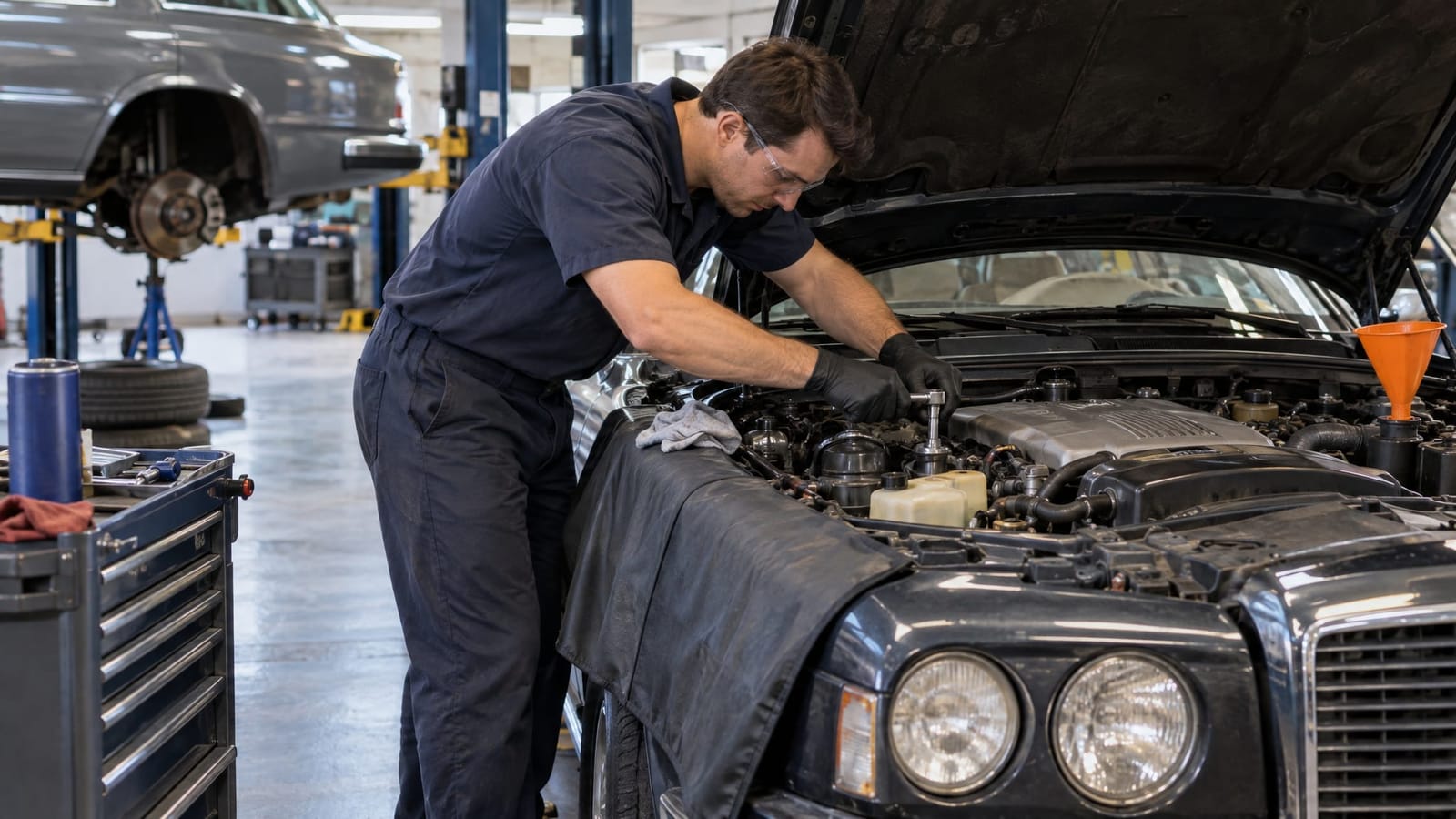
When it comes to keeping your vehicle running reliably for years, fluid maintenance is one of the most important parts of the picture. As part of a complete preventative care approach, regular vehicle fluid service maintenance protects the systems your car depends on every single day. Engine oil, coolant, brake fluid, transmission fluid: each one plays a specific role. When any of them degrade or drop to low levels, wear increases and problems follow. This guide covers every major fluid your vehicle needs serviced, how often those services are typically recommended, and why this matters especially if you own a high-mileage or luxury vehicle. Understanding these basics helps you make confident, informed decisions about your car's care.
Why Vehicle Fluid Service Maintenance Is the Foundation of Preventative Care
Your vehicle is a system of interconnected moving parts. Nearly every one of those systems depends on clean, properly conditioned fluid to function. Fluids lubricate metal surfaces, regulate temperature, transfer force, and protect components from corrosion. Over time, fluids break down. They absorb contaminants, lose their chemical effectiveness, and stop doing their job as well as they should.
The consequences of neglected fluid maintenance are gradual, not sudden. You may not notice anything immediately. But over thousands of miles, degraded fluids allow friction and heat to build up where they shouldn't. Components wear faster. Small issues become larger ones.
Vehicle fluid service maintenance is not about fixing something that's broken. It's about keeping something healthy. That's what makes it a true preventative measure: the kind that supports long-term reliability without expensive surprises. If you're following a vehicle maintenance schedule guide, fluid services will appear consistently throughout your recommended intervals, and for good reason.
Studies from the Car Care Council estimate that approximately 80% of vehicles on the road are in need of at least one service or fluid replacement at any given time. That's a striking number, and it reflects how easy it is to let fluid maintenance slip when there are no obvious warning signs yet.
Engine Oil: The Most Frequent and Familiar Fluid Service
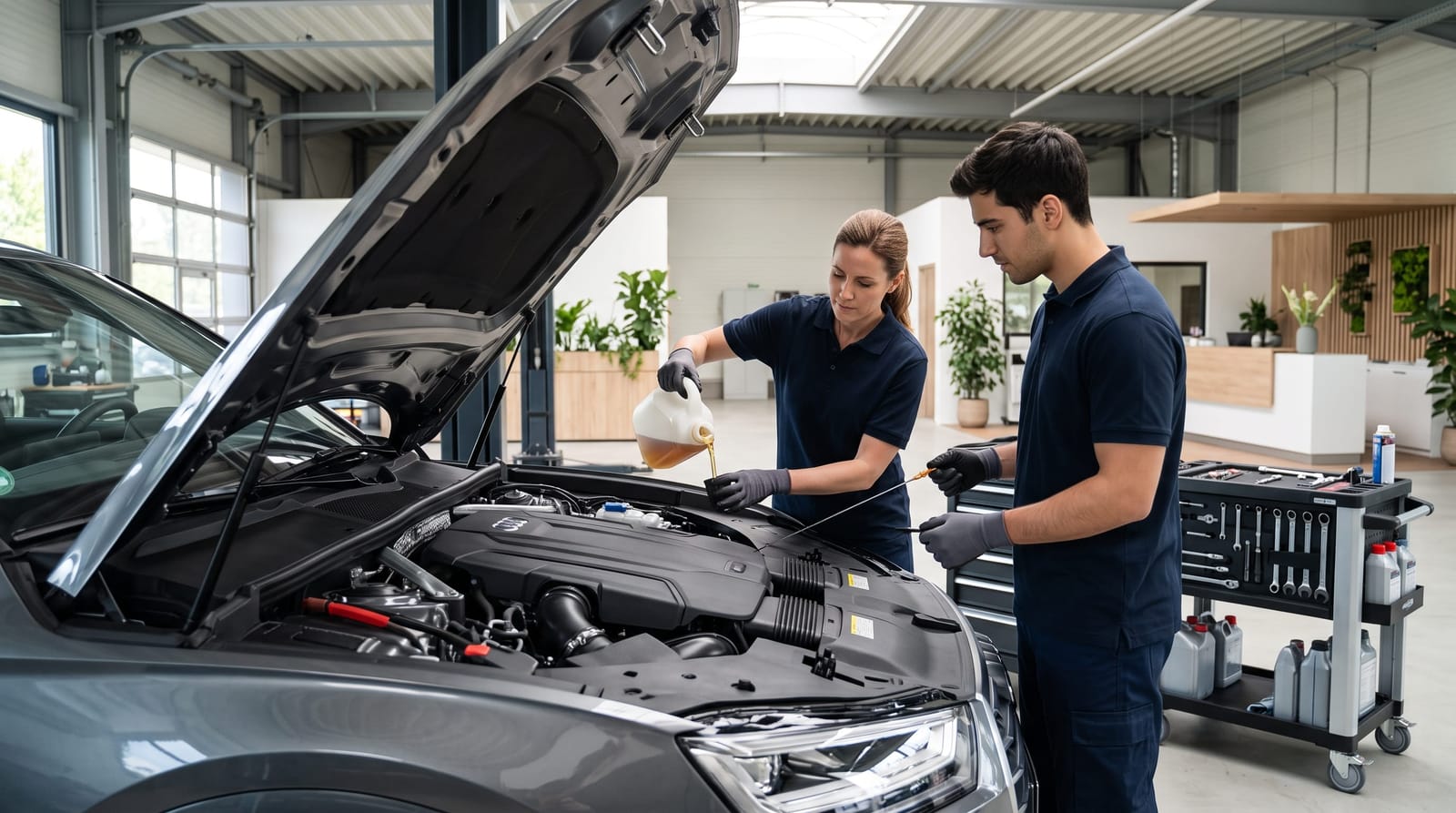
Engine oil is the fluid most drivers know best. It lubricates the moving parts inside your engine, reduces friction-related heat, and helps carry away small contaminants. Fresh oil is amber-colored and flows smoothly. As it ages, it darkens, thickens, and becomes less effective at protecting your engine.
Oil Change Intervals: What the Numbers Mean
Recommended oil change intervals vary depending on your vehicle, the type of oil used, and your driving conditions. General ranges look like this:
- Conventional motor oil: typically every 3,000 to 5,000 miles
- Synthetic blend oil: typically every 5,000 to 7,500 miles
- Full synthetic motor oil: typically every 7,500 to 15,000 miles
These are general guidelines. Your owner's manual is the most accurate reference for your specific vehicle. Driving habits also matter. Short trips, frequent stop-and-go traffic, extreme temperatures, and towing or hauling heavy loads all put additional stress on your oil, which may mean more frequent changes are a smart choice.
Oil Quality and High-Mileage Vehicles
For vehicles with over 75,000 miles, high-mileage engine oils are worth considering. These formulas contain additives that help condition seals and gaskets that may have experienced some wear over time. Choosing the right oil viscosity for your engine, the numbers like 5W-30 or 0W-20 on the label, also matters for proper protection. Your technician can help confirm the right specification for your car.
Coolant: Keeping Your Engine at the Right Temperature
Coolant (also called antifreeze) circulates through your engine and radiator to regulate operating temperature. It prevents your engine from overheating in summer heat and from freezing in cold climates. Coolant also protects internal metal components from corrosion.
Over time, coolant loses its corrosion-inhibiting properties even if the fluid level looks fine. Degraded coolant can begin to corrode the metal parts it's meant to protect, including your water pump, radiator, and heater core.
Coolant Replacement Intervals
Many manufacturers recommend a coolant flush every 30,000 miles or every 2 to 5 years, though extended-life coolants used in many modern vehicles may last longer. A proper coolant service involves draining the old fluid, flushing the system, and refilling with the correct type and mixture for your vehicle. Using the wrong coolant type can cause compatibility issues, so matching the manufacturer's specification matters.
For luxury vehicles and high-mileage cars especially, keeping coolant fresh is an important part of avoiding heat-related wear on expensive engine components.
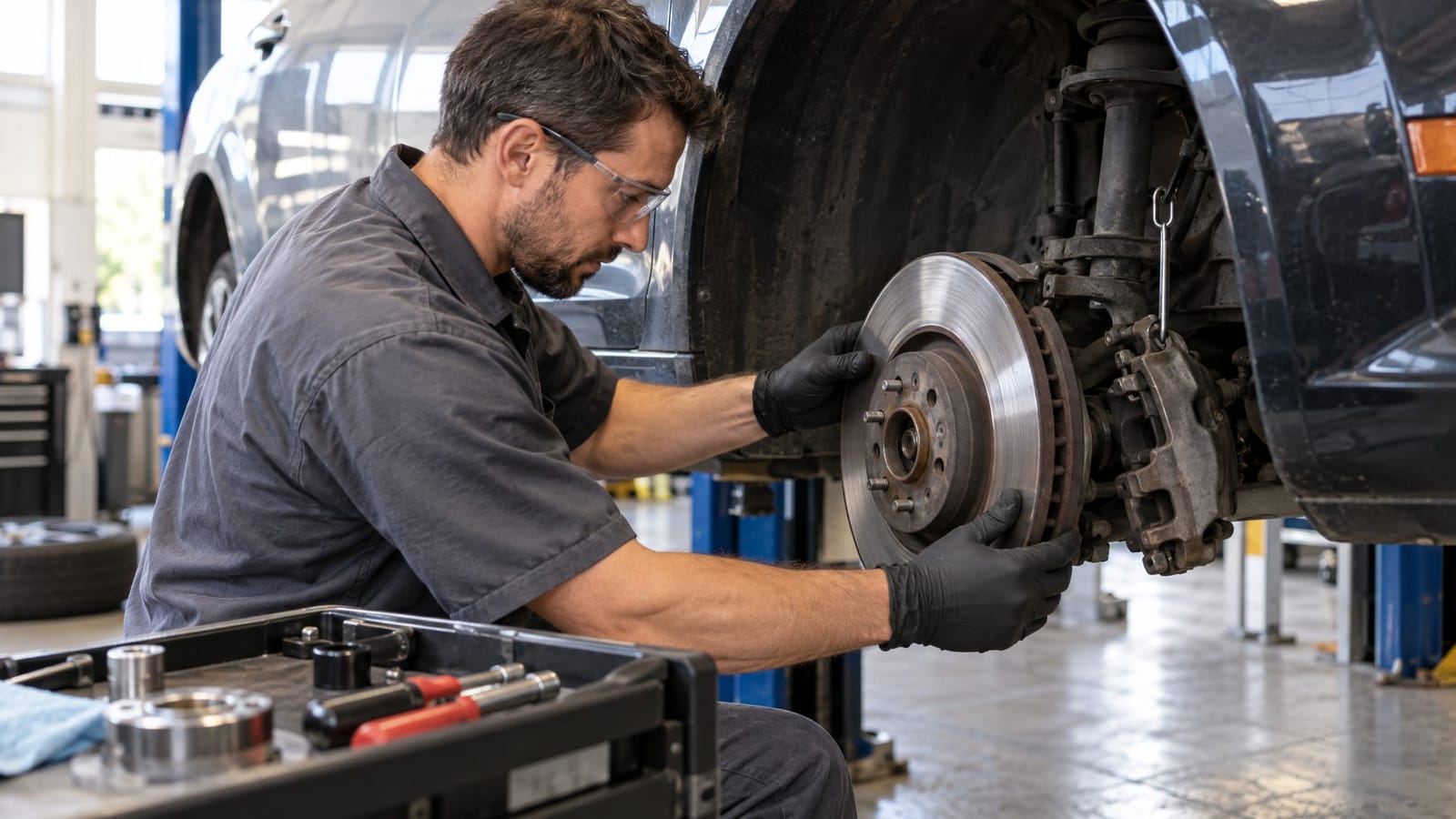
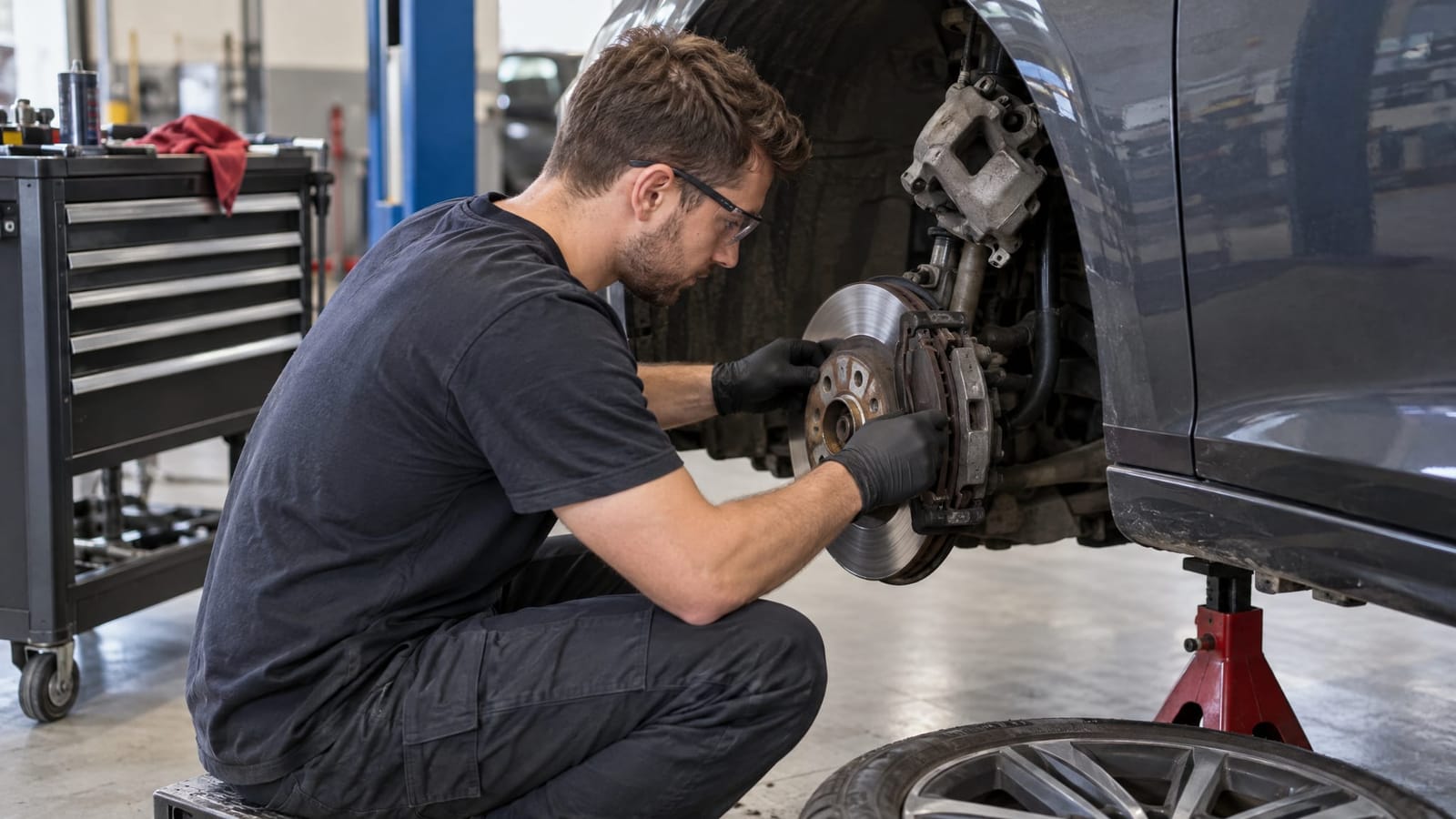
Brake Fluid: A Small Detail With a Big Safety Role
Brake fluid is what transfers the force from your foot on the pedal to the brakes at each wheel. It operates under high pressure and high heat. Most brake fluids are hygroscopic, meaning they naturally absorb moisture from the air over time.
As moisture content increases, the boiling point of the fluid drops. Lower boiling point means reduced braking effectiveness under heavy use: a condition sometimes called brake fade. Research suggests that brake fluid can absorb enough moisture within 1 to 2 years to meaningfully lower its boiling point, even if the fluid level in the reservoir still looks adequate.
When to Service Brake Fluid
Many manufacturers recommend brake fluid replacement every 2 years or every 30,000 miles. Some vehicles have longer intervals depending on the fluid specification. Technicians can test brake fluid moisture content with an inexpensive tester, which gives a more accurate picture than visual inspection alone.
During a multi point vehicle inspection, brake fluid condition is typically one of the items checked. This is a good example of how inspections and fluid services work together as part of a complete preventative care strategy.
Transmission Fluid: Protecting One of Your Vehicle's Most Complex Systems
Transmission fluid lubricates the gears, clutch packs, and other internal components inside your transmission. It also helps regulate temperature and, in automatic transmissions, serves as a hydraulic fluid that enables gear changes.
Degraded transmission fluid loses its viscosity and lubrication properties. In automatic transmissions, this can lead to rough or delayed shifting. In severe cases, transmission repairs can be among the most costly repairs a vehicle owner faces, with major automatic transmission rebuilds averaging between $1,800 and $3,400 depending on the vehicle, according to industry repair data.
Transmission Fluid Intervals Vary Widely
This is an area where manufacturer recommendations differ significantly:
- Some vehicles recommend transmission fluid changes every 30,000 to 60,000 miles
- Others with sealed transmissions may have intervals as long as 100,000 miles or longer
- Severe driving conditions, towing, hilly terrain, or city driving, often shorten recommended intervals
Checking your owner's manual and discussing your driving habits with a trusted technician gives you the clearest picture of what's right for your vehicle. Our detailed breakdown of vehicle fluids replacement schedule covers interval differences across fluid types in more depth.
Power Steering, Transfer Case, and Differential Fluids
Many drivers focus primarily on oil, coolant, brakes, and transmission, and those are the priorities. But several other fluids in your vehicle also require periodic attention.
Power Steering Fluid
Vehicles with hydraulic power steering use fluid to assist steering effort. This fluid can degrade and become contaminated over time. Most manufacturers recommend inspecting this fluid during routine services and replacing it when it shows signs of darkening or contamination. Electric power steering systems, found in many newer vehicles, do not use this fluid.
Differential and Transfer Case Fluid
Rear-wheel-drive vehicles, four-wheel-drive trucks, and all-wheel-drive vehicles have differentials and, in some cases, transfer cases that require their own gear oil. These fluids break down under heat and pressure just like other fluids. Neglecting them can lead to wear inside the differential or transfer case: components that are expensive to repair. Typical service intervals range from 30,000 to 60,000 miles, depending on the vehicle and driving conditions.
Fleet and commercial vehicle operators who log high annual mileage have even more reason to stay current on all fluid services: something we cover specifically in our fleet preventative maintenance program resources.
Special Considerations for High-Mileage and Luxury Vehicles
Vehicles with 100,000 or more miles, and luxury vehicles with precision-engineered components, benefit from closer attention to fluid quality. Higher-mileage engines may have tighter tolerances between worn surfaces, making clean, properly viscous oil more important than ever. Luxury European and Asian vehicles often have specific fluid specifications, particular coolant chemistries, transmission fluid types, or oil viscosities, that matter for proper protection.
Using the wrong fluid type doesn't always cause an immediate problem, but it can cause gradual degradation of seals, gaskets, or internal components over time. When you bring a high-mileage or luxury vehicle in for fluid service maintenance, sharing your vehicle's full service history helps technicians make the best recommendations for your specific situation.
Some luxury vehicles also have longer manufacturer-specified oil change intervals, but those specifications are based on ideal driving conditions. If your driving is primarily short trips, urban stop-and-go, or in extreme temperatures, discussing a more conservative interval with your service provider is reasonable.
Related Topics Worth Exploring
If you want to go deeper on specific fluid types and their individual replacement schedules, the post on vehicle fluids replacement schedule covers each fluid in more detail, including how to identify warning signs that a fluid may need attention before its scheduled interval.
Understanding how fluid services fit into your overall vehicle maintenance schedule guide is also helpful for planning ahead and avoiding the kind of deferred maintenance that compounds over time.
Keeping Your Vehicle Running Well for the Long Haul
Vehicle fluid service maintenance is one of the most practical things you can do to protect your investment. Clean, fresh fluids reduce wear, regulate temperature, and keep each system in your vehicle functioning the way it was designed to. Whether you drive a newer model or a high-mileage car you're committed to keeping on the road, staying current on fluid services pays off in reliability and peace of mind.
At Rancho Express Lube in Fontana, our team makes fluid services straightforward and efficient. We check, inspect, and service the fluids your vehicle needs, and we'll always explain what we find and why it matters before doing any work. Stop by or give us a call to schedule your vehicle fluid service maintenance today.