Vehicle Fluids Replacement Schedule: What Gets Checked During an Oil Change?
Most drivers know that oil changes keep engines running smoothly, but a full service oil change does a lot more than swap out old motor oil. During a complete service visit, a technician inspects several other essential vehicle fluids that quietly do important work every time you drive. Understanding which fluids get checked, what they do, and how often they need attention helps you stay ahead of routine maintenance and avoid surprises down the road. This guide breaks it all down in plain, practical terms.
Why Fluid Checks Belong in Every Oil Change Visit
Your vehicle depends on multiple fluids working together: each one protecting a different system. Motor oil handles engine lubrication, but coolant manages heat, brake fluid enables stopping power, power steering fluid makes turning effortless, transmission fluid protects gear changes, and windshield washer fluid keeps your view clear. These fluids don't all degrade at the same rate, but they all need periodic attention.
A full service oil change is the ideal opportunity to check all of them in one visit. Rather than scheduling five separate appointments or waiting until a warning light appears, a thorough inspection catches low or degraded fluid levels early. This approach is more efficient for drivers and better for the vehicle: small issues get identified before they develop into larger, more costly problems.
At a full service shop like Rancho Express Lube, technicians inspect these fluids as part of every oil change visit, not as an optional add-on. That's the difference between a basic drain-and-fill and a complete preventative maintenance service.
The Main Vehicle Fluids: What Each One Does and When It's Replaced
Engine Coolant (Antifreeze)
Coolant circulates through the engine to regulate temperature, preventing overheating in summer and freezing in winter. Over time, coolant breaks down and loses its ability to protect the cooling system from corrosion. Most vehicles benefit from a coolant inspection every oil change visit, with a full flush and replacement typically recommended every two to five years depending on the vehicle and coolant type. Your owner's manual will specify the right interval for your car.
Brake Fluid
Brake fluid transmits the force from your foot on the pedal through the braking system. It's hygroscopic, meaning it absorbs moisture from the air over time. As moisture content increases, the fluid's boiling point drops, which can affect braking performance under heavy use. A general guideline many manufacturers follow is replacing brake fluid approximately every two years, though your vehicle's specific recommendation should always take priority. A technician can check the fluid level and condition during your service visit.
Power Steering Fluid
Power steering fluid keeps your steering system operating with ease and precision. Low fluid levels can make steering feel stiff or cause unusual noises when turning. While power steering fluid doesn't need replacement as frequently as motor oil, it should be checked at every oil change visit. Replacement intervals vary widely by vehicle, so consulting your owner's manual is the best approach. Vehicles with electric power steering won't have this fluid at all: another reason why knowing your car's specific setup matters.
Transmission Fluid
Transmission fluid lubricates the gears and components inside your transmission, helping it shift smoothly and reliably. For automatic transmissions, replacement intervals commonly fall between 30,000 and 60,000 miles, while manual transmissions often follow a similar range. Some vehicles feature "lifetime" transmission fluid, though many automotive professionals note that periodic inspection is still worthwhile. Checking the fluid during an oil change visit allows technicians to spot discoloration or low levels that might otherwise go unnoticed.
Windshield Washer Fluid
Windshield washer fluid is easy to overlook, but running out at the wrong moment, on a dusty freeway or after a rainstorm, creates a real visibility issue. Unlike the other fluids listed here, washer fluid doesn't degrade; it simply gets used up. It's topped off during a full service oil change so you leave the shop with a full reservoir.
Full Service vs. Basic Oil Change: What's Actually Different?
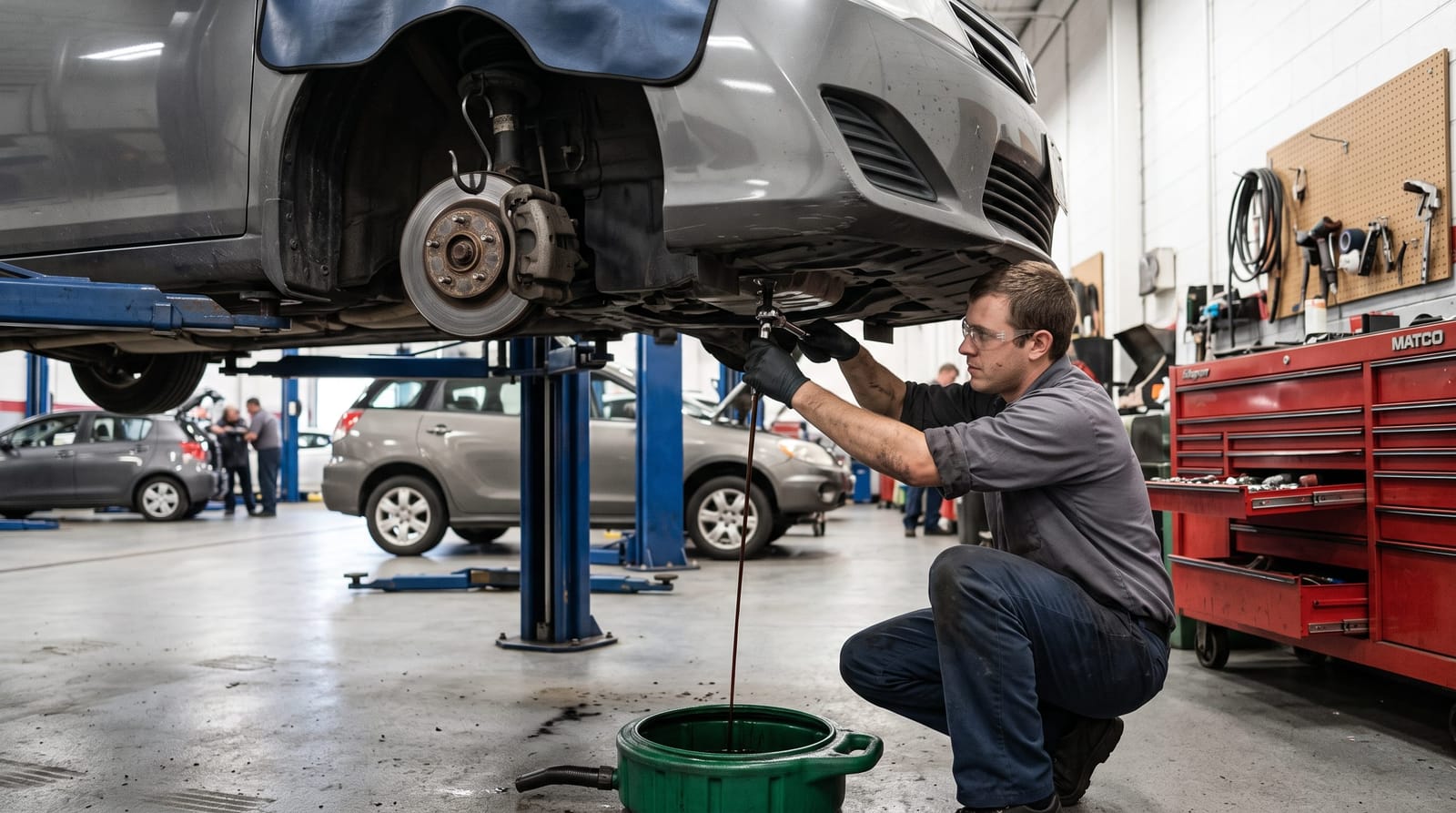
A basic oil change, sometimes called a drain-and-fill, does exactly what the name suggests: the old motor oil comes out, a new filter goes in, and fresh oil goes in. That's it. It's a straightforward service, but it leaves a lot unchecked.
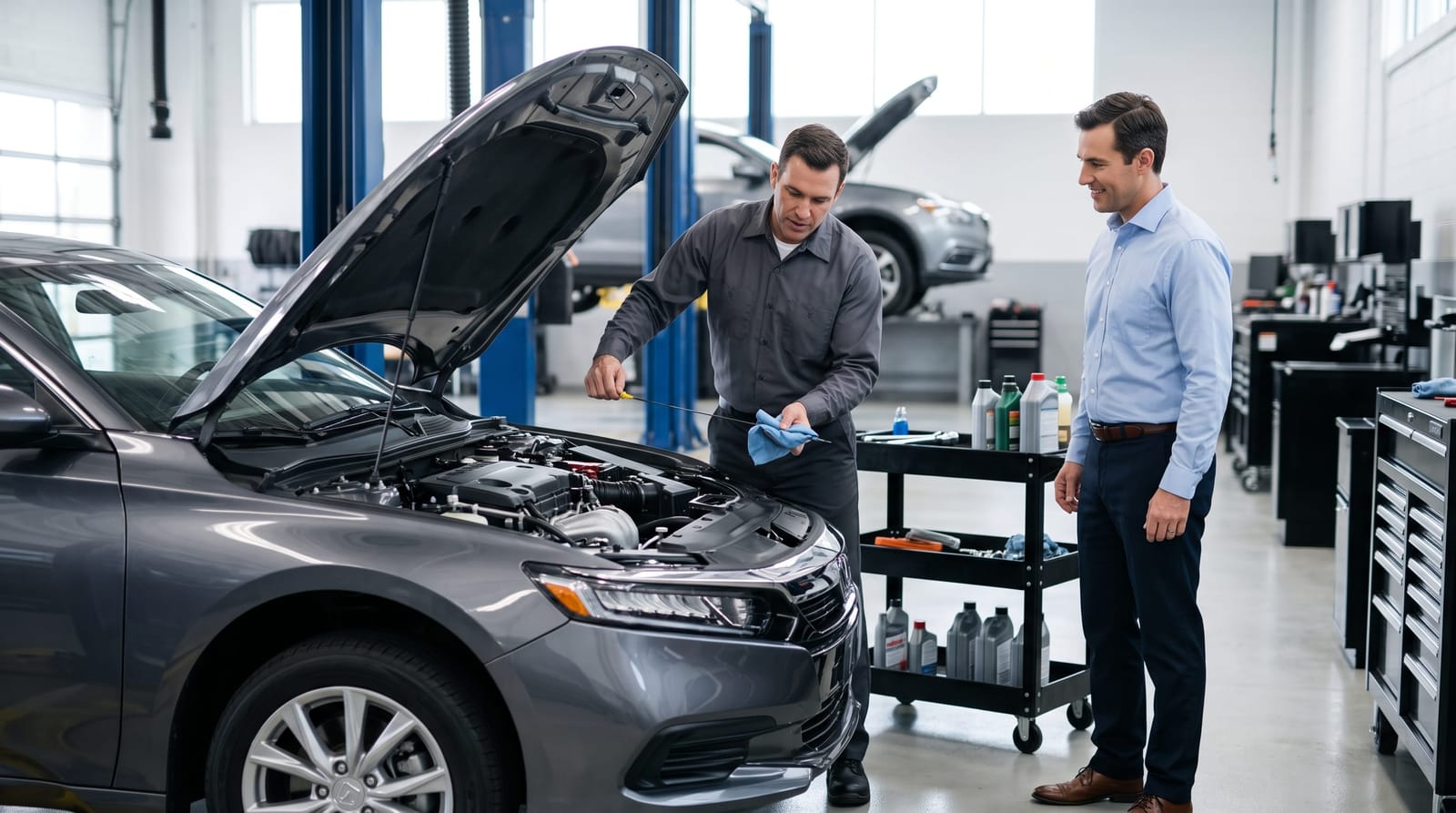
A full service oil change expands on that foundation. In addition to replacing motor oil and the filter, a full service visit includes a multi-point inspection that covers all the fluids described above, a visual check of wiper blades, tire pressure, belts, and lights, and often a digital inspection report so you have a clear picture of your vehicle's condition before you drive away.
For everyday commuters and families who want peace of mind, the full service approach makes each oil change visit more valuable. You're not just maintaining one system: you're getting a quick but thorough look at your entire vehicle. And if you're wondering about the time commitment involved, a how long full service oil change breakdown explains what to expect from start to finish.
At Rancho Express Lube, every full service synthetic oil change also includes a complimentary car wash: a small but genuinely appreciated detail that makes the visit feel complete. If you're curious what that includes, the free car wash synthetic oil change overview covers exactly what's offered.
How to Use Your Vehicle Fluids Replacement Schedule
The most reliable reference for your specific vehicle is always the owner's manual. Manufacturers set replacement intervals based on the engineering of each model, and those recommendations account for normal driving conditions. Here's a general reference to use as a starting point:
- Motor Oil: Every 5,000 to 10,000 miles, depending on oil type and vehicle specifications
- Coolant: Every 2 to 5 years or as specified by the manufacturer
- Brake Fluid: Approximately every 2 years, or per manufacturer recommendation
- Power Steering Fluid: Varies by vehicle; inspect at every oil change
- Transmission Fluid: Every 30,000 to 60,000 miles for most vehicles
- Windshield Washer Fluid: Top off as needed; checked at every service visit
Driving habits also play a role. Frequent short trips, stop-and-go traffic, towing, or driving in extreme heat, all common in the Inland Empire, can put more demand on your vehicle's fluids than highway driving under mild conditions. If your driving falls into what manufacturers call "severe" conditions, more frequent checks may be appropriate.
Frequently Asked Questions
Do all oil change shops check vehicle fluids, or is that only at full service locations?
Not all oil change shops include fluid checks as part of their standard service. A basic oil change typically covers only the motor oil and filter. Full service shops inspect multiple fluid levels and overall vehicle condition as part of the visit. It's always worth asking what's included before you arrive so you know exactly what you're getting.
Can I top off vehicle fluids myself between oil changes?
Yes, many fluid reservoirs are accessible and clearly labeled under the hood, and topping off fluids like windshield washer fluid or coolant is something many drivers handle on their own. However, for brake fluid or transmission fluid, it's worth having a professional check not just the level but also the condition of the fluid, since color and clarity can indicate whether a replacement is due.
What happens if one of my vehicle fluids runs low and I don't notice?
The consequences depend on which fluid is affected. Low coolant can lead to engine overheating. Low brake fluid may affect braking response. Low transmission fluid can cause rough shifting over time. None of these are immediate emergencies in most cases, but consistently low fluid levels can put added stress on vehicle systems. Regular inspections are the straightforward way to avoid getting to that point.
How do I know if my vehicle uses conventional or synthetic motor oil?
Your owner's manual specifies the recommended oil type and viscosity for your vehicle. Many newer vehicles, particularly luxury and European models, are engineered for full synthetic oil. Using the correct oil type is important for engine protection and warranty compliance. If you're unsure, a qualified technician can confirm the right specification for your car.
Bringing It All Together
A complete vehicle fluids replacement schedule isn't complicated: it just requires knowing which fluids your car uses, when each one is due for inspection or replacement, and working with a shop that actually takes the time to check them. A full service oil change covers that ground efficiently, turning a routine visit into a meaningful maintenance touchpoint. For drivers in Rancho Cucamonga who want straightforward, thorough service from technicians who take vehicle care seriously, that combination of attention and convenience is exactly what a trusted local shop should provide.