What is Brake Fluid and Why Does it Need to be Changed?
If you've ever wondered why change brake fluid is even on the maintenance checklist, you're not alone. Most drivers understand that oil needs regular changes, but brake fluid often gets overlooked: sometimes for years at a time. The truth is, brake fluid plays a critical role in keeping your vehicle safe every time you press the pedal. This post breaks down exactly what brake fluid does, why it degrades over time, and why staying on top of this simple service matters for your car's long-term reliability.
What Does Brake Fluid Actually Do?
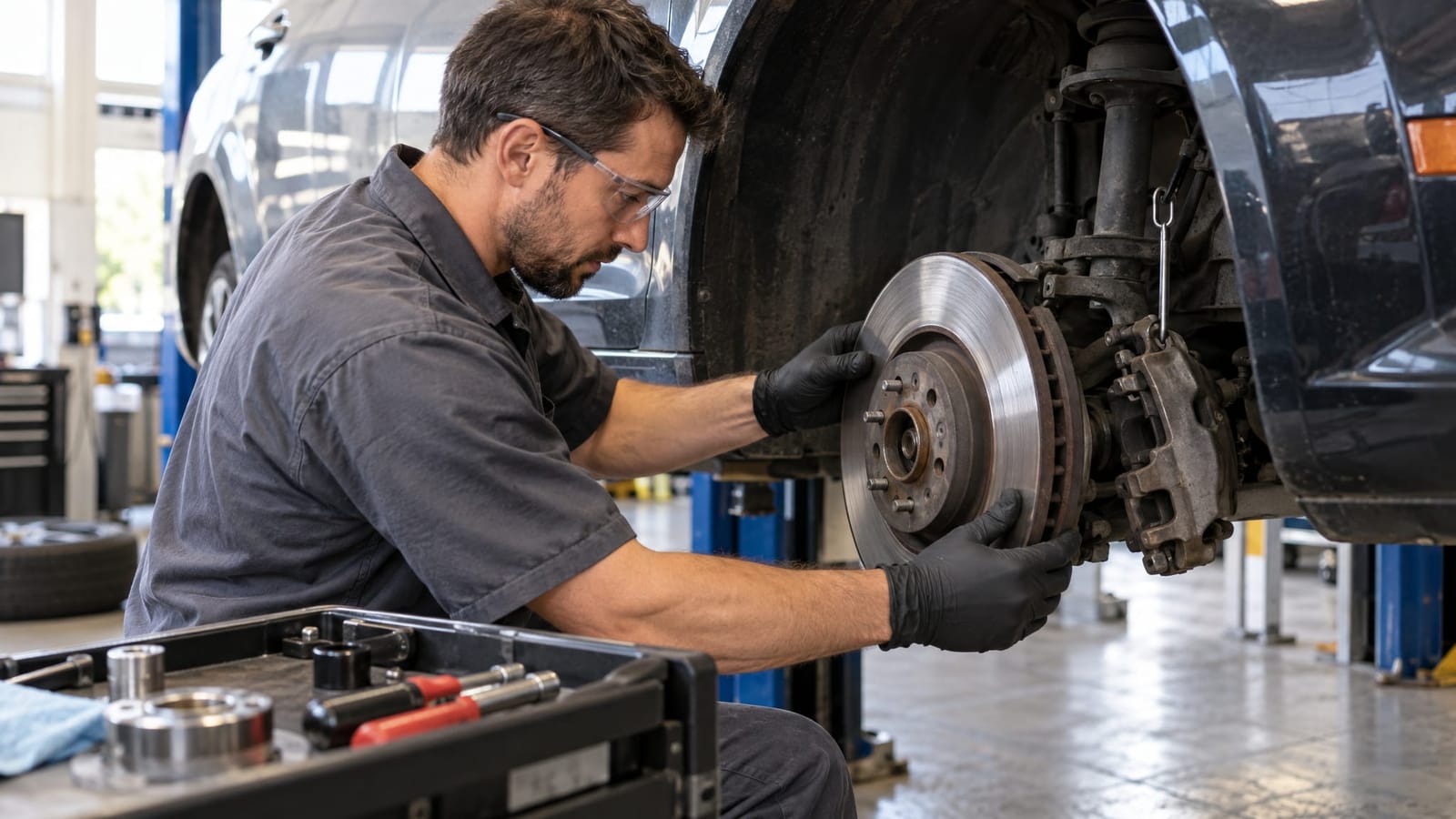
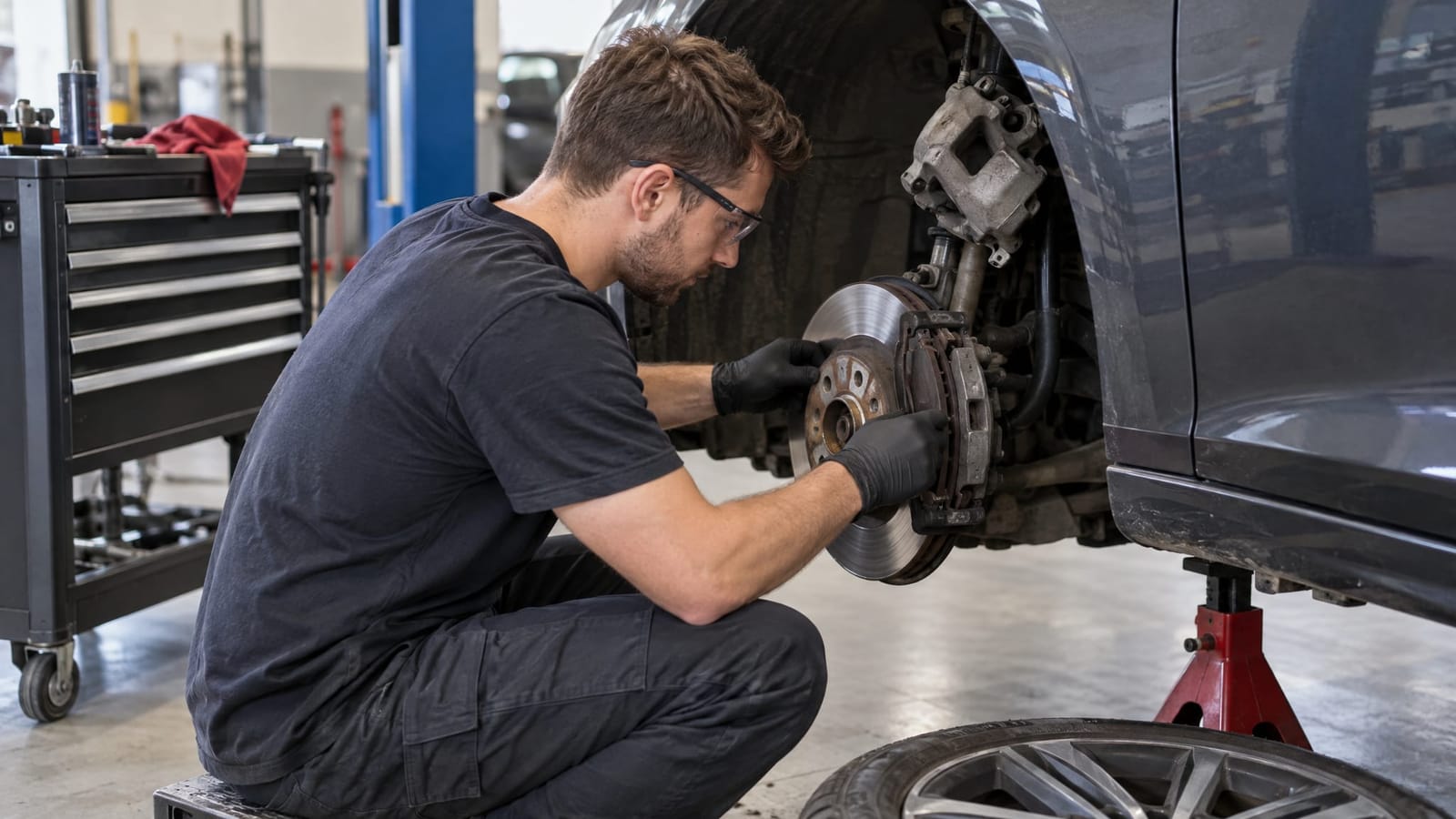
Brake fluid is what makes your braking system work. When you press the brake pedal, you're not directly squeezing the brake pads: you're applying force to a small chamber of fluid. That fluid transfers your foot pressure through the brake lines to the calipers or wheel cylinders at each wheel, which then apply the actual stopping force. This process is called hydraulic braking, and it only works because brake fluid doesn't compress under pressure.
Most vehicles use a fluid type classified as DOT 3, DOT 4, or DOT 5.1 (the numbers refer to performance standards set by the Department of Transportation). These fluids are specially formulated to handle high heat, braking generates significant friction and temperature, while remaining stable and consistent through thousands of stops. Without functioning brake fluid, that hydraulic connection between your foot and your brakes simply doesn't exist.
Brake fluid lives in a small reservoir under your hood and circulates through a closed network of lines and components. It's easy to forget it's even there, which is part of why routine inspections are valuable. A technician can check the fluid condition and level as part of a broader brake inspection, catching problems before they become more serious.
Why Brake Fluid Breaks Down Over Time
Here's something surprising about brake fluid: even though it lives in a sealed system, it naturally absorbs moisture from the surrounding environment over time. This is because most brake fluids are hygroscopic: meaning they chemically attract and absorb water. Moisture enters slowly through microscopic permeability in rubber brake hoses, seals, and even the reservoir cap.
As water content builds up, two things happen. First, the boiling point of the fluid drops significantly. Fresh DOT 4 brake fluid, for example, has a dry boiling point around 446°F. Once water contamination reaches just 3%, that boiling point can fall to around 311°F: a dramatic drop that can cause the fluid to vaporize under hard braking. Vaporized fluid creates air pockets in the lines, which are compressible, and that's what causes that spongy or soft pedal feeling.
Second, water in the brake lines promotes internal corrosion. Brake calipers, wheel cylinders, ABS components, and metal brake lines can all suffer long-term damage when moisture is present for extended periods. That kind of corrosion is expensive to address. Changing the fluid on a regular schedule is a straightforward way to avoid it.
How Often Should Brake Fluid Be Changed?
Most vehicle manufacturers and automotive technicians recommend changing brake fluid every two to five years, depending on the vehicle, the type of fluid used, and your driving conditions. Some manufacturers, like BMW and Honda, have specific intervals in their maintenance schedules. Others are more general. Checking your owner's manual is always a good starting point.
That said, mileage and age aren't the only factors. If you do a lot of mountain driving, frequent towing, or stop-and-go city driving, your braking system works harder and heats up more often, which can accelerate fluid degradation. In these situations, leaning toward the shorter end of the recommended interval makes sense.
A brake fluid test strip can give a quick read on moisture content, and many shops will perform this check as part of a routine inspection. If the fluid is dark or discolored, it should be a light amber or clear color when fresh, that's another indicator it's time for a change. Regular brake inspections give you a clear picture of where your fluid stands and whether service is due soon.
What Happens if You Skip This Service?
Skipping brake fluid changes doesn't cause immediate, obvious problems in most cases, which is part of why it tends to get ignored. But the effects accumulate quietly. Over time, degraded fluid with high moisture content raises the risk of brake fade (reduced stopping power during sustained braking), which can be especially problematic when driving in hilly terrain or during emergency stops.
Beyond performance, internal corrosion from water-contaminated fluid can damage expensive components. ABS modulators, master cylinders, and brake calipers are not cheap to replace. A routine brake fluid exchange, which is typically a straightforward, affordable service, is far less expensive than replacing corroded hydraulic components. It's one of those maintenance tasks that earns its value quietly over time, protecting components you'd prefer never to have to think about.
For owners of newer vehicles, high-value vehicles, or commercial fleet vehicles, staying current on brake fluid maintenance is particularly important. These vehicles often have more sophisticated braking technology, including electronic stability control and ABS systems that depend on clean, properly performing hydraulic fluid to function correctly.
Frequently Asked Questions
How do I know if my brake fluid needs to be changed?
The most reliable way is to have a technician test the fluid's moisture content using an inexpensive test strip. Visually, brake fluid that has turned dark brown or murky is a sign that it's been in service too long. A soft or spongy brake pedal can also indicate that moisture has compromised the fluid, though that symptom can have other causes as well. When in doubt, a quick inspection will give you a clear answer.
Can I just top off brake fluid instead of flushing it?
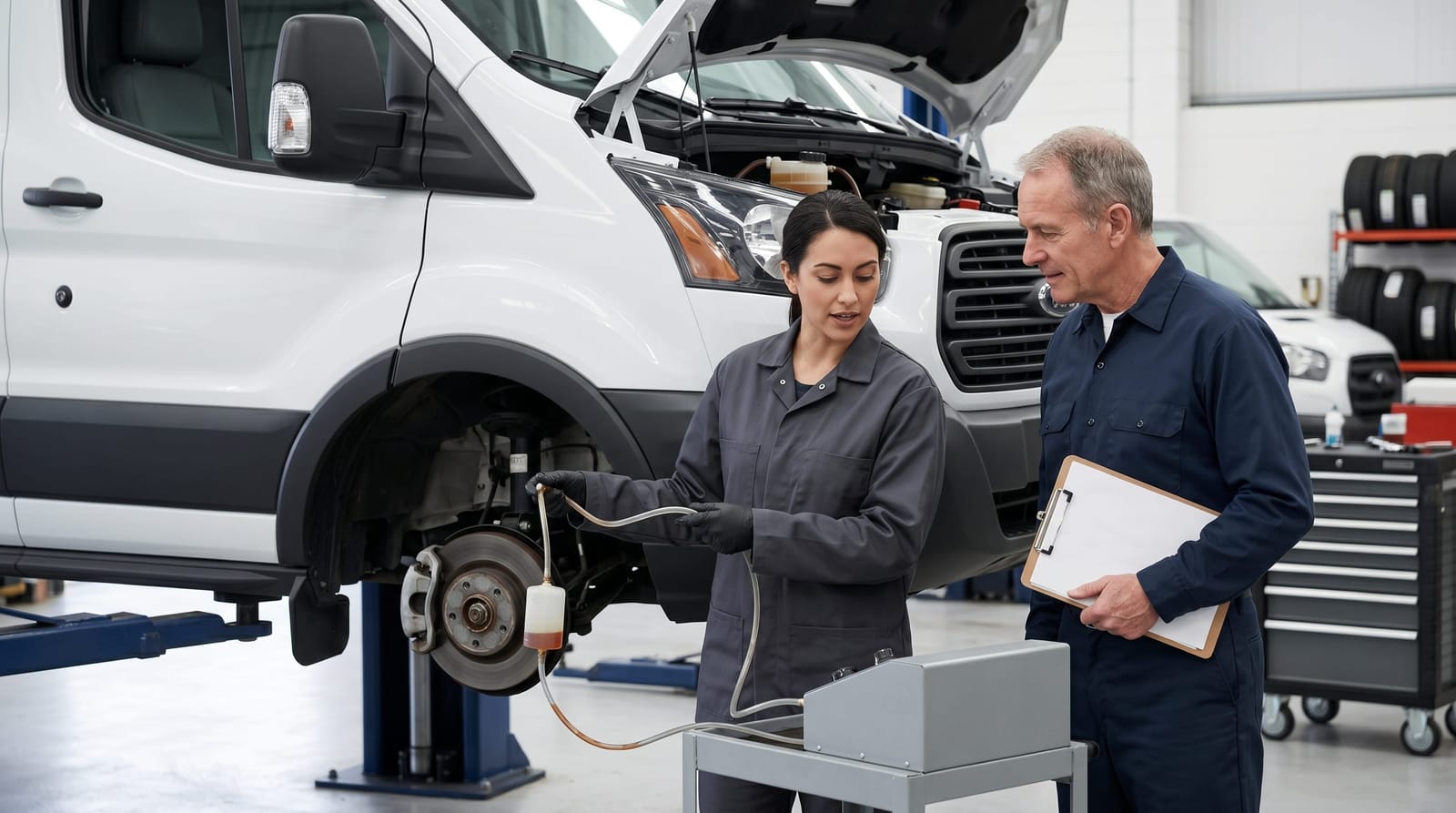
Topping off the reservoir adds fresh fluid but doesn't remove the old, contaminated fluid already in the system. A fluid flush, where the old fluid is pushed out and replaced entirely, is the correct service. Think of it like adding clean water to a glass of muddy water: the mixture improves, but the contaminants are still present. If your fluid level is consistently low, that may also indicate a leak that should be diagnosed separately.
Is brake fluid the same as power steering fluid or transmission fluid?
No: these are distinct fluids with different formulations and purposes. Using the wrong fluid in your brake system can cause serious damage to rubber seals and internal components. Always make sure any service uses the correct DOT-rated brake fluid specified for your vehicle. Your owner's manual will list the appropriate specification, and any qualified technician will know which fluid your vehicle requires.
How long does a brake fluid change take?
A brake fluid flush is typically a quick service, often completed in 30 minutes or less at a well-equipped shop. It doesn't require extensive disassembly and is usually one of the more straightforward maintenance services available. Combining it with a routine brake inspection is a convenient way to cover both at once and make sure your entire braking system is in good condition.
Keeping Your Brakes Reliable for the Long Haul
Understanding why change brake fluid matters comes down to one simple idea: this small, affordable service protects a critical safety system. Brake fluid degrades, absorbs moisture, and loses effectiveness over time, and ignoring that has real consequences for both safety and the longevity of your braking components. Following the manufacturer's recommended interval, or having your fluid tested during a routine inspection, is one of the easiest ways to keep your vehicle stopping safely and reliably. If you're unsure whether your brake fluid is due for a change, a quick visit for a brake inspection will give you the answers you need.