What to Have Your Mechanic Check Before a Long Road Trip
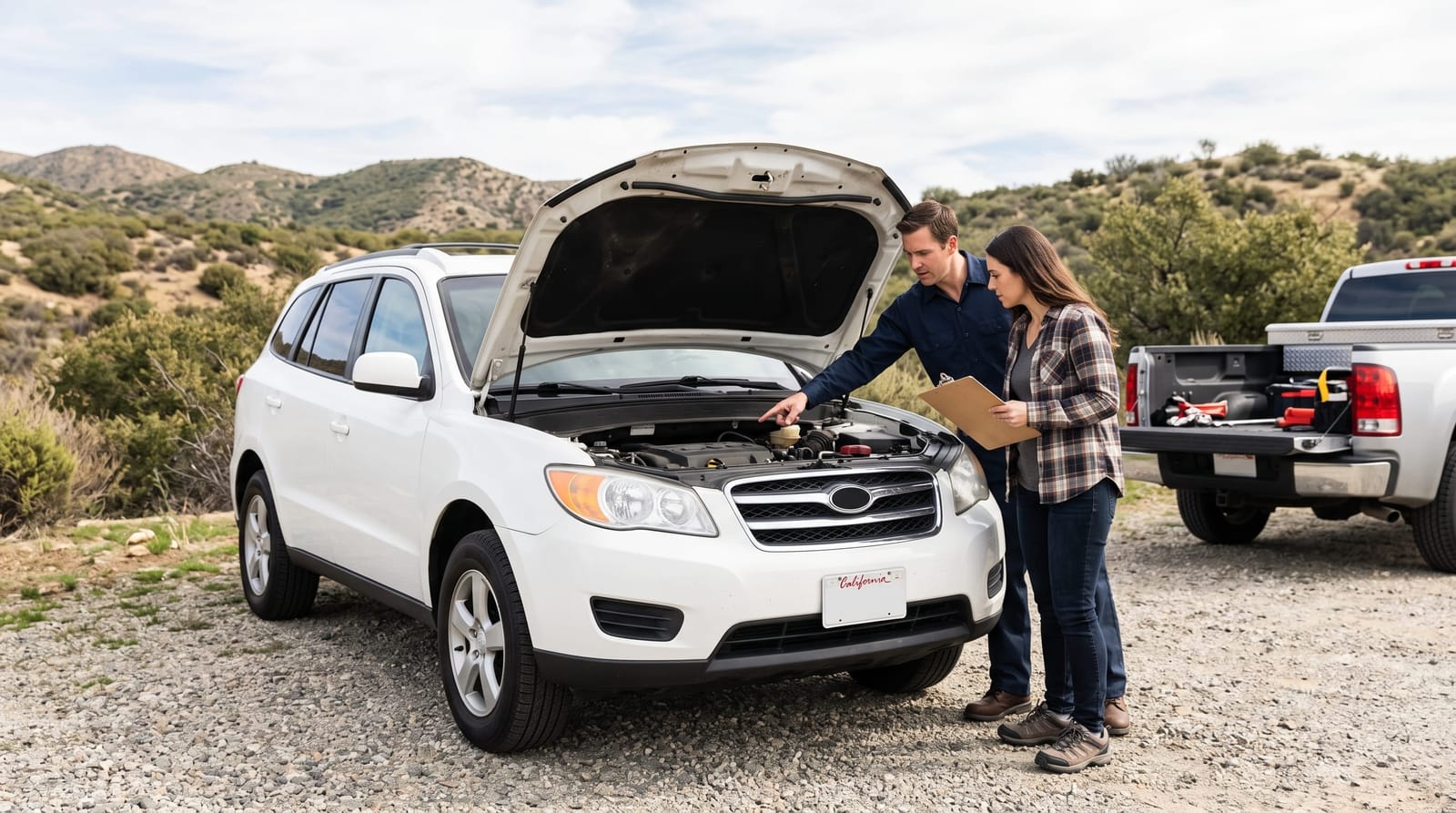
Planning a long road trip is exciting, but the last thing you want is a preventable breakdown pulling over on the side of the freeway somewhere between the Inland Empire and your destination. A quick pre-trip visit to a trusted mechanic can catch small issues before they become big problems on the road. This beginner's guide walks you through exactly what should be inspected before you head out, so you can drive with confidence from the first mile to the last.
Step 1: Start with Your Oil and Engine Fluids
Before any long drive, the first thing worth checking is your engine oil. Oil lubricates your engine's moving parts and degrades over time, so if you're approaching your next oil change interval, it's smart to get it done before you leave rather than halfway through your trip.
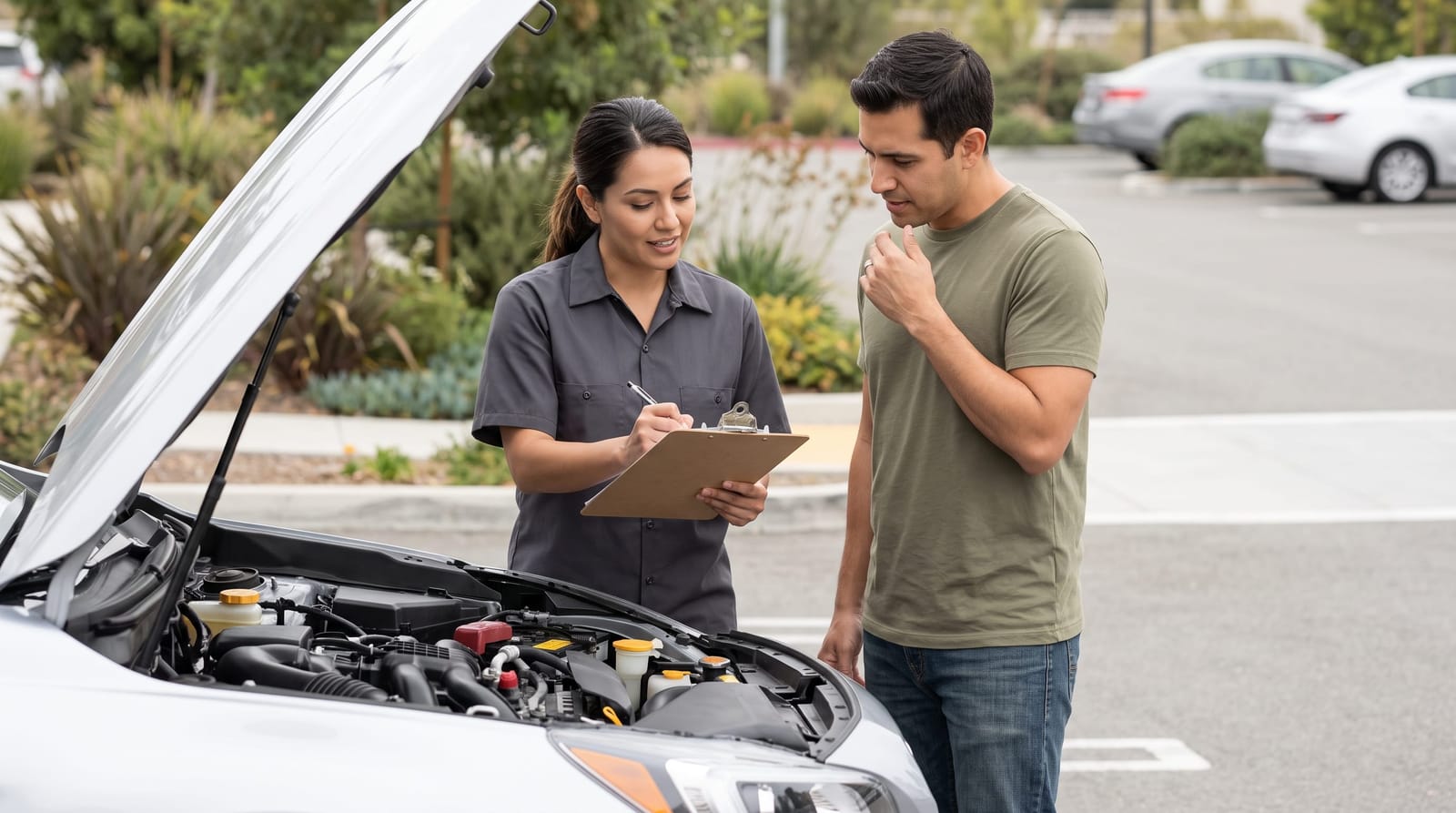
Beyond oil, your vehicle relies on several other fluids to function properly. A good pre-trip inspection should include a check of:
- Coolant (antifreeze): Keeps your engine from overheating, which is especially important during warm Inland Empire summers when temperatures can climb well above 90°F.
- Brake fluid: Supports your braking system. Low or dirty brake fluid can affect how your brakes respond.
- Power steering fluid: Helps your steering feel smooth and responsive, especially on long stretches of highway.
- Windshield washer fluid: Easy to overlook, but essential for visibility when driving through dust, bugs, or road spray.
- Transmission fluid: Keeps your transmission shifting smoothly during extended highway driving.
A technician can visually inspect and top off these fluids quickly during a routine pre-trip service. If any fluid looks particularly dark or contaminated, they'll let you know so you can make an informed decision about next steps.
Step 2: Get Your Tires Inspected and Pressures Checked
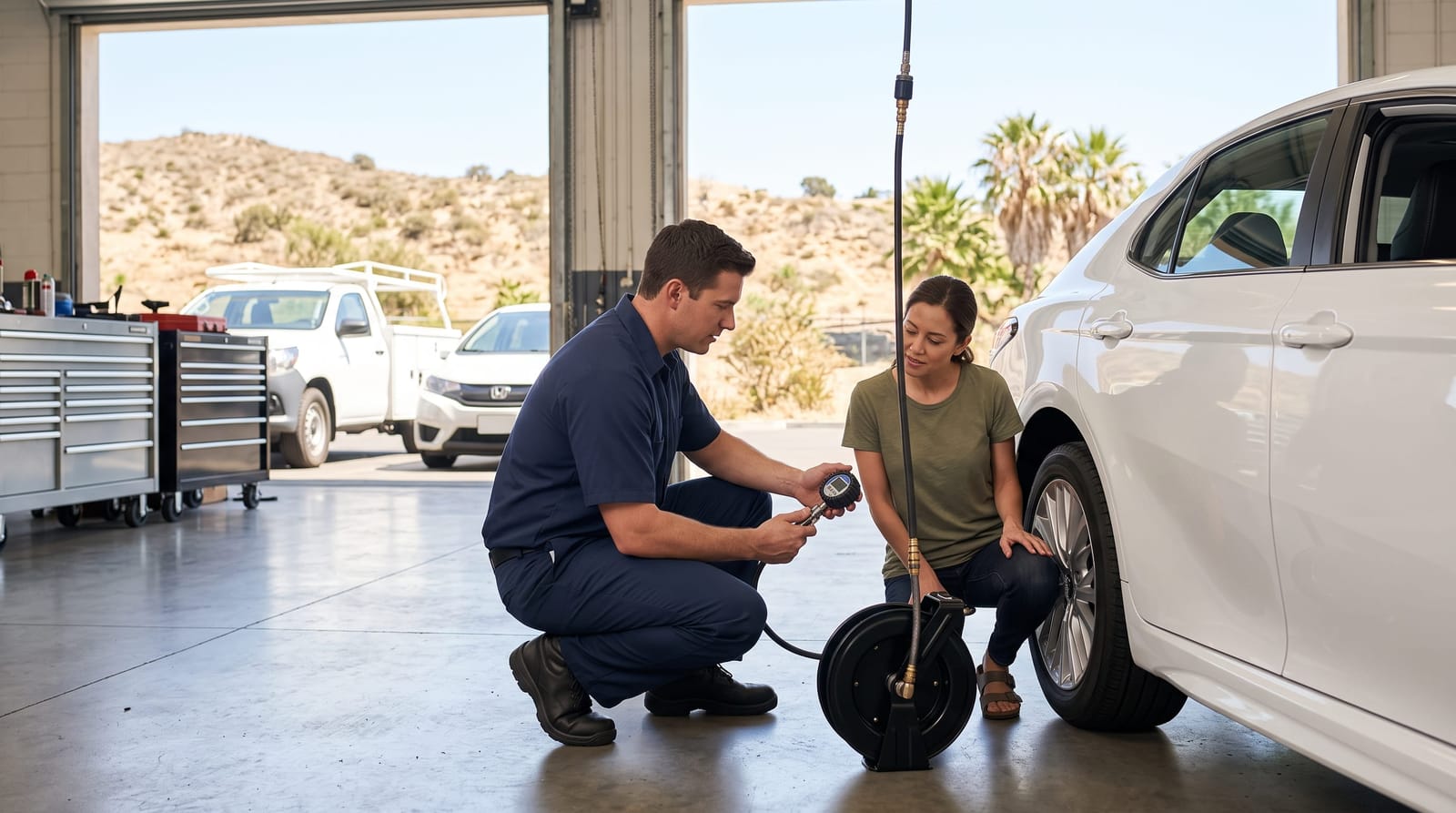
Your tires are the only part of your vehicle actually touching the road, which makes them one of the most important things to check before a long drive. There are three main things a mechanic will look at during a tire inspection:
Tire pressure: Underinflated tires can affect your vehicle's handling, reduce fuel efficiency, and cause uneven wear over time. Before a road trip, your tires should be inflated to the pressure listed in your owner's manual or on the sticker inside your driver's door jamb, not the number printed on the tire itself. Temperature changes can also affect pressure, so this is worth checking even if your tires looked fine a few weeks ago.
Tread depth: Worn-down tread reduces traction, especially in wet or slippery conditions. If you're unsure whether your tires have enough tread left, a simple inspection at the shop can give you a clear answer. For a quick at-home check, our related guide on how to check tire tread before a road trip using the penny test and other methods is a helpful starting point.
Tire rotation: If you're due for a rotation, doing it before a long trip helps ensure even wear across all four tires and can extend their overall life. Most vehicles benefit from a rotation every 5,000 to 7,500 miles, though your owner's manual will have the specific recommendation for your car.
Step 3: Have Your Brakes Inspected
Long road trips often include mountain grades, heavy freeway traffic, and unfamiliar roads, all situations where reliable brakes matter. A brake inspection before you leave gives you a clear picture of where things stand.
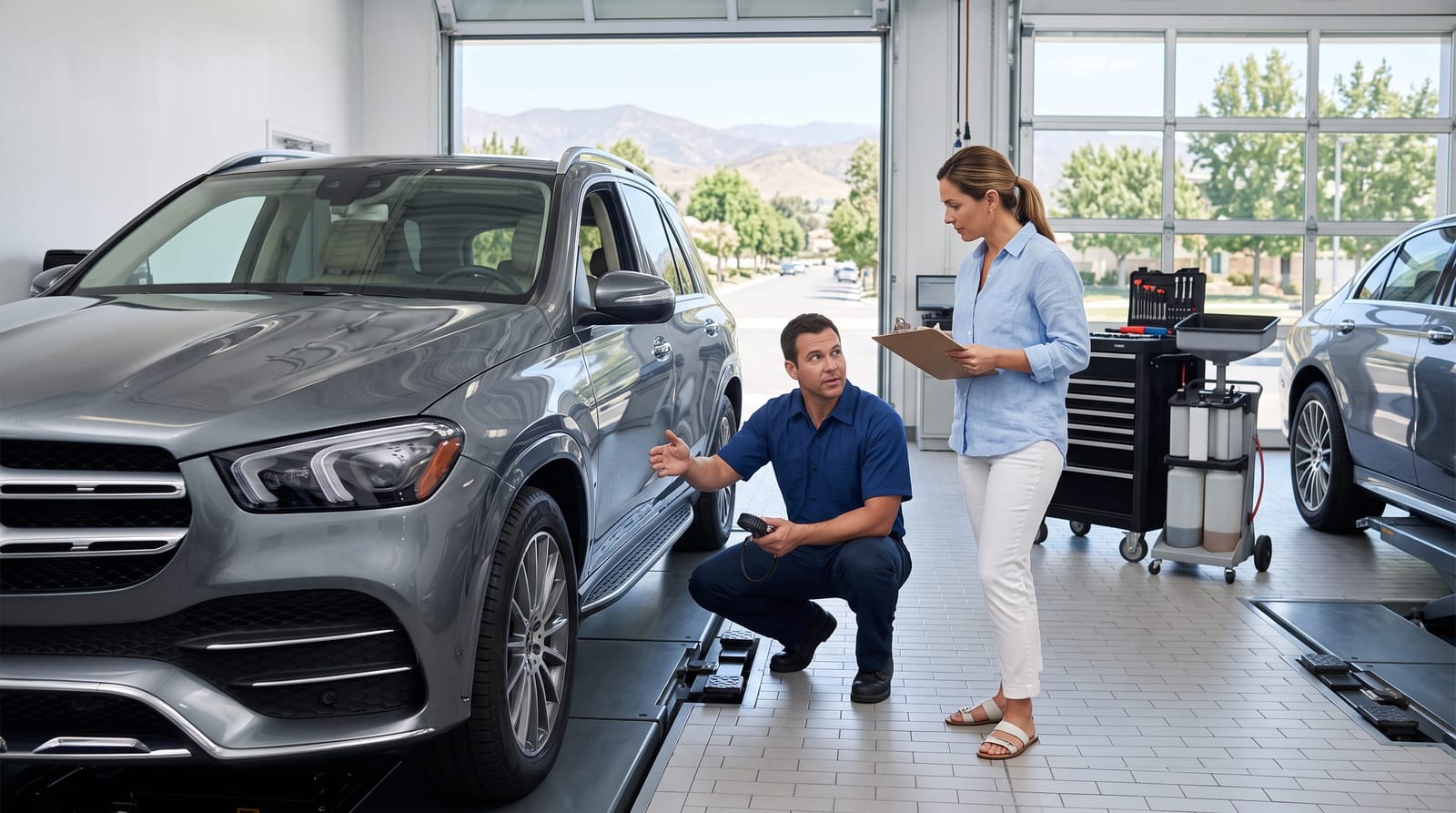
During a brake check, a technician will typically look at:
- The thickness of your brake pads (they wear down gradually and need to be replaced before they get too thin)
- The condition of your brake rotors (the metal discs that your pads clamp down on to slow the vehicle)
- Any signs of leaks or issues in the brake lines
You don't need to understand the technical details: that's what the inspection is for. What's helpful to know is that if your brakes have been squeaking, grinding, or if your vehicle pulls to one side when you brake, those are signs worth mentioning to your technician before your trip. Even if everything feels fine, having a professional set of eyes on your braking system before a long drive is simply good practice.
Step 4: Check Your Air Conditioning and Electrical Systems
In the Inland Empire, summer road trips can mean hours of driving in intense heat. A working air conditioning system isn't just about comfort: it's a genuine safety consideration when temperatures are high. Before a road trip, it's worth confirming that your AC is cooling effectively. If it's been blowing warm air or taking longer than usual to cool the cabin, now is the right time to have it looked at.
Your battery and electrical system are also worth a quick check. A battery that's struggling to hold a charge can leave you stranded, especially after sitting in a hot parking lot for hours. Most shops can test your battery's charge level in just a few minutes. If your battery is more than a few years old, a quick test gives you a clear picture of whether it's still performing reliably.
Other electrical items to briefly confirm before you leave:
- All exterior lights (headlights, brake lights, turn signals)
- Interior dashboard warning lights (if any are on, make sure you know what they mean)
- Windshield wipers for visibility in rain or dust
Step 5: Ask for a Digital Inspection Report
Many modern auto service shops, including Rancho Express Lube, provide a digital vehicle inspection report as part of a pre-trip service. This is a simple, easy-to-read summary of what was checked, what's in good shape, and what (if anything) may need attention soon.
A digital inspection report is especially useful for road trips because it gives you a documented baseline of your vehicle's condition before you leave. It also makes it easier to have an informed conversation with your technician: you can see exactly what was checked and ask questions about anything you're not sure about, without feeling pressured or confused.
This kind of transparent service approach helps you make decisions that feel right for your schedule and budget, rather than feeling like you're being sold something you don't need.
Frequently Asked Questions
How far in advance should I schedule a pre-trip inspection?
Ideally, schedule your pre-trip service at least a week before your departure date. This gives the shop time to complete the inspection and, if any parts or services are needed, allows a little buffer to get everything taken care of without rushing before your trip.
How long does a pre-road trip inspection typically take?
For most routine pre-trip checks, including an oil change, fluid top-offs, tire inspection, and brake check, you can typically expect the visit to take around 30 to 60 minutes, depending on what's needed. Rancho Express Lube is designed for fast, efficient service without sacrificing quality, so you won't be waiting around all day.
Do I need a pre-trip inspection if my car seems to be running fine?
A vehicle can be running noticeably fine while still being close to a service interval or having a fluid that's low. Road trips put more sustained stress on your vehicle than everyday local driving, so even if nothing feels wrong, a quick checkup before a long drive is a practical step that many experienced drivers make a habit of.
What if I'm not sure when my last oil change was?
If you're uncertain, let your technician know. They can check your current oil level and condition and help you figure out whether you're due for a change before the trip. It's always better to ask than to guess, especially on a long drive.
Ready to Hit the Road? Book Your Pre-Trip Appointment at Rancho Express Lube
Taking care of your vehicle before a road trip doesn't need to be complicated or stressful. A single visit to Rancho Express Lube covers the essential items, oil, fluids, tires, brakes, AC, and a full digital inspection, so you can leave the Inland Empire feeling prepared and confident. Swing by before your next adventure, and our team will make sure your vehicle is ready for wherever the road takes you.