Which Vehicle Fluids Need Regular Replacement?
Your vehicle relies on several different fluids to keep its systems running safely and efficiently. While most drivers are familiar with oil changes, the full picture of fluid maintenance goes well beyond that. As part of a well-rounded preventative car maintenance approach, understanding your vehicle fluids replacement schedule helps you stay ahead of wear, avoid unexpected problems, and keep your car running reliably for years to come. This guide covers every major fluid, how often it needs attention, and what to watch for when it starts to degrade.
Why Vehicle Fluids Degrade Over Time
Every fluid in your vehicle serves a specific purpose: lubricating moving parts, transferring heat, or enabling hydraulic pressure. But over time and with use, fluids break down. They absorb moisture, collect contaminants, lose their chemical effectiveness, and in some cases, become corrosive rather than protective.
Understanding why fluids degrade helps explain why a vehicle fluids replacement schedule matters. It's not just about hitting a mileage number: it's about maintaining the protective qualities that each fluid was designed to provide. A few key factors that cause fluid degradation include:
- Heat cycling: Repeated heating and cooling breaks down fluid chemistry over time
- Moisture absorption: Fluids like brake fluid are hygroscopic, meaning they naturally pull in moisture from the air
- Oxidation: Exposure to oxygen causes fluids to thicken, darken, or lose viscosity
- Contamination: Metal particles, rust, and debris can mix into fluids as components wear
- Additive depletion: Protective additives in coolant and transmission fluid break down with use
Once a fluid reaches this stage, it's no longer doing the job it was designed to do, and that's when system wear begins to accelerate.
Engine Oil: The Foundation of Fluid Maintenance
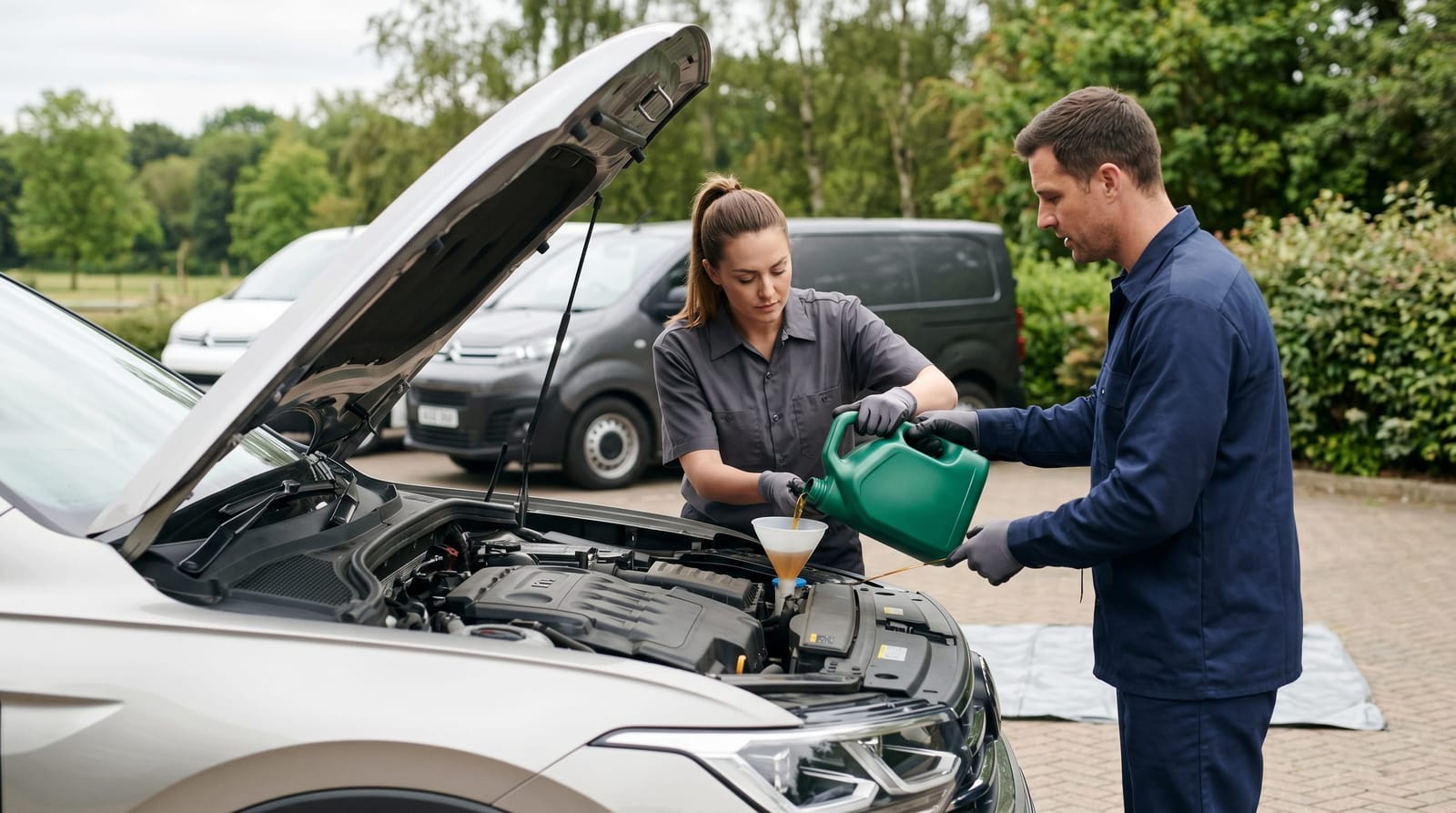
Engine oil is the most frequently serviced fluid in any vehicle, and for good reason. It lubricates hundreds of moving engine parts, reduces heat from friction, and carries contaminants to the oil filter. Modern synthetic oils have extended service life significantly, but they still require regular replacement.
General oil change intervals to keep in mind:
- Conventional oil: Every 3,000 to 5,000 miles
- Synthetic blend oil: Every 5,000 to 7,500 miles
- Full synthetic oil: Every 7,500 to 10,000 miles (some vehicles up to 15,000 miles)
Signs your oil needs attention include a dark, gritty appearance on the dipstick, a low oil level, or an oil pressure warning light. Always check your owner's manual for your specific vehicle's recommendation, as driving conditions in warm climates, including stop-and-go city driving, can shorten the ideal service interval.
Coolant: Protecting Your Engine from Temperature Extremes
Engine coolant (sometimes called antifreeze) circulates through your engine and radiator to regulate temperature. It prevents the engine from overheating in summer and from freezing in cold weather. Coolant also contains corrosion inhibitors that protect metal components throughout the cooling system.
Over time, those inhibitors deplete and the coolant itself becomes acidic, which can actually start to corrode the parts it was designed to protect. The recommended vehicle fluids replacement schedule for coolant is:
- Standard coolant: Every 2 to 3 years or 30,000 miles
- Extended-life coolant: Every 5 years or 100,000 miles (check your owner's manual)
Warning signs of degraded coolant include a sweet or burning smell near the engine, visible rust or discoloration in the overflow reservoir, or a vehicle that runs hotter than normal. A simple coolant test strip can check the pH and freeze protection level at your next service visit.
Brake Fluid: A Safety-Critical Fluid You Shouldn't Overlook
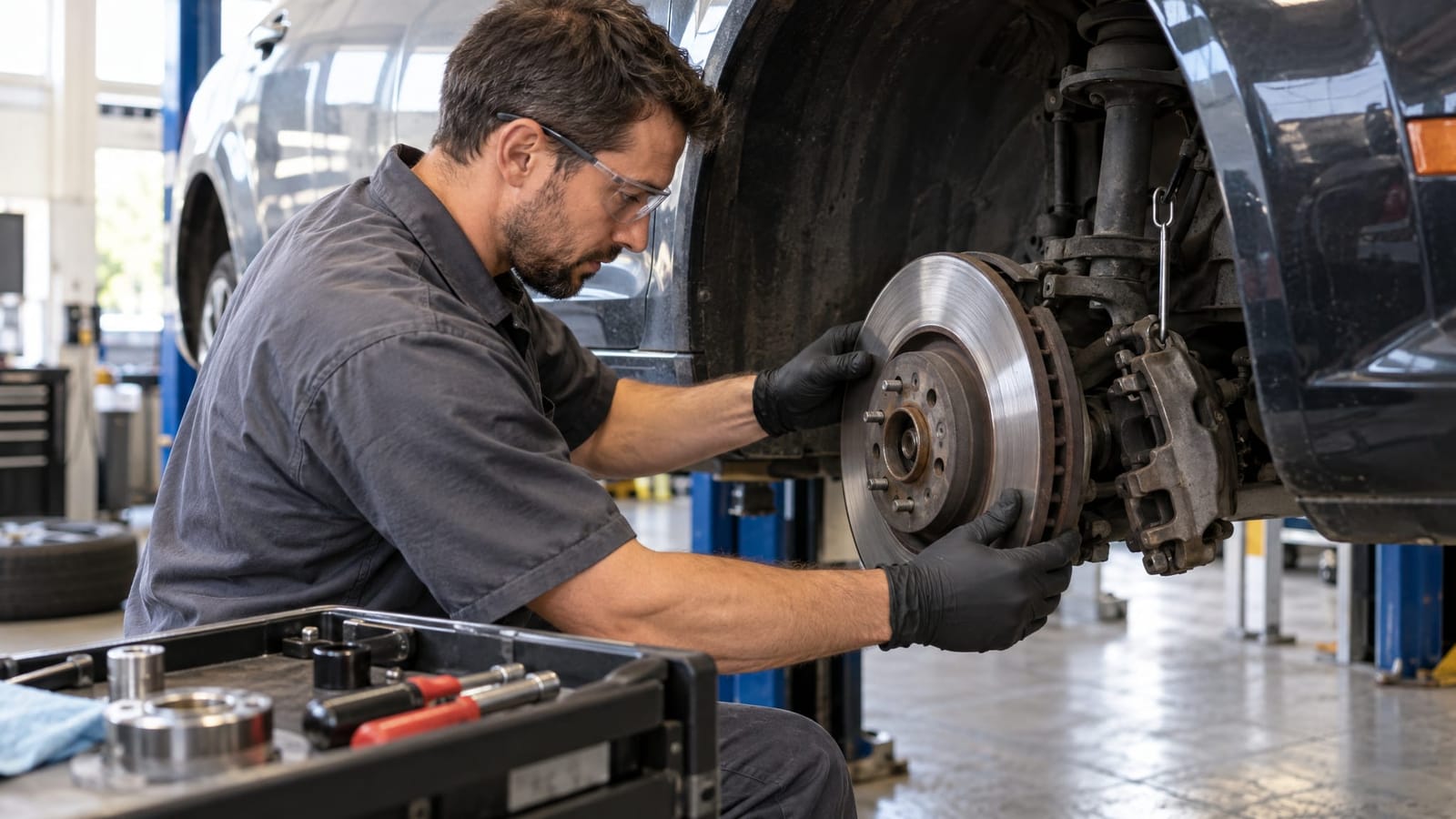
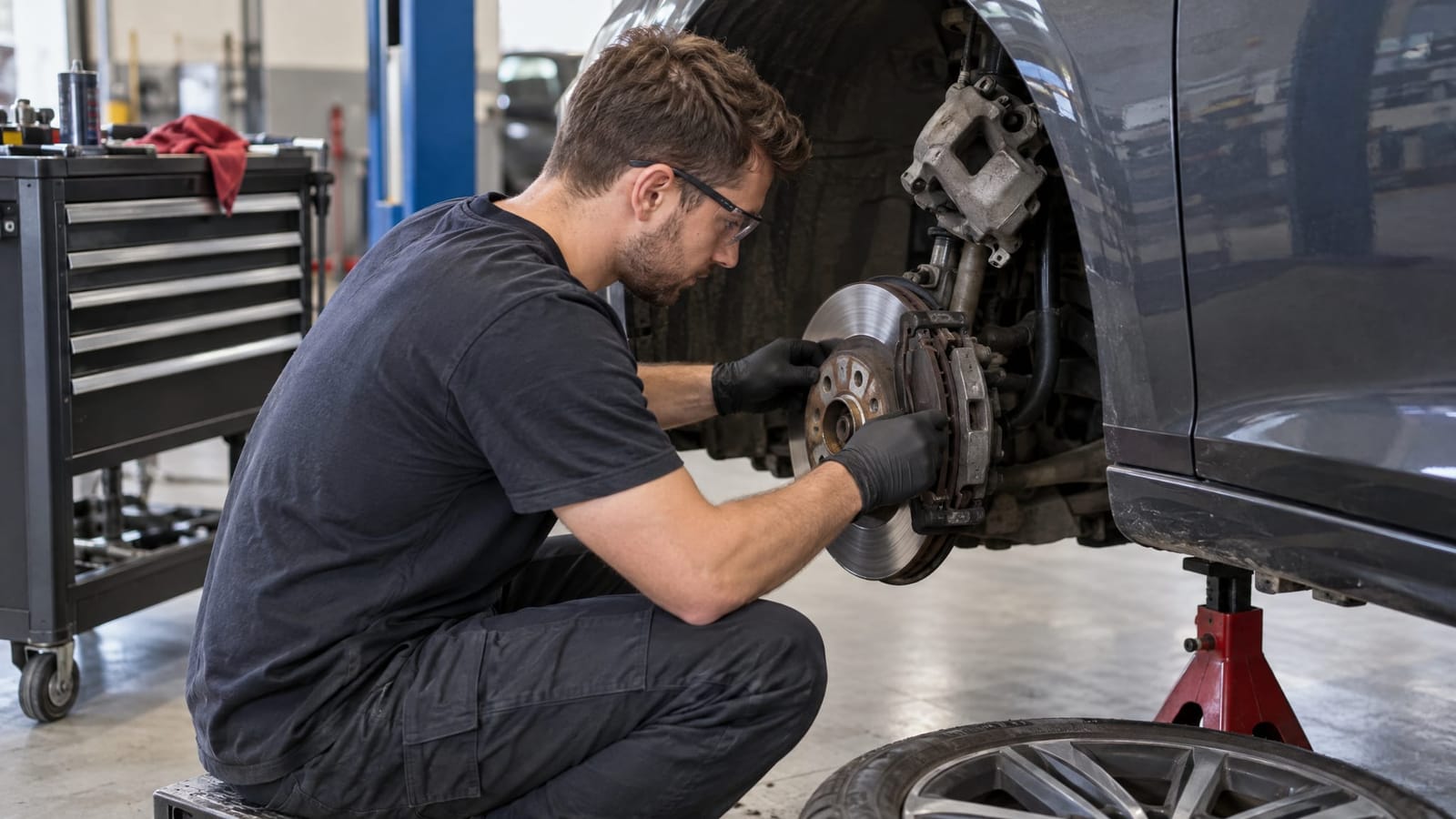
Brake fluid is one of the most overlooked fluids on a vehicle fluids replacement schedule, but it's directly tied to your safety. Your braking system is hydraulic, meaning it uses fluid pressure to transfer the force of your foot on the pedal to the brake components at each wheel.
The major problem with brake fluid is moisture absorption. Because brake fluid is hygroscopic, it gradually absorbs water vapor from the environment. As little as 3% water contamination can lower the fluid's boiling point significantly, which can cause "brake fade", reduced braking effectiveness, during hard or repeated braking.
Recommended brake fluid replacement intervals:
- Most vehicles: Every 2 years or 30,000 miles, whichever comes first
- High-use vehicles: More frequent testing is recommended
Signs of degraded brake fluid include a spongy or soft pedal feel, fluid that appears dark brown or dirty in the reservoir, or a brake warning light. This is one fluid where staying on schedule genuinely supports driving safety.
Transmission Fluid: Keeping Your Gearbox Running Smoothly
Transmission fluid lubricates the complex internal components of your transmission and, in automatic transmissions, also acts as a hydraulic fluid for smooth gear changes. As it ages, it breaks down, darkens, and loses its viscosity, which can lead to rough shifting or slipping over time.
General transmission fluid replacement intervals:
- Automatic transmissions: Every 30,000 to 60,000 miles for most vehicles
- Manual transmissions: Every 30,000 to 60,000 miles depending on use
- CVT (continuously variable) transmissions: Check your owner's manual, as CVT fluid has its own specifications
Warning signs include delayed engagement when shifting into drive or reverse, rough or jerky gear changes, a burnt smell from under the hood, or dark reddish-brown fluid (healthy automatic transmission fluid is typically bright red). Following your vehicle fluids replacement schedule for the transmission protects one of the more expensive systems on your vehicle.
Power Steering Fluid and Windshield Washer Fluid
Two additional fluids round out a complete preventative car maintenance approach:
Power steering fluid keeps your steering system responsive and smooth. On vehicles equipped with hydraulic power steering (rather than electric), this fluid degrades with heat and age. Most manufacturers recommend inspection every 30,000 miles, with replacement as needed based on color and condition.
Windshield washer fluid is the simplest fluid to manage, but don't substitute plain water, especially in cooler weather, as it can freeze in the reservoir and lines. Use a rated washer fluid appropriate for your climate and top it off as needed.
Frequently Asked Questions
How do I know if a vehicle fluid needs to be replaced?
Most fluids give visual clues when they've degraded. Dark, dirty, or discolored fluid is typically a sign it's time for service. Some fluids, like coolant and brake fluid, can also be tested with inexpensive test strips at a shop to check their chemical condition before making a replacement decision.
Can I check vehicle fluids myself at home?
Yes, several fluids are easy to check on your own. Engine oil, coolant (in the overflow reservoir), brake fluid (in the reservoir under the hood), and windshield washer fluid are all accessible and visible without any tools. Always check fluids when the engine is cool and the vehicle is on level ground. For transmission fluid, some vehicles require a professional check using specific equipment.
What happens if I skip fluid replacements?
Degraded fluids lose their protective and functional properties. Over time, this can accelerate wear on components, reduce system efficiency, and lead to repairs that could have been avoided with routine service. Staying on a vehicle fluids replacement schedule is one of the most cost-effective habits a vehicle owner can have.
Does my owner's manual override general fluid replacement guidelines?
Yes: always defer to your owner's manual for your specific vehicle. General guidelines are useful starting points, but manufacturers design fluid recommendations around their specific systems. Your driving conditions also matter: frequent short trips, hot climates, and towing can all shorten the ideal service interval for several fluids.
Keeping Your Fluids in Check Protects the Whole Vehicle
A consistent vehicle fluids replacement schedule is one of the most straightforward ways to protect your car from the inside out. Engine oil, coolant, brake fluid, and transmission fluid each play a distinct role, and each has its own timeline for when it needs attention. By staying aware of the signs of fluid degradation and following your owner's manual intervals, you give your vehicle the best foundation for long-term reliability. If you're unsure where your fluids stand, a routine preventative maintenance inspection is the easiest place to start.