Brake Rotor Service: Resurfacing vs Replacement for Expensive Vehicles
When it comes to brake service in Rancho Cucamonga, brake rotors are one of the most important components to understand. Our Complete Brake Service Guide covers your entire braking system, but rotors deserve a closer look on their own. They do a demanding job every time you slow down. For owners of high-value vehicles, luxury SUVs, or commercial fleet vehicles, making the right call on rotor service matters both for safety and for your budget. Should your rotors be resurfaced, or do they need full replacement? This guide walks you through what each option involves, when each one makes sense, and why the decision is especially important for more expensive vehicles. You'll leave with a clear picture of what to expect at your next brake inspection.
What Brake Rotors Actually Do
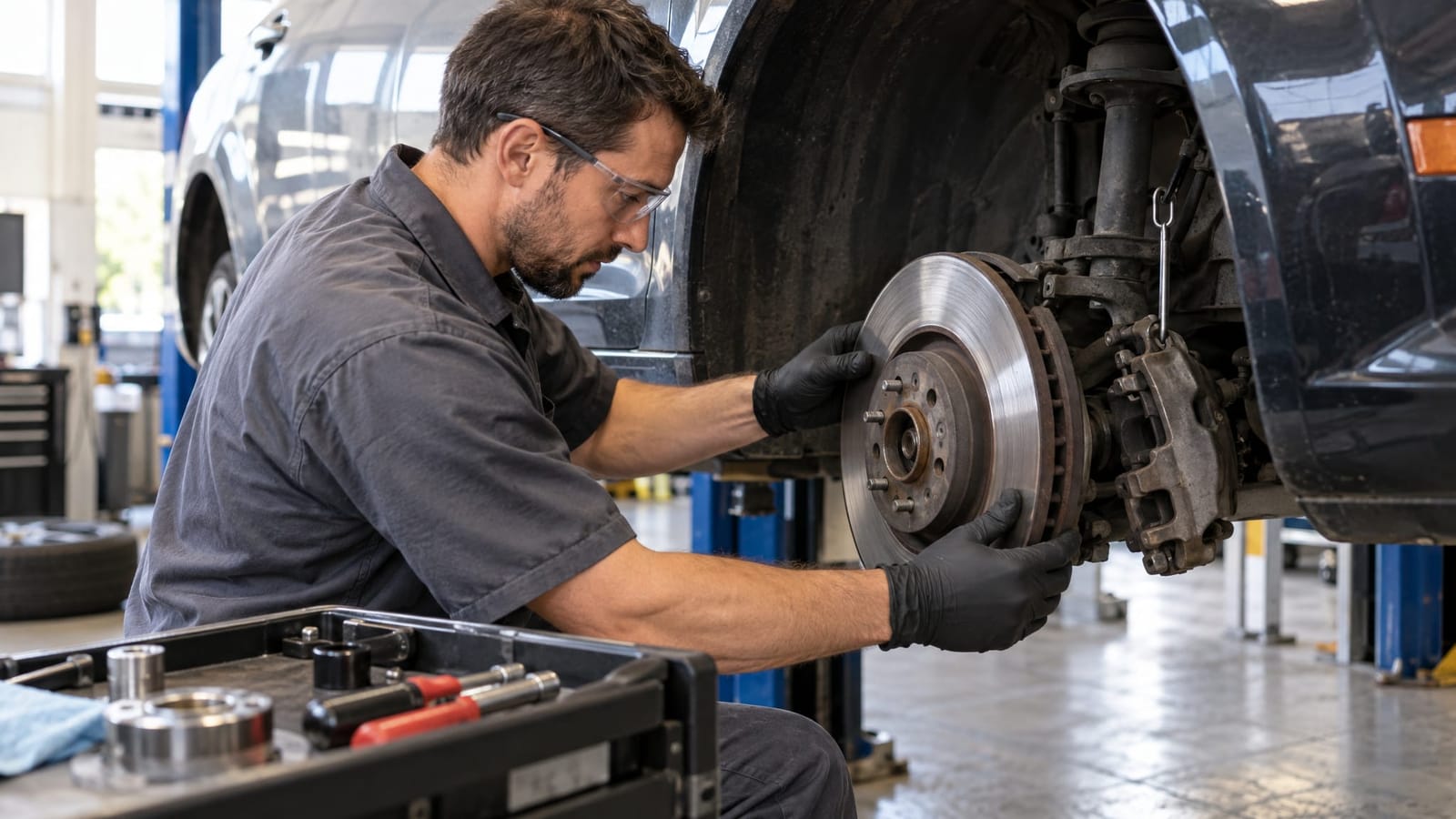
Brake rotors are the large metal discs that sit behind your wheels. When you press the brake pedal, brake pads clamp against the rotors. That friction is what slows your vehicle down. Every time you brake, a small amount of material wears away from both the pads and the rotor surface.
Over time, this wear changes the rotor surface. A smooth, flat rotor gives you even, reliable braking. A rotor that has worn unevenly, developed grooves, or warped from heat can cause noticeable problems. You might feel a vibration or pulsing through the brake pedal. The steering wheel might shimmy when you slow down. You may notice the vehicle pulling slightly to one side during braking.
These symptoms are worth taking seriously. They don't necessarily mean your rotors are beyond help, but they do mean it's time for a professional inspection.
How Rotors Wear Over Time
Normal rotor wear happens gradually. Hard stops, frequent city driving, and heavy loads all accelerate the process. Rotors also warp when they heat up unevenly. This happens most often during high-stress braking, like coming down a steep hill or stopping repeatedly at high speeds. For commercial vehicles that make frequent stops throughout the day, rotor wear can happen faster than average.
Resurfacing: What It Is and When It Makes Sense
Rotor resurfacing, sometimes called machining or turning, is a process where a technician uses a lathe to shave a thin layer off the rotor surface. The goal is to restore a smooth, even contact area. When done correctly, resurfacing can extend the life of a rotor and resolve minor issues like light surface rust or small grooves.
Resurfacing makes sense under specific conditions. The rotor must have enough thickness remaining to safely remove material and still meet the manufacturer's minimum thickness specification. Every rotor has a minimum thickness stamped on it or listed in service data. If resurfacing would bring the rotor below that minimum, the rotor must be replaced instead.
When Resurfacing Is a Reasonable Option
- The rotor has minor surface grooves but is otherwise structurally sound
- There is enough material thickness remaining after machining
- The vehicle is not a high-performance or heavy-load application
- Cost savings are a priority and the rotor condition supports it
Resurfacing is generally less expensive than full replacement. For older vehicles where the owner wants to manage costs carefully, it can be a practical choice when the rotor qualifies.
When Resurfacing Is Not Enough
Not every rotor can be saved by resurfacing. Deep grooves, heat cracks, significant warping, or rotors that are already close to minimum thickness are not good candidates. A trained technician will measure the rotor and assess its condition before recommending resurfacing. If there's any doubt about the rotor's integrity, replacement is the safer path.
Brake Rotor Replacement Service: When New Rotors Are the Right Call
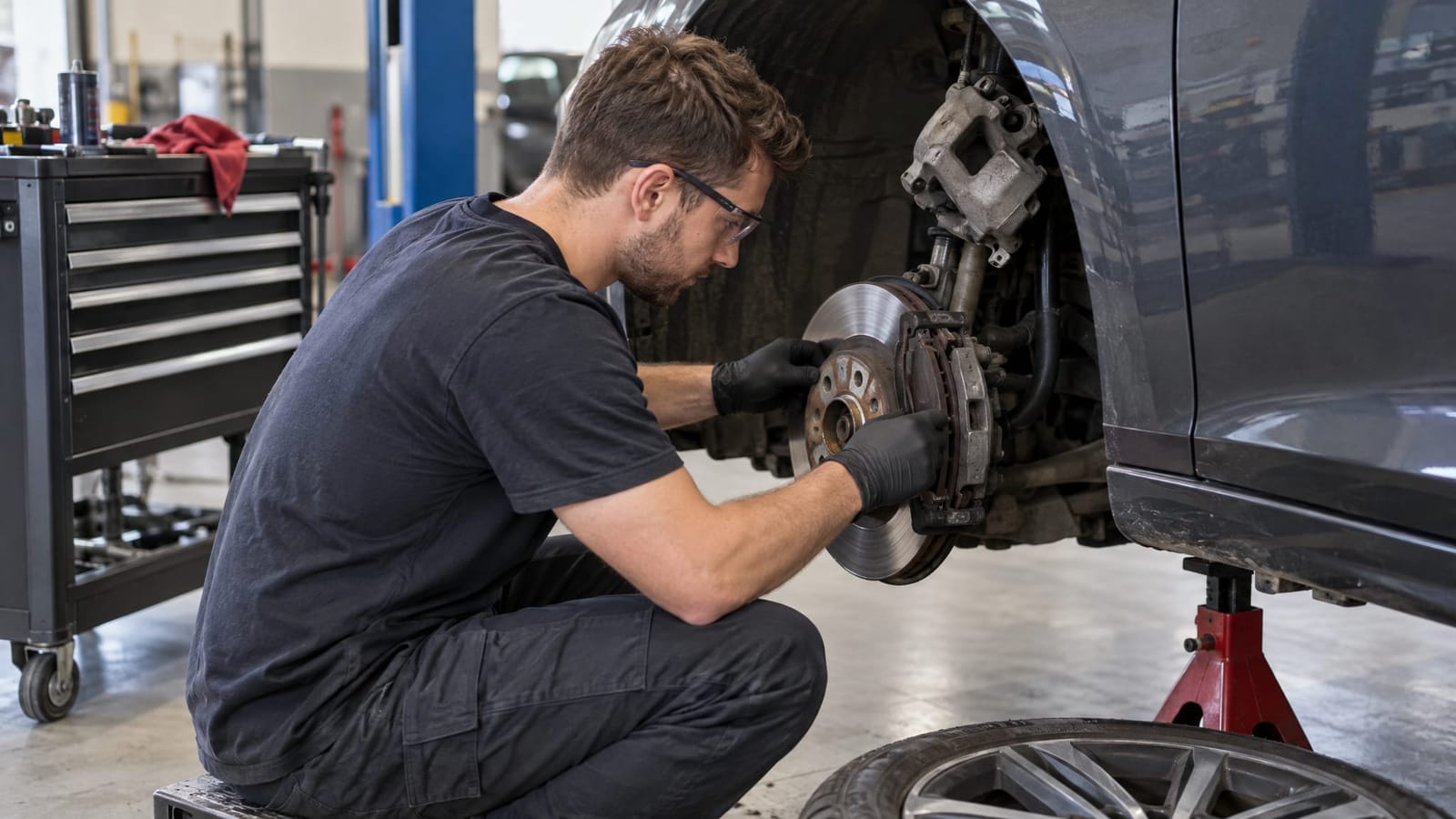
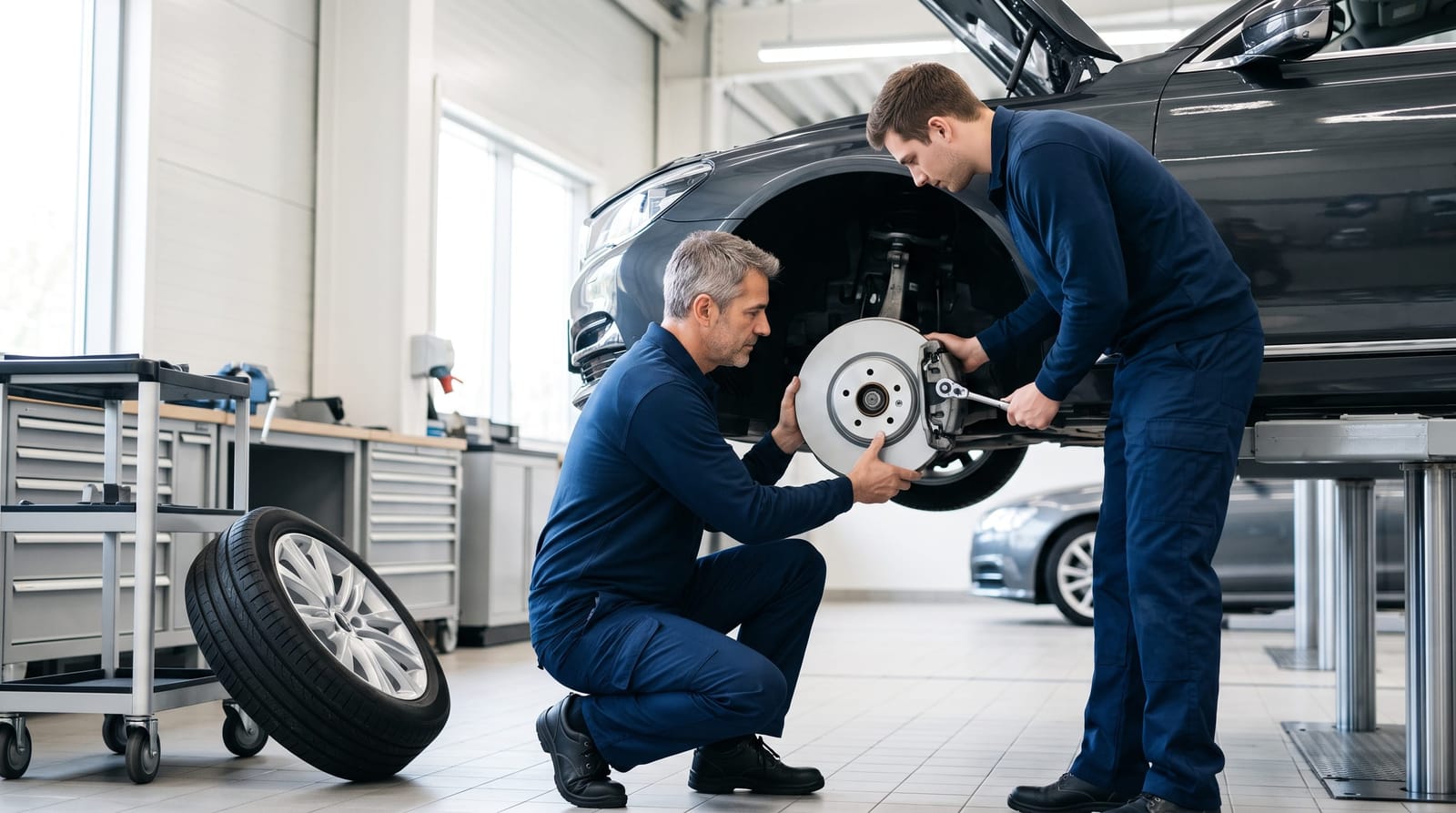
Brake rotor replacement service is the process of removing old rotors and installing new ones. For high-value vehicles, this is often the recommended approach, even when resurfacing might technically be possible. Here's why that recommendation matters.
New rotors provide a fresh, perfectly smooth surface. They meet exact thickness specifications. They have not accumulated heat stress from previous use. On luxury vehicles, premium SUVs, or any car where performance and ride quality are a priority, new rotors deliver more consistent results than resurfaced ones.
There's also a practical consideration: rotors should always be replaced at the same time as brake pads. New pads on worn or uneven rotors don't bed in properly. This can lead to vibration, reduced stopping power, and premature wear on your new pads. Replacing both together ensures the system works as a unit.
Cost Range for Brake Rotor Replacement
A complete brake rotor replacement service, including new rotors, new pads, and labor, typically runs between $200 and $800 per axle. The range depends on your vehicle make and model, the quality of parts used, and local labor rates. For luxury vehicles and European makes, parts costs are often higher due to vehicle-specific components.
That cost range might seem wide. The key is understanding what you're paying for. Quality rotors from reputable manufacturers, installed by a certified technician, are worth the investment. Cheap parts can wear faster and create new problems down the road.
Why This Decision Matters More for High-Value Vehicles
Owners of luxury sedans, premium SUVs, and high-value trucks have more at stake when it comes to brake rotor decisions. These vehicles often have larger, heavier brake components. They may use specific rotor designs, like slotted or cross-drilled rotors, that require exact replacement parts. Installing the wrong parts or cutting corners on service can affect how the vehicle handles and brakes.
For vehicles with advanced driver-assistance systems (ADAS) or electronic stability control, brake performance is integrated with safety technology. Uneven braking caused by worn or improperly serviced rotors can interfere with how these systems respond. This is another reason why quality matters on more sophisticated vehicles.
If you drive a European import, a luxury American vehicle, or a late-model full-size truck, ask your service provider about OEM-equivalent or manufacturer-approved rotor options. The difference in quality is real, and it shows up in how the vehicle feels on the road.
For related information on choosing the right brake components for your vehicle, see our guide on brake pad replacement luxury cars.
Commercial Fleet Vehicles: A Different Set of Priorities
Fleet vehicles have their own considerations when it comes to rotor service. Delivery vans, service trucks, and company vehicles rack up miles quickly. They carry loads, make frequent stops, and don't get the same attention as personal vehicles.
For fleet managers, rotor service is a maintenance planning issue. Catching rotor wear early, through regular inspections, prevents more expensive repairs later. A rotor that's inspected at 40,000 miles might be resurfaced. The same rotor ignored until 70,000 miles might need full replacement, along with caliper service and other repairs that add to the cost.
Building brake inspections into your fleet maintenance schedule is straightforward. It protects your investment in each vehicle and reduces the chance of a service disruption caused by brake failure.
Signs Fleet Vehicles Need Rotor Attention
- Brake pedal pulsing or vibrating under normal stops
- Squealing or grinding sounds during braking
- Vehicle pulling to one side when slowing down
- Visible scoring or grooves on the rotor surface
- Warning lights related to braking or traction control
What to Expect During a Professional Rotor Inspection
A thorough rotor inspection takes more than a visual glance. A qualified technician will remove the wheels to get a proper look at each rotor. They'll measure rotor thickness with a micrometer to check against the manufacturer's minimum specification. They'll look for heat discoloration, cracks, heavy scoring, and signs of uneven wear.
The technician will also check caliper function. A sticking caliper can cause a rotor to wear unevenly, even if the rotor itself was in good shape at the last service. Brake hardware, the small clips and springs that hold pads in place, should be inspected and replaced if needed.
After the inspection, a good service provider will explain what they found in plain terms. You should understand what condition your rotors are in, what the options are, and what the recommended service involves. You shouldn't feel pressured to make a decision on the spot without a clear explanation of why it's needed.
If you're wondering about specific rotor conditions, our detailed post on resurface warped brake rotors luxury car goes deeper into when warping can be corrected versus when replacement is necessary.
Related Topics Worth Exploring
Rotor service connects directly to several other areas of brake maintenance. If you're evaluating your entire brake system, understanding pad selection is just as important as rotor decisions. The right pad material for your vehicle type affects how quickly rotors wear and how the system performs overall. For a closer look at that topic, our guide on brake pad replacement luxury cars covers material options and what works best for different vehicle categories.
We also have detailed posts on brake caliper service, brake fluid maintenance, and brake noise diagnosis, all of which connect to overall rotor health and braking system performance.
Making the Right Call for Your Vehicle
Choosing between rotor resurfacing and brake rotor replacement service comes down to a few clear factors: rotor condition, remaining thickness, vehicle type, and your goals for the vehicle. Resurfacing can be a smart option when the rotor qualifies. Replacement is often the better choice for high-value vehicles, warped rotors, or any situation where rotor thickness is close to the minimum limit.
What matters most is getting an honest inspection from a technician who can show you the measurements and explain the recommendation clearly. At Rancho Express Lube, we approach every brake inspection the same way: straightforward, thorough, and focused on what's right for your vehicle. If you're due for a brake inspection or have noticed any changes in how your vehicle stops, stop by and let us take a look. We're here to help you make a confident, informed decision.