Fleet Vehicle Brake Maintenance: Keeping Service Vehicles Road-Ready
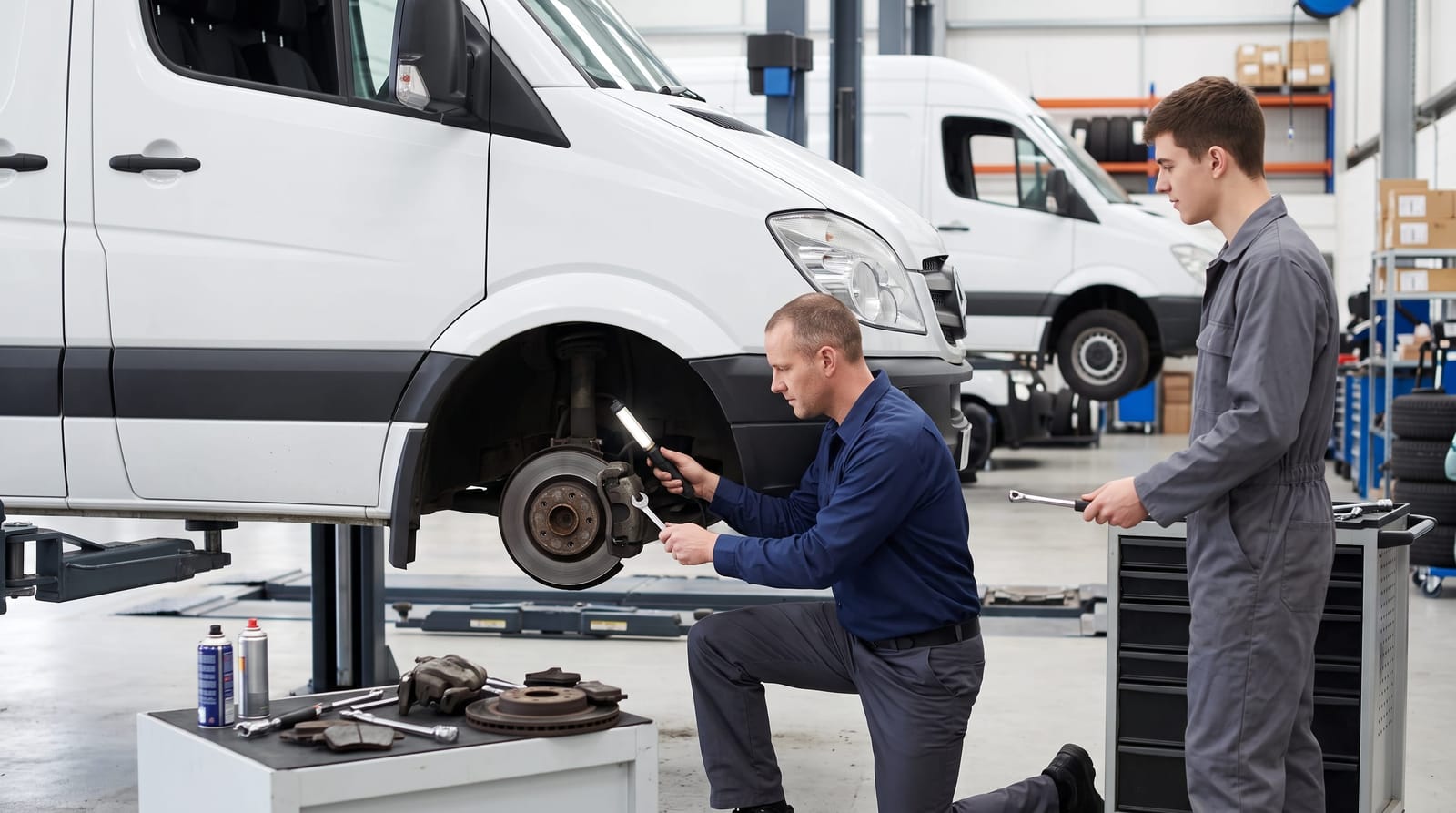
Managing a commercial fleet means keeping every vehicle safe, legal, and reliable: day after day. Brakes are one of the most critical safety systems on any vehicle, and for fleets, they take a beating. Delivery vans, service trucks, and company vehicles stop and start hundreds of times per day. That constant wear adds up fast. As part of a broader approach to professional brake services, fleet brake maintenance service requires its own dedicated strategy. It's not just about fixing something when it breaks: it's about building a system that prevents breakdowns, keeps drivers safe, and controls costs over the long run. This guide covers how fleet managers and business owners can approach brake care the right way.
Why Fleet Brake Maintenance Is Different from Standard Vehicle Service
A personal vehicle might travel 12,000 to 15,000 miles per year. A commercial fleet vehicle can easily cover two to three times that distance, and in more demanding conditions. Stop-and-go city driving, heavy cargo loads, and frequent starts and stops all accelerate brake wear significantly.
According to the Federal Motor Carrier Safety Administration (FMCSA), brake-related issues are among the top causes of commercial vehicle out-of-service violations during roadside inspections. In fact, brake system defects account for roughly 29% of all vehicle violations found during inspections. That's a significant number, and one that can result in fines, delayed deliveries, and vehicles being taken off the road entirely.
Fleet brake maintenance service is also tied directly to liability. If a company vehicle is involved in an accident and maintenance records show neglected brake service, the business can face serious legal exposure. Consistent, documented maintenance isn't just good practice: it's a layer of protection for the business itself.
Commercial vs. Personal Brake Use: Key Differences
- Fleet vehicles often carry heavier loads, which increases stopping distance and brake heat
- Multiple drivers use the same vehicle, making wear patterns less predictable
- Vehicles may run back-to-back shifts with little downtime for inspections
- Regulatory compliance adds another layer of documentation responsibility
Understanding these differences is the first step toward building a maintenance plan that actually works for your operation.
Building a Brake Inspection and Service Schedule That Works
There's no single answer to how often fleet vehicles need brake service: it depends on vehicle type, load weight, driving conditions, and mileage. However, having a clear schedule prevents vehicles from slipping through the cracks during busy periods.
A practical starting point for most light-duty fleet vehicles is a brake inspection every 10,000 to 12,000 miles or every six months, whichever comes first. For heavier vehicles or those operating in urban environments with frequent stops, that interval should be shorter: closer to every 6,000 to 8,000 miles.
You can find more specific guidance on timing in our overview of fleet brake inspection schedules, which breaks down recommendations by vehicle class and use pattern.
What a Fleet Brake Inspection Should Cover
- Brake pad thickness: Most pads should be replaced when they reach 2-3mm of remaining material
- Rotor condition: Check for scoring, warping, and minimum thickness specs
- Brake fluid level and quality: Fluid degrades over time and absorbs moisture, which reduces braking performance
- Brake lines and hoses: Look for cracks, leaks, or signs of wear
- Caliper function: Seized calipers cause uneven wear and can lead to pulling or reduced stopping power
- Parking brake operation: Especially important for vehicles that park on inclines or carry cargo
Setting Up a Service Rotation System
For fleets with five or more vehicles, a rotating inspection calendar prevents situations where multiple vehicles need service at the same time. Assign each vehicle a service month based on when it was last serviced, spread across the year. Track this in a simple spreadsheet or fleet management software so nothing gets overlooked.
Managing Brake Service Costs Across a Fleet
Brake repairs are one of the more significant maintenance expenses in fleet management. The good news is that preventive maintenance consistently costs less than reactive repairs. A brake pad replacement at the right time, before the pads wear completely, typically costs a fraction of what rotor replacement or caliper repair costs when service is delayed too long.
Studies in the fleet management industry suggest that every dollar spent on preventive maintenance saves approximately four to five dollars in repair costs down the road. That's a meaningful return for any business operating multiple vehicles.
Cost-Saving Strategies for Fleet Brake Service
- Bundle inspections with other scheduled service: Combining brake inspections with oil changes or tire rotations reduces labor costs and vehicle downtime
- Use quality replacement parts: Cheaper brake components tend to wear faster, leading to more frequent service. Mid-grade or OEM-equivalent parts often provide the best long-term value
- Track wear data by vehicle: If one vehicle consistently goes through pads faster than others, there may be a driving behavior issue or mechanical problem worth investigating
- Negotiate fleet service agreements: Many automotive service providers offer preferred pricing or priority scheduling for fleet accounts
Quality parts matter, especially across a fleet where brake pad replacement on multiple vehicles adds up quickly. Choosing reliable components from the start reduces total service frequency and keeps costs predictable. Our guide on brake pad replacement for high-value vehicles explains how part quality affects long-term performance and cost.
DOT Compliance and Safety Regulations for Commercial Fleets
Commercial vehicles operating in California, and across the country, are subject to federal and state safety regulations that include specific requirements for brake system condition. The Department of Transportation (DOT) mandates that brakes must meet minimum performance standards at all times. Failing to meet these standards during a roadside inspection can result in an out-of-service order, which means the vehicle cannot be driven until the issue is corrected.
For California fleets specifically, the California Highway Patrol (CHP) conducts commercial vehicle inspections and has the authority to pull vehicles that don't meet brake performance requirements. A single out-of-service event costs far more than the inspection or repair that would have prevented it, in lost revenue, driver downtime, and potential fines.
Key Compliance Checkpoints
- Brake adjustment must meet FMCSA standards for stroke and pushrod travel on air brake systems
- Brake lining and pad thickness must meet minimums (typically no less than 1/4 inch for most commercial vehicles)
- All brakes must function simultaneously and provide balanced stopping
- Documentation of inspections and repairs must be available and up to date
Keeping Records That Hold Up
One of the most overlooked parts of fleet brake compliance is documentation. Every inspection and every repair should be recorded: date, mileage, what was inspected, what was replaced, and who performed the work. If a vehicle is ever involved in an incident or a regulatory audit, having complete records demonstrates that the company took maintenance seriously.
Many fleet managers now use digital maintenance platforms that generate automatic service reminders and store records securely. Even a simple spreadsheet with consistent entries is far better than relying on memory or paper work orders.
Driver Behavior and Its Impact on Fleet Brake Life
Maintenance schedules are only part of the equation. Driver habits have a direct and measurable impact on how quickly brakes wear. Hard braking, riding the brakes downhill, and carrying excessive loads all shorten brake life significantly.
Research from fleet safety organizations suggests that aggressive braking can reduce brake pad life by 30 to 40 percent compared to smooth, gradual stopping patterns. That's a substantial difference in both safety and cost.
Simple Driver Training Points That Make a Difference
- Maintain safe following distance: More space ahead means more time to brake gradually
- Avoid overloading vehicles: Exceeding payload limits increases brake stress on every stop
- Use engine braking on hills: Downshifting reduces the load on brake components during descents
- Pre-trip brake checks: Drivers should report any unusual sounds, vibrations, or pulling before starting their route
A brief driver orientation on brake-friendly habits, combined with a pre-trip checklist, can extend brake life fleet-wide and catch developing problems before they become costly repairs.
Choosing the Right Service Partner for Fleet Brake Maintenance
Not every auto shop is set up to handle fleet accounts efficiently. When evaluating a service provider for fleet brake maintenance service, look for a few key qualities: consistent availability, familiarity with commercial vehicle brake systems, clear communication about what was found and what was done, and the ability to handle multiple vehicles without long delays.
ASE-certified technicians provide an important quality baseline. ASE certification means a technician has passed industry-standard tests in their area of expertise, and for brake service specifically, that matters. Brake systems are safety-critical, and the work should be done by someone who knows them thoroughly.
For rotor-related issues, it's also worth understanding your options. Our article on brake rotor resurfacing vs. replacement covers when each approach makes sense: important knowledge when you're managing service decisions across multiple vehicles.
Fleet accounts also benefit from a shop that can provide quick turnaround, clear invoicing per vehicle, and records that make compliance documentation easier. A service partner who understands the operational demands of a fleet is worth more than the lowest per-job price.
Related Topics Worth Exploring
If you're building out a complete fleet brake maintenance program, there are a few related areas that tie directly into this topic. Understanding how often fleet vehicles should have brake inspections gives you a clearer framework for scheduling across different vehicle types and use cases. Additionally, brake pad and rotor decisions, covered in our tier-1 guides on brake pad replacement and rotor service, apply directly to fleet decisions around part selection and cost management.
Keep Your Fleet Moving Safely and Efficiently
Fleet brake maintenance service isn't a single task: it's an ongoing system built around consistent inspections, reliable parts, smart scheduling, and clear documentation. Businesses that invest in a structured approach spend less on emergency repairs, keep their drivers safer, and avoid the operational disruption of unplanned downtime.
At Rancho Express Lube in Rancho Cucamonga, we work with fleet managers and business owners to create practical maintenance plans that fit real-world schedules. Whether you're managing five vehicles or fifty, our ASE-certified technicians are here to help you stay on top of brake service before small issues become big problems. Contact us today to discuss a fleet service plan that works for your operation.