How to Check Tire Tread Before a Road Trip: The Penny Test and Beyond
Planning a road trip from the Inland Empire this summer? Before you load up the car and hit the freeway, one of the smartest things you can do is check tire tread before your road trip. Tires are your vehicle's only contact with the road, and worn tread can seriously affect your ability to stop safely, especially in rain or on hot pavement. This guide walks you through the most reliable methods for checking tread depth at home, explains what the numbers mean, and helps you decide when it's time for a professional look before you go.
Tip 1: Use the Penny Test to Spot Dangerously Worn Tires
The penny test is the most well-known method for a quick tread check, and it only takes about 30 seconds per tire. Here's exactly how to do it:
- Take a standard U.S. penny and hold it with Lincoln's head pointing downward.
- Insert the penny into one of your tire's tread grooves: the deep channels that run around the tire.
- Look at how much of Lincoln's head is covered by the tread.
- If you can see the top of Lincoln's head (above the hairline), your tread depth is at or below 2/32 of an inch: the minimum legal threshold in most states.
- Repeat this in at least three different spots on each tire, including the outer edges and center, since tires don't always wear evenly.
At 2/32", a tire has very little grip left. Stopping distances increase significantly, and the risk of hydroplaning on wet roads rises sharply. Think of this as the "replace now" signal, not a "keep an eye on it" situation.
Tip 2: The Quarter Test Gives You an Earlier Warning
The penny test tells you when tires are critically worn. The quarter test gives you a heads-up earlier, which is especially useful before a long trip where you won't want to deal with tire problems mid-journey.
- Take a U.S. quarter and hold it with Washington's head pointing downward.
- Insert it into the same tread grooves you checked with the penny.
- If the tread covers the top of Washington's head, you have at least 4/32 of an inch of depth remaining.
- If Washington's head is fully visible, you're approaching the wear zone and should plan for replacement soon.
Most tire safety experts recommend replacing tires before they reach 2/32", and the 4/32" mark is widely considered the safer threshold for highway driving, particularly in wet conditions. On a road trip that takes you through rain or mountain terrain, that extra tread makes a real difference in handling and stopping performance.
Tip 3: Read the Built-In Treadwear Indicator Bars
Every modern tire comes with built-in treadwear indicators: small raised rubber bars molded into the bottom of the tread grooves. You don't need a coin to use them. Here's what to look for:
- Look for narrow rubber ridges running perpendicular across the grooves between the tread blocks.
- When the surface of your tire tread is level with, or even with, those bars, your tire is at 2/32 of an inch and should be replaced.
- If those bars are barely visible, you still have usable tread, but it's worth monitoring closely.
- Check multiple locations around the tire, since uneven wear can mean one section hits the indicator while another still has depth.
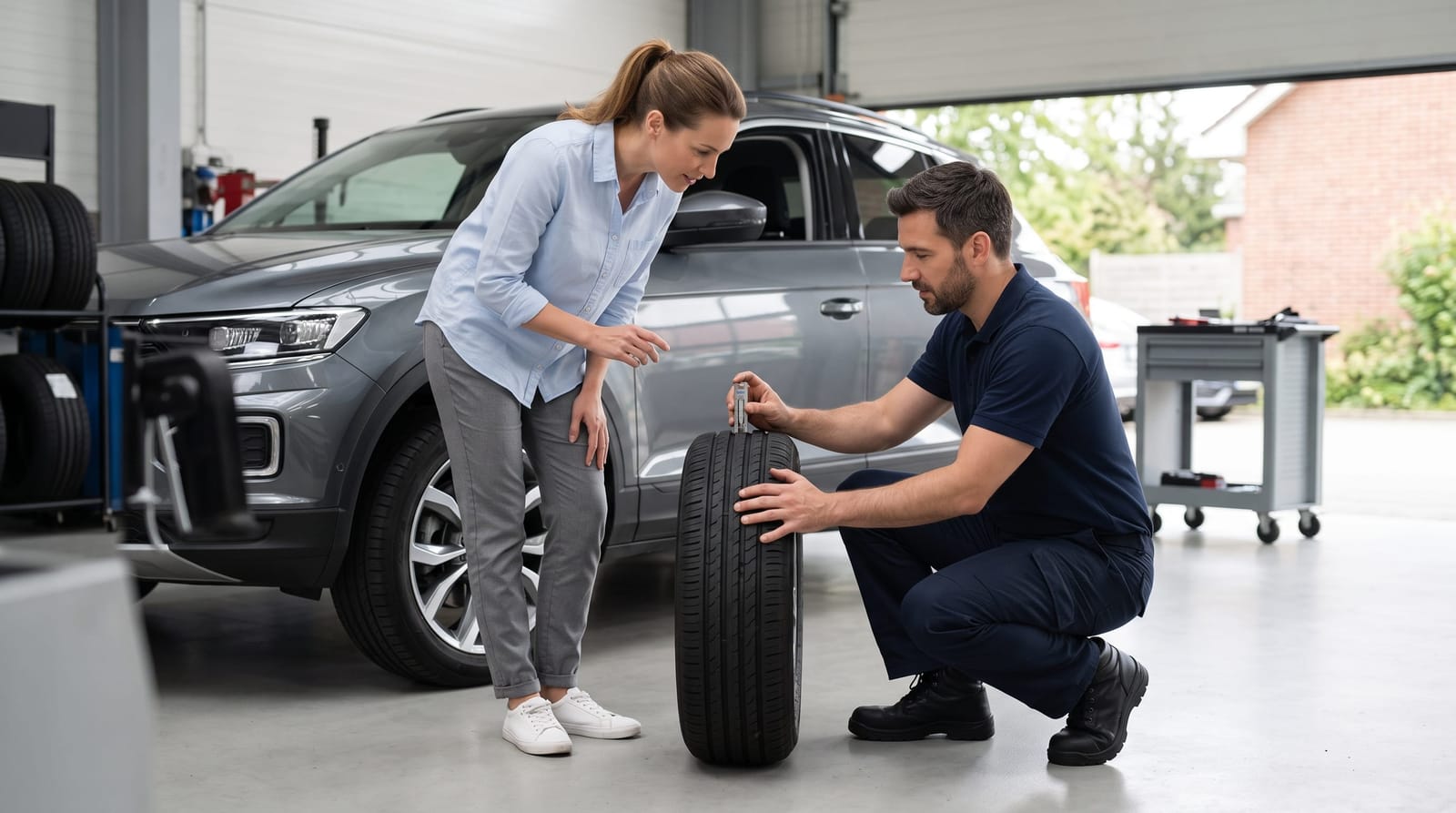
These indicator bars are especially useful for a fast visual check in a parking lot or driveway. They won't give you a precise measurement, but they'll confirm whether a tire has clearly reached its limit. For anything more precise, a physical tread depth gauge, available at most auto parts stores for just a few dollars, gives you an exact reading in 32nds of an inch.
Tip 4: Understand What Safe Tread Depth Actually Means for Different Conditions
Not all driving situations put the same demands on your tires. Here's a practical breakdown of how tread depth affects performance in real-world conditions:
- Dry highway driving: Tires at 4/32" can still perform reasonably well on dry pavement. Stopping distances increase gradually as tread wears, but dry surfaces are more forgiving.
- Wet roads and rain: Tread depth matters most here. Grooves channel water away from the contact patch so the tire can grip the road. At 2/32", hydroplaning risk increases significantly, especially at freeway speeds. Experts consistently recommend at least 4/32" for safe wet-weather driving.
- High-speed highway driving: Speed amplifies every handling issue. A tire that seems acceptable at 35 mph can behave very differently at 70 mph on a worn tread surface.
- Extended road trips: More miles mean more heat buildup in the tire. Starting a long trip on tires already close to wear limits increases the chances of a problem developing far from home.
For Inland Empire drivers heading out on summer road trips, the combination of high temperatures and worn tires is worth taking seriously. Prolonged heat, especially on hot Southern California asphalt, increases tire pressure and puts added stress on the tire's internal structure. While heat alone doesn't cause blowouts in well-maintained tires, driving on already-worn or underinflated tires in extreme summer temperatures does increase the risk of failure. The general guidance from tire safety experts is straightforward: start any significant trip on tires with adequate tread and properly inflated to the manufacturer's recommended pressure.
Tip 5: Don't Skip the Sidewalls, Inflation, and Professional Eyes
Tread depth is critical, but it's not the whole picture. Before a road trip, take a few extra minutes to do a full visual inspection:
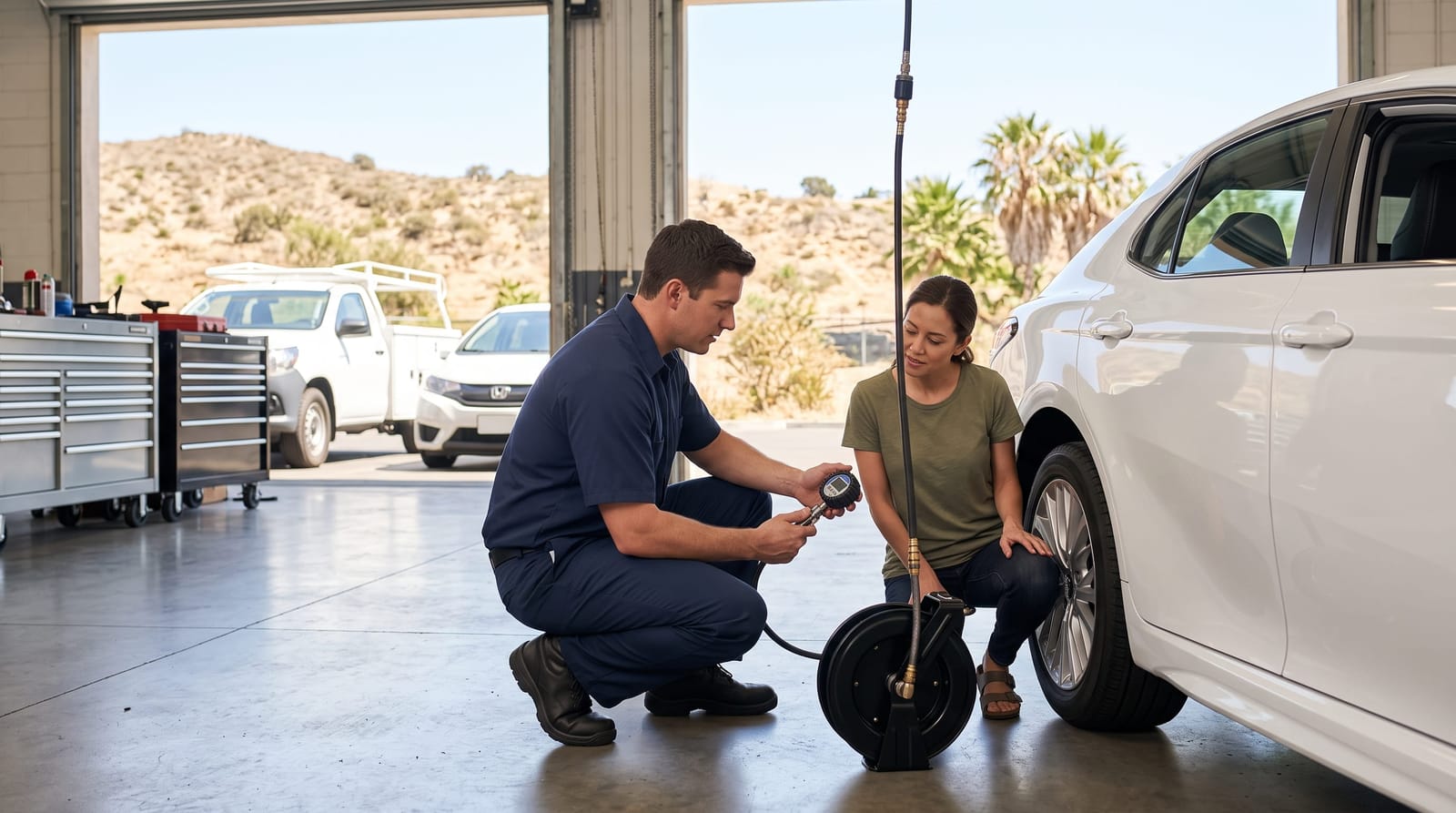
- Check tire pressure: Use a gauge to confirm all four tires (plus your spare) are inflated to the PSI listed on the sticker inside your driver's door, not the number printed on the tire itself.
- Inspect sidewalls: Look for bulges, bubbles, deep cracks, or cuts. A bulge in the sidewall can indicate internal damage and is a reason to have the tire inspected before any long drive.
- Look for uneven wear: Heavy wear on one edge but not the other can signal an alignment or inflation issue worth addressing.
- Check the spare: Many drivers forget their spare until they need it. Make sure it has adequate pressure and is in usable condition.
If anything looks off, or if you're simply not sure what you're looking at, a quick professional check before you leave is always a smart move. A mechanic road trip check in the Inland Empire can catch issues that aren't obvious to the untrained eye and give you real peace of mind before you put highway miles on your vehicle.
Frequently Asked Questions
How often should I check my tire tread depth?
A visual check every month is a reasonable habit, and a more thorough measurement check is a good idea before any road trip or long drive. If your tires are approaching 40,000-50,000 miles, checking more frequently is wise since wear accelerates as tread gets shallower.
What is the minimum safe tread depth for highway driving?
The legal minimum in most states is 2/32 of an inch, but most tire safety experts recommend replacing tires at or before 4/32", especially if you drive on wet roads or at highway speeds. Think of 2/32" as the absolute floor, not the target.
Does Southern California heat make worn tires more dangerous?
High ambient temperatures and hot road surfaces do increase the stress on tires, particularly those already worn or underinflated. Starting a summer road trip on tires in good condition, with adequate tread and proper pressure, is the simplest way to reduce that risk.
Can I check all four tires with a coin test at home?
Yes, and it only takes a few minutes. Check multiple spots on each tire, center, inner edge, and outer edge, since uneven wear patterns are common and one section of a tire can be significantly more worn than another. If results are inconsistent across spots, it's worth having the tire professionally inspected.
Ready to Hit the Road with Confidence?
Knowing how to check tire tread before a road trip is one of the most practical things any driver can do, and the penny test, quarter test, and treadwear indicator bars give you three different ways to do it at home in minutes. For summer trips in the Inland Empire, starting with tires that have at least 4/32" of tread and proper inflation keeps you safer on the highway and in unexpected rain. If you'd like a second set of eyes before your next trip, the team at Rancho Express Lube is happy to do a quick tire inspection as part of your pre-trip service. A few minutes now can make a long drive a lot more worry-free.