What Suspension Maintenance Do Work Trucks Need?
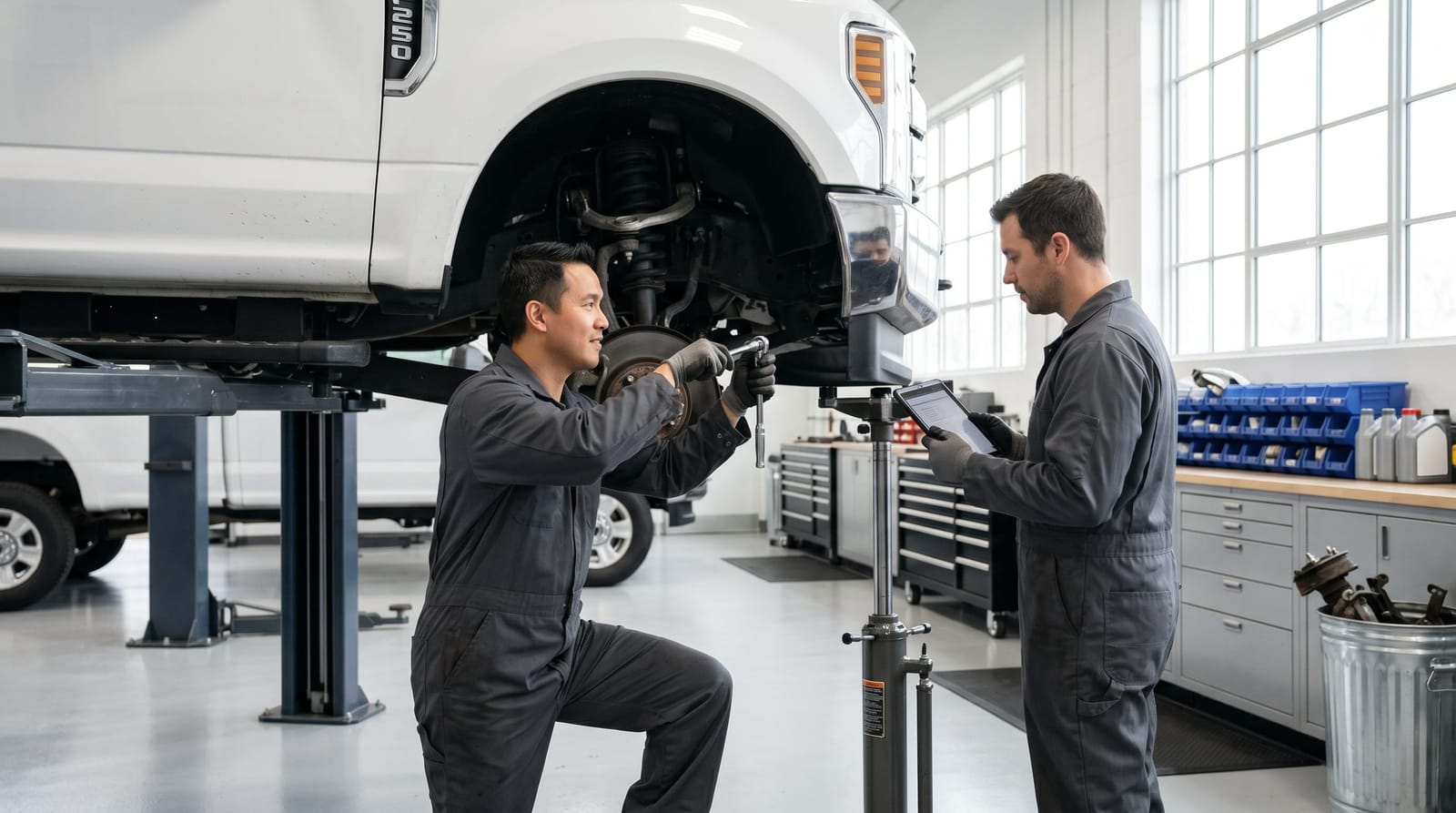
Work trucks carry heavy loads, log serious miles, and take on demanding conditions that passenger vehicles never see. All of that wear adds up fast on the suspension system: the network of components that keeps your truck stable, level, and comfortable on the road. If you manage a fleet or rely on a work truck for your livelihood, understanding what suspension maintenance looks like is essential to keeping your vehicle safe and dependable. This post breaks down the key service intervals, what to watch for, and how to stay ahead of problems before they become costly repairs.
Why Work Truck Suspensions Wear Faster Than Passenger Vehicles
A standard passenger car might carry two or three people and a few bags of groceries. A work truck, on the other hand, may regularly haul thousands of pounds of equipment, materials, or towing loads. That extra stress is constant, and it accelerates wear on every suspension component, from the shocks and springs to the bushings and steering links.
According to industry service guidelines, heavy-duty and work truck suspensions should be inspected every 12,000 to 15,000 miles, or at least once a year, whichever comes first. Trucks that frequently tow trailers or carry maximum payload loads may need that interval shortened. Compare that to a typical light-duty passenger vehicle, which might go 25,000 to 50,000 miles between suspension checks, and it becomes clear that work truck suspension maintenance operates on its own schedule.
The reason is simple: more weight means more stress on the shocks, springs, and all the hardware that connects your wheels to the frame. When those components start to wear unevenly, you may notice the truck pulling to one side, a rougher-than-usual ride, or uneven tire wear that shortens tire life faster than expected. Staying on top of work truck suspension maintenance helps you avoid those symptoms before they affect your safety or your bottom line.
Key Components to Inspect Regularly
Work truck suspension maintenance isn't a single task: it's a series of inspections across several connected systems. Here's what a thorough service check should include:
Shocks and Struts
Shocks and struts are responsible for absorbing road impact and keeping your tires in proper contact with the ground. On work trucks that carry heavy loads regularly, shocks can wear out in as few as 30,000 to 50,000 miles, compared to 75,000 miles or more on a lightly loaded vehicle. Worn shocks don't always fail dramatically: they often just gradually reduce your ability to control the truck under braking or in turns. During an inspection, a technician will check for leaks, physical damage, and whether the shocks are still providing adequate resistance.
Springs
Springs bear the weight of your truck and its cargo. Work trucks typically use heavy-duty leaf springs or coil springs rated for higher loads. Over time, springs can sag or crack, especially if the truck is consistently loaded at or near maximum capacity. A sagging spring often shows up as reduced ride height: the back of the truck sits noticeably lower than it should. Checking ride height is a standard part of any professional work truck suspension maintenance visit.
Bushings and Joints
Rubber bushings and ball joints absorb vibration and allow controlled movement between suspension parts. On work trucks, these components endure significant stress and tend to wear faster than on passenger vehicles. Cracked or collapsed bushings often lead to clunking sounds, imprecise steering, or a vague, loose feeling when you're maneuvering the truck. Technicians inspect these during suspension service and replace them before they create bigger issues.
Steering Links and Tie Rods
Steering links connect your steering wheel's input to your wheels. On a loaded work truck, loose or worn tie rods translate into unpredictable handling: something no driver wants when carrying a heavy payload at highway speeds. Inspecting and servicing these components is a standard part of comprehensive work truck suspension maintenance.
The Connection Between Suspension and Wheel Alignment
One of the most overlooked aspects of work truck suspension maintenance is wheel alignment. When suspension components wear or shift, they often pull your wheels out of proper alignment without any single obvious event causing it. The result is uneven tire wear, reduced fuel efficiency, and a truck that drifts rather than tracking straight.
For work trucks, alignment should be checked at least once a year, and more frequently if the vehicle is consistently loaded near its maximum payload or if it's driven on rough roads. Studies on commercial vehicle operations suggest that proper alignment can extend tire life by up to 25%, which matters when commercial-grade tires represent a significant operating cost. Keeping alignment in check is one of the most cost-effective parts of a complete work truck suspension maintenance plan.
If your truck has recently had suspension components replaced, alignment should always be checked immediately after: new parts can shift your existing alignment settings and undo the benefit of the repair if it's not corrected.
Maintenance Scheduling for Work Trucks and Commercial Fleets
Managing one work truck is straightforward enough, but fleet operators need a systematic approach to work truck suspension maintenance that prevents small issues from sidelining vehicles unexpectedly. A basic maintenance schedule might look like this:
- Every 5,000 to 7,500 miles: Visual inspection of shocks, springs, and steering components during oil changes
- Every 12,000 to 15,000 miles: Full suspension inspection including ride height check, bushing condition, ball joints, and tie rods
- Annually: Wheel alignment check and adjustment
- As needed: After any significant impact, heavy overloading event, or if handling changes are noticed
Pairing suspension service intervals with routine oil changes and fluid service is a practical way to stay consistent. When a truck comes in for scheduled maintenance, a technician can do a quick visual check of accessible suspension components without adding significant time to the visit. This kind of layered approach is what separates a proactive fleet maintenance program from a reactive one.
For fleet managers, keeping detailed service records for each vehicle also helps identify patterns, if one truck consistently needs alignment adjustments more than others, that might point to a route, loading practice, or component issue worth investigating.
Signs That Your Work Truck Suspension Needs Attention Now
Between scheduled service intervals, there are several indicators that suggest a suspension inspection shouldn't wait:
- The truck drifts or pulls to one side while driving straight
- You notice a bouncy, unsettled ride even on relatively smooth roads
- There's a clunking or knocking sound when going over bumps
- Tire wear is uneven across the tread, wearing more on one side or in one spot
- The back of the truck sits visibly lower than normal, even without a load
- Steering feels loose, vague, or requires more effort than usual
None of these symptoms necessarily mean something has completely failed, but they all indicate that suspension components deserve a closer look sooner rather than later. Catching wear early typically means simpler, less expensive corrections compared to waiting until a problem becomes obvious or affects other systems.
Frequently Asked Questions
How often should I have my work truck's suspension inspected?
For most work trucks, a full suspension inspection every 12,000 to 15,000 miles, or once a year, is the standard recommendation. Trucks that regularly carry heavy loads, tow trailers, or travel on rough roads should lean toward the shorter end of that range. Visual checks during routine oil changes are also a good habit.
Does carrying heavy loads really shorten suspension life that much?
Yes, noticeably. Components like shocks, springs, and bushings are rated for specific load ranges, and consistently operating near or at maximum payload compresses their service life. A shock that might last 75,000 miles on a lightly used vehicle could require replacement in 30,000 to 50,000 miles on a work truck with regular heavy loads. That's a significant difference, and it's why work truck suspension maintenance operates on a different schedule than passenger vehicle service.
Is wheel alignment really part of suspension maintenance for work trucks?
Absolutely. Alignment and suspension health are closely connected. As suspension components wear, they often shift the alignment of your wheels, leading to uneven tire wear and handling changes. For work trucks, checking alignment annually, and after any major suspension service, is an important part of a complete maintenance plan. Proper alignment also protects your tire investment, which is a real cost factor for commercial operators.
Can I keep using a work truck if I notice a suspension issue?
It depends on the issue, but it's generally a good idea to have it looked at promptly. Some symptoms, like mild tire wear, allow a short window before the next scheduled service. Others, like a clunking noise, visible fluid leaking from a shock, or noticeably poor handling, should be addressed as soon as possible since they can affect your ability to control the vehicle safely, particularly under load.
Keeping Your Work Truck Ready for the Job
Work truck suspension maintenance isn't complicated, but it does require consistency. Regular inspections, attention to alignment, and awareness of the signs that components are wearing out are the foundation of a reliable maintenance plan. Whether you're managing a single truck or a multi-vehicle fleet, staying on a scheduled service routine protects your equipment, your cargo, and the people behind the wheel. For a broader look at how suspension service fits into overall vehicle health, explore our complete suspension service guide for professional repair and maintenance recommendations tailored to high-use vehicles.