High Mileage Vehicle Maintenance: Keeping Your Car Running Past 100,000 Miles
Crossing the 100,000-mile mark is a milestone worth celebrating. It means your vehicle has served you well, and with the right care, it can keep doing exactly that. High mileage vehicle maintenance in Rancho Cucamonga is a topic that comes up often for drivers who own reliable Toyotas, Hondas, and domestic vehicles they simply don't want to give up. As part of our broader seasonal car maintenance guide for Inland Empire drivers, this post focuses specifically on what changes once your odometer climbs past six figures. We'll walk through the systems that need extra attention, the products that can help, and why staying ahead of routine service is almost always less expensive than facing a major repair, or shopping for a replacement vehicle.
Why High Mileage Vehicles Need a Different Approach
A car with 100,000 miles on it isn't the same as one with 30,000. That's not a criticism: it's just physics. Components wear over time. Seals and gaskets that were once pliable can become brittle. Fluids that were changed regularly may have left behind deposits. Metal parts that have expanded and contracted through years of heat cycles develop slight wear patterns.
None of this means your vehicle is failing. It means your maintenance approach needs to evolve alongside your car's age and mileage. The good news is that most high mileage vehicles respond very well to attentive care. Many owners of Camrys, Civics, F-150s, and Corollas drive these vehicles well past 200,000 miles without major engine or transmission issues, because they stayed consistent with maintenance.
The Inland Empire's driving conditions add another layer to consider. Heat, stop-and-go traffic, and highway miles all create different types of wear. If your vehicle spends time on the 210, the 15, or surface streets through Rancho Cucamonga, understanding what your car needs at high mileage is genuinely useful information.
Oil Changes and Fluids: The Foundation Still Matters
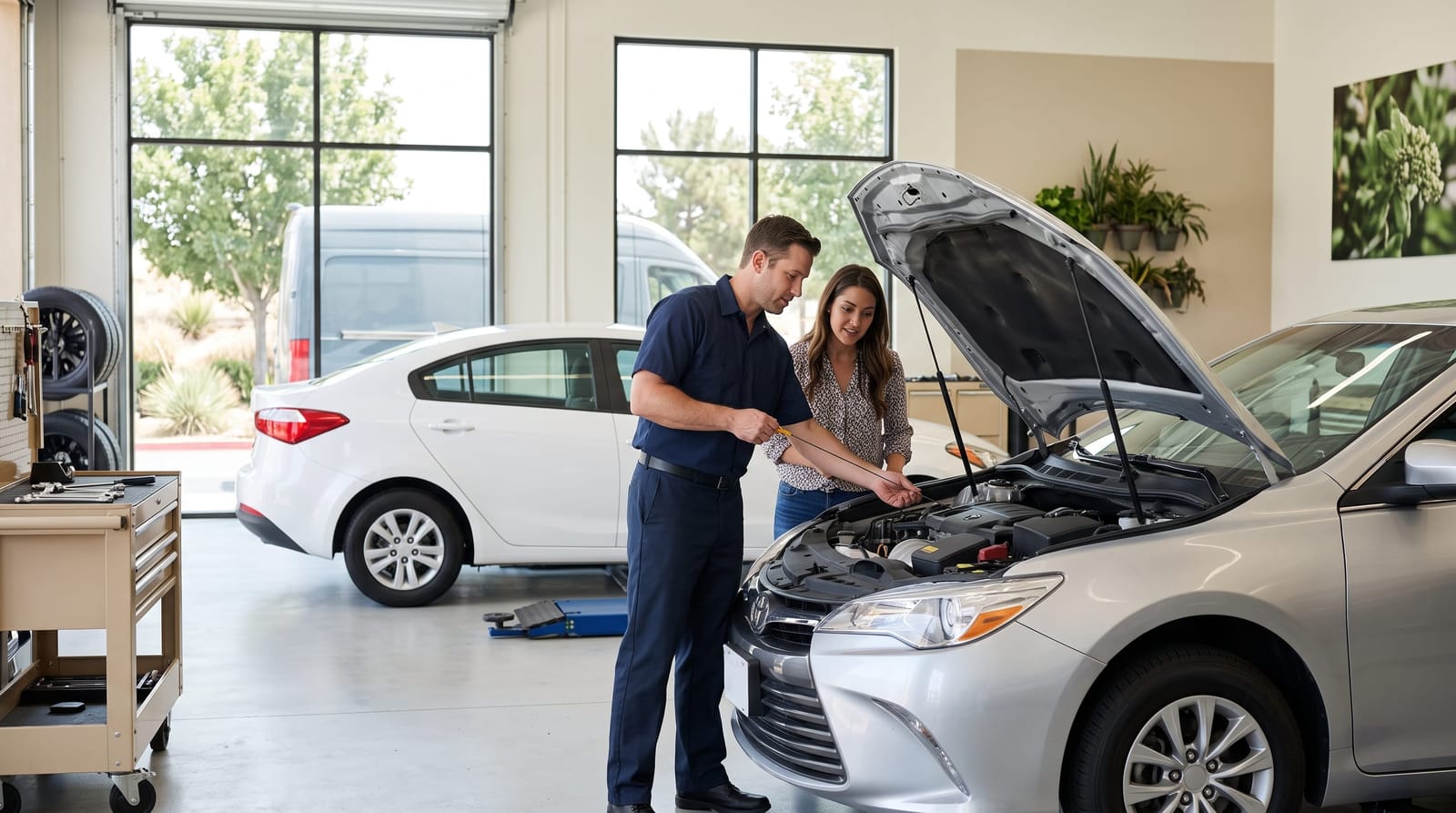
Oil changes remain the single most important maintenance task at any mileage, but the type of oil you use starts to matter more once you pass 75,000 to 100,000 miles. High mileage synthetic oil is formulated with seal conditioners and additives that help aging gaskets and seals retain their flexibility. This can reduce minor oil seepage that becomes more common in older engines.
Why High Mileage Oil Is Worth Considering
Standard oil does the job of lubricating your engine. High mileage oil does that, and also addresses some of the specific challenges older engines face. It typically contains additives that help reduce wear on engine components that have already seen significant use. For a deeper look at when this switch makes sense, when to switch to high mileage oil covers the timing and reasoning in detail.
Other Fluids to Watch Closely
- Transmission fluid: This is critical between 30,000 and 60,000 miles and again at high mileage intervals. Old transmission fluid breaks down and loses its ability to protect gears and clutch packs.
- Coolant: Coolant degrades over time and can become acidic, which damages hoses and the radiator. Flushing and replacing it on schedule keeps your cooling system working properly.
- Brake fluid: Absorbs moisture over time. Contaminated brake fluid can reduce braking performance and cause internal corrosion in brake components.
- Power steering fluid: On vehicles with hydraulic steering, this fluid can degrade and cause noise or stiffness in the steering system.
At high mileage, a full fluid inspection at every oil change is a smart habit. Small fluid issues caught early are far simpler to address than the problems they can cause if ignored.
Timing Belt, Water Pump, and Cooling System Service
If your vehicle has a timing belt rather than a timing chain, this is one of the most important service items to keep track of. Timing belts have a set replacement interval: commonly between 60,000 and 105,000 miles, depending on the manufacturer. When a timing belt fails, it often causes significant engine damage. Replacing it on schedule is straightforward and far less expensive than the alternative.
Replacing the Water Pump at the Same Time
Many shops recommend replacing the water pump when the timing belt is serviced. The reason is simple: accessing the water pump requires removing much of the same hardware needed for the timing belt. Doing both at once saves significant labor cost compared to doing them separately. Since water pumps on high mileage vehicles are also at higher risk of failure, combining these services just makes practical sense.
Hoses, Belts, and Thermostat
Coolant hoses, serpentine belts, and the thermostat should all be inspected carefully at high mileage. Hoses can develop soft spots or small cracks that aren't visible from the outside. A serpentine belt that fails leaves your alternator, power steering, and water pump without drive: leaving you stranded. These are relatively inexpensive parts that are worth replacing preventively rather than reactively.
Spark Plugs, Ignition, and Fuel System Health
Spark plugs are often overlooked until a vehicle starts running rough or gets worse fuel economy. Extended-life iridium or platinum plugs can last up to 100,000 miles, but that doesn't mean they're performing at their best the entire time. By 80,000 to 100,000 miles, most plugs benefit from replacement even if the vehicle isn't showing obvious symptoms.
Signs Your Ignition System Needs Attention
- Rough idle or occasional hesitation on acceleration
- Slightly reduced fuel economy
- Check engine light with a misfire code
- Hard starts, especially in hot weather
Ignition coils and spark plug wires (on vehicles that use them) should also be inspected. Weak ignition components cause misfires that waste fuel and put extra strain on your catalytic converter.
Fuel System Cleaning
Over time, carbon deposits build up in fuel injectors and on intake valves. This is especially common in direct-injection engines. A professional fuel system cleaning can restore injector performance and help the engine run more efficiently. It's not something that needs to happen at every service, but it's worth considering as part of a broader high mileage service plan.
Suspension, Steering, and Brake Wear at High Mileage
Suspension components wear gradually, which makes the change easy to miss. Shocks and struts that have absorbed road impacts for 100,000 miles won't stop working all at once: they simply become less effective. You might notice your vehicle taking longer to settle after a bump, or feeling slightly less controlled during lane changes.
What to Inspect on the Suspension
- Shocks and struts: Check for leaking fluid and test vehicle body movement after stops
- Ball joints and tie rods: Wear here affects steering precision and tire wear patterns
- Bushings: Rubber bushings dry out and crack over time, causing noise and looseness
- Wheel bearings: A humming noise that changes with vehicle speed can indicate bearing wear
Brake pads and rotors on high mileage vehicles should be inspected regularly. Brake hardware, the springs and clips that hold pads in place, can also wear or corrode on older vehicles and cause uneven braking. This is a good time to also look at brake hoses, which can become soft or develop internal restrictions over time.
For drivers preparing for summer travel, our guide on summer car maintenance in Rancho Cucamonga covers brake and suspension checks alongside heat-related service items that are especially relevant for Inland Empire drivers.
Gaskets, Seals, and Managing Minor Leaks
One of the most common concerns with high mileage engines is oil seepage around gaskets and seals. The valve cover gasket, rear main seal, and oil pan gasket are typical spots where slow seeps develop. Not every minor seep requires immediate repair, but they should be monitored and addressed before they become actual leaks.
When to Address a Leak
If you notice oil spots on your driveway, or if your oil level drops noticeably between changes, it's worth having the source identified. Catching a valve cover gasket seep early is inexpensive. Ignoring it until oil reaches a hot exhaust component is a different situation entirely. The goal isn't to alarm anyone: it's to stay informed about what your vehicle is doing so small issues stay small.
Switching to high mileage oil can help slow minor seeps by conditioning aging seals. It's not a guaranteed fix for every leak, but it's a reasonable first step for a vehicle showing early signs of seepage.
Building a High Mileage Maintenance Schedule
Consistency is what separates vehicles that reach 200,000 miles from those that don't. A high mileage service plan doesn't need to be complicated: it just needs to be followed.
For a structured starting point, the car maintenance 100,000 miles checklist breaks down exactly what to prioritize once your odometer hits six figures. It's a practical reference for owners who want a clear picture of what's coming up and when.
General Intervals to Keep in Mind
- Every 5,000 to 7,500 miles: Oil and filter change with high mileage synthetic oil, tire rotation, fluid level check
- Every 15,000 to 30,000 miles: Air filter inspection, brake pad check, suspension inspection
- Every 30,000 to 60,000 miles: Transmission fluid, coolant flush, fuel system inspection
- Every 60,000 to 100,000 miles: Timing belt (if applicable), water pump, spark plugs, serpentine belt
If you're planning a long trip and your vehicle is approaching one of these intervals, taking care of the service before you leave is always the smarter choice. Our road trip car preparation checklist pairs well with a high mileage service review to make sure nothing gets missed before you head out.
For families with teen drivers operating older vehicles, the back-to-school car safety check in Rancho Cucamonga is another useful resource, especially for vehicles with higher mileage that may be new to a younger driver.
Conclusion
A high mileage vehicle is a vehicle with history, and with the right maintenance approach, it can keep writing more of it. Staying consistent with oil changes, fluid services, and scheduled inspections is almost always less expensive than replacing a car. Drivers in Rancho Cucamonga who care for their Toyotas, Hondas, and domestic vehicles through the 100,000 to 200,000 mile range often find that proactive service pays for itself many times over.
At Rancho Express Lube, we work with high mileage vehicles every day and understand what they need to stay reliable. If your vehicle is approaching or past 100,000 miles and you're not sure where to start, stop in for an oil change and let us take a look. We're here to help you get the most out of the vehicle you already have.